

Dr Sonia Verma
greenwarriorsoniaverma@gmail.com
The majestic expanse of the Jammu and Kashmir Himalayas is a land steeped in history, spirituality, and breathtaking natural beauty. More than just a geographical marvel, this region has been a crucible of cultures, a pilgrimage destination for millennia, and an adventurer’s paradise. Its historical and tourist places, intricately linked by ancient routes and modern highways, offer a compelling narrative of faith, nature, and human endeavor.
A Legacy Etched in Stone and Spirit:
Jammu and Kashmir boasts a rich historical legacy, evident in its numerous ancient temples, forts, and monasteries. The Chenab Valley, often referred to as the “Valley of Rivers,” is a treasure trove of such sites.
l Vaishno Devi: Perhaps the most revered pilgrimage site in the region, the Vaishno Devi Temple, nestled in the Trikuta Mountains, attracts millions of devotees annually. The arduous but spiritually fulfilling trek to the holy cave shrine is a testament to the unwavering faith of pilgrims. The journey begins at Katra, a bustling town that has developed into a significant tourist hub. From Katra, a well-maintained track, approximately 13 kilometers long, leads to the shrine. This route is further enhanced by facilities like pony rides and palanquins for those who require assistance. Katra is well-connected to Jammu by road, which in turn is linked to the rest of India via the National Highway 44 (NH 44), formerly NH 1A. This strategic highway acts as the lifeline for the region, ensuring accessibility for both pilgrims and tourists.
l Amarnath Cave: Another pinnacle of spiritual significance is the Amarnath Cave, home to the naturally formed ice lingam, a symbol of Lord Shiva. The annual Amarnath Yatra, undertaken during the summer months, is a deeply spiritual pilgrimage. The traditional route for the Yatra is via Pahalgam, traversing through picturesque valleys and dense forests. This trek is considerably longer and more challenging than Vaishno Devi, typically spanning several days and involving significant altitude gains. The journey can be broken down into stages, with base camps and rest stops strategically located along the way. Access to Pahalgam is primarily through Srinagar, which is connected to the rest of India via National Highway 1 (NH 1), a crucial artery that weaves through the heart of Kashmir.
l Kud, Patnitop, and Sanasar: Moving beyond the major pilgrimage sites, the hill stations of Kud, Patnitop, and Sanasar offer a blend of natural splendor and historical intrigue. Patnitop, perched at an altitude of 2,024 meters, is famed for its lush meadows, pine forests, and panoramic views of the Chenab river. It offers opportunities for trekking, paragliding, and skiing during winters. Nearby, Kud is known for its delectable ‘Patisa’ (a sweet delicacy), and its serene environment. Sanasar, a lesser-known but equally captivating destination, is an oval-shaped meadow surrounded by giant conifers. It’s also a popular spot for adventure activities and offers a glimpse into the traditional Himachali way of life. These destinations are accessible via National Highway related to NH 44, branching off towards these scenic locales, connecting them with the main arteries of the region.
l Jammu City: The winter capital, Jammu, is a city that pulsates with history. The Raghunath Temple Complex, a magnificent collection of temples dedicated to various Hindu deities, is a significant landmark. The Bahut Fort, an ancient fortress perched atop a hill overlooking the Tawi River, stands as a testament to the region’s rich past. The Dogra Art Museum within the Bahut Fort complex houses an impressive collection of artifacts, paintings, and manuscripts, offering insights into the art and culture of the Dogra rulers. Jammu is a crucial junction, directly connected to the rest of India via National Highway 44, making it the primary gateway to the Jammu region and a starting point for many journeys into the higher Himalayas.
The Kashmir Valley: A Verdant Embrace of
History and Adventure:
The Kashmir Valley, often referred to as “Paradise on Earth,” is renowned for its stunning natural beauty, serene lakes, and Mughal gardens. However, it also hosts significant historical sites and serves as a gateway for numerous trekking expeditions.
l Srinagar: The summer capital, Srinagar, is a city of enchanting beauty, centered around the pristine Dal Lake. A shikara ride on the Dal Lake, visiting the floating markets and the iconic Mughal Gardens like Shalimar Bagh, Nishat Bagh, and Chashme Shahi, is an experience etched in memory. These gardens, built by Mughal emperors, are masterpieces of landscape architecture, reflecting a harmonious blend of Persian and Indian styles. Pari Mahal, a seven-terraced garden with a historical significance, offers breathtaking views of the valley. Srinagar is strategically located on National Highway 1, serving as a vital hub for accessing various tourist destinations within Kashmir.
l Gulmarg: Famous as the “Meadow of Flowers,” Gulmarg transforms into a winter wonderland during the colder months, becoming a premier skiing destination in India. Its scenic beauty, however, is captivating year-round. The Gondola, one of the world’s highest cable car systems, offers unparalleled panoramic views of the snow-capped peaks. The lush green meadows of Gulmarg are also a starting point for several treks and excursions into the surrounding Pir Panjal range. Gulmarg is connected to Srinagar via a well-maintained road, further linked to National Highway 1.
l Pahalgam: Nestled in the Lidder Valley, Pahalgam is a charming tourist resort renowned for its breathtaking meadows, pristine rivers, and dense forests. It serves as the base for the Amarnath Yatra and is a popular starting point for treks to the Sheshnag Lake and the Chandansari Glacier. The scenic beauty of Pahalgam, with its horse-drawn carriage rides through the Aru and Betaab valleys, offers a serene escape into nature. Pahalgam is accessed via a road branching off from National Highway 1, making it a crucial stop for those exploring the southern reaches of the Kashmir Valley.
l Sonamarg: Known as the “Meadow of Gold,” Sonamarg is a stunning alpine valley situated in the Sindh Valley, at an altitude of 2,800 meters. It serves as a gateway to the Zoji La Pass, a strategically important mountain pass that connects Kashmir with Ladakh. The dramatic landscapes of Sonamarg, with its glaciers, alpine meadows, and the Sindh River meandering through it, make it a popular destination for trekkers and nature enthusiasts. From Sonamarg, treks to Thajiwas Glacier are common. Sonamarg is directly accessible via National Highway 1, making it a crucial point for onward journeys towards Ladakh or for those exploring the higher reaches of Kashmir.
Trekking and Connectivity:
Weaving the Himalayan Tapestry:
The Jammu and Kashmir Himalayas are a trekker’s utopia, offering a kaleidoscope of routes catering to all levels of expertise.
l The Great Himalayan Trails: The region is crisscrossed by numerous trekking routes, from gentle strolls through meadows to multi-day expeditions across high mountain passes. Popular treks include the Great Lakes Trek in Kashmir, the Kolahoi Glacier trek, and various routes originating from Gulmarg and Pahalgam. These treks often traverse through remote villages, offering a glimpse into the lives of the local nomadic communities and their unique traditions.
l Connectivity as a Lifeline: The integration of these historical and tourist places with the National Highway network is crucial for their accessibility and development. National Highway 44 and National Highway 1 act as the arteries, facilitating the movement of people, goods, and services. These highways not only connect the region to the rest of India but also to important towns and villages within Jammu and Kashmir, enabling efficient transportation to key tourist destinations and pilgrimage sites. The development of road infrastructure has significantly boosted tourism, creating employment opportunities and promoting economic growth in the region.
l Strategic Importance of Passes: Mountain passes like Zoji La Pass (connecting Kashmir and Ladakh) and Banihal Pass (part of NH 44) are not just geographical features but also hold immense strategic and economic importance. They are vital for trade, defense, and facilitating movement of people between different regions, especially during the snow-bound winter months when higher passes remain inaccessible.
Challenges and Future Prospects:
Despite its immense potential, the region faces challenges related to infrastructure development, preservation of its natural and cultural heritage, and ensuring sustainable tourism. However, with continued focus on improving connectivity, promoting eco-tourism, and fostering a sense of responsibility among visitors, the Jammu and Kashmir Himalayas are poised to remain a sought-after destination for pilgrims, adventurers, and those seeking solace amidst unparalleled natural beauty.
The historical and tourist places in the Jammu and Kashmir Himalayas offer a profound journey through time, spirituality, and the raw power of nature. From the sacred chants echoing in ancient temples to the serene silence of snow-capped peaks, this region continues to captivate and inspire, promising an unforgettable experience for every visitor who ventures into its breathtaking embrace. The intricate network of ancient trails and modern highways weaves a narrative of resilience, faith, and the enduring allure of the Himalayas.
Jammu and Kashmir Himalayas : A Tapestry of Sacred Sites and Gateway to the Himalayas
Thrilling bouts mark Jammu Province Muay Thai Championship
Excelsior Sports Correspondent
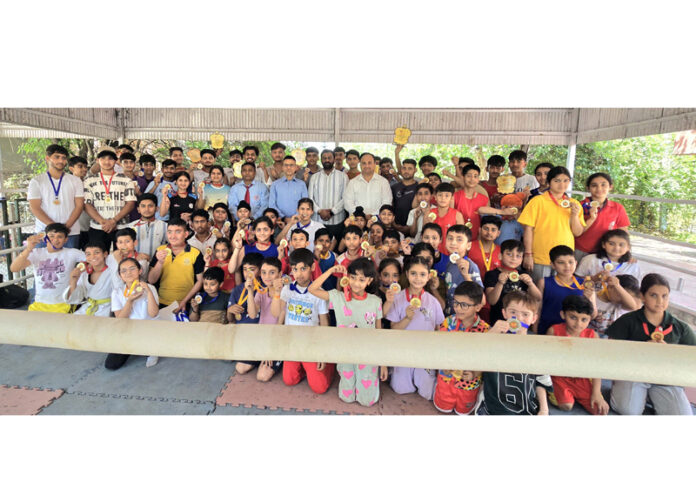
JAMMU, Apr 25: Jammu Province Muay Thai Championship was held at MA Stadium under the aegis of the Muay Thai Association of Jammu and Kashmir, drawing participation from around 180 players representing various parts of the region.
Rajeev Khajuria, Joint Commissioner JMC, attended the event as chief guest, while social activist and Samvedna Society chairman Keshav Chopra was present as guest of honour.
In his address, the chief guest underlined the significance of sports like Muay Thai in promoting discipline, confidence, and physical fitness among the youth.
The championship featured thrilling bouts across multiple weight categories, with participants exhibiting impressive technique and sportsmanship.
Keshav Chopra, while speaking on the occasion, emphasized that involvement in such demanding disciplines helps the younger generation remain empowered and focused.
The event was conducted under the leadership of Amit Singh, president of the Muay Thai Association of J&K, with Vikas Dhar serving as chief organizer and National Referee, and Mohit Singh as International Referee. Neeraj Singh officiated as Referee/Coach, while Surjeet Dogra contributed as Coach, ensuring smooth conduct of the championship.
Officials including Lovesh Dogra, Samarth Jain, Rohit Bhagat, and Yuvraj Singh managed the event, with senior players Shrutika Choudhary, Sukhmani Kaur, Vaibhavi Sharma, and Prikshit Sharma also in attendance.
Winners were awarded medals and certificates at the conclusion of the championship.
Bharat flags poor wheat quality, seeks crop compensation, MSP
Excelsior Correspondent
JAMMU, Apr 25: Sounding an alarm over the worsening condition of farmers in the Union Territory, the Jammu-Kashmir Kissan Congress Chairman, Bharat Priye has urged the Government to immediately announce compensation for damaged crops and fix a Minimum Support Price (MSP) for wheat.
Talking to media-persons here on Friday, Priye said that erratic weather has compounded the distress of farmers who are yet to recover from last year’s floods. “Many crops were ruined in the floods last year. Those farmers are under debt till today. Now a day, the weather is again bad, and the same circumstances have arisen. I request the Government to provide compensation to the farmers for their damaged crops,” he said.
The Kissan leader pointed to a visible decline in wheat quality this season across several areas of Jammu. Referring to the shriveled grains, he said the produce is far inferior to last year’s crop.
“You can see the size of the seed. Look at the size of the wheat. It is completely shriveled. What price will it fetch in the market? No mill owner will give us a good rate for this,” he remarked.
Bharat alleged that the seeds supplied this season were sub-standard and nearly four years old. “In various discussions it has come out that the seed that came this time at that rate was sub-standard. You will get wheat of this same size only. This is a fraud with farmers,” Priye said, calling it a “scam” that needs urgent inquiry.
Reiterating the long-pending demand for MSP, the Kisan Congress Chairman warned that further delay would push cultivators deeper into debt. MSP is much needed at this time. If some decision is not taken soon, the farmer will sink even deeper, and we will again see those worst scenes that were witnessed earlier,” he cautioned.
He appealed to the UT Administration and the Central Government to assess crop damage on the ground, ensure timely compensation, blacklist suppliers of sub-standard seeds, and announce MSP for wheat without delay.
‘Guardians of Weather’ in J&K
Dr Goldi Hazari
goldihazari@gmail.com
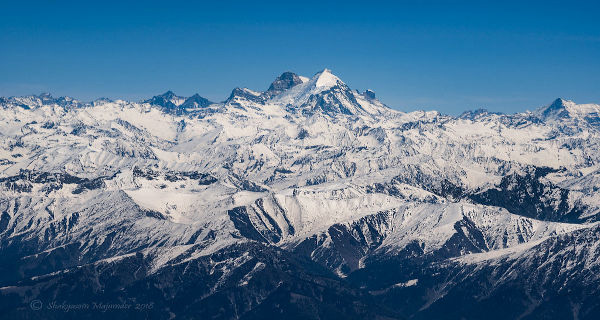
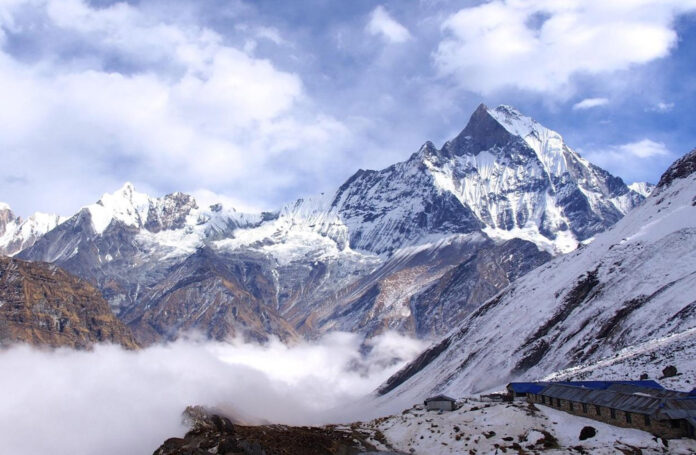
The Himalayas, often referred to as the “Guardians of Weather,” play an indispensable role in regulating the climatic patterns of Jammu and Kashmir. These towering peaks, with their snow-capped summits, act as formidable barriers and powerful influencers, dictating the meteorological landscape of the Union Territory. It is largely due to the benevolent presence of the Himalayas that Jammu and Kashmir experiences the distinct embrace of all four seasons – the vibrant bloom of spring, the warmth of summer, the fiery palette of autumn, and the serene tranquility of winter.
The imposing stature of the high, snow-clad mountains is not merely a picturesque characteristic; it is a vital component of the region’s hydrological cycle. These pristine white expanses serve as the primary source for numerous glaciers that adorn the Himalayan ranges within Jammu and Kashmir. These glaciers, in turn, are the lifeblood of the region, acting as vast natural reservoirs of fresh water. Throughout the warmer months, the gradual melting of this glacial ice feeds the rivers, streams, and tributaries that crisscross the Union Territory, sustaining agriculture, providing drinking water to communities, and powering hydroelectric projects. Without the constant replenishment from these glacial reserves, the water security of Jammu and Kashmir would be gravely compromised.
Beyond their role in water sustenance, the Himalayas, with their diverse altitudinal zones, foster an array of ecosystems that are intrinsically linked to weather regulation. At the lower and mid-altitudes, dense, verdant forests carpet the mountain slopes. These thick green canopies are not just aesthetically pleasing; they are active participants in the atmospheric processes that govern rainfall and snowfall. Through processes such as evapotranspiration, these forests release significant amounts of moisture into the atmosphere, contributing to the formation of clouds and ultimately influencing precipitation patterns. The presence of these extensive forests acts as a natural humidifier and regulator, moderating the intensity of rainfall and snowfall events.
The interaction between the vast Himalayan mass and the prevailing atmospheric currents creates a unique microclimate for Jammu and Kashmir. The mountain ranges act as a physical impediment to the movement of air masses. For instance, they effectively block the cold, dry winds originating from Central Asia during winter, thereby preventing the Union Territory from experiencing the extreme frigid temperatures that characterize regions further north. Conversely, during the monsoon season, the Western Himalayas influence the trajectory of the monsoon winds. While the main Indian monsoon is largely deflected southwards by the Greater Himalayas, a weaker, though still significant, branch can penetrate the region, bringing much-needed precipitation.
The elevation and orientation of the Himalayan peaks also play a crucial role in determining the distribution of sunlight and temperature. The southern slopes, receiving more direct sunlight, tend to be warmer and support different vegetation compared to the shaded northern slopes. This differential heating and cooling of the mountain surfaces creates localized wind systems, further contributing to the complexity of the regional weather.
The impact of the Himalayas on the four distinct seasons experienced in Jammu and Kashmir is profound and multifaceted. Spring arrives with a gentle awakening. As the snow begins to melt, fed by rising temperatures, the landscape transforms. Rivers swell, and the firstSigns of greenery emerge on the lower slopes. The Himalayas act as a buffer, moderating the transition from the harshness of winter to the full bloom of summer.
Summer in Jammu and Kashmir, while warm, is generally more temperate than in the plains due to the orographic effect of the mountains. The higher altitudes provide natural air conditioning, making places like Gulmarg, Pahalgam, and Sonamarg popular escapes from the heat. The mountains continue to influence rainfall patterns, with localized showers and thunderstorms, often occurring in the late afternoons, refreshing the landscape.
Autumn is a spectacle of color, largely attributed to the climatic conditions fostered by the Himalayas. The dry, cool air, coupled with ample sunlight, allows the deciduous forests to display their vibrant hues of red, orange, and yellow. The Himalayas contribute to the clear skies and the crisp, refreshing air that characterizes this season, making it an ideal time for tourism and trekking.
Winter brings a blanket of snow, a defining feature of Jammu and Kashmir’s identity. The Himalayas are the architects of this winter wonderland. Cold air masses are trapped by the mountains, and the high altitudes ensure persistent low temperatures, leading to heavy snowfall. This snowfall is crucial for the region’s economy, particularly for the development of winter tourism and sports. The snowpack on the Himalayas also acts as insulation, protecting the underlying vegetation and soil from extreme frost damage.
However, the influence of the Himalayas is not without its challenges. The same geographical features that provide climatic stability also make the region susceptible to natural disasters. Avalanches, landslides, and flash floods are often triggered by the volatile weather patterns and the steep terrain associated with mountainous regions. The rapid melting of glaciers due to climate change poses a significant long-term threat to water resources, altering the delicate balance that the Himalayas have historically maintained.
In conclusion, the Himalayas stand as silent, majestic sentinels, intrinsically woven into the climatic fabric of Jammu and Kashmir. They are the primary regulators of weather, shaping the distinct four seasons, nurturing vital water resources through their glaciers, and influencing rainfall and snowfall patterns through their forested slopes. The towering peaks not only define the geography but also dictate the very rhythm of life in the Union Territory, a constant reminder of nature’s immense power and its intricate, awe-inspiring designs. Understanding and respecting this profound relationship is crucial for the sustainable future of Jammu and Kashmir and its people, who have lived in harmony with these grand guardians for millennia. The continuous study of Himalayan meteorology and its impact is essential for adapting to changing climate dynamics and ensuring the region’s continued prosperity and ecological integrity.”
(The author is Medico ESIC Hospital New Delhi)

Opposition Stands : Women Bill falls
By Poonam I Kaushish
Last Friday was historic in more ways than one. First, the Modi-led NDA Government tasted its first defeat since taking office 2014. Two, the first time a Constitutional Amendment Bill collapsed in Lok Sabha since 2011. All by 54 votes.
The Constitution (131st Amendment) Bill 2026 granting 33% reservation to women prior to 2029 elections was defeated after failing to secure the two-thirds majority required to pass a Constitutional change. It got 298 for and 230 against instead of the requisite 352. Primarily, as it was linked to the Delimitation Bill 2026 which would have mandated a fresh redrawing of constituency boundaries based on the 2011 census.
The Government proposed increasing Lok Sabha seats to 850 from 543 and correspondingly promised a 50% proportional increase in seats in States. But Opposition Parties due to strained ties and lack of trust quotient refused, instead accused Government of assault on the federal structure, resulting in the Delimitation Bill being withdrawn.
Predictably, Prime Minister Modi cast Opposition as anti-women accusing it of bhrun hatya (foeticide), paap and sazaa to claim sole ownership of women’s cause in his Address to the Nation Saturday. Coming in the thick of Assembly elections it deepened distrust and further shrunk space for any conversation on the way forward between Government-Opposition.
The trust deficit is so high that when Home Minister Shah said he would stall proceedings for an hour to bring an amendment increasing the number of seats by 50%, none bought his line. Bringing things to such a pass, that traditional methods of dispute resolution that helped keep the system going have completely broken down.
Of course, Modi Sarkar will use this defeat to lay claim to ‘owning’ the cause of women’s empowerment and add it to its repertoire of political-ideological projects. BJP ensured the debate centred around two things: immediate 33% reservation for women and population-based justice for voters.
Hindutva diehards will paint Opposition as obstructionist, always blocking people-centric policies and issues which uplift the poor from the morass of destitution and anti-women in particular. Of, how regional Parties always prioritize their own math over national reform.
Yet, Government cannot escape the Lok Sabha verdict and the lesson it holds for future: It’s failure to pass its own Bill exposes limits of governing by fiat, of pursuing transformative change without consultation with those across the aisle. Specifically, in the backdrop of its fraught record of institutional integrity. Remember numbers in Parliament are no substitute for trust.
For Opposition, this is a moment of realisation that when one stands united, speaks in one voice, holds together, forcefully articulating its concerns none can stop its forward trajectory. Pointedly, marking Government’s haste and inexplicable turnaround from its 2023 position on women quota by questioning its refusal to wait for data of the ongoing census, which will include caste numbers.
Most of all, it flagged the cloud of distrust on delimitation’s institutional mechanism, giving rise to apprehensions that the intricate balance between equity in representation and federal fairness would be disturbed. That States would be pitted against each other.
Pertinently, India Bloc was clear: The 131st Amendment sought to raise the Constitutional ceiling on Lok Sabha seats from 543 to 850 and delink implementation of the 2023 Nari Shakti Vandan Adhiniyam from the next census, effectively meaning no earlier than 2034 as the current census is on, and might take a few years to complete with a delimitation to follow.
Besides, it viewed the new Bills aiming to bring 33% quota into effect by 2029, through a delimitation exercise based on 2011 census would put on the front burner issues of regional disparity and caste calculus.
However, Opposition cannot afford to savour this victory for long. Stalling the Bill and winning the national argument are two different things. It needs to move fast and find the language not just to sidestep BJP’s trap, but also communicate to people why it opposed the Bill and what it proposes instead. As its political-electoral fortunes depend on this.
For regional satraps specifically TMC’s Mamata and DMK’s Stalin with State elections ongoing they must not fall into the trap of supporting women’s quota but fear seat redistribution harming their States, as this weakens a unified Opposition attack. As BJP tom-toms credit for a historic reform. Since it failed, it will spend the next three years telling every woman, “We tried to give you power, but Congress and allies snatched it away.”
Recall, Parliament froze delimitation exercise in 1976 and 2001 amid fears amongst Southern States that the polity would become lopsided in favour of Northern States. Thereby, widening regional fault lines in the absence of cross-political consensus. The shadow of delimitation now looms large over Census 2027.
However, all is not lost. The Bill’s defeat is not a full stop to fulfilment of a dream called Naari Shakti, but a consequential pause. Even after the collapse of the Women Reservation Bill Parliament’s commitment backed by political consensus for women’s reservation stands enshrined in the 2023 law.
Importantly, as our polity moves forward it must not stoke spectres, like north vs south, peninsula vs heartland, navigate the thorny question of caste and find a formulation that unites rather than divides. What needs to be done to ensure integrity of the delimitation process? Above all, it must be institutionalised in good faith, not poisoned by a delimitation exercise the nation does not yet trust. This requires sagacity, good faith and patience across the board.
The Lok Sabha battle is over. The larger fight for women and polity, is not. The Government must learn its lesson from this defeat. It needs to change its conduct as Parliament’s high jinx bore the hallmarks of its reflexive, winner-takes-all style: As Executive of a fractious and argumentative democracy, its Government’s responsibility is to not merely table legislation but to navigate the concerns it legitimately stirs. In this case, there were apprehensions about a hasty delimitation reordering the political map and disturbing the delicate equilibrium between representation and federalism.
The ongoing elections will run their course, the poll dust will settle. But the key question raised need to be answered: How should the legislature be expanded to accommodate women’s reservation? Ultimately, BJP risks credibility erosion if implementation of women’s bill keeps slipping away. For Opposition it is its right to attack delay, but it is weakened by past ambiguity.
Either way, Naari Shakti is and will remain a volatile long term political issue especially as women constitute 50% population. Women’s reservation is a powerful idea whose time has come. —-INFA
India’s changing Monsoon : Monsoonal rainfall is no longer a process-it is an event
Sameer Rekhi
rekhi7sameer@gmail.com
A few days ago, I watched a documentary on Arab history. It showed that around 10,000 BC, parts of the Arabian Peninsula, nourished by monsoons, were green and rain-fed, supporting agriculture and pastoral life. The region was prosperous and connected through trade with Mesopotamia, Sumeria and the Indus Valley. This changed when a shift in the Earth’s orbit reduced summer heating, weakening the monsoon and pushing it southward, leaving behind deserts. Evidence of this remains in fossil lakes and ancient river channels.
This raises a question: Could the monsoon be undergoing another long-term shift? It may sound unlikely, but it is worth examining.
Available evidence suggests that India is not receiving less rain overall. Seasonal rainfall has remained broadly stable and may even increase slightly. The real change lies in how rain is delivered.
Within the season, patterns are also shifting. Longer dry spells-sometimes two to three weeks without rain-are followed by short bursts of intense rainfall. The same region can face water shortage and flooding within weeks.
Rainfall that was once spread across weeks is now increasingly compressed into short, intense spells, separated by longer dry periods. Since the 1950s, extreme rainfall events over central India have increased about threefold, while the number of moderate rainy days has declined.
A 1°C rise in temperature increases atmospheric moisture by about 7%, but heavy rainfall is rising even faster.
The explanation is straightforward. Warmer air holds more moisture. When conditions trigger rainfall, that moisture is released quickly. The result is intense downpours rather than steady rain.
The warming of the Arabian Sea is reinforcing this trend. Increased sea surface temperatures are feeding more moisture into monsoon winds. Along the west coast, short-duration rainfall events of 250-400 mm in a day are becoming more frequent.
There is another discernible shift-the movement of the monsoon itself. It still arrives strongly but often loses momentum inland. Weaker atmospheric circulation means rain systems can stall or linger, releasing large amounts of rain over the same area. What was once a passing spell now turns into concentrated rainfall, raising the risk of floods.
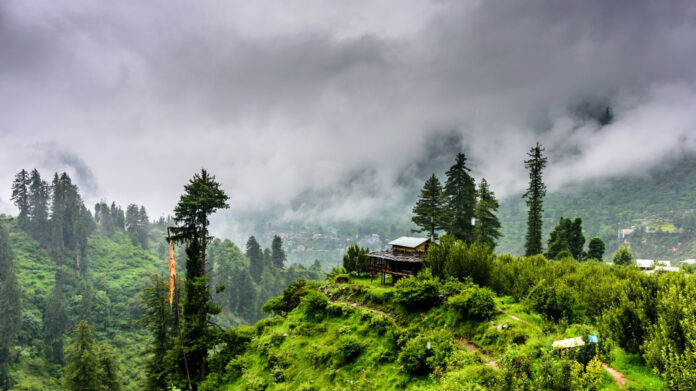
These changes are most visible-and most dangerous-in North and Northwest India, especially in the Himalayan belt of Jammu & Kashmir and Himachal Pradesh.
The mountains here are geologically young and unstable. When heavy rain falls in a short time, it rushes down narrow river channels, carrying debris and boulders. The result is flash floods, landslides and sudden terrain collapse.
Jammu & Kashmir offers a telling example. Traditionally not a high-rainfall region, it is now witnessing more frequent high-intensity rainfall events. In parts of the Jammu region, daily rainfall crossing 100 mm is being recorded more often. As a result, districts of Ramban, Kishtwar and Doda in the Chenab basin have seen frequent, localized, cloudburst-type events, pointing to a shift toward short-duration, high-intensity rainfall.
Incidents such as the Chashoti tragedy bring this reality into sharp focus. These are not isolated events, but outcomes of intense rainfall interacting with fragile terrain, made more vulnerable by unmindful human activity and commercialisation.
As an aside, continuous highway expansion and upgradation are adding significantly to the risk in this fragile Himalayan region-be it Uttarakhand, Jammu & Kashmir or Himachal Pradesh.
Veteran Congress leader Dr Karan Singh’s recent statement, urging the Union Minister of Road Transport and Highways to critically evaluate the need for six- or eight-laning of highways in the mountains, reflects deep concern about the damage such construction is causing.
The push for wider roads and new superhighways, often involving deep hill cutting, weakens natural slope stability and jeopardises human settlements in these difficult terrains. The nearly month-long road blockade at Thrad near Udhampur, which disrupted both human and goods movement, is a recent case in point.
The consequences are both ecological and economic. Such infrastructure often requires repeated repairs after every monsoon, leading to recurring expenditure without durability. For local populations, the impact is immediate-blocked roads, broken connectivity and disruption of daily life.
Risks are also increasing due to combined factors-heavy rainfall interacting with glacial melt, saturated soil and construction debris on unstable slopes. This makes outcomes more unpredictable and often more severe.
More rain, importantly, does not always mean more usable water. When rain falls too quickly, much of it runs off instead of seeping into the ground. This reduces groundwater recharge and makes water availability uneven. A significant portion of this water ultimately flows downstream, including across borders, due to limited storage capacity. To conclude, the monsoon is not disappearing. It is changing its behaviour-becoming less about steady supply and more about sudden delivery.
The question now is not how much rain we receive, but how it is delivered-and whether we are prepared for its vagaries.
(The author is a retired IPS officer)
Vanshika and Chirag win 10m air pistol mixed team gold as India continue to top table

CAIRO, Apr 25: Vanshika Chaudhary and Chirag Sharma won the 10m air pistol mixed team event at the ISSF Junior World Cup here on Saturday, taking India’s gold tally to five.
With one more day of competitions left, India continued to lead the medal table with five gold, five silver and four bronze.
The duo shot 484.3 to shrug off the challenge of Aliaksandra Piatrova and Mikita Daubash (467.6) representing the Individual Neutral Athletes (AIN). The second Indian pair of Mohini Singh and Himanshu Rana tallied 407.4 to clinch bronze in the four-team final.
Vanshika and Chirag had earlier shot a combined 582 on Saturday morning at the Olympic International City Shooting range to top the 14-team qualifiers while Mohini and Himanshu finished third as well with a 568.
It was a second gold in the tournament for Vanshika having earlier won the individual women’s 10m air pistol title. It was also a second medal for Chirag, who had earlier won bronze in the junior men’s air pistol.
The Trap men’s and women’s competitions also concluded on the day where India had one finalist each. Both Zuhair Khan and Bhavya Tripathi claimed the sixth qualifying spot in their respective qualifiers. While Zuhair shot 115, Bhavya recorded 108 after five rounds.
Bhavya then finished eighth in the junior women’s trap final, where Italian Martina Montani won gold with a new junior world record score of 26 hits out of a possible 30.
In the men’s final, Zuhair finished seventh as France’s Agez Thomas also shot a junior world record score of 28 to win the event.
The final day on Sunday will see the 50m rifle 3 positions men junior and the trap mixed team junior events being decided. (PTI)
The Himalayas : Where Nature, Culture and Spirit Converge
Towering across the northern horizon, the Himalayas are far more than a mountain range-they are a living legacy of nature’s grandeur and humanity’s enduring connection with it. Stretching across nations and shaping civilizations, these majestic peaks cradle rivers that sustain millions, nurture diverse ecosystems, and inspire countless traditions, beliefs, and stories. This special issue of Daily Excelsior Sunday Magazine seeks to explore the many dimensions of the Himalayas-their breathtaking landscapes, rich biodiversity, cultural vibrancy, and growing environmental challenges. At a time when climate change and human pressures threaten their fragile balance, understanding and preserving this natural treasure has never been more urgent.
Through insightful articles, ground reports, and expert perspectives, we invite readers to journey into the heart of the Himalayas-celebrating their timeless beauty while reflecting on our collective responsibility to protect them for generations to come.
‘Guardians of Weather’ in J&K
Dr Goldi Hazari
goldihazari@gmail.com
The Himalayas, often referred to as the “Guardians of Weather,” play an indispensable role in regulating the climatic patterns of Jammu and Kashmir. These towering peaks, with their snow-capped summits, act as formidable barriers and powerful influencers, dictating the meteorological landscape of the Union Territory. It is largely due to the benevolent presence of the Himalayas that Jammu and Kashmir experiences the distinct embrace of all four seasons – the vibrant bloom of spring, the warmth of summer, the fiery palette of autumn, and the serene tranquility of winter.
The imposing stature of the high, snow-clad mountains is not merely a picturesque characteristic; it is a vital component of the region’s hydrological cycle. These pristine white expanses serve as the primary source for numerous glaciers that adorn the Himalayan ranges within Jammu and Kashmir. These glaciers, in turn, are the lifeblood of the region, acting as vast natural reservoirs of fresh water. Throughout the warmer months, the gradual melting of this glacial ice feeds the rivers, streams, and tributaries that crisscross the Union Territory, sustaining agriculture, providing drinking water to communities, and powering hydroelectric projects. Without the constant replenishment from these glacial reserves, the water security of Jammu and Kashmir would be gravely compromised.
Beyond their role in water sustenance, the Himalayas, with their diverse altitudinal zones, foster an array of ecosystems that are intrinsically linked to weather regulation. At the lower and mid-altitudes, dense, verdant forests carpet the mountain slopes. These thick green canopies are not just aesthetically pleasing; they are active participants in the atmospheric processes that govern rainfall and snowfall. Through processes such as evapotranspiration, these forests release significant amounts of moisture into the atmosphere, contributing to the formation of clouds and ultimately influencing precipitation patterns. The presence of these extensive forests acts as a natural humidifier and regulator, moderating the intensity of rainfall and snowfall events.
The interaction between the vast Himalayan mass and the prevailing atmospheric currents creates a unique microclimate for Jammu and Kashmir. The mountain ranges act as a physical impediment to the movement of air masses. For instance, they effectively block the cold, dry winds originating from Central Asia during winter, thereby preventing the Union Territory from experiencing the extreme frigid temperatures that characterize regions further north. Conversely, during the monsoon season, the Western Himalayas influence the trajectory of the monsoon winds. While the main Indian monsoon is largely deflected southwards by the Greater Himalayas, a weaker, though still significant, branch can penetrate the region, bringing much-needed precipitation.
The elevation and orientation of the Himalayan peaks also play a crucial role in determining the distribution of sunlight and temperature. The southern slopes, receiving more direct sunlight, tend to be warmer and support different vegetation compared to the shaded northern slopes. This differential heating and cooling of the mountain surfaces creates localized wind systems, further contributing to the complexity of the regional weather.
The impact of the Himalayas on the four distinct seasons experienced in Jammu and Kashmir is profound and multifaceted. Spring arrives with a gentle awakening. As the snow begins to melt, fed by rising temperatures, the landscape transforms. Rivers swell, and the firstSigns of greenery emerge on the lower slopes. The Himalayas act as a buffer, moderating the transition from the harshness of winter to the full bloom of summer.
Summer in Jammu and Kashmir, while warm, is generally more temperate than in the plains due to the orographic effect of the mountains. The higher altitudes provide natural air conditioning, making places like Gulmarg, Pahalgam, and Sonamarg popular escapes from the heat. The mountains continue to influence rainfall patterns, with localized showers and thunderstorms, often occurring in the late afternoons, refreshing the landscape.
Autumn is a spectacle of color, largely attributed to the climatic conditions fostered by the Himalayas. The dry, cool air, coupled with ample sunlight, allows the deciduous forests to display their vibrant hues of red, orange, and yellow. The Himalayas contribute to the clear skies and the crisp, refreshing air that characterizes this season, making it an ideal time for tourism and trekking.
Winter brings a blanket of snow, a defining feature of Jammu and Kashmir’s identity. The Himalayas are the architects of this winter wonderland. Cold air masses are trapped by the mountains, and the high altitudes ensure persistent low temperatures, leading to heavy snowfall. This snowfall is crucial for the region’s economy, particularly for the development of winter tourism and sports. The snowpack on the Himalayas also acts as insulation, protecting the underlying vegetation and soil from extreme frost damage.
However, the influence of the Himalayas is not without its challenges. The same geographical features that provide climatic stability also make the region susceptible to natural disasters. Avalanches, landslides, and flash floods are often triggered by the volatile weather patterns and the steep terrain associated with mountainous regions. The rapid melting of glaciers due to climate change poses a significant long-term threat to water resources, altering the delicate balance that the Himalayas have historically maintained.
In conclusion, the Himalayas stand as silent, majestic sentinels, intrinsically woven into the climatic fabric of Jammu and Kashmir. They are the primary regulators of weather, shaping the distinct four seasons, nurturing vital water resources through their glaciers, and influencing rainfall and snowfall patterns through their forested slopes. The towering peaks not only define the geography but also dictate the very rhythm of life in the Union Territory, a constant reminder of nature’s immense power and its intricate, awe-inspiring designs. Understanding and respecting this profound relationship is crucial for the sustainable future of Jammu and Kashmir and its people, who have lived in harmony with these grand guardians for millennia. The continuous study of Himalayan meteorology and its impact is essential for adapting to changing climate dynamics and ensuring the region’s continued prosperity and ecological integrity.”
(The author is Medico ESIC Hospital New Delhi)
Himalayan Meltdown : A Race Against Time
Dr. Yudhbir Singh
yudhbirjammu@gmail.com
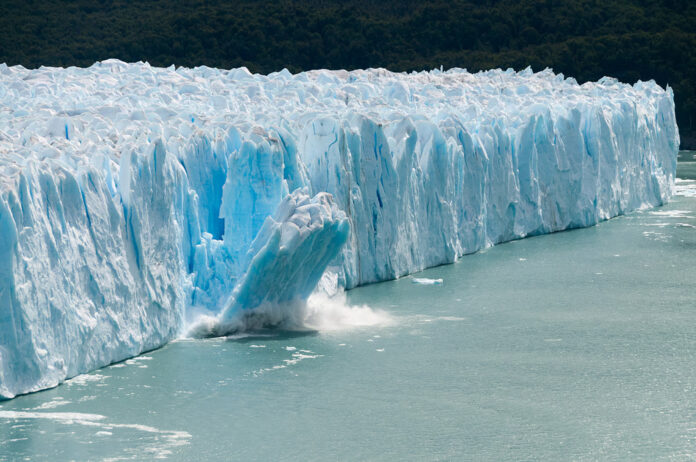
The Himalaya is the youngest and most beautiful mountain in the world, often called the “Third Pole” because it store ice and freshwater than anywhere else except the North and South Poles. This giant ice warehouse is essential for the survival of millions of people in India and across Asia. According to detailed studies by Indian scientists like Anil V. Kulkarni (2021) and R.K. Tayal (2023), key glaciers such as the “Chhota Shigri” and “Gangotri” are shrinking much faster than they used to, with the melting rate nearly doubling since the year 2000. In 2026, scientific report shows that temperature in the Himalaya is rising by about 0.02°C every year, that sounds small but enough to cause massive changes. This warming has led to more frequent natural disasters in recent years that destroy infrastructure, lives, and the environment in the Himalayan range. We must stop treating this mountain range merely as places for recreation or as natural resources instead, we need to start respecting it as a sacred gift. People from all walks of life must work together to protect the environment and stop the over-exploitation of this beautiful natural tangible heritage. If we, the inhabitants of Himalaya, do not act wisely today, the millions who rely on these natural water sources will face a very difficult future.
In our own backyard Jammu, Kashmir, and Ladakh the impact of this melting cannot be ignored because they pose significant threat to the agriculture sector and hydropower generation. Famous glaciers like the “Kolahoi Glacier” in Kashmir and the “Parkachik” and “Durung-Drung” glaciers in Ladakh are shrinking by many meters every year, a fact highlighted in the research carried out by various workers ( Romshoo et al., 2022; Azam, 2021). Even the glaciers in the Karakoram Range of Ladakh, which scientists once thought were stable , are now starting to lose their ice mass (K. Babu, 2024). This widespread melting is creating thousands of new glacial lakes that act like ticking time bombs; if they burst, they create Glacial Lake Outburst Floods (GLOFs) that may send a wall of water crashing down into our valleys. If melting continues at this rate, our growing towns and new infrastructure located downstream are in serious danger of being wiped out by these sudden floods.
The survival of Jammu, Kashmir, and Ladakh depends entirely on these glaciers because they act as “water towers” for major rivers like the Indus, Jhelum, and Chenab. While this rapid melting causes unpredictable floods during the spring in the short term, the long-term reality is that once these glaciers are gone, the rivers will start to dry up. For the people of Ladakh, who live in a high-altitude desert and depend on meltwater for their crops, this could mean the loss of their entire way of life. The accelerating changes in glaciers and the broader cryosphere are no longer distant environmental concerns but immediate indicators of a warming planet with far-reaching consequences for water security, natural hazards, and ecosystem stability. As this frozen reserve continue to shrink, its impacts will increasingly shape both regional livelihoods and global climate systems. In Jammu and Kashmir, the whole economy from the famous apple orchards to the green rice fields will suffer from a lack of irrigation water.
Furthermore, our most important energy source, hydroelectric power, will be hit hard; power plants won’t be able to generate electricity if the water flow is too low to turn the turbines. This represents a major threat to our food security, energy, and overall safety. We must treat the Himalaya with the same respect we show to God and change how we live to protect our mountain home before our steady water supply disappears forever and we face a true challenge to our survival. To overcome this Himalayan menace, the government must prioritize the installation of high-tech sensors and satellite monitoring systems to provide early warnings to downstream villages when water levels rise dangerously. This must be accompanied by a strict ban on constructing large hotels, houses, or factories near riverbanks and known flood paths to minimize future casualties. Furthermore, a shift toward “green infrastructure” is essential, as planting vegetation allows tree roots to act as natural anchors that stabilize soil and prevent the weathering of slope material. We should rapidly move toward repairing traditional ponds and tanks. On the tourism front, the government should implement a “carrying capacity” for sensitive ecological zones, limiting the daily number of visitors to glaciers and mountain passes to curb pollution and localized heating. Finally, schools in the region should integrate local geology and climate change into their curricula to prepare the next generation as guardians of their “water towers,” while empowering local communities to protect their own forests and streams, as a sense of ownership is the strongest defense against environmental harm.
(The autor is Associate Professor Department of Geology University of Jammu)
Himalayan Meltdown : A Race Against Time
Dr. Yudhbir Singh
yudhbirjammu@gmail.com
The Himalaya is the youngest and most beautiful mountain in the world, often called the “Third Pole” because it store ice and freshwater than anywhere else except the North and South Poles. This giant ice warehouse is essential for the survival of millions of people in India and across Asia. According to detailed studies by Indian scientists like Anil V. Kulkarni (2021) and R.K. Tayal (2023), key glaciers such as the “Chhota Shigri” and “Gangotri” are shrinking much faster than they used to, with the melting rate nearly doubling since the year 2000. In 2026, scientific report shows that temperature in the Himalaya is rising by about 0.02°C every year, that sounds small but enough to cause massive changes. This warming has led to more frequent natural disasters in recent years that destroy infrastructure, lives, and the environment in the Himalayan range. We must stop treating this mountain range merely as places for recreation or as natural resources instead, we need to start respecting it as a sacred gift. People from all walks of life must work together to protect the environment and stop the over-exploitation of this beautiful natural tangible heritage. If we, the inhabitants of Himalaya, do not act wisely today, the millions who rely on these natural water sources will face a very difficult future.
In our own backyard Jammu, Kashmir, and Ladakh the impact of this melting cannot be ignored because they pose significant threat to the agriculture sector and hydropower generation. Famous glaciers like the “Kolahoi Glacier” in Kashmir and the “Parkachik” and “Durung-Drung” glaciers in Ladakh are shrinking by many meters every year, a fact highlighted in the research carried out by various workers ( Romshoo et al., 2022; Azam, 2021). Even the glaciers in the Karakoram Range of Ladakh, which scientists once thought were stable , are now starting to lose their ice mass (K. Babu, 2024). This widespread melting is creating thousands of new glacial lakes that act like ticking time bombs; if they burst, they create Glacial Lake Outburst Floods (GLOFs) that may send a wall of water crashing down into our valleys. If melting continues at this rate, our growing towns and new infrastructure located downstream are in serious danger of being wiped out by these sudden floods.
The survival of Jammu, Kashmir, and Ladakh depends entirely on these glaciers because they act as “water towers” for major rivers like the Indus, Jhelum, and Chenab. While this rapid melting causes unpredictable floods during the spring in the short term, the long-term reality is that once these glaciers are gone, the rivers will start to dry up. For the people of Ladakh, who live in a high-altitude desert and depend on meltwater for their crops, this could mean the loss of their entire way of life. The accelerating changes in glaciers and the broader cryosphere are no longer distant environmental concerns but immediate indicators of a warming planet with far-reaching consequences for water security, natural hazards, and ecosystem stability. As this frozen reserve continue to shrink, its impacts will increasingly shape both regional livelihoods and global climate systems. In Jammu and Kashmir, the whole economy from the famous apple orchards to the green rice fields will suffer from a lack of irrigation water.
Furthermore, our most important energy source, hydroelectric power, will be hit hard; power plants won’t be able to generate electricity if the water flow is too low to turn the turbines. This represents a major threat to our food security, energy, and overall safety. We must treat the Himalaya with the same respect we show to God and change how we live to protect our mountain home before our steady water supply disappears forever and we face a true challenge to our survival. To overcome this Himalayan menace, the government must prioritize the installation of high-tech sensors and satellite monitoring systems to provide early warnings to downstream villages when water levels rise dangerously. This must be accompanied by a strict ban on constructing large hotels, houses, or factories near riverbanks and known flood paths to minimize future casualties. Furthermore, a shift toward “green infrastructure” is essential, as planting vegetation allows tree roots to act as natural anchors that stabilize soil and prevent the weathering of slope material. We should rapidly move toward repairing traditional ponds and tanks. On the tourism front, the government should implement a “carrying capacity” for sensitive ecological zones, limiting the daily number of visitors to glaciers and mountain passes to curb pollution and localized heating. Finally, schools in the region should integrate local geology and climate change into their curricula to prepare the next generation as guardians of their “water towers,” while empowering local communities to protect their own forests and streams, as a sense of ownership is the strongest defense against environmental harm.
(The autor is Associate Professor Department of Geology University of Jammu)
India discusses energy cooperation with Nepal’s new Govt

KATHMANDU, Apr 25: India’s envoy in Kathmandu and the energy minister in the new Government in Nepal discussed issues of mutual interests and those focusing on cooperation in energy.
India’s Ambassador to the himalayan nation Naveen Srivastava and Nepal’s Minister for Energy, Water Resources, and Irrigation Biraj Bhakta Shrestha met here on Friday, according to sources at the ministry.
Shrestha took charge as the energy minister in March last week after the Balendra Shah ‘Balen’ led Rastriya Swatantra Party (RSP) won a landslide victory in the general election earlier that month.
Minister Shrestha and Ambassador Srivastava discussed bilateral relations and issues of mutual interests, focusing on cooperation in energy and water resources.
“The discussions focused on the longstanding partnership between Nepal and India, and the shared vision of advancing sustainable development and regional connectivity,” the sources said.
Both sides reaffirmed their commitment to deepening collaboration and fostering greater synergy to ensure shared prosperity and mutual benefit for the people of both countries.
The energy minister said he looks forward to further strengthening this partnership through continued dialogue and cooperation.
Weeks before the March general elections, Nepal signed a long-term agreement for the export of 10,000 MW power to India, an MoU for cooperation in renewable energy, and jointly inaugurated three cross-border transmission lines.
These developments took place during the two-day visit of the External Affairs Minister S Jaishankar to the Himalayan nation in January.
On the same day, Shreshtha also met Chinese Ambassador Zhang Maoming and discussed a range of topics aimed at advancing mutually beneficial practical cooperation.
“They also exchanged views on how to cope with the current regional energy challenges,” the sources added. (PTI)