

Sameer Rekhi
rekhi7sameer@gmail.com
A few days ago, I watched a documentary on Arab history. It showed that around 10,000 BC, parts of the Arabian Peninsula, nourished by monsoons, were green and rain-fed, supporting agriculture and pastoral life. The region was prosperous and connected through trade with Mesopotamia, Sumeria and the Indus Valley. This changed when a shift in the Earth’s orbit reduced summer heating, weakening the monsoon and pushing it southward, leaving behind deserts. Evidence of this remains in fossil lakes and ancient river channels.
This raises a question: Could the monsoon be undergoing another long-term shift? It may sound unlikely, but it is worth examining.
Available evidence suggests that India is not receiving less rain overall. Seasonal rainfall has remained broadly stable and may even increase slightly. The real change lies in how rain is delivered.
Within the season, patterns are also shifting. Longer dry spells-sometimes two to three weeks without rain-are followed by short bursts of intense rainfall. The same region can face water shortage and flooding within weeks.
Rainfall that was once spread across weeks is now increasingly compressed into short, intense spells, separated by longer dry periods. Since the 1950s, extreme rainfall events over central India have increased about threefold, while the number of moderate rainy days has declined.
A 1°C rise in temperature increases atmospheric moisture by about 7%, but heavy rainfall is rising even faster.
The explanation is straightforward. Warmer air holds more moisture. When conditions trigger rainfall, that moisture is released quickly. The result is intense downpours rather than steady rain.
The warming of the Arabian Sea is reinforcing this trend. Increased sea surface temperatures are feeding more moisture into monsoon winds. Along the west coast, short-duration rainfall events of 250-400 mm in a day are becoming more frequent.
There is another discernible shift-the movement of the monsoon itself. It still arrives strongly but often loses momentum inland. Weaker atmospheric circulation means rain systems can stall or linger, releasing large amounts of rain over the same area. What was once a passing spell now turns into concentrated rainfall, raising the risk of floods.
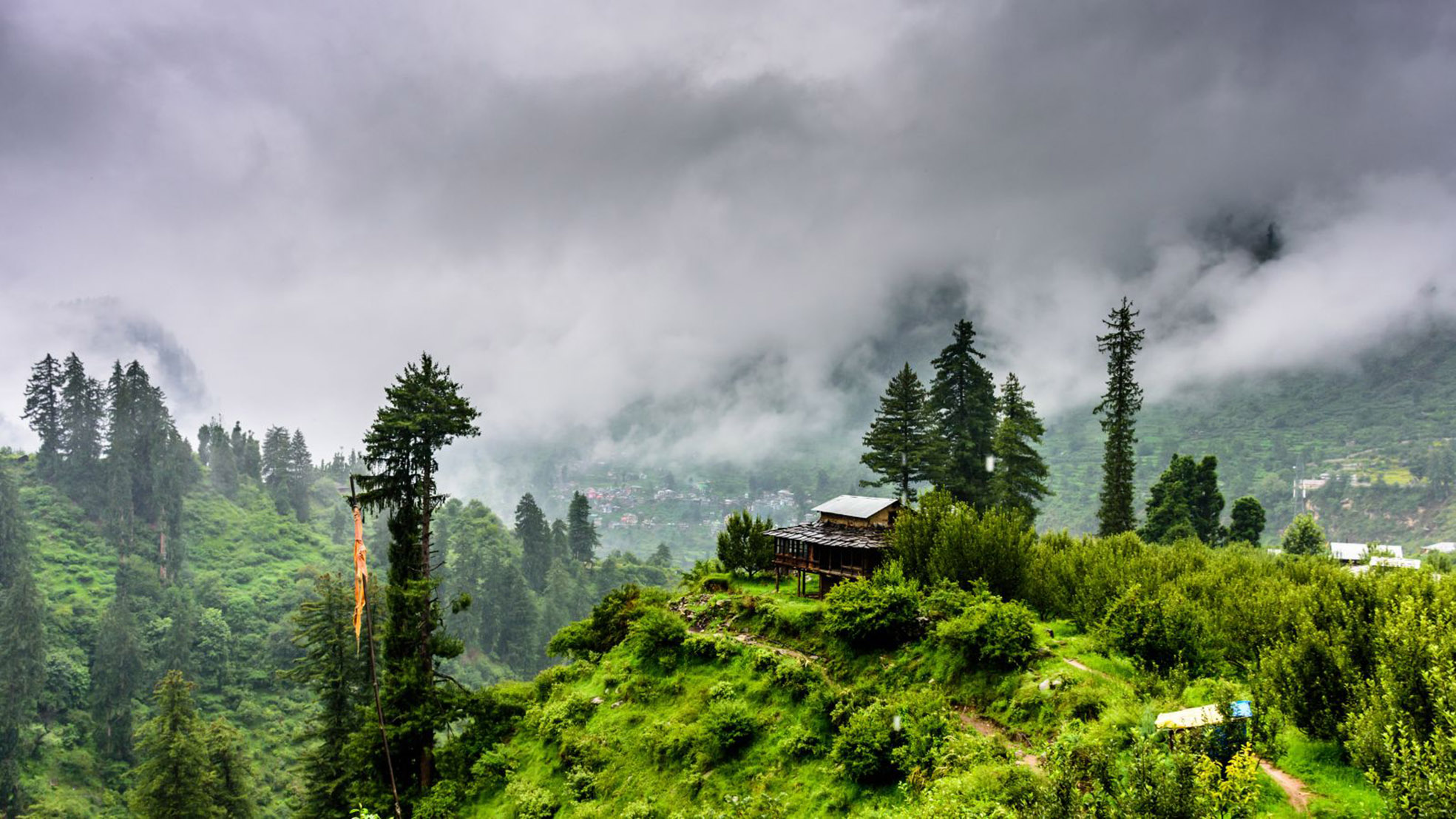
These changes are most visible-and most dangerous-in North and Northwest India, especially in the Himalayan belt of Jammu & Kashmir and Himachal Pradesh.
The mountains here are geologically young and unstable. When heavy rain falls in a short time, it rushes down narrow river channels, carrying debris and boulders. The result is flash floods, landslides and sudden terrain collapse.
Jammu & Kashmir offers a telling example. Traditionally not a high-rainfall region, it is now witnessing more frequent high-intensity rainfall events. In parts of the Jammu region, daily rainfall crossing 100 mm is being recorded more often. As a result, districts of Ramban, Kishtwar and Doda in the Chenab basin have seen frequent, localized, cloudburst-type events, pointing to a shift toward short-duration, high-intensity rainfall.
Incidents such as the Chashoti tragedy bring this reality into sharp focus. These are not isolated events, but outcomes of intense rainfall interacting with fragile terrain, made more vulnerable by unmindful human activity and commercialisation.
As an aside, continuous highway expansion and upgradation are adding significantly to the risk in this fragile Himalayan region-be it Uttarakhand, Jammu & Kashmir or Himachal Pradesh.
Veteran Congress leader Dr Karan Singh’s recent statement, urging the Union Minister of Road Transport and Highways to critically evaluate the need for six- or eight-laning of highways in the mountains, reflects deep concern about the damage such construction is causing.
The push for wider roads and new superhighways, often involving deep hill cutting, weakens natural slope stability and jeopardises human settlements in these difficult terrains. The nearly month-long road blockade at Thrad near Udhampur, which disrupted both human and goods movement, is a recent case in point.
The consequences are both ecological and economic. Such infrastructure often requires repeated repairs after every monsoon, leading to recurring expenditure without durability. For local populations, the impact is immediate-blocked roads, broken connectivity and disruption of daily life.
Risks are also increasing due to combined factors-heavy rainfall interacting with glacial melt, saturated soil and construction debris on unstable slopes. This makes outcomes more unpredictable and often more severe.
More rain, importantly, does not always mean more usable water. When rain falls too quickly, much of it runs off instead of seeping into the ground. This reduces groundwater recharge and makes water availability uneven. A significant portion of this water ultimately flows downstream, including across borders, due to limited storage capacity. To conclude, the monsoon is not disappearing. It is changing its behaviour-becoming less about steady supply and more about sudden delivery.
The question now is not how much rain we receive, but how it is delivered-and whether we are prepared for its vagaries.
(The author is a retired IPS officer)
 Follow our WhatsApp channel
