

Excelsior Correspondent
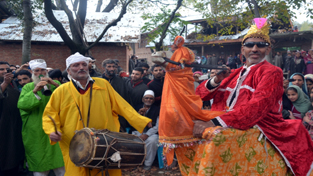
BUDGAM, Oct 27: Two plays featured today, on the second day of ‘Bhard Pather’ show series being organized by Natrang in collaboration with Sangeet Natak Akademi.
The first play ‘Wakh Shu Badlan’ written by Mohd Akram, directed by Muzaffar Ahmed and presented by Sheesh Mahal Folk Theatre was staged at Waterhail, Budgam and second play ‘Dal Te Weth’ written and directed by Mohd Abdullah and presented by Hayat Bhagat Theatre was staged at Aaroo, Beerwah, Budgam.
The shows were coordinated by Mohd Yaseen, Manzoor-ul-Haq and Shah-e-Jahan Ahmed Bhagat.
The first play ‘Wakh Shu Badlan’ turned out to be one of the finest and bold statement theatrically made by the community of Bhand performers. As the title of the play suggests, the theme predicts a time when all will change.
The play opens with an appeal to the general public for cleanliness. When whole world prioritize cleanliness in everything then why Kashmiris should lag behind. The play progresses further and it is witnessed that people with positive thinking adhere to the appeal of Maskharas (Clown performers of Bhand) but people with negative and sadistic thoughts are not ready to mend their ways.
In a highly symbolic manner, the Maskharas hit at the pollution of minds. The filth at the streets is shown as the reflection of the pollution of minds which always attracts negativity. If your mind is pollution free you will certainly like to translate the beauty of your mind by transforming you surroundings.
The 2nd play of the day ‘Dal Te Weth’ was yet another urgent and emotional public appeal made by the traditional performers of Kashmir in the form of a Bhand Pather play. The play highlighted the larger human concerns of Kashmir which are associated with the life lines of Kashmir valley like Jhlem and Dal Lake. They are at the verge of extinction but instead of focusing on such grave concerns, the general public is being deviated to other issues.
 Follow our WhatsApp channel