

PM for whole-of-nation approach to tackle heatwave
NEW DELHI, May 27:
Prime Minister Narendra Modi on Wednesday urged all Union Cabinet Ministers to ensure that their respective ministries and departments take necessary steps to mitigate the impact of the prevailing heatwave conditions across the country.
Follow the Daily Excelsior channel on WhatsApp
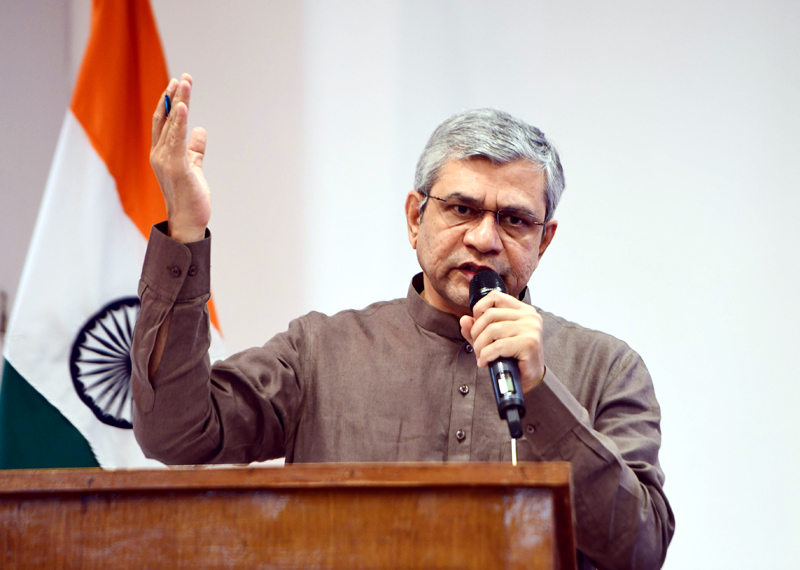
Addressing a media briefing after the Cabinet meeting, Union Minister Ashvini Vaishnaw said the Prime Minister stressed the need for a “whole-of-nation” approach to deal with the extreme heat situation.
Vaishnaw said the Prime Minister directed all ministries to take appropriate action to protect people from the heatwave, particularly departments such as health and water resources.
“The Prime Minister said all ministries must take steps to protect people from the heatwave, especially ministries such as health and water resources, and consider what measures can be taken. He was clear that such major challenges should be addressed through a whole-of-nation approach, with the Centre, states and citizens working together,” the minister said.
Asked about the measures the Government plans to take, Vaishnaw said individual ministries and departments would determine their respective courses of action and added that the Centre has also reached out to state Governments.
Modi on Wednesday urged citizens to take maximum precautions as the country continues to witness soaring temperatures, stressing that staying hydrated is key during harsh weather conditions.
In a series of posts on X, Modi said children, the elderly and those working outdoors are especially vulnerable to extreme heat.
He cautioned people against ignoring signs of heat exhaustion, warning that it can quickly turn dangerous and may even lead to heatstroke.
Meanwhile, the Union Cabinet on Wednesday approved the continuation of the ‘SARTHAK-PDS’ scheme for five years with a financial outlay of Rs 25,530 crore till March 2031, marking a significant step towards overhauling the country’s public distribution infrastructure through technology-led reforms.
The Cabinet Committee on Economic Affairs (CCEA), chaired by Prime Minister Narendra Modi, also cleared a revision in norms governing Central assistance to states and union territories for intra-state movement and handling of foodgrains, along with fair price shop (FPS) dealers’ margins, while retaining the existing funding pattern.
SARTHAK-PDS has been conceived as an umbrella scheme, consolidating two existing programmes – “Assistance to State Agencies for Intra-State Movement of Foodgrains and FPS Dealers’ Margin under NFSA” and the “Scheme for Modernization and Reforms through Technology in Public Distribution System (SMART PDS).”
The merger is aimed at comprehensively strengthening implementation of the National Food Security Act, 2013 (NFSA), by bringing financial assistance and technology modernisation under a single administrative framework.
Information and Broadcasting Minister Ashwini Vaishnaw, briefing reporters after the Cabinet decisions, said the approval covers the entire PDS value chain.
“Right from selection of beneficiaries to movement of foodgrains, to getting proactive feedback from citizens, to reducing transportation distance – all those activities have been approved with an outlay of Rs 25,530 crore for five years,” he said.
The State Governments were facing difficulties in bearing the cost of transportation of foodgrain to the PDS shops. This cost will be supported under the scheme wherein FPS dealers’ remuneration will also be enhanced, he added.
Vaishnaw was categorical that SARTHAK-PDS does not replace the existing PDS architecture but is designed to bring structural reform across delivery of foodgrains, logistics, transportation, material handling and grievance redressal.
The scheme carries a dual mandate: providing assured financial support for intra-state movement, handling and FPS dealers’ margins on one hand, and building a unified, citizen-centric and interoperable PDS architecture on the other – aimed at ensuring last-mile service delivery while minimising leakages.
On the technology front, the scheme envisages deployment of Artificial Intelligence (AI), Machine Learning (ML), Natural Language Processing (NLP) and Blockchain to modernise PDS operations.
Key deliverables include standardised architectures and unified databases for real-time monitoring, AI-driven grievance redressal and analytics systems, and State Command Control Centres for data-driven oversight. ISO-certified process frameworks will also be put in place to ensure transparency, security and operational sustainability. (PTI)
 Follow our WhatsApp channel
