

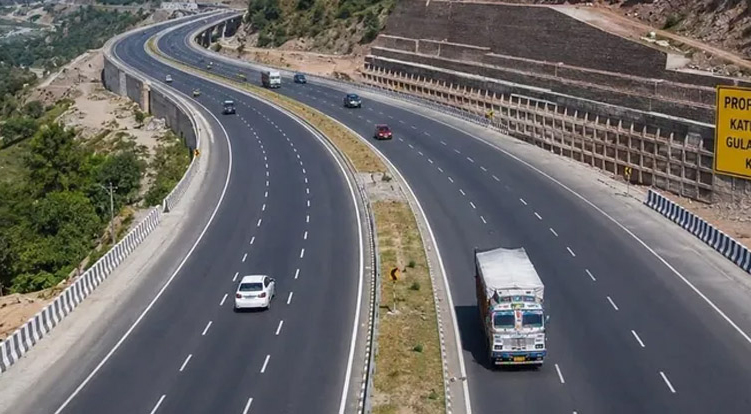
Jammu and Kashmir has long been defined not merely by its geography but by the distances – physical, economic, and psychological – that have separated its people. The NHAI’s proposal to four-lane the Katra-Reasi-Mahore-Gulabgarh-Nandimarg-Kulgam corridor is, therefore, far more than a road project. It is a declaration that no district of this UT shall remain at the margins of India’s development story. The significance of this corridor becomes clearer when placed alongside existing connectivity efforts. The Mughal Road, linking Rajouri and Poonch to the Kashmir Valley, has already demonstrated what infrastructure can accomplish in underserved regions. Once isolated and economically dormant, the Rajouri-Poonch belt has witnessed a tangible transformation – agricultural produce reaching wider markets, trade flourishing across divisions, and communities gradually breaking free from the grip of poverty and neglect. The proposed highway carries an identical promise, this time for the Doda-Kishtwar belt, a region of extraordinary natural wealth that has historically been deprived of the infrastructure it deserves.
Reasi, Mahore, Gulabgarh, and Nandimarg – share a common story of difficult terrain, weather-induced isolation, and overdependence on a single national highway that remains perpetually vulnerable to disruption. Every landslide on NH-44 severs not just traffic but livelihoods. A parallel all-weather corridor would fundamentally alter this calculus, redistributing the burden of connectivity and offering redundancy that the region has long lacked. The economic dividends are straightforward to envisage. The horticulture sector, one of Kashmir’s most vital industries, loses millions annually to delays caused by road blockages. Faster, reliable inter-divisional movement of apples, saffron, and other produce would directly translate into better returns for farmers. Simultaneously, tourism – the other great engine of J&K’s economy – stands to gain enormously. The landscapes traversed by this corridor are breathtaking and largely undiscovered. Regions that once made headlines for insurgency and unrest are steadily reinventing themselves as destinations for adventure tourism, pilgrimage, and ecotourism. Better roads will accelerate that transformation decisively.
Equitable development across every district of UT is sound governance. When remote communities feel connected, invested in, and served by the state, the social fabric strengthens. The dependency on traditional, overloaded routes diminishes, and in its place grows a network of commerce, mobility, and opportunity. This highway, once built, will be another thread woven into the fabric of a unified, prosperous J&K. The Government must ensure that the DPR process moves swiftly and that ambition on paper translates without undue delay.
 Follow our WhatsApp channel
