

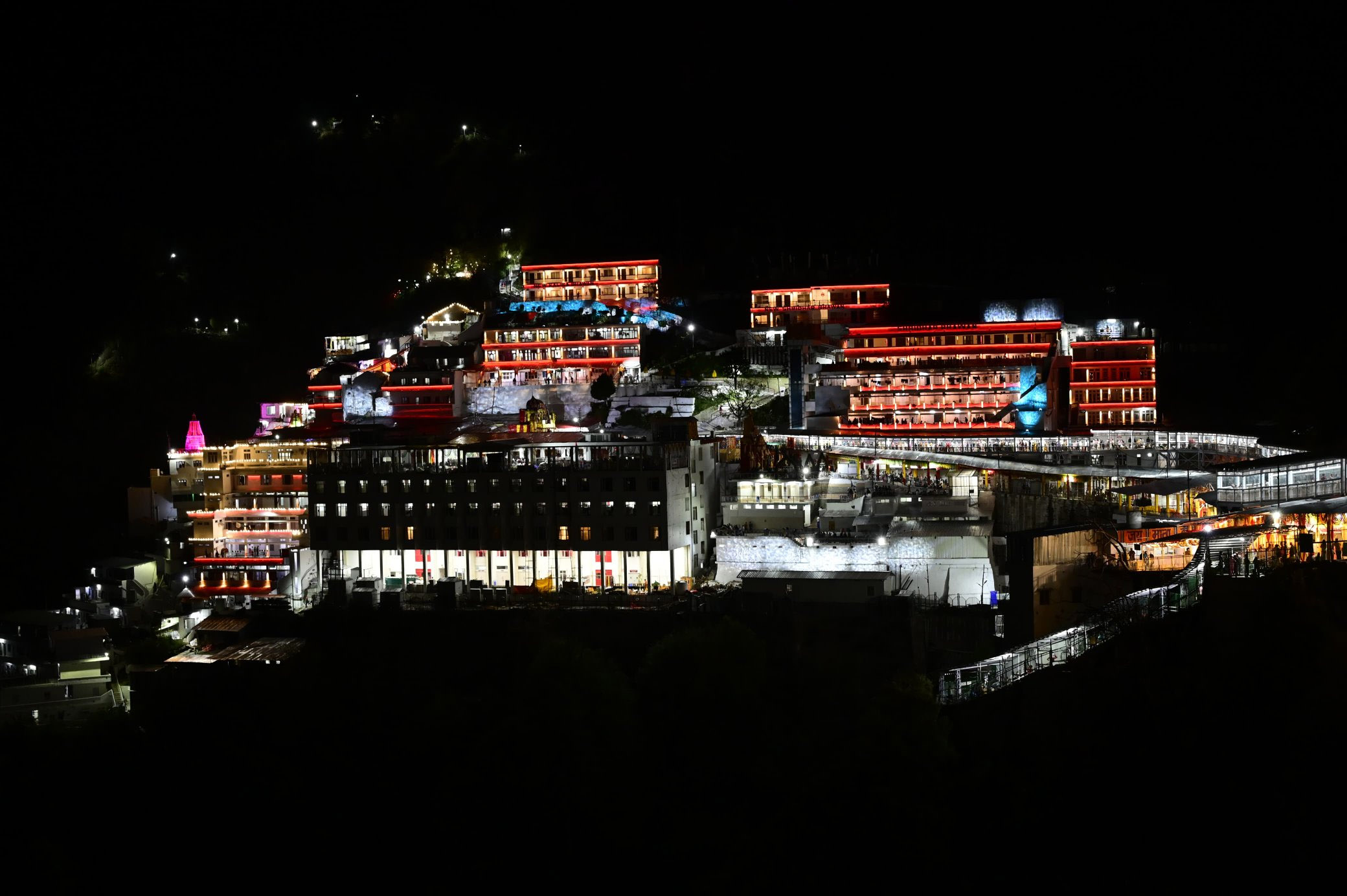
The holy shrine of Shri Mata Vaishno Devi has long stood as one of India’s most beloved and most visited sacred destinations. Drawing between eighty and ninety lakh pilgrims annually to the foothills of the Trikuta Mountains, Katra has always pulsed with an energy unique amongst the country’s religious centres. Yet even the most revered of pilgrimage sites must evolve with the times, and the sweeping augmentations now underway – from the base camp to the Bhavan high above – signal a new and ambitious chapter in the yatra’s illustrious history. It is true that last year saw a dip in pilgrim footfall, owing to a confluence of security concerns and regional uncertainties. However, those who manage and administer this sacred corridor remain undeterred. Their collective vision, backed by the LG Administration, is directed firmly towards ensuring that the shrine is fully equipped to welcome record-breaking footfall in the years ahead.
At the Bhavan itself, the changes are both thoughtful and substantial. The introduction of separate entry and exit points addresses one of the most persistent challenges of managing massive crowds in a confined high-altitude setting – the risk of congestion and the attendant safety hazards. Complementing this structural change is the deployment of RFID chip technology, a modern safeguard that allows authorities to track pilgrims along the route, significantly enhancing safety during peak periods and adverse weather. The newly inaugurated Vaishnavi Bhawan, offering seventy-eight well-furnished rooms across approximately 45,784 square feet, adds much-needed accommodation capacity. For pilgrims who are stranded by sudden rainfall or arrive during the busiest of seasons, a comfortable and dignified place to rest is a necessity.
The upgrade to helicopter services deserves particular attention and commendation. Demand for heli-services has consistently outpaced supply, and the inauguration of the new helipad at Village Hutt, Katra, is a critically important addition. Beyond addressing capacity, the new facility resolves a long-standing safety concern: operating helicopter services over a densely populated town such as Katra was inherently risky, and past incidents had underscored the dangers. Operating from a purpose-built, DGCA-compliant heliport away from the town centre, the Shrine Board has acted both prudently and responsibly. The broader connectivity picture for Katra is rapidly improving: the railway terminus has already considerably reduced journey times, and the much-anticipated ropeway project, when completed, will further compress travel times to mere hours. For pilgrims with limited time in today’s fast-paced world, these developments are not simply conveniences – they are deciding factors in whether the pilgrimage is undertaken at all. The decision to extend helicopter booking quotas for senior citizens and specially-abled pilgrims is a similarly inclusive and commendable step, mirroring the success of the dedicated battery-car booking provision introduced earlier. Pilgrimage ought not to be the preserve of the physically able or the young.
Equally praiseworthy is the attention being paid to neighbouring shrines, particularly Shiv Khori. Developing integrated heli-connectivity between Vaishno Devi and Shiv Khori not only eases logistics for devotees wishing to visit both shrines but also helps distribute pilgrim traffic and economic benefits across a wider geographic area. This collaborative approach reflects mature destination management.
However, it is the proposed International Museum of Goddesses at Katra that may prove the most transformative initiative of all. The astounding paradox of improved connectivity is that it shortens visitor stays and, consequently, reduces spending in the local economy. With railway, ropeway, and enhanced helicopter services all converging to make the yatra achievable within a single day, Katra risks becoming a transit point rather than a destination. The museum – planned as a world-class institution housing representations of all fifty-one Shakti Peethas and the nine divine Swaroops of Maa Durga – is a direct and inspired answer to this challenge. By offering pilgrims a compelling reason to linger, to learn, and to deepen their spiritual understanding, it has the potential to transform a few hurried hours into a richly fulfilling two-day experience, sustaining local livelihoods in the process.
The Shrine Board and the LG Administration deserve full credit for ensuring that this ancient pilgrimage continues to offer an experience that is not only spiritually profound but also safe, accessible, and unforgettable.
 Follow our WhatsApp channel
