

Shiban Khaibri
Political analysts must have largely felt vindicated about what they expected the three interlocutors would submit in their report on the Jammu and Kashmir situation. Has the team of Dilip Padgaonkar, Radha Kumar and M.M.Ansari made an innovative approach to address the intricate problem of the state or they have simply joined the dots on the line of specific reference received, beyond which they could not go, is central to the recommendations of the group. That they met as many as 700 delegations across the state for more than a year to collate variant views to enable them have access to different shades of opinion based on their aspirations, find very little expression in the report which the Ministry of Home affairs made public on its website on May 24, 2012.
The report has, at the outset, to be seen in the perspective of having been not successful to meet the separatists and both factions of the Hurriyat to know what they had to say in the changed scenario, developed down more than six decades. However the report which was submitted to the Home Ministry on Oct 12, 2011 favoured resumption of dialogue process between the centre and the Hurriyat Conference “at the earliest”. The report says that this dialogue process should yield visible outcome. The report, however, has impliedly set at rest, any of the political solutions of any nature outside the confines of the constitution of India by suggesting that the clock cannot be turned back and there was a need to look at the future and the future should take into account the changed security and economic situation. This, however, is the indirect message to those who still do cast aspersions on and question the validity of the state’s accession with the Union of India. In this, the report has not obliged even the National Conference wherefrom the distinction between the merger and the accession was of late sought to be drawn and the political solution envisioned only through the” autonomy” plank. Perhaps that speaks for the Chief Minister asking for few days’ time to study and examine the report which does not favour a return to pre-1953 position, “We discuss it with senior colleagues and then react”. The report says that the state of Jammu and Kashmir should “continue” to function as a single entity within the Indian Union. The report rightly put its fingers crossed on returning to pre 1953 position as that was bound to create a “dangerous constitutional vacuum in the centre state relationship”. In similar sense, the self rule or joint control model of the principal opposition party, the PDP too find no mention in the report.
The overwhelming participation of the people , especially from the Kashmir region in the Panchayati elections despite threats from the ultra groups, and some of the threats executed also , indicates the people’s over all acquiesce in the democratic system whereby devolution of powers at the grass root village and block levels through panchayati system finds echo in the report, calling for bringing in the desired changes through implementation of 73rd and 74th amendments of the constitution of India for which there have been otherwise pressing demands from the people. The report is slightly self contradictory when it suggests that the high trust deficit needed to be overcome and that the people of Jammu and Kashmir should be empowered in order for them to exercise their civic and political rights. When the huge turn out of voters in the last Assembly and Panchayati elections is taken into account which has earned the distinction of being cent percent fair and free, the question of any impediment in exercising political rights by the people, does not arise when they send their elected representatives to the governing bodies. The last assembly elections, consequently witnessed contesting elections by a few leaders from the separatist ideology, it is another thing that they lost the elections.
The recommendations however do suggest that civic and political rights’ empowerment should be acceptable to all the three regions of the state and even should be in favour of those communities which have been “uprooted from their homes because of force, wars and endemic violence”. The report is completely silent about the menace of terrorism and growing radicalism in the valley and the imperious far reaching effects thereof resulting in such uprooting, identifying the vast spectrum of victims mostly innocent and peace loving, and the ways as to how to reverse such causes and take on terrorism effectively. Instead, it has suggested reduction of intrusive presence of security forces in the state and amendment of PSA and review of AFSPA as if presence of army units was any cause of problem to restore peace. The role of the army and the sacrifices given by them right from 1947 find no mention and not even this that before 1990, there has been not a single incident of any avoidable involvement of the army any where in the valley or any part of the state. It appears that with this measure, there shall be complete peace in Kashmir which has proved wrong as attacks on Para military and police forces continue unabated in Kashmir, only the number of incidences may have been less. It has however not taken a note of the deep involvement of Pakistan in fomenting trouble in the valley right from the Kabayli raid of 1947 till date and not addressed therefore the continuous problem of cross border terrorism and sending in of armed and indoctrinated militants by designated agencies from Pakistan to create disturbances in the state. Amnesty for terrorists and their rehabilitation as suggested by the group has larger security ramifications. Similarly, the recommendations of making LOC irrelevant and to use it for greater movement of goods and people in a hassle free way, has to be seen less as an emotive issue and more as a security issue. The resolution of Parliament in 1994 declaring whole of the Pakistan occupied parts of the state as belonging to India has to be seen in the context of rendering LOC irrelevant which however finds no mention in the report. The border experience has been dismal and that of treachery calling for no such fiddling with this sensitive issue.
The interlocutors have recommended that there should be a review exercise in respect of the extension of central acts and articles of the constitution of India after 1952 for which a constitutional committee could be constituted as “we have said that most of the articles and acts are fairly innocuous”, the question then is resting on two premises. Firstly shall it widen or bridge the gap of integration of the state with the Union and secondly when the report itself suggests that most of such articles and acts are not against the interests of the people, what purpose shall it serve to go in for the review exercise? This is unwittingly tantamount to playing in the hands of secessionist politics to start with the exercise of rescinding central laws and articles to weaken the ties with the centre. Another aspect of the report is with regard to the Article 370 which is sought to be prefixed with the word “special “instead of “temporary” status and is beyond one’s comprehension as to what purpose was that going to serve. Like wise, gradual replacement of IAS and IPS officers with those of the local cadre and the “local mixed police” as recommended by the group was not aimed at integration of the people with rest of the country. The interlocutors have to a large extent, addressed the problem of parity as regards legislative, executive and financial powers to three regions of the state – Jammu, Kashmir and Ladakh for which three regional councils are proposed to be set up which shall go a long way to remove apprehensions about one ignored to benefit the other which shall result in an even economic progress of the state on the whole. The issue of appointment of the Governor, the powers of the Governor and the nomenclature issue have also been discussed in the report, however, the tallest leader of the state Late Sheikh Abdullah had put to rest, the nomenclature issue in that he had agreed to be called the Chief Minister instead of Prime Minister in 1975 Indira – Sheikh accord. The report is appearing much in content than in substance and the structured feed back, to be assimilated by the interlocutors shall rate the report accordingly.
Joining the dots on the line
All is not well with the BJP
Sunita Vakil
With the Congress having painted itself into a corner over corruption and relentless pricerise, the principal opposition party has been unable to fill the vacuum. Indeed, the BJP has persistently failed to capitalise on the failures of the ruling UPA which has been tottering in its second “avataar” in power. On its part the party has done little to create an impression on public minds that it is well oiled and eminently suited to change things for the better if catapulated to power. Evidently, an alternative to a corrupt Government is a strong and principled opposition. Can BJP claim to be a worthwhile candidate?
Despite the general disenchantment with the Congress Government, the BJP party convention offered no signs that it could be getting its act together. At a time when the Congress’s downhill slide has raised hopes of its return to power, LK Advani’s and Sushma Swaraj’s show of dissent have exposed the rifts within. Indeed, its now out in the open that all is not hunky-dory within the party. Gadkari has his share of detractors as everybody is not happy with him for getting a second term, largely because of an internal tussle for power. Infact, the differences between the party president and other central leaders seem to be creating new camps within the party. Mr Advani and Mrs Swaraj are reportedly among several top BJP leaders who are opposed to Gadkari getting a second term.
The party meet was to plan a strategy against the Congress led governance at the centre to prepare for the Assembly elections in Gujarat and Himachal Pradesh later this year and also the more important General elections just 2 years away. But just as Mr Gadkari seemed to have managed to bring together all warring parteners on board, his party’s show of unity seems to have come undone again. While the traditional rally after the meet was attended by all the BJP Chief Ministers, the senior most leader LK Advani did not grace the rally. Neither did top leader Sushma Swaraj. Though embarrassed BJP spokespersons tried to playdown their absence saying that they had prior engagements, rumours began to fly thick and fast that there was infighting within the party. The fact that the leader of oppsition in Parliament Sushma Swaraj also beat a hasty retreat made it clear that the battle lines were being drawn in the party.
It can reasonably be argued that the two day national executive of the BJP in Mumbai hasn’t offered a viable political alternative to the Congress led UPA Government. Rather than coming out as a credible opposition the meet turned out to be a flop show with internal dissensions coming out in the open. More than anything else it demonstrated the party’s continued inability to regroup itself and emerge as a national alternative to the ever expanding political space.
However, the meet has proved to be significant in more ways than one. Most notable is the growing influence of the state leaders who boast of a considerable support at the grassroots. Then there is the erosion of authority of some central leaders like Gadkari himself. That Narendra Modi has asserted his authority within the party and has emerged as a popular face, is also significant. Gujarat Chief Minister Mr Modi, no doubt, used the platform to project himself as BJP’s Chief Ministerial candidate. However, its yet to be seen how his acceptability will play out at the national level. Its also true that the BJP leader Sushma Swaraj has no love lost for Modi. And LK Advani is still nurturing prime ministerial ambitions.
Also significant is the fact that new power equations are emerging within the party. The party president Nitin Gadkari has attempted to patch up with Modi who was upset with him for inducing his arch rival Sanjay Joshi to the National Executive. Modi had virtually boycotted the event demanding that Joshi be made a sacrificial goat. To save his own face and secure another term as party chief, Gadkari succumbed and Joshi had to quit his party post just ahead of the National Executive.
With the Lok Sabha elections two years away and several state assembly polls just round the corner, the party was expected to show a united face. But what transpired at the National Executive was the opposite. Riven by unresolved differences, the BJP is headed for more turmoil and political incoherence. The party has made news mostly for the wrong reasons. It has been notorious for its penchant for opportunistic alliances. Its leaders are divided by venality and vaulting ambitions. With such a state of affairs what will certainly take a beating is the BJP’s political credibility.
The BJP’s strategy on tainted ministers also does not make much sense. The saffron party’s central leadership has brazenly displayed double standards all along. Its anticorruption plank won’t sound convincing unless it includes a clarion call against its own tainted ministers while attacking the UPA at the centre. Its not anybody’s case that tainted ministers should be included but those living in glass houses should not throw stones.
Is the BJP on a path to reinvent itself for the 2014 elections? As the party’s troubles are mounting its top leaders strike out on their own paths, each chalking his own strategy to outdo the other. The Mumbai fiasco as well as happenings in many states like Karnataka, Rajasthan, Jharkhand and Himachal Pradesh point to the contrary. Some recent goofups like admitting scam tainted former BSP minister Babu Kushawaha into the party despite charges against him in the health mission’ scam and making Uma Bharti the head of campaigning in UP have not shown the BJP leadership in good light. The party cannot even boast of a strong central leadership. Also, given the mood at the party grassroots and hardly any mass leader at the top, Modi’s candidature seems to be Hobson’s choice for the BJP.
However, the BJP has an opportunity to undo the 2004 and 2009 verdicts considering the UPA’s leadership crisis and policy paralysis. The party needs to face the challenges of the present and seize the opportunities of the future by infusing a new dynamism in the organisation and craft a new plank that can serve the party well. As a national alternative to the Congress, there is a need for the party to come up with the credible agenda of governance. Its not enough to point out flaws in the Congress’s policies and programmes. It is important to posit what the party plans to do if voted to power.
Can the BJP emerge as a credible alternative to the congress? It does not appear so at the moment given the rare criticism of Mr Advani regarding his own party leadership saying that the situation calls for introspection. Infact, by washing dirty linen in public, Advani has already confirmed the BJP status as a divided house besides denting its image as a disciplined party. However, focussing on expanding its base, strengthening relations with existing allies, reaching out to new partners and building a strong inclusive leadership hold the key to the party trumping the Congress in the next elections. By no means is it an easy task.
Gurus on fast
Both Anna Hazare and yoga guru Ramdev together sat at one-day fast at protest venue at Jantar Mantar in New Delhi. Their fast is against corruption and black money stashed in foreign banks. The fight against corruption is almost one year old and many things happened in between in the country. However the Lokpal Bill which the anti-corruption crowds have been demanding did not come up. It got mired in legal and constitutional complicacies and remains a pending issue. In the meanwhile the gurus have begun attacking the Prime Minister directly for heading a cabinet where some ministers are involved in corruption. Taking recourse to moral and ethical values to protest against something going against the interests of common man is the old practice to which the Indians are used. It was put to political use by the Father of the Nation. Ever since smaller leaders also tried to draw mileage from it and sit on hunger strikes and no-talk strikes etc. Our countrymen still think that moral force can change the mind of the Government and make it do things right as they perceive them. In western countries it looks bizarre. Let us hope that sanity prevails on both sides and a formula of compromise is arrived at to avert escalation of tension. The government cannot afford agitation to continue and therefore must find some way out of this stalemate.
Smooth handling of an event
The administration and the people in general heaved a sigh of relief on peaceful dilution of tension caused by the decision of the Vishwa Hindu Parishad (VHP) to begin yatra to the holy Amarnath cave on the day of Jyeshtha Purnima. Actually the Shrine Board had decided that the yatra should be undertaken from 25 June but the VHP wanted to begin it earlier. For the administration, there were many difficulties to change the schedule. We should know that a large police force is needed for deployment all along the road and the path up to the holy cave to ensure security of the pilgrims. As many as 74 battalions of CRP have to be deployed to make the security foolproof.
A large number of VHP activists gathered at the Parade Ground Jammu wherefrom their caravan would start for a march towards Srinagar. This posed a great and difficult challenge to the police that had directions not to allow the yatris to proceed further from Jammu. At the same time, hundreds of yatris were detained at various towns who wanted to join the rally at Parade Ground. The situation seemed tense and threatening.
But fortunately, the administration showed extraordinary alertness and patience in handling the tense situation. Even some people addressing the large crowd of about 800 souls in Parade Ground issued threats and challenges. But the police remained unmoved and unprovoked. Obviously, the administration had done good spade work to meet the challenge and what ultimately happened is a clear sign that there was total change in the strategy of the police in handling the event. In normal course of things this would have called show of muscle power on either side especially the police as usually happen on occasions like these. The yatris would have resisted and in the melee that would ensue out of this situation, something ugly could have happened. But nothing happened and this event passed without creating any commotion.
Credit should be given to both the Governor as the Chairman of the Shrine Board and the Chief Minister for very sensible and patient handling of the situation. The entire administrative machinery right from the Divisional Commissioner to IGP Jammu and many more officers engaged the VHP leadership in a discussion why the Government would not be in a position not to allow the yatris proceed to the holy cave right now. Their argument was that both the hill tracks of Baltal and Chandanwari were snow bound and not fit for travel for the yataris at this point of time. Keeping the past experience in mind in which a number of yatris lost their lives owing to inclement weather, the government was not prepared to take any risk at this time. This was more important in view of the fact that the pilgrims are usually ill clad and not aware of the climatic conditions prevailing over the Himalayas. Availability of medical aid under snow conditions was very difficult rather impossible. Even other infrastructural facilities like the ponies the coolies and supplies etc. Were also at a risk and could not be assured. Therefore there was ample force in the argument of authorities that the yatra would not be allowed.
Credit must also go to the organisers of the pilgrimage who understood the view of the authorities and accepted to disperse peacefully and not go ahead with their insistence. As a gesture of goodwill, the authorities arranged langar meaning free meals for the pilgrims and Yatri Bhawan in Mohinder Nagar. This created a fund of goodwill between the police force and the pilgrims and a situation that was likely to turn ugly was nipped in the bud. This event has a good lesson for the police force and the authorities for their future guidance. The lesson is that the use of muscle power should be the last resort with the police and law enforcing agencies. It is possible to resolve tense situations through interaction and discussion in an objective and realistic manner. Normally what happens is that the police believe it has to strike at the mobs in any case and they do it brutally thereby helping situation go out of hands. All those officers in civil and police ranks who were responsible for handling this grave situation need to be complimented on their patient and effective handling of the situation. At the same time, it is important for organizers of social and religious evens that they plan their events in a way that least disturbance is done to normal life. Religious event is an occasion of peace and tranquillity for all and it should not be converted into confrontation of sorts. We hope that the experience gained by both sides in the course of this event will become a desk book formula for the police and the administration. We need peaceful summer this year in any case so that the Government can attend to developmental works waiting to be brought to completion.
China Southern may get capital from parent to cut debt
HONG KONG, June 4: China Southern Airlines Co Ltd , the country’s largest airline by fleet size, said on Monday its state-owned parent was considering injecting capital into the company to lower its debt level.
The airline, which did not provide details of the amount being considered, was also studying a non-public issue of new shares to its parent, China Southern Air Holding Company, it said in a statement to the Hong Kong stock exchange.
Based in China’s southern city of Guangzhou, China Southern’s net debt stood at 75.8 billion yuan ($11.9 billion) at the end of 2011, while its ratio of net debt to total equity was 201 percent last year compared with 211 percent in 2010.
‘It’s a surprising move and the injection could be a sizable amount as trading of the stock will be suspended,’ said Kelvin Lau, an aviation analyst at Daiwa Securities.
China Southern said it had requested a trading suspension from June 5.
The airline last month reported a 74 percent slide in first-quarter net profit to 319 million yuan due to a slowing domestic economy and rising jet fuel prices. (AGENCIES)
Fitch downgrades Indian Bank‘s outlook to negative
MUMBAI, June 4: Credit rating agency, Fitch Ratings has revised public sector lender Indian Bank’s (IB) outlook to Negative from Stable, while affirming its Long-Term Foreign Currency Issuer Default Rating (LT FCIDR) at BBB- .
Fitch has also affirmed IB s Viability Rating (VR) at
Bbb- , Short-term IDR at F3 , Support Rating at 3 , and Support
Rating Floor at BB+ .
Indian Bank National Long-Term rating has been affirmed at
Fitch AA+(ind) with a stable outlook and national short-Term rating at Fitch A1+(ind) . A full list of rating actions is provided at the end of this commentary, a statement said.
The outlook revision on the LT FCIDR reflects increasing asset quality pressures on IB compared with other Indian banks rated
BBB- , on account of both cyclical and structural factors.
However, the risk is somewhat mitigated by the bank s reasonable standalone financials including robust core capitalisation,falling-though-above average profitability, and stable funding and liquidity profile, which explains the stable outlook on the National
Long-Term rating that is one notch below the highest level.
The support rating and Sspport rating Ffoor reflect IB s regional (65 branches in South India) as well as moderate albeit growing franchise (over 1,955 branches), the statement added. (UNI)
Falling value of crude to help contain CAD: Secy
NEW DELHI, June 4: Declining prices of crude oil in the international market is good news for India as it will help contain current account deficit (CAD) and ease pressure on rupee, a senior Finance Ministry official said today.
“There is a feeling that the CAD is going to get reduced, thanks to the crude prices going down,” Economic Affairs Secretary R Gopalan told reporters on the sidelines of a Ficci event here.
International crude oil prices have declined to USD 103 per barrel from USD 117 in April.
The CAD, which arises when import of goods and services exceeds their exports, had touched 4 per cent of GDP at the end of December 2011.
The rupee dipped to a historic low of 56.52 against the US dollar last week mainly because of withdrawal of funds by foreign institutional investors. The rupee has declined more than 11 per cent since March. It was trading around Rs 55.58 against the dollar in early trade today.
“The Reserve Bank is constantly monitoring the exchange rate,” he added.
He further said the Indian economy will clock a growth of over 7 per cent and the government would strive to stick to the projected numbers.
The government has budgeted to bring down fiscal deficit to 5.1 per cent of GDP in the current fiscal from 5.76 per cent in 2011-12.
“The growth which we are looking at will be definitely higher than what has been projected, what has been given last year. It could be in the range of 7 per cent plus… But we have to see how the external conditions behave,” Gopalan said.
India’s economic growth fell to a 9 year low of 6.5 per cent in 2011-12 mainly on account of poor performance of manufacturing sector and slowdown in global economy. The GDP is projected to grow by 7.6 per cent in the current fiscal.
“We are constantly evaluating the eurozone issue. We need to look at how the Greece elections turn out to be, the Italian and Spanish issues are going to be tackled, employment in the US is another area of concern,” he added.
He said with the lowering of the global crude oil prices, there is a possibility of inflation coming down.
“The good thing is that crude prices are going down. So that has some positives for us. But at the same time, if the imported costs of materials also go down, then imported inflation could be contained and to that extent inflation numbers would also come down,” he said.
The WPI inflation was 7.23 per cent in April, while the retail inflation was 10.36 per cent. (PTI)
Govt may announce sops tomorrow for exporters in FTP
NEW DELHI, Jun 4: The government may announce sops like interest subsidy for hard-pressed labour intensive sectors such as textiles and carpets in the Foreign Trade Policy tomorrow to provide them cushion against the global slowdown.
“There will be some incentives for exporters. The Commerce Minister is also likely to announce some steps to reduce transaction costs,” an official said.
Commerce and Industry Minister Anand Sharma has already reviewed the situation of exports with all stakeholders, including the industry and export promotion councils.
Sharma had also discussed with Finance Minister Pranab Mukherjee the issues such as rupee depreciation, cost of credit and eurozone crisis affecting exporters.
The economic crisis in major markets – the US and Europe – is hitting India’s exports. Both these markets account for about one-third of country’s total shipments.
The expansion in the country’s merchandise exports, which grew by as much as 82 per cent in July 2011, came down to 3.2 per cent in April 2012 due to the demand slowdown.
In April, exports of gems and jewellery and readymade garments contracted by 25.7 per cent and 9.7 per cent to USD 2.6 billion and USD 1 billion, respectively.
In the last FTP announced in October 2011, the government had extended export incentives worth Rs 1,700 crore.
Besides, the ministry is also planning to rejig the policy for tax-free enclaves and provide sops to make the Special Economic Zones (SEZs) more attractive.
Besides, 2 per cent interest subsidy, exporters are demanding easy and affordable credit to SME exporters and review of EPCG Scheme to encourage procurement of capital goods from domestic industries.
They are also demanding higher allocation of funds for market development and a regular policy for raw material security. (PTI)
Hopes of glory
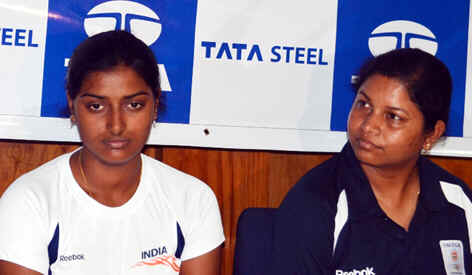
Indian sports lovers, who probably lived through moments of hysteria in 2008 when the country clinched more than one Olympic medal in Beijing, are looking forward with expectations to the 2012 edition of the grand sporting event in London. Three athletes clinched medals in Beijing, making the country generate some amount of romance for games that fight hard to win the heart of the followers in a nation obsessed with cricket.
While, Boxing witnessed a tremendous revival in India, holding the hands of Olympic bronze medalist Vijender Singh who defeated Carlos Góngora of Ecuador 9-4 in the quarterfinals at the Beijing Olympics, to guarantee the bronze medal, other games like Wrestling and shooting also developed followers of its own.
Keeping tab on the probable sports that can bring home medals this year, Archery holds a special place of importance in the sporting paradigm.
The game holds a deeper connection with Indian roots as it shares a deep bondage with the country’s mythology and religion. The pages of mythology have stated that India gave birth to an exceptionally skilled archer like Arjun.
From the pages of mythology to real life, the sports have developed in India with the passage of time and have produced renowned archers over the years.
However, the game failed to top the popularity charts in a country better known for its madness for cricket.
Despite all these troubles, it is practiced by dedicated performers, who have helped in its development and recognition over the years.
Limba Ram and Dola Banerjee are such names that the world of Indian archery can easily recognize.
However, in recent years a few more players have emerged who have generated new hopes in the minds of Indian sports fanatics.
Rahul Banerjee, Jayanta Talukdar, Deepika Kumari, Laishram Bombayla Devi and Chekrovolu Swuro are the young bloods who have brought a fresh lease of air in the future of the sports in India.
Teenager Deepika Kumari can be considered one of the brightest stars shining at the moment in the sky of Indian archery.
The Jharkhand girl has impressed with her performance in several international events in recent years and that has made her one of the strong contenders to bring home a medal from the London Olympics.
She stormed into headlines this month as she won her first World Cup individual recurve gold medal recently at Antalya.
Kumari beat Korea’s Lee Sung Jin by six set points to four in the final.
In the Delhi Commonwealth Games 2010, Deepika won two gold medals, one in the individual event and other in the women’s team recurve event. She also won the Cadet World Title in 2009.
Speaking to TWF on Olympics, Kumari says, “I am not running behind the gold medal but yes I am practising hard to accomplish success so that I don’t have to return empty hand.”
Sharing fragments about her training schedule for the major sporting event, she says, “The training is as usual but the difference is we are going to Sikkim to practice as Kolkata weather is not suitable for practice. Better weather and appropriate wind matters a lot.”
Kumari assured that she is moving with a positive mindset and will give her 100 percent for achieving brilliance. “Now I have become more serious about the game. I am moving with a positive mindset. From my side it will be 100 percent,” she says on her personal expectations.
Talking about her toughest competitors, the soon to be 18 year old says: “I think it’s Koreans and Chinese. They are very confident players. Moreover, if the competitors are tough then fighting will also be interesting.”
She adds that a player who will commit minimum mistake will emerge as the winner.
“Actually, it all depends how you play at that particular situation. Anybody can beat anyone. The player who will commit fewer mistakes in the competition will be the winner,” she says.
The Indian women team comprising Deepika Kumari, Laishram Bombayla Devi and Chekrovolu Swuro looks quite promising as they have already earned Olympic quota place.
Hopes can be rested on the men’s team, where some archers will fight hard to earn Olympic berths by competing at the World Cup Stage III to be held at Ogden in USA from June 18-24.
Ace archer Jayanta Talukdar is the only one in the men’s team, who has booked his seat for the mega event so far.
The men’s team is comprised of talented players like Talukdar, Tarundeep Rai and Rahul Banerjee.
Rahul won gold in men’s individual recurve event and bronze in team event at the Commonwealth Games in 2010. He won bronze in 16th Asian Games Guangzhou 2010 in team event.
“Yes, I can do anything for promoting this sport. I just love it and I mean it when I say I can do anything for promoting archery,” Rahul says.
In Asian Games, Tarundeep became the first Indian archer to win a Asian Games silver medal in the men’s individual event.
Beijing Olympics provided India with new stars. Three men- Vijender Singh , Abhinav Bindra and Sushil Kumar- became household names by dint of their electrifying performances at the highest platform of sports.
While it was Hockey that had made India taste gold in the past, star shooter Bindra brought home the first individual gold medal by winning the yellow metal in the 10 m Air Rifle event in 2008.
Now, it will be interesting to see the dimension London will provide to Indian sports that will help in developing the spirit of the games in the country in the coming years. (TWF)
Diabetics prone to heat stroke

Dr. Jitendra Singh
When the summer sun rises to its pristine glory, one cannot remain oblivious of the fact that the same sun which we worship, the God, the benefactor of all the living beings, the source of life’s warmth and enormous solary energy does not refrain from showing its wrath whenever we forget to observe the precautions laid down to avoid sun strokes particularly if some of us are already susceptible on account of an underlying disorder like Diabetes Mellitus.
The sun which blesses with the light and warmth of life is also capable of extinguishing the very flame of life nurtured by it if one fails to observe necessary safeguards against the summer heat particularly when one is suffering from a vulnerable affliction like Diabetes and more so in case of unacclimitised individuals like for example the dispalced Kashmiri Pandit Diabetics.
It is well known that some people can withstand the severity of seasonal heat and humidity better while others cannot. The individual vulnerability gets further enhanced especially in the presence of Diabetes on account of a number of factors. For example, Diabetes leads to a reduction in general physical resistance and perseverance. Second, because of the consequent sequential changes like neuropathy, alteration in sweat gland response and changes in skin itself, Diabetes makes an individual more susceptible to heat stroke and heat exhaustion.
Avoid Venturing Outdoors
As a matter of fact, the advice for all the Diabetics is that they must avoid moving outdoors during extremes of temperatures, that is, both during extreme heat wave as also during extreme cold wave in winter months. Exposure to such extremes of temperature can also sometimes trigger a heart attack in a Diabetic particularly when he or she belongs to elderly age group. However, it is worthwhile mentioning that direct exposure to sun is not always absolutely essential for a heat stroke to take place which can sometimes also occur indoors if there is high percentage of humidity coupled with heat in a poorly ventilated over-crowded room.
Consume Plenty of Fluids
Diabetics are advised to observe certain basic safeguards. These include wearing clothes which donot interfere with evaporation of sweat from the body, avoiding over-crowded enclosed spaces and avoiding hectic muscle activity which is liable to generate excessive body heat.
A very important tip is to consume plenty of fluids even without thirst during the hot weather. Diabetics are expected to exercise discretion while choosing beverages and soft drinks although of late there have appeared certain soft drinks which contain artificial sweeteners and are specially formulated for Diabetics. However, the best choice is to have lots and lots of fresh lime juice containing a pinch of salt sweetened by adding “sugar-free” tablets.