

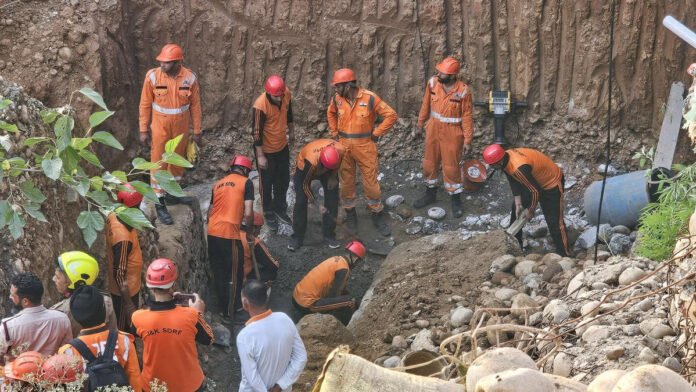
The collapse of an old bridge at Thathar in Jammu on May Day, claiming three lives, is not a tragedy in the conventional sense of the word. Tragedies are unforeseen. What unfolded at Thathar was a disaster written in advance, authored by institutional negligence, bureaucratic indifference, and what can only be described as a criminal disregard for human life. The facts speak with damning clarity. The bridge’s retaining walls had developed visible cracks as far back as the flash floods of August-September last year. Despite this, vehicular traffic continued to move across the structure unimpeded – even as labourers worked beneath and around it. This is not an oversight. This is a fundamental, inexcusable violation of the most basic safety protocols that govern construction and repair work on public infrastructure. That the Roads and Buildings Department permitted such a situation to persist for months stretches credulity and demands the sternest accountability.
Compounding matters are the deeply troubling allegations emerging from locals and corroborated by videos circulating on social media, suggesting that the original construction of the bridge was itself substandard – base and retaining walls apparently laid without iron reinforcement bars, a cornerstone of any sound civil engineering practice. If proven, this point is not merely about operational negligence but about possible corruption in the original construction – a thread that the inquiry committee must pull firmly and without fear.
The Government’s response – suspending two Junior Engineers and constituting a three-member inquiry panel – is procedurally correct but substantively inadequate. Suspension under Rule 331 is, in practice, a paid holiday: suspended officers draw 75 per cent of their salary whilst remaining attached to their respective offices. Exemplary action – including criminal liability where warranted – must follow the inquiry’s findings. The committee report should be conclusive. The families of the deceased and missing labourers – migrants from Odisha and Chhattisgarh, far from home when death came for them – deserve swift and generous compensation beyond routine insurance payments. They came seeking a livelihood, not a grave.
Going forward, the Government must mandate and strictly enforce SOPs requiring the immediate closure of any structure under repair to all traffic, with no exceptions. Inspections must be regular, documented, and independent. Jammu has mourned these men on Labour Day, of all days. The least their deaths must yield is lasting, systemic change – not a 15-day report followed by silence.
Thathar Bridge Tragedy
Kolkata Knight Riders beat Sunrisers Hyderabad by seven wickets
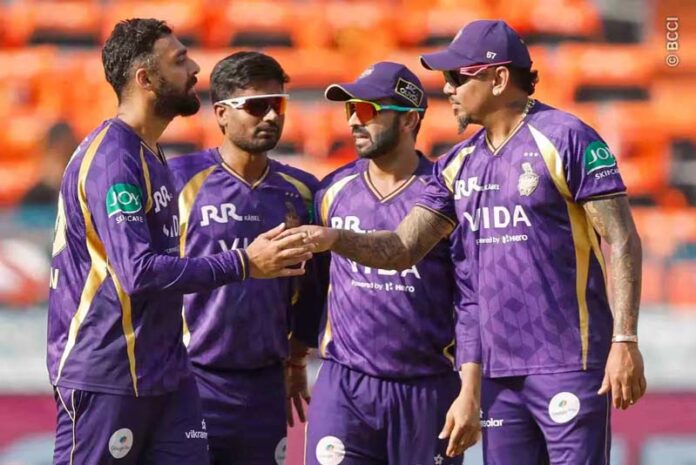
HYDERABAD, May 3: A resurgent Varun Chakravarthy and milestone man Sunil Narine were instrumental in Kolkata Knight Riders’ comprehensive seven-wicket victory that snapped Sunriser Hyderabad’s five-match winning streak in the Indian Premier League today.
After Chakravarthy (3/36) and Narine (2/31) played major roles in bowling out SRH for 165 in 19 overs, KKR chased down the target with 10 balls to spare to notch their third win on the trot.
This was leg-spinner Chakravarthy’s fourth successive match in which he took at least two wickets while veteran off-spinner Narine joined an exclusive three-member 200-wicket club in the IPL.
Playing his 197th match, Narine, who also opened KKR’s bowling, joined pacer Bhuvneshwar Kumar (215 from 199 matches) and spinner Yuzvendra Chahal (228 from 182 matches) in the elite group.
Chasing a small target, KKR lost Impact Sub Finn Allen in the fourth over for a quick-fire 39 off 13 balls when the team score was 49 but captain Ajinkya Rahane (43 off 36 balls) and Angkrish Raghuvanshi (59 off 47 balls) held the innings together with a second wicket stand of 84 runs from 11 overs.
Rahane, who scored just one half century in previous eighth matches at the top of the order, hit four boundaries and a six, while Raghuvanshi struck five boundaries and two sixes.
Rinku Singh struck the winning runs — a four — as he remained not out on 22 off 11 balls.
Earlier, opting to bat, SRH were in their usual menacing batting form, reaching 77 for 1 after powerplay and 107 for 2 at the halfway mark, courtesy Travis Head’s (61 off 28 balls) second consecutive half century.
But they collapsed spectacularly in the second half of their innings, losing nine wickets in 10 overs for the addition of 60 runs.
This was the first time SRH were bowled out in the IPL 2026.
Kartik Tyagi chipped in with 2/30.
Head’s innings was laced with nine fours and three sixes, and he was well supported by Ishan Kishan (42 off 29 balls). This was the third successive match SRH had scored more than 100 runs inside first 10 overs.
The explosive Australian batter stitched 44 runs in just 3.4 overs with Abhishek Sharma (15 off 10 balls) for the opening wicket and then had an alliance of 61 runs with Kishan for the second wicket.
Head was at his destructive best in the second over bowled by Vaibhav Arora, hitting four boundaries. Head did not let Narine off also, hitting a six and four in the third over. He also punished his Australian team-mate Cameron Green with three fours in the fifth over of the innings.
But once Head was out in the final ball of the ninth over, off the bowling of Chakravarthy, SRH’s batting fell apart.
Dangerous Heinrich Klaasen (11) was dismissed, courtesy a spectacular fielding effort from Rovman Powell off the bowling of Green. The West Indian moved to his right at deep midwicket and then leapt to pluck the ball out of thin air with his right hand.
In the process, he struck his head on the ground. This was Klaasen’s lowest score of the season.
Chakravarthy got rid of Ravichandran Smaran and Aniket Verma in his back-to-back overs before Narine removed well-set Kishan in the 16th over for his 200th wicket.
BRIEF SCORES:
Sunrisers Hyderabad: 165 all out in 19 overs (Travis Head 61, Ishan Kishan 42; Varun Chakravarthy 3/36, Sunil Narine 2/31).
Kolkata Knight Riders: 169/3 in 18.2 overs (Angkrish Raghuvanshi 59, Ajinkya Rahane 43).
(PTI)
Drug Addiction and the Role of Education in Jammu
& Kashmir
Divya Sharma
Biotech.divyakhajuria@gmail.com
In valleys known for peace and grace,
A silent struggle finds its place.
Where beauty blooms in every view,
A hidden crisis quietly grew.
Jammu and Kashmir, widely admired as a paradise on earth, is today facing a difficult and deeply concerning reality—the growing problem of drug addiction, especially among its youth. Beneath its scenic beauty, a silent crisis is unfolding, one that threatens the strength and future of an entire generation.
Recent figures underline the seriousness of the issue. Government records show that over 32,000 cases of drug abuse have been reported in Jammu and Kashmir since 2022, with many individuals seeking help through de-addiction facilities. Even more worrying are estimates suggesting that around 13.5 lakh people in the region are affected by substance use, including more than 1.6 lakh children between the ages of 10 and 17. These numbers clearly reflect a growing public health and social concern that cannot be ignored.
Youth at the Heart of the Crisis
One of the most troubling aspects of this issue is its increasing impact on young people. Evidence from districts such as Kathua indicates that more than half of users begin substance use between 16 and 20 years of age, with some cases starting as early as early adolescence. Among the substances being abused, heroin has emerged as one of the most commonly used drugs.
The causes behind this trend are layered and interconnected. Factors like unemployment, emotional stress, social pressures, and exposure to drug networks play a major role. In a region that has experienced long-standing socio-political challenges, many young individuals turn to drugs as a way to cope with anxiety and uncertainty. However, what begins as a temporary relief often leads to long-term dependence.
Education: A Crucial Line of Defense
At this point, the role of education becomes not just relevant, but essential.
Education is not limited to academic learning; it also shapes attitudes, decision-making, and emotional strength. However, there is still a noticeable gap in addressing issues like drug awareness, mental health, and life skills within the current educational framework.
Schools and colleges in Jammu and Kashmir need to take on a more active and preventive role. By incorporating:
• life skills education
• access to counselling services
• peer awareness initiatives
• value-based learning
institutions can help students build resilience and make informed choices.
Research and practical observations indicate that early intervention through education can significantly delay or even prevent the onset of drug use. When young individuals are equipped with coping mechanisms and emotional awareness, they are better prepared to resist harmful influences.
From Awareness to Real Action
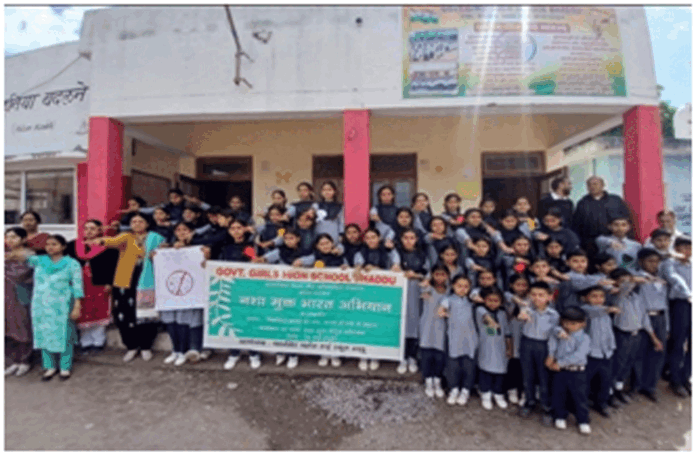
Government efforts to address substance abuse have also intensified in recent years. Initiatives such as the Nasha Mukt Bharat Abhiyaan and the National Action Plan for Drug Demand Reduction (NAPDDR) aim to strengthen prevention, treatment, and rehabilitation services across the country. A multi-pronged strategy has been adopted, leading to the expansion of treatment facilities and the establishment of hundreds of Integrated Rehabilitation Centres for Addicts (IRCAs), Addiction Treatment Facilities (ATFs), and District De-addiction Centres (DDACs). In addition, awareness campaigns are being actively conducted in educational institutions and communities, along with the provision of toll-free helpline services to support those in need.
However, despite these efforts, the effectiveness of such initiatives largely depends on their proper implementation and accessibility at the local level, particularly in vulnerable regions like Jammu and Kashmir.
To address this effectively, educational institutions must work in close coordination with:
• healthcare systems
• community organizations
• families
to build a strong and supportive environment for young people.
The Way Forward
A long-term solution to this crisis lies in adopting an education-driven preventive approach. This would involve:
• integrating drug awareness into the curriculum
• training teachers to identify and support at-risk students
• creating safe and open spaces within schools
• ensuring that awareness programs are regular and continuous
Such efforts position education as a powerful tool for social change and community well-being.
Conclusion
Drug addiction in Jammu and Kashmir is far more than a medical issue—it is a serious social and educational challenge that directly impacts the region’s future. If not addressed in time, it risks undermining the potential of an entire generation.
“If we protect our youth today, we protect the future of tomorrow.”
The urgency to act is clear—and education must be at the center of this transformation.
Udhampur among India’s 3 top performing districts in PMGSY implementation: Dr Jitendra
‘Rail, other projects of connectivity will turn game changer for region’
Avtar Bhat
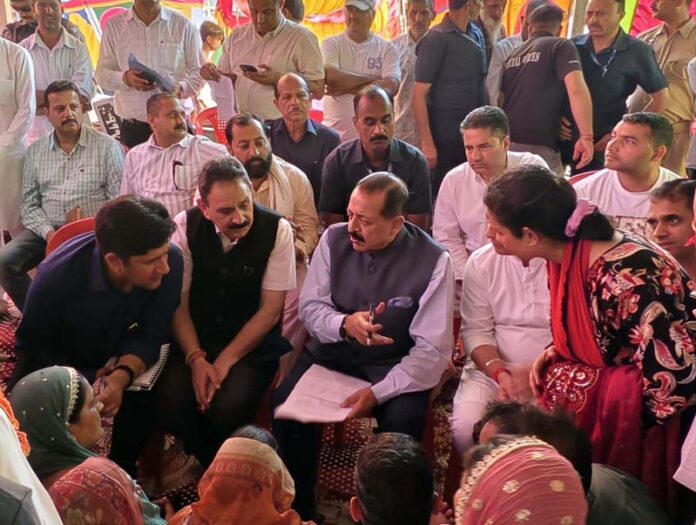
UDHAMPUR, May 3: Union Minister in PMO with Independent charge of Ministries of Science & Technology and Earth Sciences, Dr Jitendra Singh today said that Narendra Modi Government is committed to development of remote and hitherto neglected and far flung areas of J&K.
Talking to reporters here today on the sidelines of a public darbar, Dr Jitendra Singh said it was due to this commitment of Modi Government that Udhampur continued to be among India’s three top performing districts in PMGSY implementation in the entire country.
He said soon after the Modi Government came to power in 2014, main focus was laid to development of remote and backward areas in the country and Kathua, Udhampur –Doda constituency which is spread over a huge hilly area received top attention from the Government for development.
Follow the Daily Excelsior channel on WhatsApp
Dr Jitendra Singh said connectivity wise Udhampur got top priority and very soon the airport which was a long pending demand of the people of the district will become functional.
The Union Minister said besides, the Expressway Corridor linking Katra township with Delhi via Amritsar will also become functional within next six months and this will prove a game changer for entire region. With the construction of Expressway Corridor Udhampur, people will get facility of road travel to Delhi in six hours.
Likewise with Vande Bharat stop at Udhampur, the travel time to Srinagar will be reduced to three to four hours only and people in coming days will have multiple options to travel to Delhi and Srinagar.
Dr Jitendra Singh also reviewed the arrangements for upcoming holy Amarnath Ji Yatra with DIG Udhampur and Reasi and he was informed by the authorities that all arrangements are in place for the annual pilgrimage starting on July 3 this year.
He also announced Yatri transit camp from MP LAD Fund for Narsinghdev temple to provide better amenities to devotees and pilgrims.
Earlier continuing his public outreach in his Parliamentary constituency, the Union Minister held a Public Durbar at Barmeen village under Chenani Assembly segment here, during which he personally interacted with local residents and public delegations to address their concerns.
The Minister was accompanied by senior officers representing different Government departments as well as public representatives. Several issues were resolved on the spot.
This initiative is part of a series of Public Durbars regularly organized by the Minister across the Udhampur-Kathua-Doda Lok Sabha constituency, with events held not only at the district level but also at the block and Panchayat levels.
During today’s programme, Dr. Jitendra Singh engaged with several delegations from Barmeen and surrounding areas. The Minister listened to their grievances, and ensured that many issues were resolved on the spot.
Dr Jitendra Singh expressed gratitude to Prime Minister, Narendra Modi for giving the highest priority to the Udhampur–Kathua–Doda Parliamentary constituency under the Pradhan Mantri Gram Sadak Yojana (PMGSY). He informed that out of the total allocation of 3,566 crore rupees for PMGSY road projects in the Union Territory of Jammu & Kashmir, 1,524 crore rupees have been earmarked for the Udhampur–Kathua–Doda constituency alone. This accounts for approximately 43 per cent of the total allocation, reflecting the Government’s continued focus on strengthening rural road connectivity in the region. He further noted that this trend has been consistently maintained over the past decade, underscoring sustained developmental efforts in the constituency.
Dr. Jitendra Singh emphasized the importance of authorities maintaining a direct contact with the people so that their issues are addressed in a timely manner. The Minister assured the residents that their concerns would be taken up with the relevant authorities and resolved in an expeditious manner.
Dr. Jitendra Singh reiterated his commitment to continue holding such Public Durbars, ensuring that the voices of even the most remote areas of his constituency are heard and acted upon promptly. He also encouraged local residents to continue participating in such forums, which he described as crucial to fostering transparent and responsive governance.
Earlier, addressing a gathering during Maha Satsang organised in the courtyard of historic Narsingh Mandir, Dr Jitendra Singh outlined key developmental initiatives for the area, with a focus on education, infrastructure, and preservation of heritage sites.
On the public demand for establishment of a Kendriya Vidyalaya in Ghordi, Dr. Singh stated that the district administration has been tasked with identifying a suitable site. He added that a formal proposal will be submitted to the Ministry of Education for approval once the site is finalized.
On the issue of road connectivity, Dr. Jitendra Singh informed that work is already underway to improve the road infrastructure in the region, which will enhance accessibility and facilitate local development.
Dr. Jitendra Singh emphasized the importance of authorities maintaining a direct contact with the people.
Among the public representatives, MLA Sunil Bhardwaj, district president, Arun Gupta, Rajinder Sharma, Neha Mahajan, Arti Sharma, Sarpanches and others were present.
Hardik, Suryakumar in focus as Mumbai Indians take on Lucknow Super Giants in IPL
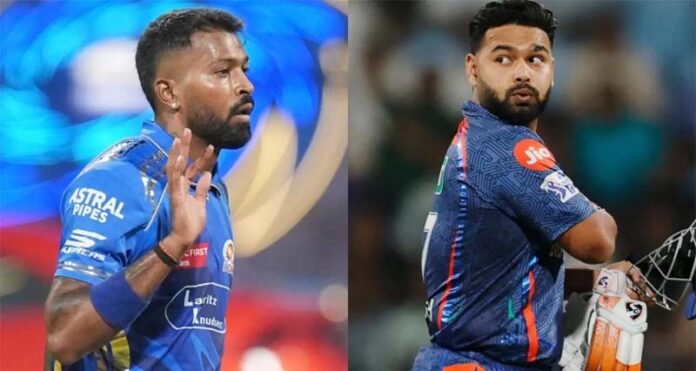
MUMBAI, May 3: Struggling former champions Mumbai Indians will hope their embattled stars Hardik Pandya and Suryakumar Yadav come good in a clash against bottom-ranked Lucknow Super Giants even though the chances of qualifying for the play-offs in this edition of IPL has evaporated for good.
Pandya (146 runs and 4 wickets) and Suryakumar (186) have had forgettable campaigns so far, which has hampered MI’s journey, more so in the absence of former skipper Rohit Sharma, who remains on a comeback trail after a hamstring injury earlier this season.
Only two wins in nine matches have consigned the five-time IPL winners Mumbai Indians to the penultimate spot in the points table.
While their hopes to remain in contention for the IPL playoffs are all but over, there still remains an outside chance of qualification.
But before all that, MI will have to have their Indian stars doing the heavy lifting, which has not been the case so far.
Pandya’s leadership has come into focus as MI have endured a tough campaign. Tactically he has been way off the mark.
The batters have collectively misfired, and so have their bowlers, but in between have been Pandya’s ordinary performances both with the bat and the ball, combined with certain calls on the field which did not yield desired results.
With the ball, Pandya has been on and off in terms of execution, but his batting leaves a lot to be desired, especially when he carries a lot of responsibility in that heavily depleted lower order from the past.
Suryakumar has not been able to convert starts while being caught off his trademark strokes, which has indeed been a growing concern as he no longer dominates bowling like he used to.
The Indian T20I captain, who had started the year 2026 with a string of high scores after a forgettable 2025, is once again going through a lean phase where he has neither looked completely out of form nor has he had a long stay in the middle to produce a knock of composure.
Suryakumar’s struggles against pace bowling have particularly come into focus with the right-hander averaging a little above 10 during this phase against the quicks.
The five-time IPL champions Mumbai Indians and LSG have eerily had a similar run in this edition, grappling with the issue of collective batting failures which has heavily marred their chances of making it to the final four.
LSG skipper Rishabh Pant desperately appealed for a break for his side, which has lost five matches on the trot to slip to the bottom of the points table.
LSG began with a loss in the first match but bounced back with two consecutive wins. But their fortunes plummeted from the point they were expected to take off, as ordinary batting could not be masked by some strong showing by their bowlers collectively.
Even in their last game, Mohsin Khan’s 5/23 for the best bowling figures in the tournament were undone by LSG’s erroneous call to send a struggling Nicholas Pooran in the Super Over.
Skipper Rishabh Pant finds himself at a crossroads with questions being posed on his white-ball game in general.
The maverick Indian wicketkeeper-batter too will face the challenge of turning it around for his side as LSG head into a busy week of having three crucial games in a span of seven days.
Teams
Mumbai Indians: Hardik Pandya (c), Ryan Rickelton (wk), Quinton de Kock (wk), Danish Malewar, Robin Minz (wk), Rohit Sharma, Sherfane Rutherford, Suryakumar Yadav, Tilak Varma, Raj Bawa, Corbin Bosch, Will Jacks, Mayank Rawat, Naman Dhir, Shardul Thakur, Ashwani Kumar, Trent Boult, Jasprit Bumrah, Deepak Chahar, AM Ghazanfar, Krish Bhagat, Keshav Maharaj, Mayank Markande, Mohd Izhar, Raghu Sharma.
Lucknow Super Giants: Rishabh Pant (c&wk), Abdul Samad, Akshat Raghuvanshi, Ayush Badoni, Mukul Choudhary, Himmat Singh, Josh Inglis (wk), Aiden Markram, Nicholas Pooran (wk), Arshin Kulkarni, George Linde, Mitchell Marsh, Shahbaz Ahmed, Akash Singh, Avesh Khan, Mohammed Shami, Mohsin Khan, Anrich Nortje, Prince Yadav, Digvesh Rathi, Manimaran Siddharth, Arjun Tendulkar, Naman Tiwari, Mayank Yadav.
Match starts at 7:30pm IST. (PTI)
30,000 Govt jobs filled through backdoor means: Mehbooba
‘Each ruling MLA allotted quota’
Suhail Bhat
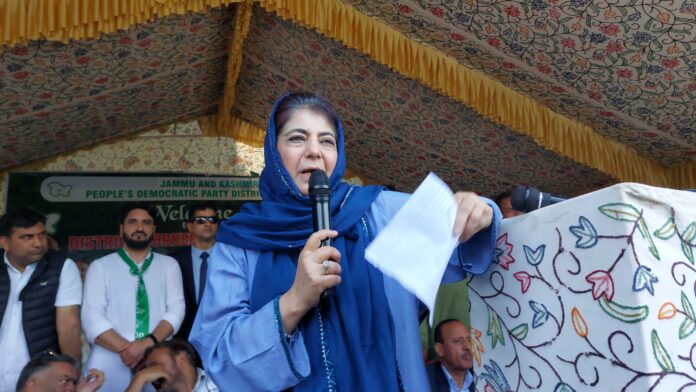
SRINAGAR May 3: Peoples Democratic Party (PDP) president Mehbooba Mufti today accused the ruling National Conference (NC) of large-scale “backdoor appointments” in Jammu and Kashmir, alleging corruption and favoritism in Government recruitment.
Addressing party workers during an outreach visit in Ganderbal district, Mufti said that nearly 30,000 Government jobs had been filled through backdoor means.
Click here to watch video
“They do not give jobs through a proper system. These are backdoor appointments. Around 30,000 people have been employed this way, and this is being done in the name of privatization,” she alleged.
Follow the Daily Excelsior channel on WhatsApp
According to Mufti, each MLA under the ruling dispensation is allotted a quota of 30 to 40 jobs. “Money changes hands in these appointments. Relatives and close associates are given jobs, while common people are ignored,” she said, adding that such practices have deepened public distress.
“People are once again being forced to sell their jewellery to get jobs. This has become a pattern under the National Conference,” she alleged.
The PDP Chief also raised concerns over the closure of prominent educational institutions, particularly those providing a mix of religious and modern education. She cited the recent shutdown of Siraj-ul-Uloom, describing it as an institution that produced doctors and engineers while offering quality education to destitute children alongside religious instruction. “How was such an institution shut down? The Government is sitting as a silent spectator,” she said.
Mufti further alleged a pattern, pointing to earlier action against Madinat-ul-Uloom in the Dargah area. “Institutions where Muslims receive both religious and worldly education are being systematically targeted,” Mufti claimed.
She accused the BJP-led Centre and the local Government of pursuing an “agenda” to weaken Muslim institutions, erode cultural identity, and sideline the Urdu language in Jammu and Kashmir. “They are trying to destroy our culture and separate us from our religion,” she said.
Mufti referred to the situation around the river Sindh, where she said local livelihoods have been affected. “Earlier, poor people earned their living there. Now big machines have come in and taken away their work, leaving many unemployed,” she alleged.
On the issue of Urdu, the PDP Chief responded to remarks by Chief Minister Omar Abdullah, who has denied any move to undermine the language. She cited a 2009 order that made knowledge of Urdu mandatory for recruitment in the Revenue Department, and contrasted it with a 2026 order, which she claimed made graduation the primary requirement.
“There may not be a direct order against Urdu, but effectively its importance is being reduced. If Omar Abdullah denies this, what can I do?” she asked.
Mohsin Ali selected for Canoe Marathon World Cup
Excelsior Sports Correspondent
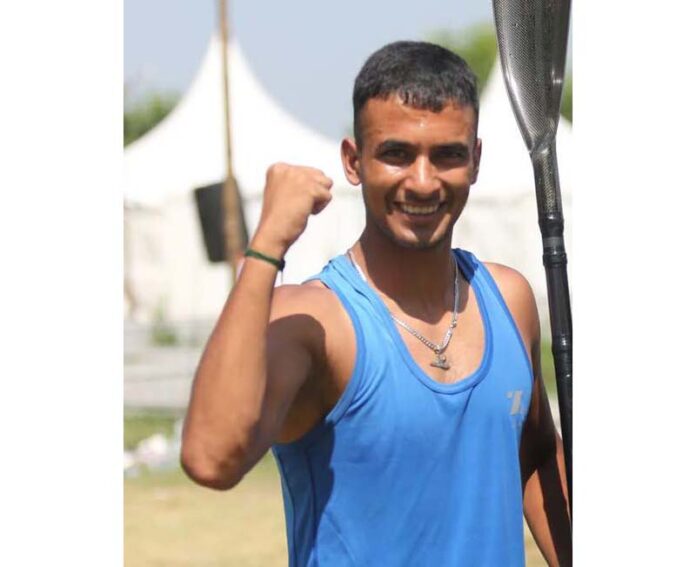
SRINAGAR, May 3: Young paddler Mohsin Ali has been selected to represent India at the ICF Canoe Marathon World Cup, scheduled to be held from May 21 to 24 in Bazhong, China, turning a dream that began in 2015 into reality.
As per official communication, the Indian Kayaking and Canoeing Association (IKCA) has finalized the squad for the prestigious event, with Mohsin securing a place after consistent performances at the national level.
His coach, Bilquis Mir, expressed immense pride, calling it one of the most memorable moments of her career. She said the achievement reflects years of dedication, hard work, and perseverance. Describing the journey from Dal Lake to the international stage, she termed it a proud moment for the entire Kashmir region and an inspiration for aspiring athletes to dream big and stay determined.
Mohsin, a national medalist, has delivered impressive performances in recent years. He has won medals in the National Games, Uttarakhand Nationals and the President’s Cup in 2025, besides clinching gold at the Khelo India Water Games, establishing himself as a promising talent.
SKCC beats Dogra Veterans by 8 runs
Excelsior Sports Correspondent
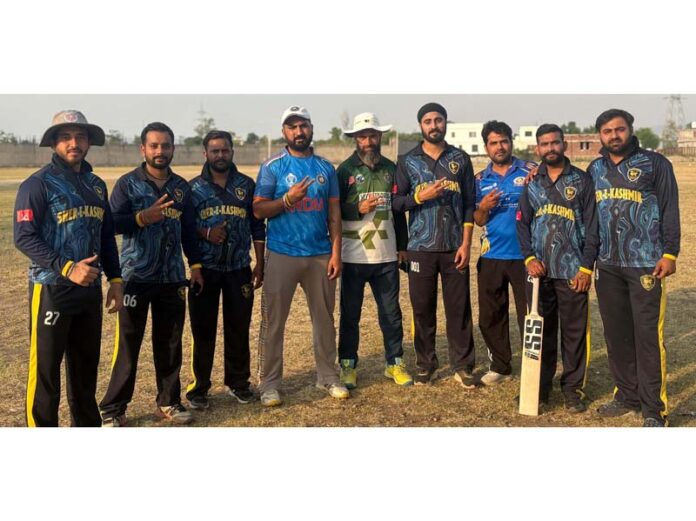
JAMMU, May 3: In a thrilling T20 encounter at Kirpalpur Ground, Sher-e-Kashmir Cricket Club (SKCC), led by Surpreet Singh, edged past Dogra Veteran Cricket Club by 8 runs in a high-scoring match that also carried a strong anti-drug message for youth.
Batting first, SKCC posted a strong total of 199/8 in 20 overs. Openers Vardhan Padha and Ashu Kumar provided a solid foundation with a valuable 50-plus partnership. Mansoor Ali anchored the innings with a fluent 45 off 26 balls, while Akshit Sharma played a blistering knock of 39 off just 17 deliveries. Jimmy added further momentum with a quick 30 off 13 balls, helping SKCC reach a commanding total.
In reply, Dogra Veterans fought hard, led by Sanjay Sharma, who struck a magnificent 90 off 56 balls, hitting 12 boundaries and three sixes. He was well supported by Vikas Virdi, who scored 31 off 19 balls, keeping the chase alive till the end.
However, SKCC bowlers held their nerve under pressure. Jimmy starred with the ball, claiming 4 wickets for 22 runs, while Akshit Sharma picked up two crucial wickets. Despite a strong effort, Dogra Veterans were restricted to 191/9, falling short by 8 runs in a closely contested finish.
2 NCB officials suspended over Jammu BSF cop’s custodial death

NEW DELHI, May 3: An investigation officer and an assistant director working under the Narcotics Control Bureau (NCB) have been suspended following the death of a BSF constable in custody on the night of March 19-20, sources said today.
According to sources, the “unfortunate incident” involved BSF Constable Jaswinder Singh, a resident of Chakroi R S Pura who died of cardiac arrest after experiencing two cardiac episodes while receiving treatment at Pulse Hospital, where he was admitted.
Follow the Daily Excelsior channel on WhatsApp
Singh was arrested in Jammu by the NCB and was being transported to Amritsar, Punjab, in connection with an investigation linked to a case registered in Amritsar. A Special NDPS Judge in Jammu had remanded him to custody, highlighting his connection to Punjab in the remand application.
The NCB’s investigation indicated that Singh was allegedly in contact with two virtual numbers associated with operatives from Pakistan, sources said, adding that a relative of Singh, also a BSF constable, has been arrested in two NCB cases and four cases with the Punjab Police concerning narcotics.
While being transported from Jammu, Singh began to experience severe chest pain. After taking some water, his condition temporarily improved. The NCB team arrived in Amritsar on March 19 at around 9.30 pm. At approximately 9.45 pm, however, Singh again experienced chest pain and was admitted to Pulse Hospital at about 10 pm. Despite medical efforts, he suffered two cardiac arrests and ultimately passed away at 4 am on March 20 due to cardiac arrest, sources noted.
The National Human Rights Commission (NHRC) guidelines regarding custodial deaths are being followed. A post-mortem examination was conducted by a team of three doctors, and a magisterial inquest, along with an inquiry, is currently underway.
State police will advance with legal proceedings against those responsible based on the post-mortem report, the inquest findings, and the outcome of the magisterial inquiry, sources informed.
This matter has been reported to the NHRC, which has requested a report and intends to take action based on the findings. The Jammu Police have registered a zero FIR in the case.
According to sources, the family has shared the incident on social media, demanding action against the NCB officials involved.
The case is also being tried in the Punjab and Haryana High Court.
“The investigation officer and the assistant director concerned have been suspended,” a source stated.
Singh was allegedly picked up for questioning by the NCB on March 3.
Singh’s mother, Gurmeet Kaur, who resides in Jammu, informed reporters that her son had returned home on leave before being taken by the Jammu unit of the NCB on March 3. She noted that the family was informed on March 20 about his deteriorating health, but was not told the reasons for his detention.
“We want justice in the matter,” she had said. (PTI)
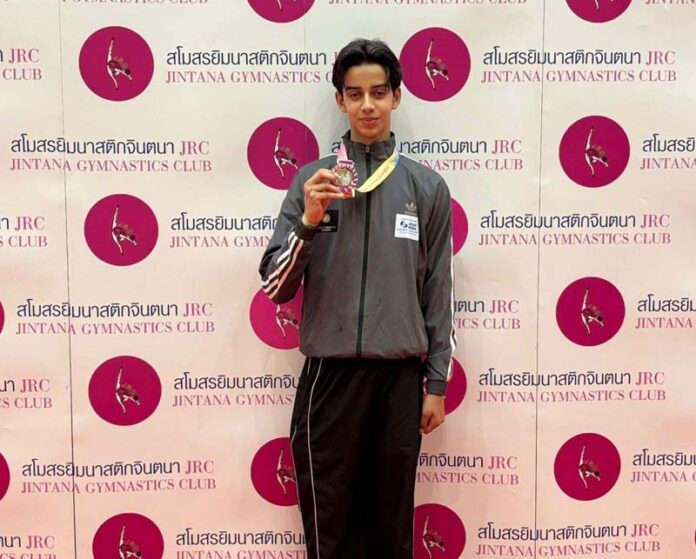
J&K Gymnast Ruddrakash shines with silver medal in Thailand
Excelsior Sports Correspondent
JAMMU, May 3: Ruddrakash Khanna of Jammu Gymnastics Club has brought laurels to the country by winning a silver medal at the 1st JRC Aerobic Gymnastics Stars Championship held in Thailand.
Sponsored by the Indian Renewable Energy Development Agency (IREDA), Ruddrakash delivered an impressive performance to secure a podium finish, making it a significant milestone in his international career.
He trains under Arjuna Awardee Krupali Patel Singh and former international coach S P Singh, whose guidance has played a key role in his development.
Ruddrakash has previously represented India in two Asian Aerobic Gymnastics Championships and two World Cups, finishing fourth on both occasions. He is also a national gold medallist, further establishing his credentials as a promising gymnast.
This silver medal marks his first international podium finish and is being seen as a breakthrough achievement. His success has not only enhanced his personal standing but has also brought recognition to his coaches, club, and Jammu region on the international gymnastics stage.