New Delhi, May 4: A study has suggested a mechanism by which performing a physical behaviour can trigger a movement of the cerebrospinal fluid — a clear liquid that circulates in the brain — which may then carry away waste that can interfere with normal brain function.
Functions of the cerebrospinal fluid include removing waste, cushioning the central nervous system from shocks, and delivering nutrients. The colourless fluid is part of the glymphatic system.
“Our research explains how just moving around might serve as an important physiological mechanism promoting brain health,” said author Patrick Drew, a professor of engineering science and mechanics, neurosurgery, biology, and biomedical engineering at The Pennsylvania State University in the US, said.
Drew added, “In this study (in mice), we found that when the abdominal muscles contract, they push blood from the abdomen into the spinal cord, just like in a hydraulic system, applying pressure to the brain and making it move.”
“Simulations show that this gentle brain movement will drive fluid flow in and around the brain. It is thought the movement of fluid in the brain is important for removing waste and preventing neurodegenerative disorders. Our research shows that a little bit of motion is good, and it could be another reason why exercise is good for our brain health,” the corresponding author of the study published in the journal Nature Neuroscience said.
The researchers said even small actions, such as bracing your core before standing up or taking a step, can create the ‘pumping’ effect.
An October 2025 research, published in the journal Alzheimer’s and Dementia: The Journal of the Alzheimer’s Association, suggested that problems with the brain’s waste clearance due to an impaired movement of the cerebrospinal fluid could contribute towards developing dementia, a neurodegenerative disorder.
The team observed moving mice and found that the brain shifted just before the animals moved, immediately after the abdominal muscles tightened to initiate motion.
Further, they applied a gentle, controlled pressure to the abdomens of lightly anaesthetised mice.
The level of pressure was lower than what a person experiences during a blood pressure test, yet it still caused the brain to move, the researchers said.
“Importantly, the brain began moving back to its baseline position immediately upon relief of the abdominal pressure. This suggests that abdominal pressure can rapidly and significantly alter the position of the brain within the skull,” Drew said.
To understand how the brain’s movement influences the flow of the cerebrospinal fluid, the team created computer simulations of fluid motion. They also developed imaging techniques for conducting experiments with live mice.
The researchers treated the brain like a sponge and simulated how fluid travels through spaces of different sizes, similar to the folds of the brain or the pores of a sponge.
“Keeping with the idea of the brain as a sponge, we also thought of it as a dirty sponge — how do you clean a dirty sponge?” Francesco Costanzo, professor of engineering science and mechanics at The Pennsylvania State University, said.
“You run it under a tap and squeeze it out. In our simulations, we were able to get a sense of how the brain moving from an abdominal contraction can help induce fluid flow over the brain to help clear waste products,” Costanzo said.
Drew noted that more research is needed to determine how the study’s findings apply to humans.
However, the results suggest that everyday movement may help circulate cerebrospinal fluid through the brain, aiding in the removal of waste and possibly lowering the risk of neurodegenerative diseases linked to waste buildup, Drew said. (PTI)
Study suggests mechanism by which physical movement could be linked with brain’s cleansing process
LG Inaugurates All India Inter-University Wushu Championship At University Of Kashmir
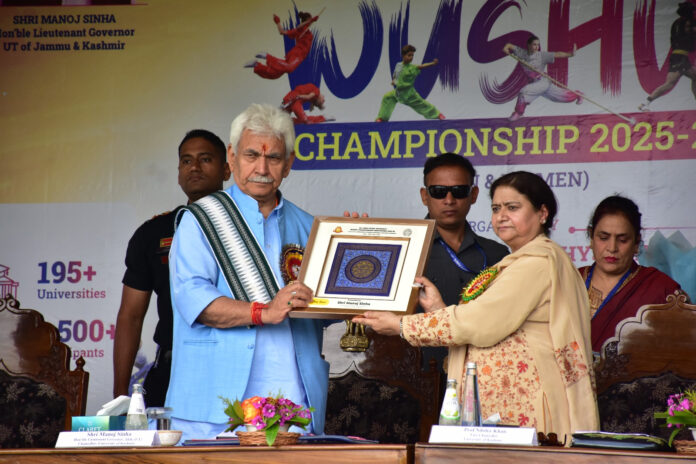
SRINAGAR, May 4: Lieutenant Governor Manoj Sinha on Monday called upon the Athletes to act as the Ambassadors of Nasha Mukt Jammu Kashmir Abhiyaan and inspire the youth to shun drugs and embrace sports.
The Lieutenant Governor was speaking at the inaugural ceremony of All India Inter-University Wushu Championship at University of Kashmir.
In his address, the Lieutenant Governor reiterated that the Administration is committed to building a robust sporting culture across Higher Educational Institutions, ensuring equal opportunities for every student to lead an active and healthy lifestyle.
The Lieutenant Governor said that the All-India Inter-University Wushu Championship is more than a sporting contest; it is a vibrant celebration of Ek Bharat Shreshth Bharat and serves as a powerful platform to promote unity in diversity, discipline, excellence, and national integration.
“This championship carries with it a responsibility to uphold and renew the essential spirit of sport that transcends competition and connects us to our highest aspirations as human beings. Let the Inter-University Wushu Championship at Kashmir University be remembered not only for the brilliance of the contests but for the bonds of friendship it forged, the barriers it broke, and the sense of one united, determined, compassionate Indian family it renewed. May every athlete continue to light the path forward for generations to come,” the Lieutenant Governor said.
The Lieutenant Governor highlighted that the rigorous discipline of Wushu reflects the resilience of our youth. He stated that the championship serves as a platform for cultural exchange, where rivals become friends and mentors shape the future “heartbeat of India.”
The Lieutenant Governor encouraged each athlete to create a short video on their mobile phones and share it on social media to spread awareness against substance abuse and inspire others to adopt sports and creative activities for a positive lifestyle.
“You are the role models for India’s new generation. Your appeal will inspire the youth to walk on the right path,” he added
The championship has drawn an impressive participation of more than 150 Universities and over 1000 athletes, bringing together top Wushu talent from across the country. The event showcases both men’s and women’s competitions, reflecting the growing popularity and inclusivity of the sport at the University level.
The championship, being conducted under the aegis of the Association of Indian Universities will continue for 6 days, featuring multiple bouts and categories in Wushu, a martial art that combines agility, strength and precision.
Prof. Nilofer Khan, Vice Chancellor Kashmir University, Dr. Shahid Iqbal Choudhary, Commissioner Secretary Youth Services & Sports, Ram Niwas Sharma, Commissioner Secretary Higher Education, Akshay Labroo, Deputy Commissioner Srinagar, Prof. Naseer Iqbal, Registrar Kashmir University along with senior University Officials, prominent sports personalities, coaches and sports enthusiasts attended the inaugural event organized by the Directorate of Physical Education & Sports, University of Kashmir.
Air India SATS inks pact to fast-track Samsung Data Systems shipments from Noida airport

Pakistan clears donkey meat exports after Chinese firm warning
US-led task force tells ships to reroute on first day of new effort to reopen Strait of Hormuz

Pak foreign minister discusses regional situation with Iranian counterpart

Indian submarine Sindhukesari arrives in Sri Lanka

Spike Lee praises ‘Michael’; defends against controversy over exclusion of child sex abuse claims

Shooting at lake near Oklahoma City sends at least 12 people to hospitals

New Mexico seeks child safety restrictions on Meta apps, algorithms in trial’s 2nd phase