

New Delhi, Jan 3: With 2020 finally over, several leading automakers are now looking to carry on with their plans in 2021 even as several challenges like supply chain issues still continue to impact the market.
While Kia Motors is looking to ramp up production, Toyota is all set to bring in new products and Hyundai aims to carry over its strategy of bringing in industry first innovations to the market.
“As we move into the next year, we will look at operating three shifts at our manufacturing plant to meet the increasing consumer demand for Kia cars, and strengthen our ‘phygital’ model with our network to offer a seamless, safer and matchless customer experience in the post-COVID-19 digitised world,” Kia Motors MD and CEO Kookhyun Shim told PTI.
The company’s manufacturing facility in Anantapur district of Andhra Pradesh has an installed production capacity of around 3 lakh units per annum.
Shim noted that despite challenges, the company successfully made a foray into two new segments in 2020 and is currently the number four automobile player within just 16 months of its first product launch in the country. “We looked at COVID-19 challenges as a slew of opportunities to embrace the new normal by acknowledging the need for safe personal mobility which can be addressed by the power of technology,” he added.
The success of Kia’s third product – Sonet, with many industry-first innovations – reiterates the importance of advanced technology to solve urban mobility issues in context to the recent times, which will continue to be one of the biggest trends even in 2021, Shim said.
Similarly, Toyota Kirloskar Motor Senior Vice President (Sales and Service) Naveen Soni said that in order to cater to the enhanced demand in 2021, the company plans to expand its product line-up in a sustainable and phased manner to meet customer expectations.
“We would also like to focus on alternate mobility solutions such as electrified vehicles as a mid to long-term strategy,” he added.
Elaborating further, Soni said the company would expand its subscription and leasing service by taking it to more cities.
“Lastly, we also intend to increase our investments into our human development efforts, which is key to achieve the goals of creating an industry-ready talent pipeline, increased localisation and self-reliance,” he noted.
On Hyundai’s plans, MD and CEO SS Kim said: “With a deep-rooted commitment to the Indian market, we will continue with our plans and strengthen our leadership with technologically superior and industry first innovations that are most relevant for our customers.”.
Similarly, Tata Motors MD and CEO Guenter Butschek said the company’s orders for domestic passenger cars were at an all-time high with demand exceeding production and market share improving.
“We remain focused on delighting our customers and comprehensively addressing their evolving mobility needs by introducing relevant products that are high on safety, efficiency, quality and comfort,” he added.
Honda Cars India Senior Vice President and Director Marketing & Sales Rajesh Goel said the company’s volumes have gained steadily after the successful ramp-up of its operations.
“This pandemic has also brought with it opportunities for everyone to transform themselves. Enhanced focus on ever important aspects of health, safety and hygiene will have lasting benefits for everyone,” he noted.
Elaborating on the auto retail business, Federation of Automobile Dealers Associations (FADA) President Vinkesh Gulati said despite the current challenges, the auto industry is now at the cusp of entering exciting times as India will once again increase its momentum to achieve the third position globally in passenger vehicle segment.
He noted that the pandemic has taught the auto retail industry to make tough choices to ensure that dealerships survive.
“Decisions such as rightsizing, financial prudence and adapting to the new normal were difficult but have eventually resulted in robust business models and improved efficiency. We are a resilient industry and automobiles remain an aspirational purchase,” he noted. (PTI)
Automakers firm up growth plans for 2021 with cautious optimism

CAG writes to Finmin, seeks performance audit details of PSU banks recapitalisation

NEW DELHI, Jan 3: The Comptroller and Auditor General of India (CAG) has written to the finance ministry seeking details about the ongoing performance audit of government’s massive recapitalisation excercise of public sector banks (PSBs).
CAG is doing performance audit on recapitalisation of PSBs after 2016-17 and it has written a letter to the Department of Financial Services, Ministry of Finance, seeking various information, including rationale for distribution of capital among different PSBs, sources said.
The Government of India made capital infusion to the tune of Rs 90,000 crore in 2017-18. This rose to Rs 1.06 lakh crore in the following year. During the last financial year, the capital infusion through bonds was Rs 70,000 crore.
For the current fiscal, the government has earmarked Rs 20,000 crore for the capital infusion into the PSBs. Of this, the government allocated Rs 5,500 crore to Punjab & Sind Bank in November 2020 for meeting the regulatory requirement prescribed under the Basel III guidelines.
The audit may be going to analyse the impact of capital infusion in PSBs and how it has been able to improve the financial parameters such as Return on Assets (ROA), Return on Equity (ROE) and rate of growth of advances, sources said.
In its last report released in July 2017, CAG had pointed out some shortcomings in distribution of capital to various banks.
It had also raised doubts over possibility of PSU banks raising about Rs 1 lakh crore from market by 2019.
“The rationale for distribution of government of India capital among different PSBs was not found on record in all cases. Some banks which did not qualify for additional capital as per decided norms were infused with capital, a bank was infused with more capital than required, while others did not receive the requisite capital to meet their capital adequacy requirements,” CAG had said.
The Centre infused Rs 1,18,724 crore in PSBs during 2008-09 to 2016-17. CAG had said. Of this, SBI received the maximum capital infusion of Rs 26,948 crore, which is nearly 22.7 per cent of the total capital infusion.
IDBI Bank, Central Bank of India, Indian Overseas Bank and Bank of India were also significant beneficiaries with 8.77 per cent, 8.61 per cent, 7.88 per cent and 7.80 per cent of the total capital infusion, respectively. Punjab & Sind Bank and Indian Bank received the lowest capital infusion, at 0.20 per cent and 0.24 per cent of the total funds infused.
Central Bank of India and UCO Bank were given capital in eight out of nine years under audit scrutiny while Indian Bank received capital only once, in 2014-15. (PTI)
Veteran US broadcaster Larry King in hospital with COVID

Los Angeles, Jan 3: Legendary talk show host Larry King has tested positive for coronavirus and is being treated at a hospital here, according to US media reports on Sunday.
Sources close to the 87-year-old former CNN interviewer said he has been at the Cedars-Sinai Medical Centre for over a week.
Representatives for King have not publicly commented on his hospitalisation, and details of his current condition are unclear.
“Larry has fought so many health issues in the last few years and he is fighting this one hard too, he’s a champ,” a source told CNN.
News of King’s hospitalisation came as emergency officials in California said hospitals were treating an unprecedented number of COVID-19 patients.
King, who has Type 2 diabetes, has confronted a series of medical issues over the years, including several heart attacks and quintuple bypass surgery in 1987, CNN reported.
In 2017, King revealed he had been diagnosed with lung cancer and successfully underwent surgery. He also underwent a procedure in 2019 to address angina.
King hosted CNN’s “Larry King Live” for 25 years, interviewing presidential candidates, celebrities, athletes, movie stars and everyday people.
He retired in 2010 after taping more than 6,000 episodes of the show. But he could not stay off the airwaves for long.
In 2012, he became the host of “Larry King Now,” a thrice-weekly show on Ora TV, an on-demand digital network he co-founded with Mexican telecommunications mogul Carlos Slim, according to Forbes.
In a career spanning over 60 years, King has multiple accolades, including two Peabody Awards and an Emmy.
Two of his five children also died last year within weeks of each other – one from a heart attack, another from lung cancer.
In 1988 he founded the Larry King Cardiac Foundation, a charity which helps to fund heart treatment for those with limited financial means or no medical insurance.
In less than 11 months, COVID-19 has killed more than 349,000 people in the US.
A total of 125,379 people were hospitalised with COVID-19 on Thursday, more than any other day of the pandemic, according to the Covid Tracking Project.
The number of patients topped 125,000 on Friday as well, but dipped slightly on Saturday to 123,639. The US has now remained above 100,000 hospitalisations for 32 straight days. (PTI)
Promote Kishtwar saffron
Sir,
This has reference to the news item ‘Will make Kashmiri saffron a globally popular brand: Modi’ DE Dec 28,2020.
The Central Government deserves all appreciation for paying attention to Kashmiri saffron, by giving it world market through GI Tag. It will definitely give a new lease of life to saffron growers in Kashmir who had been witnessing declined business in this sector. So far so good. However, attention of the Government is also drawn to Kishtwar saffron which is also known for its quality but not doing much business as it has not received the same attention as does the Kashmir saffron. A good number of people are involved in Kishtwar saffron in Jammu region. The people here claim that if Kishtwar saffron is promoted on a large scale, it would definitely find a respectable place in world market.
The Governments both State and Central are therefore requested to make all efforts to promote this brand of saffron as well. If that is done, it will boost the economy of people living in this part of the Union Territory.
Sanjay Parihar
Kishtwar
New supply of office space down 30-35 pc in 2020 amid pandemic: Reports
New Delhi, Jan 3: Fresh supply of office space fell 30-35 per cent year-on-year in 2020 across major cities mainly on lower demand because of the COVID-19 pandemic, according to property consultants JLL and Savills.
While JLL India reported that new supply of office space across seven major cities declined 30 per cent to 36.34 million sq ft in 2020 from 51.62 million sq ft in the previous year, the UK-based Savills said fresh supply dropped to 30.6 million sq ft from 47.1 million sq ft across six big cities.
New office space supply was less impacted than the demand, which fell by around 45-50 per cent with corporates deferring their expansion plan and adopting work-from-home policy for employees. The supply was also hit due to the nationwide lockdown that brought all construction activities to a standstill during April-May.
As a result, JLL said the vacancy level of office space increased to 14 per cent in December from 12.8 per cent in March 2020. As per Savills data, the overall vacancy level marginally increased to 11.7 per cent in 2020 as new supply exceeded the pace of leasing.
“Occupiers continue to review their real estate portfolios and are adopting consolidation and optimisation strategies through the year. The relatively subdued net absorption levels could not keep pace with new completions. This resulted in overall vacancy increasing from 13.5 per cent in Q3 2020 to 14 per cent in Q4 2020,” JLL India said.
On the demand side, both JLL India and Savills India reported steep fall in leasing activities of office space.
Net leasing fell 44 per cent during 2020 to 25.82 million sq ft from a record 46.5 million sq ft in the previous year across Delhi-NCR, Mumbai, Chennai, Kolkata, Hyderabad, Pune and Bengaluru, according to JLL India.
In Savills database, leasing of office space fell to 27.4 million sq ft in 2020 from 55.7 million sq ft across six cities. Savills research has not captured the Kolkata market.
On office rentals, JLL said office rents in 2020 remained stable across the major office markets in India.
However, Savills said that the rental value change across micro-markets varied within a city compared to last year. NCR saw an average decline of about 7 per cent year-on-year, while Chennai and Hyderabad saw 3 per cent year-on-year fall. Mumbai and Pune markets sustained similar rental ranges as last year.
“The year 2019 saw historic highs with net absorption crossing 46 mn sq ft. In 2020, net absorption dipped by 44 per cent when compared to 2019. However, a comparison to the average annual net absorption levels between 2016 and 2018 elucidates a more realistic and thus resilient nature of the Indian office market,” said Ramesh Nair, CEO and Country Head, JLL India.
Strong market fundamentals, sustained IT sector growth, increasing demand from sectors such as e-commerce, healthcare, FMCG and the increasing presence of institutional investors will continue to drive the office market, JLL said.
Savills India CEO Anurag Mathur said, “The overall story of 2020 is the one of survival, and most markets did exactly that. While the story of Indian office market in 2020 may not be as glorious as it was in 2019 and 2018, it still continues to strive and display resilience, in the face of COVID-induced slowdown.” (PTI)
Union Minister Sadananda Gowda collapses due to low blood sugar, hospitalised
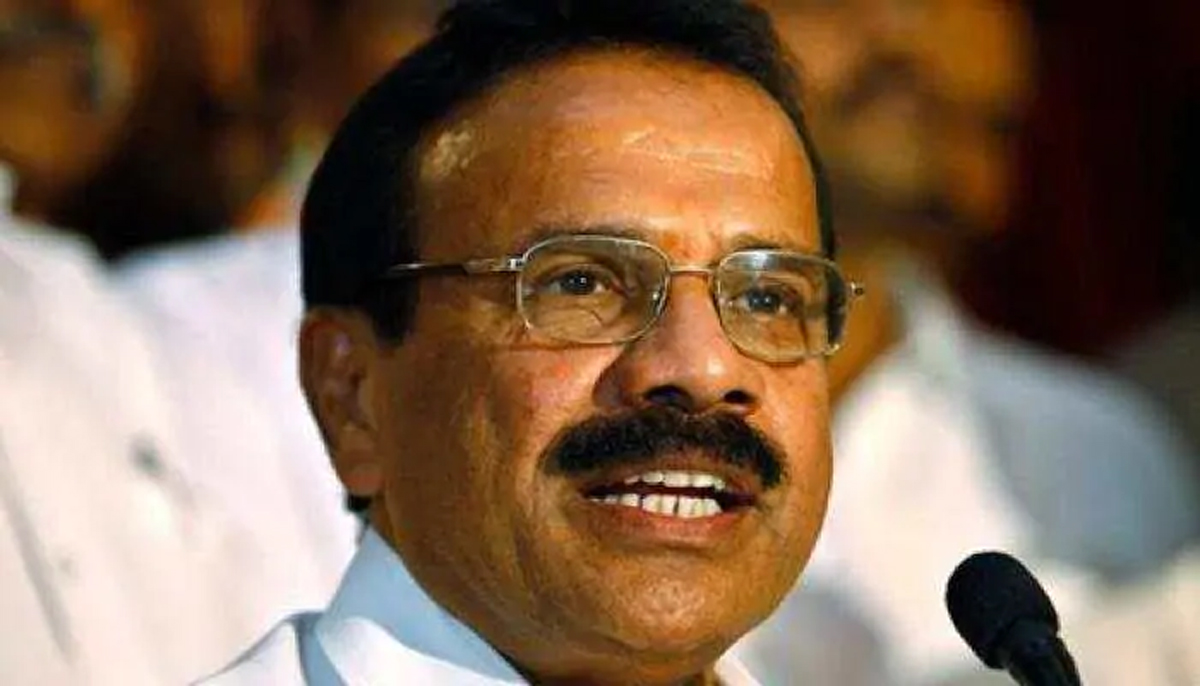
BENGALURU: Union Minister D V Sadananda Gowda collapsed due to low blood sugar in Chitradurga while on his way to the city from Shivamogga on Sunday and has been admitted to a hospital here, official sources said.
Gowda (67) is currently stable and is undergoing further tests and treatment at a private hospital.
The Union Minister for Chemicals and Fertilizers was brought to Aster CMI hospital at 4:45 pm on Sunday.
His condition is stable and will be kept under observation for the next 24 hours, the hospital’s spokesperson said in a statement.
“He is stable, blood and other parameters are normal. There is nothing to worry. We will keep him under observation for 24 hours. (AGENCIES)
23 dead, 15 injured in roof collapse at Ghaziabad cremation ground
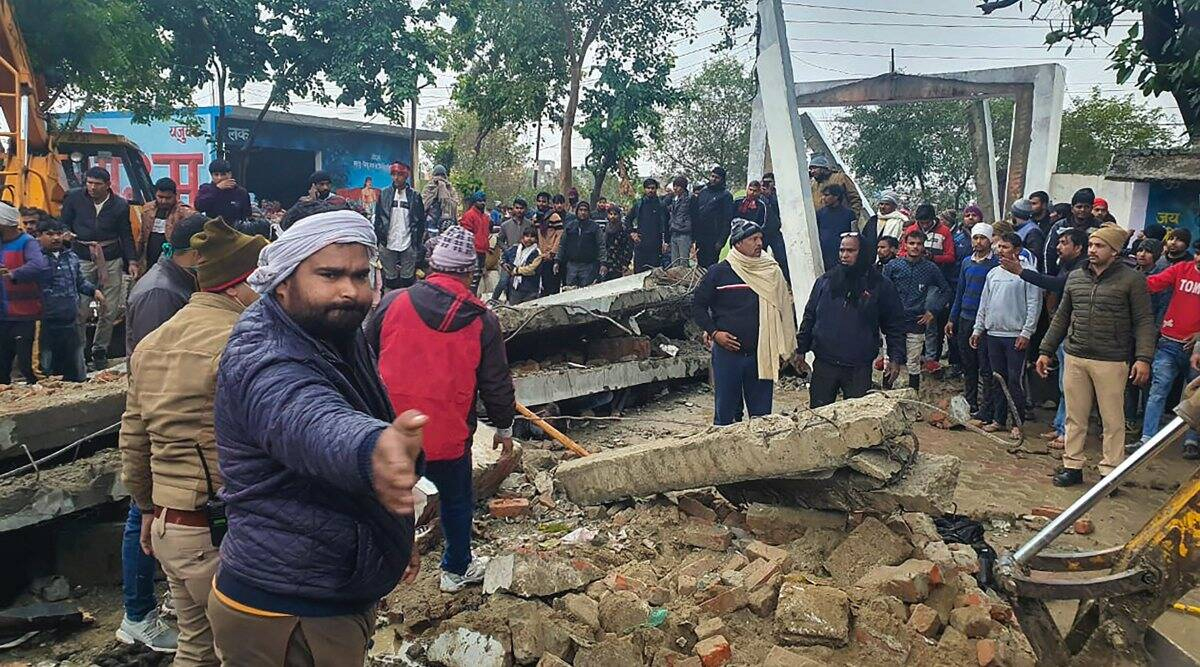
GHAZIABAD (UP): Twenty-three people, most of them attending a funeral, were killed and 15 others injured when the roof of a shelter at a cremation ground in Uttar Pradesh’s Muradnagar collapsed on Sunday, police said.
Several people had taken shelter under the recently constructed structure while it rained. The dead, all of them men, were mostly relatives or neighbours of Jai Ram, who was being cremated at that time, officials said.
Rescue workers sifted through the building’s rubble for hours to ensure that more victims were not trapped there.
Apart from the 23 dead, 15 others were admitted at different hospitals, Ghaziabad (Rural) Superintendent of Police Iraj Raja said.
11 injured as bus falls into gorge in Doda
BHADERWAH: At least 11 people were injured on Sunday when a passenger bus skidded off the road and fell into a deep gorge in Doda district, police said.
The bus was on its way from Bhaderwah to Jammu when its driver lost control due to slippery conditions near Ganpat bridge. The bus rolled down 200 feet before stopping abruptly, a police official said.
He said the bus driver and 10 passengers were injured in the incident.
“They were lucky to survive the accident as the bus got stuck 50 feet ahead of the fast-flowing Chenab river,” the official said. (AGENCIES)
182 new COVID-19 cases, one more death in J-K
SRINAGAR: Jammu and Kashmir recorded 182 new positive cases on Sunday, bringing the infection count to 1,21,653, while another fatality linked to the pandemic raised the death toll to 1,866, officials said.
Of the fresh novel coronavirus cases, 103 were from the Jammu Division and 79 from the Kashmir Division, they said.
The officials said Jammu recorded a maximum of 75 new cases, followed by 31 in Srinagar district.
The number of active cases dropped to 2,975 in the union territory, while 1,16,792 patients have recovered so far from the infection, the officials said.
The UT reported one COVID-19 death from Jammu division in the last 24 hours, they said. (AGENCIES)