

Ashok Ogra
ashokogra@gmail.com
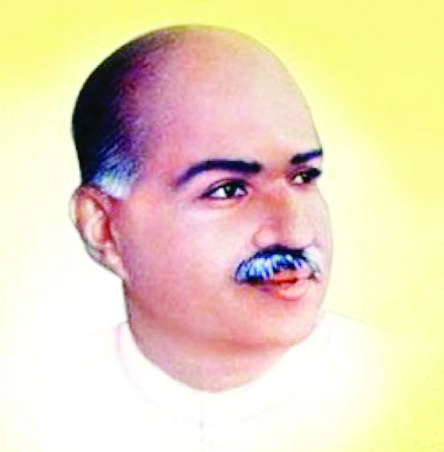
It is only natural that public discussions on Dr. Syama Prasad Mookerjee focus largely on Kashmir and the founding of the Bharatiya Jana Sangh. However, his public life was much wider. He was associated with education, Parliament, industry, and public affairs during the early years of independent India.
Born 125 years ago, he grew up in Bengal’s rich academic and intellectual environment. He performed exceptionally well in academics and stood first in his Intermediate, Graduation, and MA examinations, while his father, Sir Asutosh Mookerjee, was Vice-Chancellor. This led to allegations of favouritism in some circles.
Later, he went to London for higher studies and became a barrister in 1927. During his stay there, he reportedly developed an interest in theosophy and spiritual discussions linked to Arthur Conan Doyle.
He followed in his father’s footsteps and became Vice-Chancellor of Calcutta University at the age of thirty-three.
His personal life also shaped him deeply. The early death of his wife, Sudha, had a strong impact on him. He believed more in a universal idea of God than in rituals and formal religious practices.
Mookerjee entered politics in 1929 as a Congress candidate to the Bengal Legislative Council. Over time, however, he became dissatisfied with the party’s response to the communal politics of the Muslim League. During this period, he also came under the influence of Vinayak Damodar Savarkar of Hindu Mahasabha and his ideas on nationalism.
Meanwhile, two political developments particularly disturbed him- the Communal Award of 1932 and the Government of India Act of 1935. Both introduced separate electorates and minority representation. He believed these measures were politically unfavourable to Bengal Hindus.
Seeing the reception that Savarkar received during his visit to Calcutta in August 1939, Mookerjee noted: “I will not be surprised, things being as they are, if the Hindu Mahasabha were to succeed in stealing a certain amount of Congress thunder.” Because of Savarkar’s ill health, Mookerjee became the acting president of the Hindu Mahasabha in 1940.
Subhas Bose disagreed with Mookerjee’s association with the Hindu Mahasabha. He warned him that if a “rival political party is formed in Bengal, he would see to it (by force if need be) that it was broken before it was really born.” This upset Mookerjee, who responded: “This I consider to be the most unfair and unreasonable attitude to take up.” (‘Shyama Prasad Mokherjee & Indian Politics’ by Prashanto Chatterjee)
Despite political differences, particularly over the Khilafat movement, Gandhi often appreciated Mookerjee’s administrative abilities. He supported his inclusion in India’s first Cabinet under Nehru in 1947.
Unfortunately, both the RSS and the Hindu Mahasabha came under scrutiny after reports that some supporters had reacted positively to Gandhi’s assassination.
The government later banned the RSS. However, Sardar Patel clarified that “the RSS was not involved in it at all.” He linked the conspiracy to “a fanatical wing of the Hindu Mahasabha directly under Savarkar,” while also noting that the RSS had “other sins to answer for, but not this one.” (Patel’s correspondence)
As India’s first Industry and Supply Minister, although he had preferred the education portfolio, Mookerjee supported rapid but organised industrial growth. He believed the public and private sectors should work together. His approach was shaped more by practical national needs than by rigid ideology.
His resignation from Nehru’s Cabinet in April 1950 became an important turning point in his political life. The immediate trigger was the communal violence in East Pakistan in 1949-50 and the Nehru-Liaquat Pact.
Nehru, along with Patel and Azad, tried to persuade him to withdraw his resignation, but he remained firm on his stand.
His resignation speech, delivered in the Lok Sabha on 19 April 1950, was described by Balraj Madhok in his biography of Dr. Mookerjee as “one of his best and most moving speeches.”
It was during this period that Mookerjee began thinking about creating a new political platform. Discussions with RSS chief M. S. Golwalkar eventually led to the formation of the Bharatiya Jana Sangh in Delhi on 21 October 1951, with Mookerjee becoming its first president. Golwalkar, however, maintained that the ”RSS could not play a second fiddle to any political organisation.” Mookerjee responded that “the new political party also could not be made subservient to any other organisation.” Despite these differences, both worked together politically.
Interestingly, “The RSS which had hitherto consciously kept away from India’s political life, now choose to enter it, albeit hesitantly.” (‘Awakening Bharat Mata’ by Swapan Dasgupta).
The Jana Sangh’s programme combined cultural nationalism with economic decentralisation. It supported the protection of Hindu interests, though it refrained from openly advocating a theocratic state. It also supported private enterprise along with selective state control, favoured land reforms, and education rooted in Indian culture as well as modern science. Importantly, Mookerjee also stressed civil liberties, administrative neutrality, and national unity.
Although he founded the Jana Sangh, it was Deendayal Upadhyaya who became more closely associated with its ideological direction through the idea of “Integral Humanism.” The Bharatiya Janata Party emerged from the Jana Sangh tradition in 1980.
The final phase of Mookerjee’s political life became closely linked with Jammu and Kashmir. Between 1952 and 1953, the debate centred on Article 370 and the demand for the complete integration of Jammu and Kashmir with India.
In his book ‘India After Gandhi’, historian Ramachandra Guha notes that Mookerjee strongly criticised the government in Parliament on the Kashmir issue. During one debate, he asked sarcastically: “Who made Sheikh Abdullah the King of Kings in Kashmir?”
The Jana Sangh opposed separate constitutional provisions for Jammu and Kashmir. Praja Parishad leader Prem Nath Dogra and others courted arrest in Jammu on 8 February 1952- leading to protest meetings and rallies all over Jammu.
On 11 May 1953, Mookerjee travelled to J &K to protest against the state’s special entry restrictions. He was detained at the border and brought to Srinagar. Gurudatt Vaidya and Tek Chand who accompanied him, were arrested. Vajpayee and Bal Raj Madhok were sent back.
Reports described the sub-jail near Nishat Bagh as isolated and lacking proper facilities. Questions were later raised after he fell ill. On 22 June 1953, he was admitted to hospital. After examination and an electrocardiogram, doctors concluded that he had suffered a coronary attack.
Despite medical treatment at the Srinagar hospital, his condition deteriorated further. Prem Nath Dogra and a few other leaders rushed to the hospital, only to be informed that Mookerjee had “breathed his last” at 3:40 am on 23 June 1953.
Tathagat Roy who has written a voluminous biography titled ‘Shyama Prasad Mookerjee: Life & Times’, provides vivid details of the misdiagnosis and bungling by the doctors attending to him.
He quotes prominent doctor of Calcutta, Dr. Amal Kumar Chowdhury: “What was diagnosed as dry pleurisy was a complication of a coronary problem or pneumonia that must have started quite a few days earlier. The patient should have been administered morphine, and his prothrombin time should have been noted.” This test checks how quickly blood clots.
Among those who demanded an inquiry into his death were Jayprakash Narayan,Master Tara Singh, Sucheta Kriplani and Dr.B.C.Roy.
In her letter of 4 July 1953 to Nehru, Jogomaya Devi, mother of Dr.Mookerjee, wrote: “…it is also evident that the Kashmir government had never cared to acquaint itself with the previous history of Shyama Prasad’s health and provide for nursing arrangements and emergency medical attendance in case of need.”
It is important to mention that a Calcutta-based cardiologist, Dr. Shuvo Dutta, who had earlier treated Mookerjee, had remarked that he had suffered two consecutive heart attacks in 1945.
The Praja Parishad temporarily called off the agitation on 7 July 1953 to process the grief. On 8 August 1953, Sheikh Abdullah was dismissed from office. The Kashmir debate, however, continued in Indian politics for decades.
In August 2019, the Government of India revoked the special status of Jammu and Kashmir under Article 370. The decision renewed discussion about the position Mookerjee had taken on this issue during his political life.
Today, Dr. Syama Prasad Mookerjee is remembered as a statesman, a cultural nationalist, and also as an educationist, parliamentarian, minister, and constitutional politician.
Perhaps that is why this tribute by Harindranath Chattopadhyay, the younger brother of Sarojini Naidu, continues to resonate: “The sun of a colossal intellect has set / The giants are departing one by one / To whom our mourning nation owes a debt.”
(The author works for reputed Apeejay Education, New Delhi)
 Follow our WhatsApp channel
