

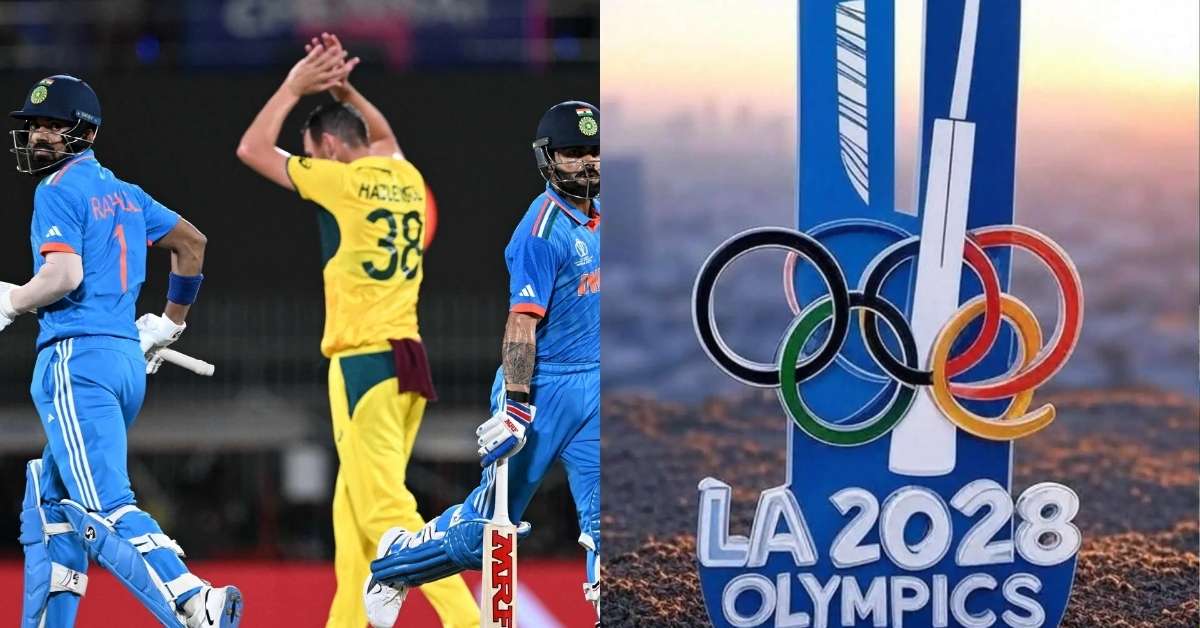
Cricket’s inclusion in the Los Angeles 2028 Olympic Games is not a symbolic correction but a structural decision driven by format compression, market scale, and operational compatibility.
The sport now fits Olympic constraints around duration, venue usage, and broadcast modularity while bringing audiences that few other disciplines can match. What changed was not cricket’s popularity, but its system design.
This shift is visible across global digital sports ecosystems, including analytical and wagering environments used by platforms such as RAJBET, where cricket’s transition into a fast, data-native competition made Olympic integration economically and technically viable. LA 2028 is the result of readiness, not revival.
Format Compression Solved the Olympic Time Problem
Cricket became Olympic-compatible only after its formats aligned numerically with Olympic constraints around session length, venue turnover, and medal scheduling. This shift is measurable rather than conceptual.
Format Metrics That Enabled Inclusion:
- T20 match duration: ~170–190 minutes including innings break
- Overs per side: 20, fixed and non-extendable
- Balls per match: 240, creating predictable pacing
- Matches per venue per day: 2–3, depending on turnaround protocols
- Turnaround time: 90–120 minutes between matches
- Tournament length: 7–10 days for 8–12 teams
- Total matches per tournament: 16–24, enabling full medal resolution
- Weather contingency rules: Reduced formats (5–10 overs) preserving result validity
Cricket Formats vs Olympic Constraints
| Metric | Legacy Cricket | Olympic-Compatible Cricket | Quantified Effect |
| Match length | 7–40 hours | ~3 hours | −90% duration |
| Scheduling blocks | Variable | Fixed | Predictable rotation |
| Venue utilization | 1 match/day | 2–3 matches/day | +100–200% efficiency |
| Tournament span | Weeks/months | ≤10 days | Olympic fit |
| Event density | Low | High | Medal viability |
| Contingency handling | Limited | Standardized | Fewer disruptions |
| Broadcast packaging | Session-based | Slot-based | Global synchronization |
Once cricket operated inside these numeric boundaries, it stopped competing with Olympic logistics and started fitting into them.
Global Market Scale Made Cricket Economically Irresistible
Cricket’s return to the Olympic program in 2028 is driven by market structure rather than sentiment.
As the Olympics increasingly operate as a global media platform competing for fragmented digital attention, cricket offers scale, geographic diversification, and engagement frequency that materially alter the economic profile of the Games.
Crucially, this value is concentrated in regions where Olympic penetration has historically been weaker, making cricket an additive asset rather than a substitute for existing audiences.
- Global cricket audience estimated at 2.5–3.0 billion, exceeding the reach of most individual Olympic sports
- India contributing ~1.4 billion potential viewers, representing the single largest growth lever for Olympic media rights
- ICC membership exceeding 100 nations, expanding geographic legitimacy and qualification diversity
- Asia, Middle East, UK, Australia, and Africa forming a continuous high-engagement time-zone corridor
- T20 format consumption dominated by short-form digital highlights, outperforming long live sessions in engagement metrics
- Women’s cricket sustaining double-digit annual audience growth, strengthening long-term Olympic relevance
- Year-round cricket calendars creating repeat engagement rather than quadrennial spikes
- Franchise ecosystems with valuations frequently above $100M, signaling commercial maturity beyond national teams
These characteristics matter because Olympic value creation increasingly depends on cumulative digital reach, regional balance, and retention between Games, not solely on peak broadcast moments.
By aligning with cricket’s market dynamics, LA 2028 captures audiences that extend Olympic relevance across new regions, platforms, and demographics, reinforcing the Games’ position as a continuously consumed global product rather than a four-year event.
Cricket Now Fits Olympic Data, Broadcast, and Integrity Systems
Cricket’s inclusion in LA 2028 ultimately depends on its ability to integrate cleanly into Olympic technical infrastructure, where latency, verification, automation, and system reuse are non-negotiable.
Technical Compatibility With Olympic Systems
| System Dimension | Pre-Modern Cricket | Olympic-Ready Cricket | Operational Threshold |
| Data granularity | Session-level | Ball-by-ball | 300–350 events/match |
| Data latency | Minutes | <1 second | Live synchronization |
| Results validation | Single-source | Multi-source | Redundancy required |
| Integrity coverage | Event-based | Continuous | 100% match coverage |
| Broadcast segmentation | Long sessions | Modular units | Slot-based delivery |
| Automation level | Low | High | Scalable operations |
| Officiating support | Manual review | Tech-assisted | <20s decisions |
| System interoperability | Limited | Full | IOC-compatible feeds |
What Makes Cricket System-Compatible in Practice:
- Ball-level event architecture produces 300+ discrete data points per match, aligning cricket with Olympic sports that rely on high-frequency event logging
- Sub-second data propagation allows real-time ingestion into Olympic scoreboards, broadcast graphics, and analytics dashboards
- Continuous integrity monitoring applies automated anomaly detection across betting, scoring, and officiating data streams
- Automated highlight generation produces broadcast-ready clips within 30–90 seconds of key moments
- Standardized officiating technologies (ball tracking, edge detection, no-ball automation) reduce subjective variance
- Decision-review turnaround times typically remain within 10–20 seconds, preserving live broadcast pacing
- Temporary or shared venue deployment lowers host-city infrastructure costs
- Downstream system reuse allows a single data feed to power broadcasting, integrity services, analytics, and archival systems
Cricket now behaves like a data-native Olympic discipline, capable of scaling inside a multi-sport event without bespoke handling.
Conclusion
Cricket returns to the Olympics in 2028 because it finally fits. Compressed formats, massive global markets, and full compatibility with Olympic data, broadcast, and integrity systems transformed the sport from an operational outlier into a scalable Olympic asset.
LA 2028 reflects system alignment, not nostalgia — a decision driven by structure, numbers, and readiness.
 Follow our WhatsApp channel
