

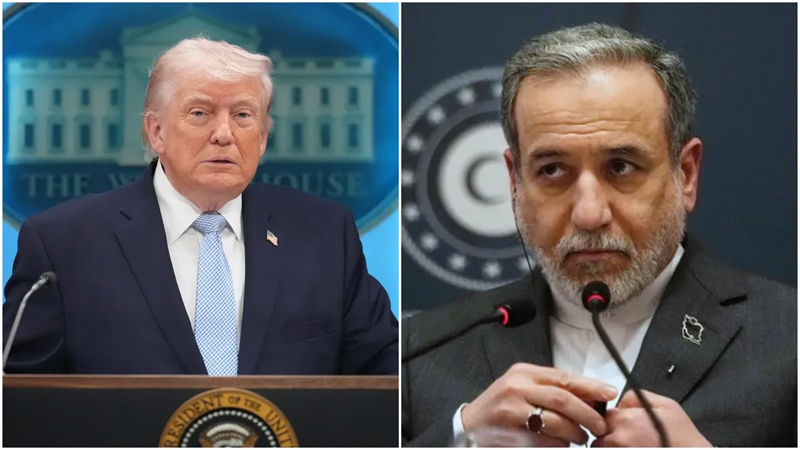
ISLAMABAD, Apr 18: Despite rising tensions around the Strait of Hormuz, where shipping remains paralysed as Iran moved to restrict all maritime traffic in response to the US blockade of its ports, there has been reportedly some success in the diplomatic outreach between the two countries.
Pakistani officials involved in mediation today said that Washington and Tehran are moving closer to a deal ahead of the April 22 ceasefire deadline, even as the situation on the ground remains tense and increasingly volatile.
Following the Israel-Hezbollah ceasefire, Pakistani Foreign Minister Ishaq Dar described it as a “positive sign”, noting that the Lebanon front had been one of the main obstacles during the last round of talks in Islamabad, which he said came “very close” to an agreement.
Islamabad has been employing multiple channels simultaneously as part of its mediations, with Pakistan’s Chief of Army Staff and Chief of Defence Forces, Field Marshal Asim Munir, travelling to Iran to meet with authorities, while Prime Minister Shehbaz Sharif met with Turkish President Recep Tayyip Erdogan and Qatar’s Emir Tamim bin Hamad Al Thani on the sidelines of the forum, as part of its broader effort to align all regional players before the next round of negotiations commence.
Islamabad is now expected to host fresh talks between Washington and Tehran early next week.
Still, uncertainty hangs over the Lebanon ceasefire itself, as both Hezbollah and Israel are primed for combat, with IDF forces remaining deployed across parts of southern Lebanon, while the Islamist group has also warned that its fingers are on the trigger. Furthermore, despite the ceasefire holding, violence hasn’t fully stopped, as sporadic shelling in Lebanon has been reported.
US President Donald Trump claimed that Israel has been “prohibited” from carrying out further strikes in Lebanon by Washington, adding that “enough is enough”, though US officials clarified that these restrictions apply only to offensive actions, not self-defence.
Israeli Prime Minister Benjamin Netanyahu acknowledging the claim, said that he agreed to ceasefire only “at the request of my friend President Trump”, but made it clear the campaign against Hezbollah is not over. He said Israel had destroyed around 90 per cent of the group’s missile and rocket stockpiles and warned operations could resume if needed.
On the ground, displaced families have begun returning to southern Lebanon and Beirut’s southern suburbs, with increasing doubts emerging over the ceasefire’s durability.
The broader war, which erupted on February 28 with U.S. and Israeli strikes on Iran, has left a heavy toll across the region – with thousands killed in Iran and Lebanon, casualties in Israel and Gulf states, and losses among US armed forces.
(UNI)
 Follow our WhatsApp channel
