

Maj Gen Sanjeev Dogra (Retd)
sanjeev662006@gmail.com
I have spent the better part of forty years looking at these mountains through a variety of lenses. Sometimes I saw them through the long-range optics of a surveillance post, searching for movement in the shadows. Sometimes I saw them through the dusty windshield of a Shaktiman truck, bouncing along hair-pin turns that would make a mountain goat think twice. But most often, and most dearly, I have seen them through the eyes of a man who calls this soil home.
From the perspective of a soldier, a rampart is a defensive wall, a fortification designed to keep an enemy at bay. But as I sit here in my retirement, looking out toward the jagged horizon of my youth, I realize that the mountains of Jammu and Kashmir are a different kind of rampart altogether. They are living ramparts. They are not just barriers of rock and ice; they are an inheritance of climate, of beauty, and of our national soul.
To truly understand our home, you must look past the maps. Maps are cold things that show lines of control and administrative boundaries. They rarely capture the deep conversation that occurs between our woods, rivers, and meadows. I have watched these landscapes change over the decades. There was a time when we worried the green was receding, but I am heartened to see that our forest cover is actually breathing again. Recent records show an increase of over 80 square kilometers in our forests. This isn’t just a statistic to me. It is the return of the deodar, the kail, the walnut, and the maple. These are the very textures that define our terrain and our memories.
Let me take you to Gurez. In my years of service, I have seen few places that possess such Himalayan grace. When you stand there at dawn, the Kishanganga river doesn’t just flow; it sings a quiet hymn. When the first light touches the snow on Habba Khatoon, the mountain scatters a visual blessing across the entire valley. I remember patrolling those conifer forests where the trees stand so thick they choke out the sun, leaving the floor a world of moss and silence. In Gurez, you learn that a forest is not something you merely look at. It is something you inhale. It is a cocktail of resin, damp earth, and ancient shade. Even the high alpine plants, which bloom with such urgency in their brief summer window, teach us that this land deserves reverence and not just a passing glance.
Further south, in Kishtwar and Bhaderwah, the mountains shift their mood. Here, the landscape is more expansive, a series of long, wooded folds that blend into open grasslands without a single note of visual harshness. I have often told my younger officers that these valleys rival any in the world, not because they are scenic in a postcard sense, but because they are ecological reservoirs. They support a chain of life that functions so well it often goes unnoticed, providing the hydrology and resilience that the rest of the region depends on. When these forests are healthy, the water flows and the birds return. It is a silent victory that keeps the region alive.
Then you move toward the sterner climates of Kargil, into the Mashkoh Valley. This is a landscape of survival. It is a place that teaches you the brief but never accidental nature of beauty. You see the roses of Kargil, flowers that spend months buried under heavy snow only to return with an astonishing speed that defies the cold. Mashkoh is a reminder that even the most rugged terrain hides a fragile rhythm. It is a lesson in adaptation that every soldier learns: beauty is the result of perfect timing and immense grit.
Then there is the Pir Panjal, the great ridge that serves as both a geographical and emotional landmark for every local. It is the spine of our land, a connector of cultures and climates. To the uninitiated, it is just a skyline. To us, it is a sheltering system. It is the watershed that feeds our valleys and the corridor for the icons of our wilderness. Here live the hangul, the markhor, the Himalayan brown bear, and the elusive snow leopard. When we protect the Pir Panjal, we aren’t just guarding a ridge. We are securing the environmental health of the entire region.
People often ask me about the Army’s role in all of this. It is a unique relationship. The soldier is a permanent fixture in these remote heights, often staying where no civilian could survive for long. Over decades, a formation deployed on the Line of Control develops a bond with the land. It becomes a temporary home. Military discipline naturally lends itself to conservation. We discourage illicit felling and poaching simply by being there, bringing a certain restraint to the terrain.
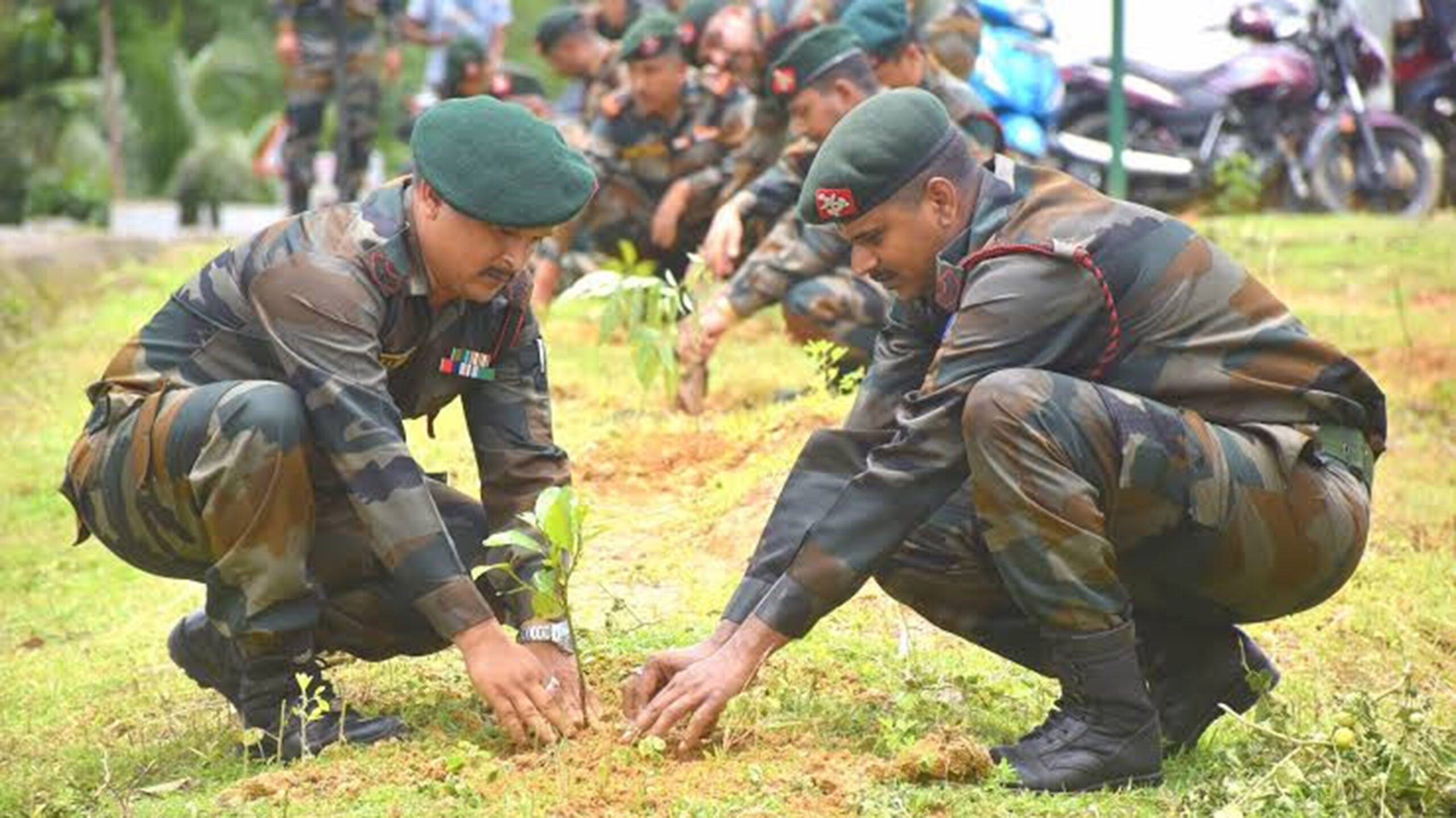
Beyond that, there is the work of the Ecological Task Force of the Territorial Army. I have seen these men work in the most degraded and difficult terrains where others would give up. They don’t just plant trees; they restore ecosystems. Ecological recovery in these mountains isn’t achieved by sentiment or social media posts. It requires the endurance and continuity that only a disciplined force can provide.
However, my service has taught me one final and sobering truth. The protection of Jammu and Kashmir cannot be the burden of the Army or the Forest Department alone. It must be a collective ethic. We have to decide if we view these mountains as expendable land to be exploited or as sacred capital to be preserved. Our tourism, our water security, and our very dignity are tied to these forests. It is not enough to just plant new trees. We must protect the mature forests that have stood for centuries. We need more than awareness. We need emotional attachment.
In Gurez, I saw the fragrance of the woods. In Mashkoh, I saw the defiance of the rose. Along the Pir Panjal, I saw the architecture of life itself. In all these places, I saw my fellow soldiers standing guard. They were not just guarding territory, but a living inheritance. Protecting this land is more than an environmental obligation. For me, and for all of us who call this place home, it is an act of gratitude and a fundamental duty of nation-building.
Let us not be the generation that allowed the ramparts to fall. Let us be the ones who ensured they remained green, vibrant, and alive for the sentinels who come after us. This land has given us everything. Now, it is time we gave it the protection it has earned.
 Follow our WhatsApp channel
