

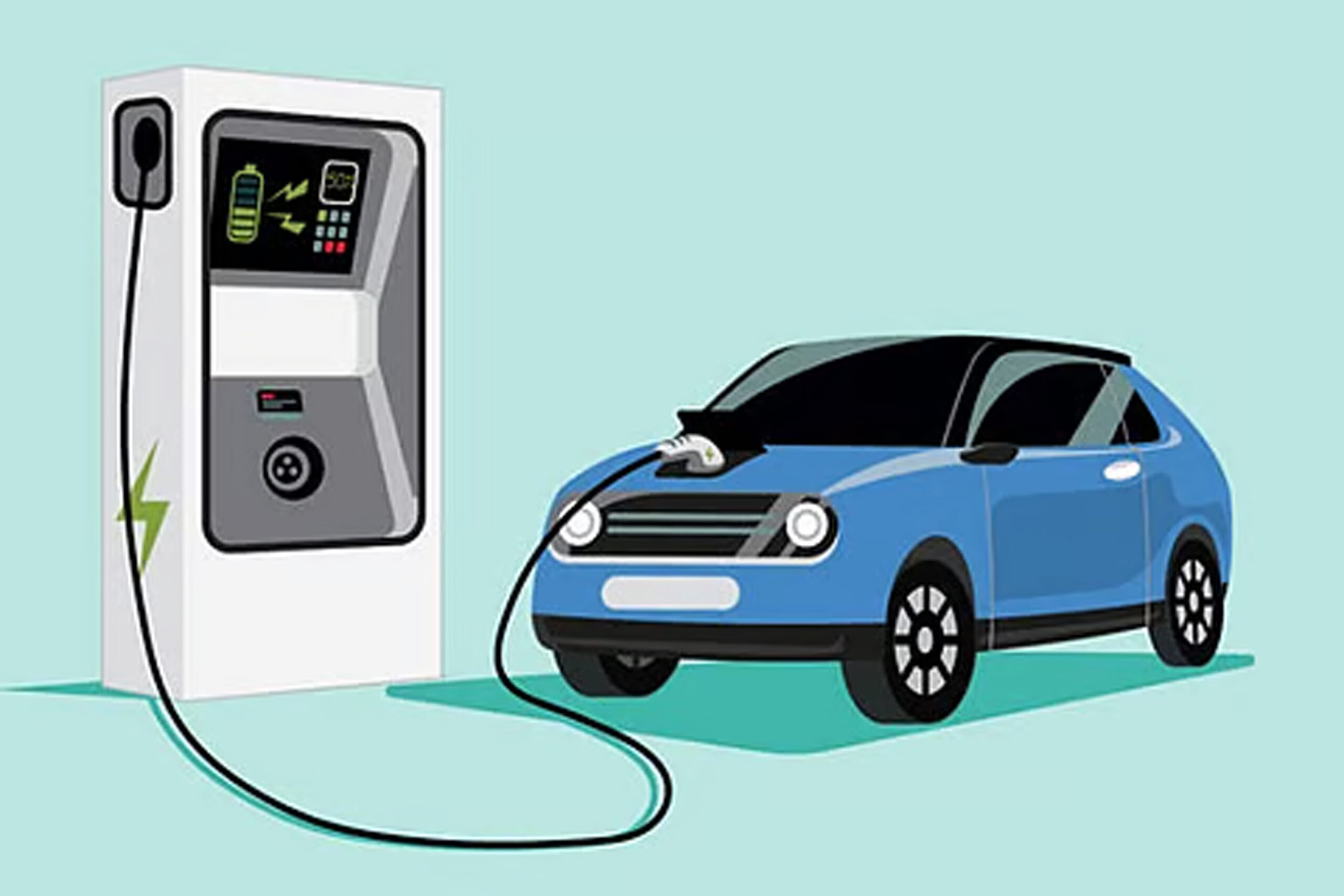
No clarity on number of charging stations
*Lack of trained manpower raises serious concerns
Mohinder Verma
JAMMU, Apr 27: At a time when electric mobility is gaining momentum across the country, Jammu and Kashmir is still struggling to move beyond prolonged deliberations, with no concrete roadmap for charging infrastructure and no system in place to deal with vehicle breakdowns on highways and in remote areas.
Follow the Daily Excelsior channel on WhatsApp
Official sources told EXCELSIOR that the process to frame a comprehensive Electric Vehicle Policy for the Union Territory began in October 2022, when the Government constituted a high-level committee comprising senior officers from various departments. The committee was tasked with evaluating and suggesting measures to promote an electric mobility ecosystem in J&K.
After a detailed exercise spanning several months, the committee submitted its recommendations to the Government, covering aspects such as incentives for EV ownership and the creation of necessary infrastructure to facilitate the transition to electric mobility.
The panel laid strong emphasis on establishing EV charging stations at district, sub-division and tehsil levels, as well as at intervals of every 25 km along major highways. It also noted that an expenditure of around Rs 10 lakh would be required to set up each fast-charging station without which large-scale EV adoption would not be feasible.
In November last year, the Government constituted another committee to re-examine the draft EV Policy and suggest revisions in light of developments in the EV sector since 2021, along with updated guidelines issued by the concerned Ministries of the Government of India.
However, instead of taking a concrete decision, the matter has now been referred to the Centre for Innovation and Transformation in Governance (CITaG) under the Planning, Development & Monitoring Department, for further deliberations. “Till date, no decision has been taken on the most fundamental question-how many charging stations are required across the Union Territory,” sources said.
Even more concerning, sources added, is the near absence of trained manpower to handle repair and maintenance of electric vehicles. “As things stand today, there is no reliable mechanism to respond to breakdowns, especially on highways and in far-flung areas where immediate assistance is critical”, they said.
“In such conditions, a stalled electric vehicle without access to technical support or charging backup could leave commuters stranded for hours, raising serious safety and logistical concerns”, sources added, citing issues flagged during official deliberations on the draft policy.
They further noted that the contrast with other States and Union Territories is stark. Across the country, EV Policies have moved beyond paperwork to implementation, backed by defined infrastructure targets, incentives and service ecosystems. In J&K, however, the process appears stuck in a cycle of bureaucratic discussions with little to show on the ground.
“The absence of clarity on infrastructure and support systems is likely to deter both private investment and consumer adoption, effectively stalling the transition before it even begins,” they said, adding “with critical gaps still unresolved after three years, the EV Policy risks remaining yet another well-intentioned document, disconnected from ground realities”.
“Unless urgent and time-bound decisions are taken on charging infrastructure, manpower development and emergency response systems, Jammu and Kashmir’s electric mobility push may remain confined to files,” they added.
Sources indicated that private players have also shown limited interest in investing in charging infrastructure due to policy uncertainty and lack of assured returns. “Without clear targets, viability gap funding or operational guidelines, investors are reluctant to commit resources in a geographically challenging region like J&K”, they said.
They further pointed out that the absence of inter-departmental coordination has slowed progress, with multiple agencies involved but no single authority driving implementation. “There is a need for a dedicated nodal agency with clear accountability to execute the EV roadmap in a time-bound manner”, they added.
Environmental experts believe that delays in rolling out the EV ecosystem could undermine efforts to reduce vehicular emissions in ecologically sensitive zones of the Union Territory. “Electric mobility is crucial for sustainable transport, but without infrastructure readiness, the transition will remain aspirational,” they said.
 Follow our WhatsApp channel
