

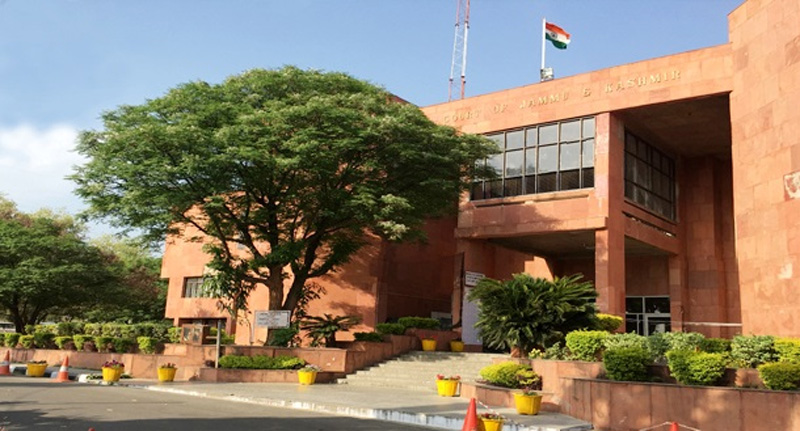
‘Right to pregnancy termination not absolute amid life risks’
*Directions issued for victim’s care, rehabilitation
Mohinder Verma
JAMMU, May 21: In a significant judgment balancing reproductive rights with preservation of life, the High Court of Jammu & Kashmir and Ladakh has declined permission for Medical Termination of Pregnancy (MTP) of a minor rape survivor whose pregnancy had advanced to nearly 27 weeks, holding that constitutional courts cannot disregard a categorical medical opinion warning of grave and substantial risks to the life and future reproductive health of the victim.
Follow the Daily Excelsior channel on WhatsApp
Delivering judgment in the petition filed on behalf of a minor girl, aged approximately 14 years, who conceived as a direct result of sexual assault and rape, Justice Wasim Sadiq Nargal held that although the court was conscious of the trauma, emotional distress and psychological agony suffered by the victim, the paramount consideration under Article 21 of the Constitution remained the preservation and protection of her life.
The High Court noted that the Child Welfare Committee (CWC), Kulgam, had already declared the victim a “Child in Need of Care and Protection” and recommended urgent legal, medical and psychological intervention.
Pursuant to earlier directions of the High Court, a duly constituted Medical Board examined the victim and submitted its opinion in a sealed cover. The Board categorically warned that termination at such an advanced gestational stage involved severe obstetric and medical risks.
According to the Medical Board, termination could result in prolonged and failed induction, need for operative interventions including hysterectomy, postpartum hemorrhage, puerperal sepsis, intensive care support, multiple blood transfusions and secondary infertility as a long-term sequel.
The Board further warned of risks to the fetus, including respiratory distress syndrome, intraventricular hemorrhage, mechanical ventilation, neonatal complications and possible neonatal or intrauterine demise.
“Once the expert Medical Board had unequivocally opined that termination posed a serious and imminent threat to the life and health of the victim, the court could not ignore or brush aside such expert medical opinion merely on sympathetic considerations”, Justice Nargal said, adding “courts are not expected to substitute their own views over the opinion of specialists and super specialists who are equipped to assess the medical feasibility, safety and consequences of such procedures”.
The High Court distinguished the recent Supreme Court judgment where termination of a 28-week pregnancy had been permitted because the Medical Board in that case had specifically declared the minor physically fit for the procedure.
“In the present case, the Medical Board has unequivocally opined that termination of pregnancy at this advanced stage would pose serious risks to the life and health of the minor victim”, the High Court observed.
Relying upon the Supreme Court ruling, the High Court reiterated that constitutional courts are not obliged to exercise jurisdiction and order termination in every case where there is unwanted pregnancy, and that each matter depends upon its own facts and medical circumstances.
The High Court further held that once pregnancy advances to a stage where the fetus attains substantial viability the distinction between termination and premature delivery becomes medically narrow and legally sensitive.
“The right to seek termination cannot be construed as an absolute right divorced from medical realities and expert assessment”, the High Court said, adding “sympathy alone cannot be a ground for issuance of judicial directions where life-threatening consequences are medically anticipated”.
Invoking the doctrine of “parens patriae” (legal principle under which courts act as guardians to protect the welfare and best interests of minors and vulnerable persons), the High Court observed, “where two competing concerns arise — psychological trauma associated with continuation of pregnancy and imminent medical danger associated with termination the court is duty-bound to prioritize preservation of life”.
While refusing permission for MTP, the High Court issued extensive directions for safeguarding the welfare, dignity, privacy, rehabilitation and future well-being of minor victim and the prospective child.
The High Court directed Government Lalla Ded Hospital, Srinagar, to provide complete pre-delivery and post-delivery medical care free of cost, including hospitalization, medicines, investigations, dietary requirements, counseling and delivery-related procedures.
The Medical Superintendent of the hospital was appointed as nodal officer for coordinating all medical treatment and allied healthcare requirements of the victim. The High Court also directed the Senior Superintendents of Police of Kulgam and Srinagar to provide requisite security and protection to the victim whenever required and ordered strict maintenance of confidentiality regarding her identity and medical condition.
Referring extensively to the Juvenile Justice (Care and Protection of Children) Act, 2015, the High Court observed that a minor survivor of sexual assault unmistakably falls within the category of a “Child in Need of Care and Protection” and is therefore entitled to statutory protection, rehabilitation and institutional support.
The High Court also took note of the communication issued by the Nodal Officer, Directorate of Mission Vatsalya, J&K, directing authorities to coordinate legal formalities relating to adoption, registration and care of the newborn, in consultation with the Specialized Adoption Agency and Child Welfare Committee concerned.
Disposing of the petition, the High Court directed the Medical Superintendent, Lalla Ded Hospital, the Nodal Officer, Mission Vatsalya, and the SSPs of Srinagar and Kulgam to file monthly compliance reports before the Registry of the High Court regarding the medical condition, care, protection and overall welfare of minor victim and the prospective child.
 Follow our WhatsApp channel
