

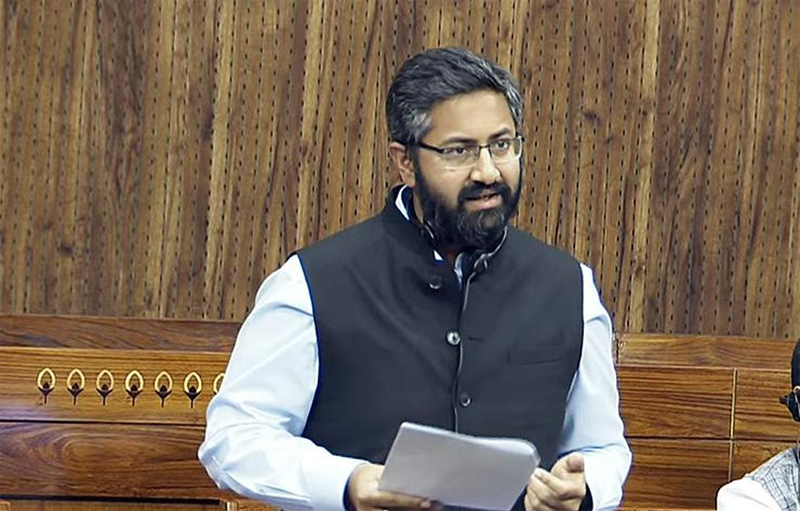
VISAKHAPATNAM, June 6: Emphasising the growing role of space technology in maritime governance and environmental protection, Visakhapatnam TDP MP, M. Sribharat, the President of Gandhi Institute of Technology and Management (GITAM), a private deemed university, on Saturday said advanced satellite-based surveillance systems can significantly strengthen coastal security, disaster management and marine resource protection in India.
Speaking during a visit to Kongsberg Satellite Services (KSAT) in Troms , Norway, as part of the India-Norway Knowledge Exchange Tour, Sribharat highlighted the relevance of such technologies for strategic coastal cities like Visakhapatnam.
Accompanied by Nandyal MP Byreddy Shabari, Sribharat visited the globally recognised organisation that provides satellite-based maritime monitoring, environmental observation and security services.
During the visit, KSAT officials briefed the Indian delegation on advanced satellite technologies used for maritime traffic monitoring, detection of illegal fishing activities, oil spill surveillance, environmental monitoring and climate-related data collection.
The organisation operates an extensive global network of satellite ground stations and monitoring systems that support maritime domain awareness across the world.
Sribharat noted that India, with its vast coastline, could derive substantial benefits from adopting satellite-enabled maritime surveillance systems.
Such technologies, he said, would help safeguard marine resources, enhance coastal and maritime security, strengthen disaster response capabilities and support environmental conservation initiatives.
The discussions also explored opportunities for deeper India-Norway cooperation in areas such as sustainable development, green technologies, the blue economy and the use of space technology for public welfare.
The MP said knowledge-sharing initiatives and technology partnerships between the two countries could drive innovation-led growth and help address global challenges related to climate change, environmental protection and maritime governance.
He further observed that exposure to international best practices through such visits creates opportunities for future collaboration in research, technology development and capacity building.
Strengthening bilateral cooperation in emerging sectors, he added, would benefit both countries and contribute to sustainable and inclusive development.
(UNI)
 Follow our WhatsApp channel
