

‘Baseless allegations against Judicial Officers to invite strict action’
*Petitioner asked to show remorse, tender apology
Excelsior Correspondent
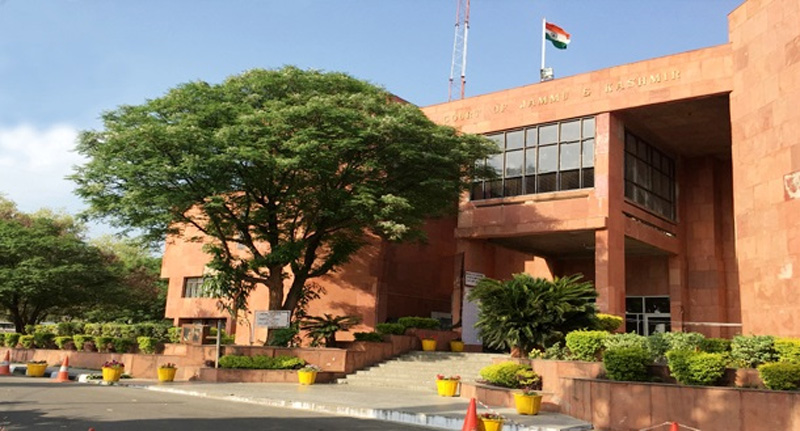
JAMMU, Apr 30: Emphasising that the sanctity of judicial proceedings cannot be permitted to be sullied, the High Court of Jammu & Kashmir and Ladakh has issued a stern warning against the growing tendency of litigants to level baseless allegations against Judicial Officers.
Hearing a transfer petition titled Assadullah Bhat and Others Versus Gul Dar and Others, Justice Wasim Sadiq Nargal took serious note of scandalous and wholly unsubstantiated allegations made by the petitioners against the Presiding Officer of the Court of Sub-Judge, Pattan and the Principal District Judge, Baramulla, observing that such claims were made without any proof whatsoever.
When confronted with these averments, the petitioners’ counsel was unable to substantiate them even at the threshold and sought permission to withdraw the petition unconditionally. However, the High Court declined this request, holding that allowing withdrawal would enable the petitioners to circumvent judicial scrutiny and the consequences that may ensue therefrom, which is wholly impermissible in law.
Coming down heavily on such conduct, the High Court observed that the tendency to level unwarranted, baseless and scandalous allegations must be curbed with a firm hand. It stressed that such allegations are not merely directed against an individual judge but constitute an affront to the dignity, independence and institutional integrity of the judiciary.
The High Court further underlined that reckless pleadings, under the guise of advocacy, cannot be allowed to malign the judicial process, adding that the sanctity of judicial proceedings must be preserved at all costs.
Referring to settled law, the High Court noted that the Supreme Court has consistently deprecated the practice of making scandalous, reckless and unfounded allegations against Judicial Officers, cautioning that such conduct strikes at the very root of the administration of justice.
Quoting from precedents including MB Sanghi Versus High Court of Punjab & Haryana and Asharam M Jain Versus A T Gupta, the High Court reiterated that disparaging remarks against judges can shake the foundation of judicial independence and that litigants cannot be permitted to tarnish, terrorise and destroy the system of administration of justice by vilification of Judges.
The High Court also relied on a recent judgment in N Peddi Raju and Others, observing that lawyers must be mindful of the serious repercussions before endorsing pleadings containing scurrilous and scandalous allegations.
Highlighting its constitutional responsibility, the High Court observed that while it exercises supervisory jurisdiction over the district judiciary, it also has a duty to protect Judicial Officers from scandalous, reckless and wholly unsubstantiated allegations. Any indulgence in such matters, it warned, would corrode institutional integrity and erode public confidence in the administration of justice.
The High Court further remarked that Judicial Officers cannot function with independence and fearlessness if subjected to constant spectre of unfounded aspersions and allowing such allegations to gain publicity without credible material would have a chilling effect on the judicial process.
In view of the seriousness of the matter, the High Court directed the petitioners to file affidavits tendering an unconditional apology, demonstrating genuine remorse and undertaking to refrain from making such allegations in future, within one week.
While refraining from passing coercive orders against the counsel in view of his standing, the High Court issued a stern and unequivocal caution, stressing that pleadings must be drafted with due care, responsibility and proper verification and that any recurrence would invite appropriate action in accordance with law.
Sending a clear message to litigants and members of the Bar, the High Court warned that repetition of such unfounded and scandalous allegations will be dealt with strictly to preserve the majesty of law and the credibility of the institution.
 Follow our WhatsApp channel
