

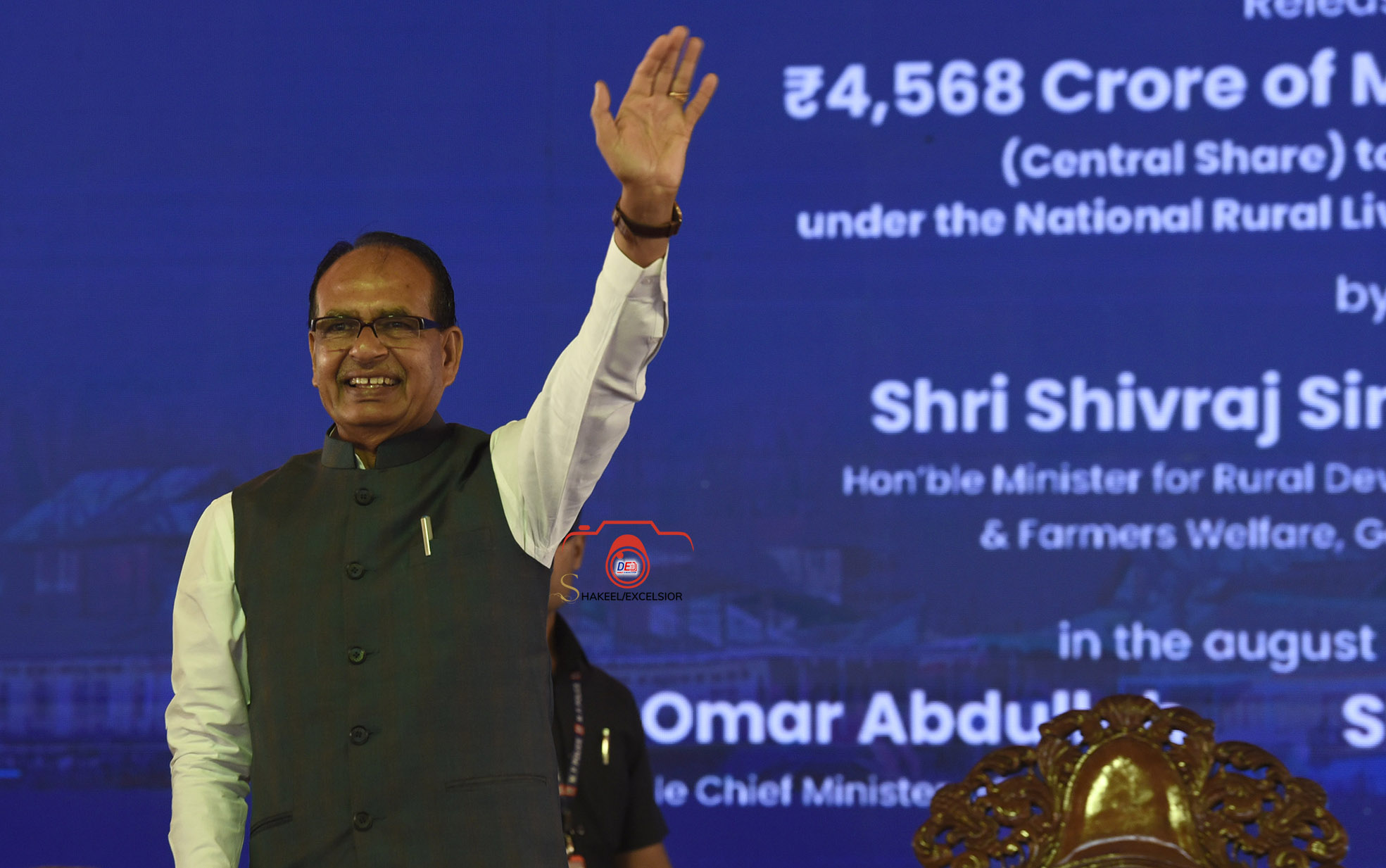
There is something deeply symbolic about Union Minister Shivraj Singh Chouhan returning to Jammu and Kashmir bearing gifts of development. His latest visit, much like his reassuring presence following last year’s post-monsoon devastation, underscores a consistency of purpose that the region has come to appreciate. This time, the bounty arrives in the form of nearly Rs 3,566 crore worth of rural road projects sanctioned under PMGSY-IV – a landmark intervention that promises to rewrite the connectivity story of a region long denied its rightful share of progress. The numbers are striking. Approximately 1,600 kilometres of roads covering 330 projects are set to link 363 habitations that have, in many cases, remained cut off from the mainstream for generations. For decades, the twin scourges of separatism and terrorism held Jammu and Kashmir in a stranglehold, diverting attention and resources away from basic infrastructure, whilst the rest of India steadily built its arterial road networks. The consequences were stark and lasting. Even during the last assembly session, elected representatives raised the absence of proper road connectivity in numerous constituencies – a painful reminder of how much ground remains to be recovered.
The Centre, cognisant of the Union Territory’s constrained fiscal position, has stepped in with characteristic vigour. A sanction exceeding Rs 3,566 crore in a single tranche represents not merely a budgetary allocation but a moral commitment to compensate for lost decades. That J&K was prioritised in both phases of PMGSY-IV approvals is a statement of intent that should not go unacknowledged. Equally encouraging is the broader development canvas being painted alongside the road projects. Agriculture and allied sectors – beekeeping, fisheries, and sheep rearing – are receiving targeted attention suited to the region’s unique terrain and climate. The Rs 4,568 crore sanctioned under DAY-NRLM for women’s self-help groups for states signals a genuine drive towards economic empowerment at the grassroots level, with ambitions reaching beyond mere subsistence towards entrepreneurship.
Since 2019 in particular, the pace of change has been unmistakable. Education, healthcare, and employment opportunities have all registered meaningful improvement. The momentum is real, even if the destination remains some distance away. Much has indeed been accomplished – but as Minister Chouhan himself acknowledged, the possibilities remain immense. The Central Government appears determined to leave no stone unturned, and J&K, at long last, appears poised to claim its rightful place in India’s development story. It may take some more time, but it will be achieved.
 Follow our WhatsApp channel
