

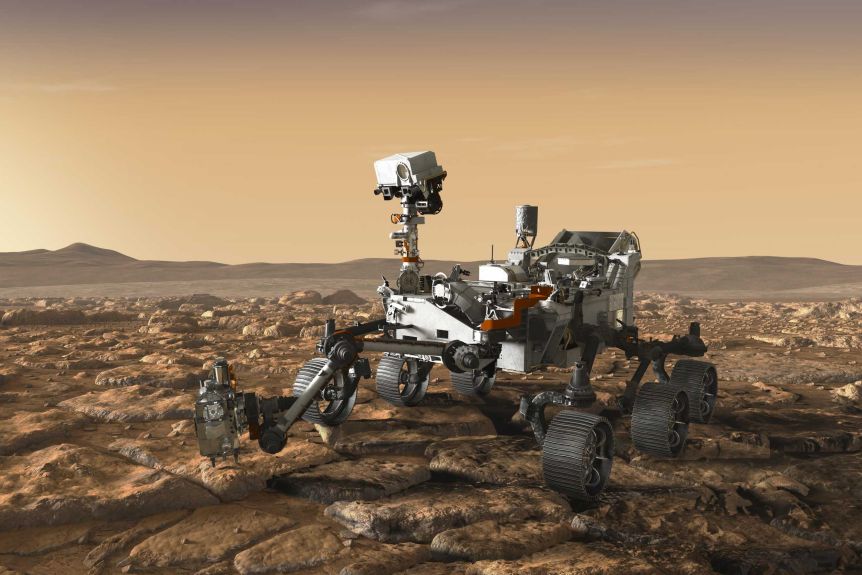
NEW DELHI: With NASA successfully launching its Mars-bound Perseverance rover from the Cape Canaveral Air Force Station in the US, scientists say the mission’s biggest and most exciting challenge would be in finding evidence of ancient microbial life on the Red Planet.
Weighing at about 1,025 kilogrammes, the Perseverance rover, which is part of NASA’s Mars Exploration Program, is expected to reach its landing site, the Jezero Crater, on the Martian surface on February 18, 2021.
Goutam Chattopadhyay, Senior Research Scientists at NASA’s Jet Propulsion Laboratory in California, US, said the Jezero crater was chosen after exhaustive search by the Mars Reconnaissance Orbiter (MRO) launched to survey the Red Planet in 2005.
According to NASA, the crater site was chosen because scientists believe the area may have been home to an ancient river delta.
“We believe that once it (Jezero crater) was flooded with water. Obviously, we are looking for carbon based life because that is the kind of life we know about and for that water and oxygen is a must,” Chattopadhyay said.
“Our belief that the crater was a river delta before and if life ever existed on Mars or exist today, this location will have some signatures,” he added.
The rover, which is part of NASA’s long-term effort of robotic exploration of Mars, carries seven instruments that will search for habitable conditions in the Red Planet’s ancient past, and signs of past microbial life.
“We are looking for any organics, confirm methane — how much and what is the source — we believe it could be bio-related,” Chattopadhyay said. (AGENCIES)
 Follow our WhatsApp channel
