

Saturday, May 2, 2026
E-Paper
Home Blog Page 80270

Earth’s twin discovered 200 light years away

WASHINGTON, Jan 7: Astronomers have discovered Earth’s ‘gassy twin’ with a mass similar to that of our planet in another solar system 200 light years away.

An international team discovered the first Earth-mass planet that transits, or crosses in front of, its host star. KOI-314c is the lightest planet to have both its mass and physical size measured.

Surprisingly, although the planet weighs the same as Earth, it is 60 per cent larger in diameter, meaning that it must have a very thick, gaseous atmosphere.

“This planet might have the same mass as Earth, but it is certainly not Earth-like,” said David Kipping of the Harvard-Smithsonian Centre for Astrophysics (CfA).

“It proves that there is no clear dividing line between rocky worlds like Earth and fluffier planets like water worlds or gas giants,” said Kipping, lead author of the discovery.

The team gleaned the planet’s characteristics using data from NASA’s Kepler spacecraft. KOI-314c orbits a dim, red dwarf star located approximately 200 light-years away.

It circles its star every 23 days. The team estimates its temperature to be 104 degrees Celsius, too hot for life as we know it.

KOI-314c is only 30 per cent denser than water. This suggests that the planet is enveloped by a significant atmosphere of hydrogen and helium hundreds of miles thick.

It might have begun life as a mini-Neptune and lost some of its atmospheric gases over time, boiled off by the intense radiation of its star, researchers said.

Conventionally, astronomers measure the mass of an exoplanet by measuring the tiny wobbles of the parent star induced by the planet’s gravity.

This radial velocity method is extremely difficult for a planet with Earth’s mass. The previous record holder for a planet with a measured mass (Kepler-78b) weighed 70 per cent more than Earth.

To weigh KOI-314c, the team relied on a different technique known as transit timing variations (TTV). This method can only be used when more than one planet orbits a star. The two planets tug on each other, slightly changing the times that they transit their star.

“Kepler saw two planets transiting in front of the same star over and over again. By measuring the times at which these transits occurred very carefully, we were able to discover that the two planets are locked in an intricate dance of tiny wobbles giving away their masses,” said second author David Nesvorny of the Southwest Research Institute (SwRI).

The second planet in the system, KOI-314b, is about the same size as KOI-314c but significantly denser, weighing about 4 times as much as Earth. It orbits the star every 13 days, meaning it is in a 5-to-3 resonance with the outer planet.

Kipping presented the discovery at a meeting of the American Astronomical Society. (AGENCIES)
Daily Horoscope 08-Jan-2014

Aries : You may be alone, but not necessarily lonely. You may want to listen to your inner voice, and express your true self creatively. Spend the evening with a loved one who can hear the music in your silence too, suggests Ganesha.

Taurus : Today is a day of closure. You may find yourself on the winning side of things, says Ganesha. Pending projects will reach completion and you will achieve satisfaction and success in education. With a little extra effort, you can build a castle from stone. Ganesha wishes you a cheerful and colourful day.

Gemini : Today, you will do an amazing job in dividing your time between work and family. Despite your preoccupation with work, you will take time off for your family, and even plan out a small outing, leaving them pleasantly surprised. Also, your dreams are about to come true. Now, how many times does that happen in a lifetime?

Cancer : Today, you are likely to be brimming with love and compassion. However, certain negative thoughts will spoil all your good work. But don’t fret! Your efforts won’t go wasted and you will get the desired results sooner or later, says Ganesha.

Leo : The pressure at work will be high. Some person may try to tempt you with lucrative offers to go against your principles. However, you will be able to resist the lure of easy money. Your health may suffer today, so be on guard, says Ganesha.

Virgo : An easy-going day full of fun and light moments will help you vent all that pressure built up inside you. Ganesha predicts a progressive and profitable day for you. Expect to honour invitations to social events or even parties.

Libra : Ganesha says you will be able to show your love and appreciation for your beloved. Small issues will crop up and keep you tensed and uncomfortable today. Just remember good days and old memories and life will seem good again. It is essential to have confidence in yourself if you want to go ahead in life and be happy.

Scorpio : It is very likely that the moment of victory is often preceded by a moment of peril; but that is not where the danger ends. In the heat of victory, arrogance and overconfidence can push you away from what you aimed for. So, it is important for you to learn when to stop in victory. Set a goal and stop when you reach there, says Ganesha.

Sagittarius : Your will be loaded with responsibilities at work today, fore sees Ganesha. But, you are pro challenges and will take it up sportingly. On personal front, the list of your friends is likely to get longer. All in all, Ganesha sees you in an active avatar today.

Capricorn : You will be overpowered with nostalgia and may long to get in touch with old pals. And as Ganesha says, chances are that you may take a liking to your ex-lover, while simultaneously strengthening your social standing. All in all, the day will be a productive one.

Aquarius : You may huff and puff, but today is not the day when you’ll finish what you started. Don’t lose heart, the future is promising. Take a break, says Ganesha, you’ve worked enough. The results are on the way.

Pisces : You are likely to be grinding yourself under at the workplace today. A turning point will arise in romantic liaisons, though if the evening awaiting you is anything to go by, it is something you should welcome wholeheartedly, says Ganesha.

ISRO has done it

“Today the naughty boy has become obedient”, were the historic words uttered by S Ramakrishnan, Director of Vikram Sarabai Space Centre while referring to many failures that had preceded the moment of triumph. After more than 30 years of toil, Indian scientists have been able to successfully ignite an indigenous cryogenic engine to launch a GSLV rocket in the space. The crucial engine had remained an enigma with our space scientists who had vowed to manufacture it indigenously after the US imposed embargo on the transfer of cryogenic technology.
The story of India making indigenous cryogenic is bizarre in part. It was way back in 1991 that we were to receive the technology of cryogenic engine from the then Soviet Union. Then happened the implosion of the Soviet Union, and two years later, Russia retracted the agreement. However, it did agree to give four more engines but not the technology. Veteran Indian scientist Nambi Narayanan managed to bring in crucial components of the engine without drawing the attention of the Americans who would have obstructed it. Since Air India had refused to carry the crucial components fearing the American embargo, Narayanan employed an alternative plan of shipment and succeeded to complete the shipment in three flights.  Narayanan’s arrest and alleged espionage charges in ISRO spying case later put ISRO under cloud and production of cryogenic engine, scheduled for 2001 could not come about.
On April 15, 2010, ISRO made the maiden attempt of firing GSLV-D3 carrying GSAT-4 from Siriharikota. But the engine failed shortly after ignition. For the next launch ISRO used the one of the two last Russian cryogenic engines left with it. But success was still far away. This time liquid fuel boosters failed. The last attempt was aborted on August 18, 2013 when the scientists detected a leak in the liquid fuel tank. They corrected it and at last success kissed their hands on Sunday last.
Putting the success story in perspective, the mission Director S Radhakrishnana said,” Behind the 1,000 wonderful seconds of GSLV-D5’s flight were more than a thousand days of dedication of our scientists”.  These harbingers of new India have brought us honour and dignity. We salute them for their service to the nation and to the world of technology and science. Their name will embellish the pages of our history. The successful launch will make one of the cutting edge technological breakthroughs—-manned mission to space —– a possibility. With this India has become the sixth spacefarer to develop cryogenic engines, a pre-requisite for inter-planetary probes and manned space missions.
Some people believe that the success of GDLV-D5 signals the beginning of a new era of commercial viability for Indian space missions. Germany is reported to have approached ISRO for the launch of an 800 kg satellite and the UK for three satellites weighing 300 kg each.  GSLV-D5 has the capacity to launch more than the limits prescribed for PSLV and PSLV launches are reported to have earned ISRO Rs. 1,300 crore during the current fiscal year.
With this singular technological achievement to the credit of our scientists, India is well poised for taking ling strides in the realm of science and technology so as to be at par with advanced nations of the world. At this point we are reminded of the prophetic words of President Pranab Mukherjee who recently said at convocation that our scientific researches should be oriented to bringing comforts and facilities to our citizens. Our resources and our manpower have to be put to the important necessity of improving life of our citizens, to eradicate illiteracy, poverty and backwardness. Western countries have used science and technology for changing life and society and for bringing in modernity into life style. We should also at this point of time, remember our visionary leaders who realized in good time the need and utility of opening up the country to scientific and technological investigation and research. The successful launch of the GSLV in the space is a right tribute to them which we can pay with all humility. Each big success induces us to work for bigger success and for a country with such a vast advanced technical and skilled manpower and infrastructure, nothing is impossible to do. ISRO has done it.

BSP stresses for reservation to OBCs as per Mandal report

Excelsior Correspondent
JAMMU, Jan 7: Bahujan Samaj Party (BSP) today reiterated its demand for providing 27 % reservation to State OBCs in real sense as per Mandal Commission Report.
Addressing the workers’ meet here at Party Headquarters, State president, Tulsi Dass Langeh took serious note of hue and cry by the leadership of Congress, BJP and Panthers Party for State Government’s discrimination with Jammu region while declaring backward areas, as out of 42 backward villages only 17 villages from Jammu region were included.
“Time and again State Government took such discriminative decisions in the Cabinet, the Ministers from Jammu region failed to watch the interest of people of Jammu region”, he said and regretted that State Government has even failed to provide 27% reservation to State OBCs as per Mandal Commission Report in the light of the verdict of Supreme Court of India.
He further said that though the Jats have been given OBC status in other States, the same is denied by J&K Government and it is giving deaf ear to their (Jats’) demand for grant of OBC status in their favour.
BSP leader further said that Government is giving 20% reservation in the name of backward areas, whereas in the constitution there is not any provision for grant of reservation in the name of backward areas. An area can be declared backward for the purpose of development, not for job reservation, he added.
The BSP State president stressed upon the State Government to rectify its decision and grant 27% reservation to OBCs in real sense as per Mandal Commission Report and OBC status to the Jats of the State.

Castorseed futures dip on heavy selling

NEW DELHI, Jan 7: Castorseed prices tumbled Rs 191 to Rs 4,606 per quintal in futures trading today on the back of fall in both overseas and domestic demand against heavy supply from producing regions.

Marketrmen said all round selling by traders on existing higher levels mainly led the sharp fall in prices.

Slackness in overseas demand also helped to pull down the prices, they added.

At the National Commodity and Derivatives Exchange counter, castorseed prices for most far May contract dropped by Rs 191, or 3.98 per cent, to Rs 4,606 per quintal, with an open interest of 3,200 lots.

Most active near February contract dipped by Rs 165, or 3.63 per cent, at Rs 4,375 per quintal, having an open interest of 1,75,650 lots.

Current January month contracts also slided by Rs 157, or 3.51 per cent, to Rs 4,319 per quintal with an open interest of 35,900 lots. (AGENCIES)

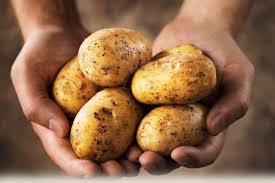
Potato futures fall 1.20 pc on higher supply, low demand

NEW DELHI, Jan 7: Potato prices fell by 1.20 per cent to Rs 952.70 per quintal in futures trade today as speculators offloaded their positions on the back of low demand against higher supplies from producing regions.

At the Multi Commodity Exchange, potato for delivery in March fell by Rs 11.60, or 1.20 per cent, to Rs 952.70 per quintal in a business turnover of 278 lots.

Potato for delivery in far-month April also declined by Rs 11.30, or 1.19 per cent, to Rs 938 per quintal in 59 lots.

Analysts said speculators offloaded their positions on the back of low demand in the spot market against higher supplies from producing belts that mainly kept pressure on potato prices at futures trade. (AGENCIES)

Delta retires last DC-9, oldest plane in US fleet

MINNEAPOLIS, Jan 7: Delta Air Lines is retiring its last DC-9s, the oldest passenger plane in the fleet of the big US airlines.

Delta operated the final passenger flight from Minneapolis to Atlanta last evening.

McDonnell Douglas delivered the first DC-9s in 1965, and eventually built 976 of them. The plane was noteworthy at the time because it was small enough to fly to airports in smaller cities that had previously been served by propeller-driven planes.

Its low-to-the-ground profile put its cargo door at about waist height, so ground crews at smaller airports could load it without special equipment.

The plane flew for Delta, Continental and several smaller regional airlines. The one flown on the final scheduled flight yesterday was built in 1978 and went to North Central Airlines.

Its fate after that mirrors the merger wave that rolled through the whole airline industry. A combination of North Central and other airlines formed Republic Airlines, which merged with Northwest Airlines in the 1980s. Delta bought Northwest in 2008.

Most airlines retired the DC-9s by the 1990s. But instead of retiring them, Northwest in 1995 refurbished their interiors to squeeze more flying out of them. Federal rules don’t limit how many years a plane can fly, only how many takeoffs and landings. As long as it stayed under those limits, the DC-9s could keep flying.

At one time the planes made up almost one-third of Northwest’s fleet. Yesterday, Delta was down to its last six. It’s keeping two planes as spares for a few more weeks. In an era when planes all have digital instruments, the DC-9 cockpit stands out for its dials.

The plane doesn’t have a flight management computer that handles many of the routine flying tasks on newer planes, said Delta’s DC-9 chief line check pilot Scott Woolfrey, who specifically asked to pilot the plane’s last flight. “It’s a pilot’s airplane,” he said before the flight yesterday.

The final flight prompted dozens of aviation enthusiasts to buy tickets, and they lined up at the window to watch the plane come in from LaGuardia airport in New York.

Delta is known for buying used airplanes and flying them longer than other airlines. Even Delta’s DC-9 replacement used Boeing 717s from AirTran is a hand-me-down. Delta is giving those planes new interiors and adding Wi-Fi as it brings them into its fleet. The 717, along with the MD-90s that Delta has also been buying used, are both descendants of the DC-9. (AGENCIES)

Preserve serenity of new highway

Sir,
It is a matter of pride for the Jammuites that the portion of National Highway from Kunjwani  Bye Pass to Udhampur is being readied for opening which will take place shortly. This road has given a fresh and modern look to some of the neglected areas of Jammu region and has given reasons to the populace of these areas to start making their livelihood better.
The road is being laid and looked after by NHIA who have left no stone unturned to give it a serene look but it is apprehended that like other roads of the state, this road might also be covered with hoardings of different sizes particularly from Nagrota up to Domail and give it a shabby look as has been done to the road stretch from Domail to Katra.
If the concerned Government agencies and the officials responsible do not take a timely measure, this road might fall prey to the Paharganj Culture and this needs to be addressed and strict measures put in place before any damage is done to it. The concerned agencies of Reasi District had recently taken steps to reduce this menace, but the Domail – Katra road is still in shambles as even after removing most of these uneven structures, many still remain giving the entire area a bad look and defacement is still visible. Also the wild life department, the Forest Department and others responsible should take an early note of these issues and fix measures to save all roads and the environment.
Yours etc….
Sunil Singh
Via e-mail

Hurdles for rural aspirants

Dr Ashwani Mahajan
After changing rules of Civil Services (preliminary) Examinations in 2011, Union Public Service Commission (UPSC) has now changed rules for Main Examination too. Aspirants who have been preparing for this examination for years are highly perturbed. Aspirants are not only giving memorandums to the government, demonstrations are also going on at various places. Aspirants are demanding increase in number of attempts and relaxation of age limit, as new changes require them to make preparation afresh.
Amidst these demands, statement of the minister of government of India, that there is no proposal for increasing the number of attempts or raising the age limits, has multiplied the worries of the aspirants and they are grossly nervous.
However, the question is not merely of increasing attempts of raising age limit; the issue is much deep rooted. Fact of the matter is that changes being mooted are directed against aspirants from rural background and aspirants from rural background are at gross disadvantage. According to the statistics published by Lal Bahadur Shastri Academy, which imparts training to top rankers of Civil Services Examination; before Civil Services (Preliminary) Examination rules 2011 made applicable, between 2009 and 2011, 63 to 67 percent top rankers used to be from rural background. In 2012, after new rules were made applicable, this number has come down to only 27 percent. Among male candidates this number is 31 percent and for females, it is 16 percent. Changes introduced and being introduced are not only directed against candidates with Hindi and Vernacular languages medium, they are also against students who have not studied mathematics and science.
Economic policies initiated since 1991 have been so biased in favour of corporates, mainly concentrated in urban areas; that rural incomes have continuously been coming down. Share of agriculture in GDP main occupation in rural areas, which was 38 percent in 1980-81, has now come down to merely 13.7 percent. Villages lack in facilities like education, health, sanitation, transport, drinking water etc. Despites all these deprivations, children and youth from rural areas have been working hard to achieve heights in education and other fields.
If we talk of civil services, students with rural background used to be at par with their urban counterparts. Given the fact that share of urban population in India is 31 percent and the share of successful candidate with urban background in civil services was also around 32 to 35 percent. However, with change in Civil Services Examination rules, getting success in this examination is becoming a distant dream for rural youth with introduction of new Civil Services Aptitude Paper in 2011 in preliminary examination, a candidate has to pass a test comprising mainly of mathematics, reasoning and civil services aptitude. Justifying the new rules, UPSC’s argument is that due to changing expectation from the civil servants in the country these changes were called for. UPSC says that from civil servants it is expected that they not only function effectively in the new environment, but also make their seniors aware of the problems being faced by them. For this reason, testing of required aptitude becomes imperative.
After changing rules for Preliminary Examination, now even rules of Main Examination have also been changed. For a long time, the exercise for change in syllabus of Main Examination was going on, which were being under severe criticism. Main objection in rules proposed therein was that test of English language was not only being made compulsory, marks obtained in this test were also supposed to be included in the result for making merit list. But due to widespread criticism of these proposals, government had to do away with compulsory English language paper; however other changes were adopted almost ditto. According to new rules, Civil Services (Main) Examination will comprise of 7 papers, out of which 4 papers would be of General Studies, two of the optional subject and one of Essay. All seven papers would carry 250 marks each, totaling 1750 marks for Main Examination. It may be noted that in the previous syllabus, Main Examination comprised of only 2 papers in General Studies. But there are four general studies papers now; first paper is- Indian Heritage and Culture, History and Geography of the World and Society, second is – Governance, Constitution, Polity, Social Justice and International relations, third paper is – Technology, Economic Development, Bio-diversity, Environment, Security and Disaster Management and the fourth paper is named as Ethics, Integrity and Aptitude. In place of two options, with two papers each, now there will be only one optional subject, with two papers.
Main argument of the government is that since there is no fundamental change in the main examination, in terms of maximum marks and the quantum of course, there is no justification for increasing the number of attempts and raising the age limit.
But basic issue is not that simple about giving or not giving these reliefs to the aspirants. Issue is much bigger and serious. The proposed scheme of examination and the new curriculum is so designed that it is not suited for candidates with rural backgrounds. Subjects such as ethics are generally not taught in rural schools and colleges. With the introduction of such subjects, rural background students will fall behind their urban counterparts.  Detailed analysis of the curriculum shows that the type of information required from candidates necessitates their access to the computer and the Internet, which are generally lacking in village infrastructure. Apart from this, rural students would also fall behind in terms of references and reports of the Government and international agencies, which are required to be given as references for the case studies so included in the syllabus; as it would not only require access to internet, but also urban infrastructure.
One can say that proposed scheme of examination and curricula would widen rural urban divide further and the hope of the rural aspirants would get a big setback and Government’s claims of inclusive growth would also be negated in the process.

Chana futures down 0.82 pc on increased supply

NEW DELHI, Jan 7: Chana prices moved down by 0.82 per cent to Rs 3,017 per quintal in futures trading today as participants trimmed positions, triggered by increased supplies from producing regions against subdued demand.

At the National Commodity and Derivative Exchange, chana for delivery in January moved down by Rs 25, or 0.82 per cent, to Rs 3,017 per quintal with an open interest of 56,690 lots.

Similarly, the commodity for delivery in February lost Rs 21, or 0.68 per cent, to Rs 3,078 per quintal in 66,030 lots.

Analysts said participants trimmed positions, triggered by increased supplies from producing regions against subdued demand in the spot market that pulled down chana prices at futures trade. (AGENCIES)