


Golf in Jammu
Good conduct
Capt Purushottam Sharma
Good conduct is the mother of Righteousness. All merits abide where good conduct resides.Good conduct means right or ideal conduct, that is, the conduct universally accepted within the boundaries of ‘sanathana dharma’ (eternal righteousness). Pre-requisites of good conduct are Truth, Love, Non-violence, Continence, Contentment, Forgiveness, Humbleness and Honest Earning.
People of good conduct secure universal welfare and universal fellowship treading the path of righteousness. They are thorough-going who master the facts through their power of discrimination. Such persons do not rebel for personal gains. They always endeavour to be in harmony with fellow beings and resolve differences amicably. They fulfill their obligations towards their Motherland, society, family and lastly themselves. Their every action is based on good conduct and is conducive to the good of others. Persons of good conduct grow beautiful plants of merits in the garden of their heart. By virtue of good conduct, their analytical faculty gets sharpened which helps them to rise from common to outstanding. To them, ‘‘work is worship’’ indeed. They respect law and follow ethics explicitly. They honour all religions and faiths. This feeling is an essential part of good conduct that brings mutual harmony and trust. Spiritual perception grows in persons of good conduct like shadow that follows a moving object. Happiness derived out of good conduct is their very nature. They are never remorse for they have nothing to fear of.
Teachings of Holy scriptures and ways of lives of saints and great men inspire us to take to good conduct. We have treasures of teachings in Holy Vedas, Upnishads, Srimad Bhagwadgeetha, Holy Koran, Holy Bible, Holy Guru Granth Saheb, Dhampada and great men’s ways of lives and their messages for us to equip ourselves with good conduct.
In Lord Rama, we find ideal child, ideal youth, ideal pupil, ideal son, ideal brother, ideal husband, ideal father, ideal master, ideal servant and ideal God to His devotees. Similarly, His consort Sita is an ideal wife, an ideal daughter-in-law, an ideal mother and an ideal Goddess to Her devotees. Their ideal conduct is always there as source of emulation. Each word and action of the Lord is impregnate with instructive thought for acquiring good conduct through self-control, pure conduct and character crystallization. Lord says in Srimad Bhagwat Gita (36/X) “sattyam sattvvatamaham’’ (‘I am the goodness of the good’’).
We realize today that good conduct should be one of the main objects of our education and it had been in the past too to which our scriptures are ample proof. Upanishad says – “matru devo bhav pitri devo bhav acharya devo bhav atithi devo bhav yanyanvadyani karmani taant sevitvyani’’ (‘Treat mother, father, teacher and guest as God and perform good action and deeds only within the boundaries of righteousness’) “paro upkarah punnyaye paapaaye par peedanam’’ (‘Helping others is virtue and harming others is sin’’). “In every woman to see one’s mother and in others’ material possessions see dust’’ is what our scriptures preach to be of good conduct.
To follow the foot-prints of great men who live for the good of the mankind leads to good conduct. It is, however, necessary to examine our every thought and action and improve our conduct out of daily experience. In maintaining the good conduct under all involves constant endeavour and care.
‘Bad company should be certainly given up by all means. It is cause of last, wrath, delusion, loss of memory, loss of intellect and total ruin’ (Narada Bhakti Sootra).
Good conduct of a child depends on the good conduct of its family members in particular and the society in general. Good conduct of a taught depends on the good conduct of his teacher. Good conduct of an employer is bound to affect the conduct of his employees and so on. But it is a fact that there will be rule of good conduct in the society if every one of us faithfully thinks and acts as per the injunctions of the scriptures, that is, as per one’s ‘dharma’ (righteousness). We observe that it is the good conduct at the root of the Sun, the Moon, the Earth, the Air, the Water, the Fire and the Ether performing their duties faithfully assigned to them by the Lord of the Universe. We are punished when we indulge in bad conduct. The fall out of bad conduct results into chaos and disorder causing sufferings to the society.
Lord rules His domain with the instrument of good conduct and loves His people of good conduct very much. People of good conduct help in His command and receive their reward by way of Eternal Bliss and Joys.
In this context, it is worthwhile to mention one of the favourite hymns of Gandhi Ji, which is “Lord , preserve me from looking on things which arouse evil thoughts. It were better for me to be blind.
Lord, preserve me from soiling my lips with impure words. It were better for me to be dumb. Lord, preserve me from hearing any word of slander and insult. It were better for me to be deaf. Lord, preserve me from looking with desire on any of those who should be my sisters. It were better for me to be dead’’.
“Do unto others as you would have them do unto you’’ is the loud call of ‘dharma’ that demands Good Conduct.
Reconnecting with lost signs

Adarsh Ajit
Name of the book : Kashmir Hindu
Heritage- A Study
Name of the Author : S N Pandit
Price : Rs 450/-
Pages : 463
At a time when Kashmiri Pandits, displaced from the valley more than two decades ago, are virtually delinked with their shrines, temples, symbols of faith, language, and the Kashmir legacy as a whole, S N Pandit, through his book, Kashmir Hindu Heritage-A Study, tries to regenerate their warmth and tie them again with these lost signs. Even analyzing the book by its face value the degree of toil exercised by the author in supplementing his personal readings with the historical authenticities is plainly disclosed. The big positivity of S N Pandit is that he has not locked up his works within the four walls but has extended it to the broader levels and agreeably bonded Kashmir with vast Bharat Varsha. Quoting Kalhan Mr. Pandit says that the mountain walls, acting as natural hurdles, have stopped foreign influences on Kashmir and thus there are little differences in socio-religious, ritualistic patterns and customs of people of Kashmir and that of the Bharat Varsha. However Pandit puts the present scholars the dock for their continued indifference towards the massive fortune of literature that is buried deep in libraries of the country and abroad.
The book has been divided into five chapters. In its first chapter ‘Puranas-our heritage’ S N Pandit remarks that Vishnudharmottara Purana is the most voluminous of all the three Puranas found till date in Kashmir and various Vaishnavite dictions found in the ancient Madra Desha (the area between the North Punjab to the south of Jammu province) have elaborately been discussed in it. Describing Nilmata Purana as a conversation between the king Janmejaye, son of Parikshita, and the grandson of Arjuna and Rishi Vaishampayana, pupil of Maharishi Vyasa, S N Pandit unfolds that the spirit of co-existence and brotherhood that existed among various castes and creeds like, the Shaivites, the Vaishnavaits, the followers of Brahma, Budha, the Nagas, the Pishachas, the Yakshas, etc., of the valley later on spread throughout the whole of the subcontinent. In other words, it can be said, that the author has defined Central Asia as the extension Kashmir.
Explaining Vasuki Purana, the author informs that in order to establish the ancient legacy of the Nagas, the Mahabharata clearly states that the great grandfather of Vasudeva was a Naga Chief, Vasuki. Quoting Smritis he states that fifteen Naga Rajas existed in the subcontinent to whom we offer our oblations while performing various rites. Most importantly the author has not missed to mention that Vasuki Purana is a short sketch of the religious places of the small valley of Bhaderwah also known as chota Kashmir.
In the second Chapter captioned The Tirathas Of Kashmir, S N Pandit, makes a political observation that the political upheavals and intense social turmoil and civilizational onslaughts virtually demolished the very roots of the millennia old social and cultural structure that had served as an anchor for the survival of the indigenous people and it could not be reassembled till date even by bits and slices so as to rebuild it to its ancient grandeur once again. Giving historical, religious and geographical backgrounds of Shankaracharya hillock, Shakti Peetha at Zabarvan, Shakti Peetha of Rajnya, Chakreshvra, Jwala Devi, etc the author says that the rock known as Shankarpal, is still lying on the mountain above Harvan without a trace of any inscription engraved on it. It is very important to mention here that the author has termed Ishwarsaroopa, Swami Lakshman Joo Maharaj as the last doyen of Kashmir Shaivism. About Mata Maha Rajnya S N Pandit reaffirms the legend that entering the valley of Satisar she is said to have touched some of the ancient tirthas of the valley like Manzgam, Luk Bhawan, Larkipora, Tikkar, Shailkputri, Haramukata Ganga and finally reaching Tulamula. Jagat Guru Shankaracharya is believed to have attained final realization at the feet of the Mother Goddess at Tulamula, and as per the author, Shankaracharya composed the famous Stutis in her praise called, Saundariya Lahari.
S N Pandit is not only focused towards pointing out the riches of Kashmir legacy but after discussing and narrating the things he, like a teacher, makes us to understand the magnitude of these possessions. While commenting on Janam Ashtami(Zarama Satam) he tries to elucidate the impact of the Yadava dynasty on the political map of the sub-continent and its past relations with Kashmir. The month of magha has been described as the holiest of all the twelve months of the year. Characterizing the significance of Gauri Tritiya, Kalhana, has been vociferously quoted. Kashmir, the abode of Shiva, is the home of Goddess Sarasvati. ‘The Sharada Tirtha appears to have lost its old grandeur and importance especially during the unfavourable medieval period of Kashmir history. We have a reference in the Rajatarngini vs., 2552 and 2706 confirming the siege of the fortress of Sharadi’. Even while narrating the story of Navreh Mavas, the concluding day of the year, Pandit feels it necessary to divulge that during the medieval period, a great son of the valley, Shri Shriya Bhat lived here, succeeded in changing the mind of Sultan Zain-ul-Abidine. It was due to his strenuous efforts of Shriya Bhat that the migrated and suffering Hindus were resettled in their ancestral homes.
The book may partially be called ‘one in all’ for Kashmiri Pandits because it carries a handful from all sections of community’s belongings, be it from history, geography, politics, society, religion, etc. Like an almanac it gives also essence of socio-religious practices. The photographs and the layout have been incorporated to make the things more understandable. The front cover carrying a photo of a dilapidated temple, and back-cover, a parental home of the author, show historical fumes which Pandits have gone through from time to time. The author has dedicated the book to his late father Shri Keshav Nath Pandit who was the victim in the dreaded jaws of militants and Islamic zealots. The cuttings of leading Urdu dailies included in the book aggravate the pain of the turmoil.
Flax seeds in food

Dr Juhi Gulati Amla
Flaxseeds (also called linseeds) are a rich source of micronutrients, dietary fiber, manganese, vitamin B1, and the essential fatty acid alpha-linolenic acid, also known as ALA or omega-3. The seeds come from flax, one of the oldest fiber crops in the world – known to have been cultivated in ancient Egypt and China. It is not only a source of healthy fat, antioxidants, and fiber; modern research has found evidence to suggest that flaxseed can also help lower the risk of diabetes, cancer, and heart disease.
Nutritional profile for Flaxseed
There are two main types of flaxseed: golden flaxseed and brown flaxseed. Their nutritional profiles are very similar and both contain the same number of short-chain omega-3 fatty acids. The American Nutrition Association highlighted the importance of this “neglected food”, stating that flaxseed is not only “an excellent source of two fatty acids that are essential for human health – linoleic acid and alpha-linolenic acid,” but also “an excellent source of fiber and a good source of minerals and vitamins.”Flaxseed is very low in Cholesterol and Sodium
Flaxseeds are rich in:
* Lignans – They are estrogens-like chemical compounds with antioxidant qualities, able to scavenge free radicals in the body.
* Fiber – flaxseed is rich in both soluble fiber (which dissolves in water) and insoluble fiber (which does not dissolve in water).
* Omega-3 fatty acids – these are considered to be “good fats” that are beneficial for the heart. These essential acids are only obtainable by eating the right foods.
Health benefits of Flaxseed
The therapeutic and beneficial properties of consuming flaxseed are not yet completely understood, and many claims still lack “high-quality” studies to back them up.
Cardiovascular Disease
Eating flaxseed daily may also help your cholesterol levels. The level of LDL or “bad” cholesterol in the bloodstream has been linked to an increased risk of heart disease, obesity, diabetes, and metabolic syndrome.
Inflammation
Two components in flaxseed, ALA and lignans, may reduce the inflammation that accompanies certain illnesses, Reducing inflammation associated with plaque buildup in the arteries may be another way flaxseed helps prevent heart attack and strokes.
Cancer
Recent studies have suggested that flaxseed may have a protective effect against breast cancer, prostate cancer, and colon cancer. The lignans in flaxseed may provide some protection against cancers that are sensitive to hormones without interfering with the breast cancer drug tamoxifen. Lignans may help protect against cancer by blocking enzymes that are involved in hormone metabolism and interfering with the growth and spread of tumor cells.
Tips for Using Flaxseed
* Buy it ground or grind it yourself. Flaxseed, when eaten whole, is more likely to pass through the intestinal tract undigested, which means your body doesn’t get all the healthful components. If you want to grind flaxseed yourself, those little electric coffee grinders seem to work best.
* Buy either brown or golden flaxseed. Golden flaxseed is easier on the eyes, but brown flaxseed is easier to find in most supermarkets. There is very little difference nutritionally between the two, so the choice is up to you.
* Add flaxseed to a food you habitually eat. Every time you have a certain food, like oatmeal, smoothies, soup, or yogurt, stir in a couple tablespoons of ground flaxseed. Soon it will be a habit and you won’t have to think about it, you’ll just do it.
* Keep it in the freezer. The best place to store ground flaxseed is the freezer. Freeze pre-ground flaxseed in the bag you bought it in or in a plastic sealable bag if you ground it yourself. The freezer will keep the ground flax from oxidizing and losing its nutritional potency.
* Whole flaxseed keeps longer. The outside shell in whole flaxseed appears to keep the fatty acids inside well protected. It’s a good idea to keep your whole flaxseed in a dark, cool place until you grind it. But as long as it is dry and of good quality, whole flaxseed can be stored at room temperature for up to a year.
(The author is Consultant Dietitian/Nutritionist)
Let’s Dance

King Bharati
Gone are the days when glamour used to be the symbol of metro cities and people from other states used to envy them for being closer to the glamour industry.
Jammu and Kashmir which has earned a bad name due to violence for the past 23 years has also earned a name in carving its niche in Bollywood shunning its past of being only the host of the movie biggies during their shoots upto early 90’s
Now there are numerous examples of talented people from this state making it big in Bollywood on the silver screen and other stages of the world in whatever way they can and yes Jammu is not lagging far behind.
With Bollywood, the first thing that comes to our mind is the larger than life film stars dancing to the musical beats of Hindi songs creating euphoria among masses who crave to join their league. And when dance comes to the mind of the Jammuites the name that is synonymous with dance in J&K is Master X who has the distinction of having given the concept of modern dance schools to J&K way back in 1990.
Master X or Ajit Singh or Happy Sir to his friends and fans who originally belongs to Kashmir started it all just at the age of six when his fascination to participate in school functions gave birth to his inner talent and started taking part in active dance and acting activities in schools at the age of nine.
The turning point came at the age of twelve when he received his first award and since then there has been no looking back.
“What I needed was just music and mirror and this passion for dance came to a point where I became the first person to introduce Gymnastics and Western Dance in Jammu and Kashmir in 1990 and soon became popular as Master X”, says Ajit the Master X.
Dedicating all his success to his late elder brother Lucky, Master X says that he will never forget how dancing has a great influence on his life and a huge learning experience all these years.
Master X soon became a household name for youngsters and schools who thronged him with requests to teach their students in schools and prepare them for various dance shows. After participating in many big shows in Jammu Master X like any other youngster aspired to join Bollywood and went to Mumbai at the age of 14 but due to lack of contacts, guidance and exposure he could not make it there and returned to Jammu to start his career as choreographer with many big schools like APS, Model Academy, Luthra Academy, Shastri Memorial School and many others.
To quote Master X, “there is no thinking involved in my choreography, I don’t work through images or ideas, I work through my body. Dancer does not dance well when he uses so called theories about dancing or pushes him or herself to dance but when a dancer dances he shows what he is and just lets his body to flow in ecstasy because everything is there in your body, you just have to explore it”.
Giving
in to the stiff resistance and wishes of his parents, relatives, friends and well wishers asking him to leave the profession, Master X was forced to leave choreography and join the Government services as an adhoc employee in Civil Secretariat but as they say one can never suppress the intense passion of a person for too long and he too left the job soon.
Since destiny had thought something else for this talented dancer, yet another turning point came into his dancing career in 1997, when he got an opportunity to go to United Arab Emirates (UAE) where instead of a regular run of the mill job he pursued his passion with more vigour and enthusiasm by joining as choreographer in Blue Diamond Music Centre Dubai.
In Dubai he actually got the real exposure of international standards in dancing and show business and participated in more than 300 shows and worked as a judge in more than 145 schools besides sharing stage in UAE with Bollywood biggies like Arbaaz Khan, Raveena Tandon, Manisha Koirala, Mukesh Rishi, Javed Jafri, Malaika Arora, Anu Malik, Sonu Nigam, Harbajan Mann, Sukhwinder Singh, Parvez Khan etc.
He worked with reputed companies of Dubai like Kala Kendra, Kala Shri, Golden Talent Music Centre, Blue Diamond etc and with such an experience at hand Master X finally opened his first own dancing school ‘Gurukul’ in Dubai in 2006.
With his school now in place his hardwork saw him preparing talent among children in Dubai while his units worked in movies like Naqaab, Jawar, Kaafir, Welcome etc besides venturing into Wedding Event Management. But deep inside his mind there was an inclination and attraction towards his own culture, city and people forcing him to take another plunge to come back to his roots to repay his country, state and hometown back what he got from it by establishing the first ever international standard dance institute under the name and style ‘Legends Dance Studio’ at Talab Tillo, Jammu, where he prepares children and adults both as dancers of international caliber.
“I want Bollywood to come to Jammu to search for talented dancers instead of our youngsters having to go there and with that mission I am teaching the children to make them compete with anybody in the world” says Master X about his future plans.
Master X plans some topnotch dance shows in Jammu where top Bollywood stars will be participating and conducting workshops for Jammu kids. He adds that since he has struggled very hard in life to achieve something and many times he was discouraged but some energy within him kept him going and wants to share his rich experience with Jammu kids so that they get well prepared for future career and won’t have to struggle as hard as he did.
To conclude I again quote his explanation for dancing, “I get very excited when I dance, as I love it with a deep passion and we dance for laughter, we dance for tears, we dance for madness, we dance for fears, we dance for hopes, we dance for screams because we are dancers and we create dreams”.
(The author is a senior journalist and social activist)
A great lover of Kashmir
Jawahar Kaul Ganhar
Kashmir since ancient times has been the centre of Sanskrit learning and as such has given to the country (India) great luminaries in the field of Sanskrit literature as Sanskrit was the main language of communication of the valley. During this period extending thousands of years in the past many great Sanskrit scholars, poets, critics, grammarians, historians etc were born here who wrote valuable literature in the language.
Among the famous writers were Abhinav Gupta founder of Philosphy of Kashmiri Shavisim, Mammata, Anand Verman, Vasu-Gupta, Khemendra, Bilhan and the famous poet and historian Pandit Kalhan considered one of the greatest sons of Kashmir. The other native historians of Kashmir who carry the torch of history writing after pandit Kalhan were Shirivara, Prajyabhatta, Skukha and Jonaraja who continued the history of Kashmir (Rajtarangani) on the model of their pioneer. The work of these scholars is a treasure. As far as history is concerned “Raj Tarangani” is such a historical book which has a international fame. The other famous historian who wrote about medieval Kashmir was Jonaraja who was a man of great learning. This shows that since early times Kashmir had a tradition of historial writings.
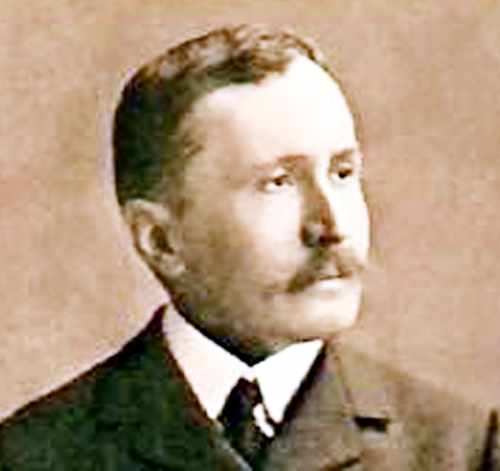
It was in 1889 that the work of the Kashmiri scholar Pandit Kalhan came into lime light when a great lover of ancient Kashmir and explorer, Dr. Mark Aural Stein translated Raj Tarangani (River of Kings) with the assistance of Kashmiri Pandits scholars, Gobind Kaul, Mukand Ram Shastri and Harbhat Shastri into English.
Stein was a European scholar born at Budapest, Hungry on November 26, 1862. His father Nicholas Stein was a rich merchant and mother was Anna Stein. It is said Stein had a great desire of visiting India to study its culture and history. After graduation Stein took interest in the archaeological studies as he was advised by his teacher and guide Geogre Bulher, himself an eminent scholar to study rich classical wisdom of India. After getting doctoral degree in 1884 he was appointed as registrar of Punjab University and also Principal, Oriental College Lahore of undivided India.
It was in 1881 Sir Aurel Stein visited Kashmir to study oldest manuscript of Raj Tarangani. During his stay in Kashmir he found large number of manuscript written in Sanskrit and Shardha languages about which his guide George Bulher had already prepared a detailed script. Besides manuscripts he also came across Pandit scholars who were well-versed with the Sanskrit and Sharda language who helped him in the task.
Stein had a great love for Kashmir and called Kashmir his second home. He used to spent long time in a year at a place known as “Mohan Marg” situated in the lap of “Haramukh Peak” near famous tourist resort of Sonamarg which he used as his base camp for central Asain exploration. During his stay in Kashmir he not only developed interest in studying Sanskrit, Sharda and Kashmiri language but also in folk lore of Kashmir from a professional story teller “Hatim Tilwoon” resident of Sindh Valley. It was from one such story teller that Aural Stein learnt the folk tales of Kashmir, which he later on presented to the world as “Hatim Tales”, with the full co-operation of Pandit Gobind Kaul. Stein was so impressed with the beauty of “Mohan Marg” that he had wished that after his death he (Stein) should be buried there but this internationally acclaimed explorer and archeologist passed away at Kabul in Afganistan in 1943 at the age of 81 years and was buried there.
Aural Stein has written number of books on Kashmir and on Central Asia, which include ancient geography of Kashmir, Hatims Tales, Ancient Kohtan Innermost Asia four volumes, besides numerous articles in Royal Asiatic Society Journal and translating of Kalhan’s Rajtarangani which gave him world wide recoganisation.
Rajtrangani has been translated into Germani, Hindi, Urdu and Kashmiri etc languages. To remember this famous European explorer, University of Kashmir organized a seminar on the legacy of Sir Aurel Stein in August 2004 at the center of central Asian studies at the University Campus of Kashmir University, Srinagar.
The University of Kashmir should establish a Chair in his name in the department of History and also act as nodal agency as Dr. Mark Aurel Stein belongs to Kashmir and then to the rest of the world.
Sports Sphere
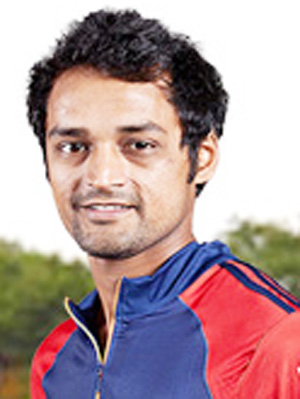 Born on August 12, 1989 in Muzaffarpur, Bihar, Shahbaz Nadeem is a slow left-arm orthodox bowler, who played for Bihar Under-14 side and currently plays for Jharkhand and Delhi Daredevils.
Even before he made his first-class debut, Nadeem was seen as the next big left-arm slow bowler. He has a classical, flowing lefty’s action, is naturally inclined to bowl round the wicket to right-hand batsmen, and has the boldness to experiment with varying degrees of loop. In addition, he is an athletic fielder and a fixture at point for his state and the East Zone side.
He came into the reckoning with a nine-wicket haul against Sikkim in an Under-15 game in 2002. His first-class debut earlier this season was impressive, but he found himself under the hammer against Australia in the Under-19 one-dayers, and played only one match in the Under-19 World Cup.
In the 2012 IPL season, Nadeem made a breakthrough in the Delhi Daredevils team with impressive performances. He was also one of the seven players nominated for IPL Rising Star of the year award.
Nadeem is a consistent performer for Jharkhand and a regular member of India A teams from last 2 years.
Nadeem recently toured South Africa with the India-A team and had a decent outing there, took wickets and scored some runs while batting at lower-order. For performing consistently at the higher levels, Nadeem has got the National selectors nod by being picked in the 30-member probables for T20 World Cup.
Identify the Player:
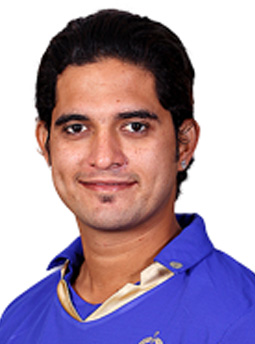
Write a brief description about him in 250 words.
Questions of this week:
1. Who scored century for India in the first match of the ongoing ODI series against New Zealand?
2. For which team Naman Ojha played in Indian Premier League (IPL) Season-6?
3. Who emerged top scorer for New Zealand in the second ODI of the ongoing series against India?
4. Name the team which lifted the title trophy of 2nd Christmas Soccer Championship, organized by Christian Sports Organisation, J&K recently?
5. Who is TA Shekar?
Answers of the last week:
1. Shahbaz Nadeem 2. Mumbai Indians 3. Brendon McCullum 4. Parvez Rasool & Omar Nazir 5. Former Australian Fast Bowler.
The best entry of this week was received from Sunil Kumar, Krishna Nagar, Jammu.
The other entries of the week were from Kewal Krishan, Talab Tiloo, Jammu; Ajay Sharma, New Plots, Jammu; Pritam Singh, Domana, Jammu; Dheeraj Sharma, Patoli Brahmana, Jammu; Sanjay Dhar, Lane-1, H No-3, Upper Laxmi Nagar, Sarwal, Jammu and Tushar Mahajan, H No 55 Lower Laxmi Nagar Sarwal, Jammu.
Dear Contestants, please send your reply within five days to:-
Sports sphere, Daily Excelsior
C/o Excelsior House, Janipur, Jammu. Pin 180007
Or through e-mail: sportsquiz@dailyexcelsior.com
Winners of cultural dance event posing alongwith the dignitaries during ‘Drishti 2014’ on Saturday.
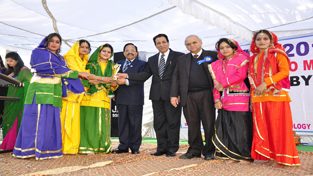
Winners of cultural dance event posing alongwith the dignitaries during ‘Drishti 2014’ on Saturday.
Li Na (R) of China poses with the Daphne Akhurst Memorial Cup, standing next to Dominika Cibulkova of Slovakia, whom she defeated in their women’s singles final match at the Australian Open 2014 tennis tournament in Melbourne

Li Na (R) of China poses with the Daphne Akhurst Memorial Cup, standing next to Dominika Cibulkova of Slovakia, whom she defeated in their women’s singles final match at the Australian Open 2014 tennis tournament in Melbourne
Wandhama massacre:Omar rubbishes criticism about govt inaction
SRINAGAR, Jan 25: Jammu and Kashmir Chief Minister Omar Abdullah today brushed aside criticism that the state government did not act against the perpetrarors of 1998 Wandhama massacre of Kashmiri Pandits, saying 12 militants responsible for the act were killed.
“A lot of chatter about alleged inaction following #Wandahama massacre of Kashmiri Pandits. Facts are very different and counter (the) allegation. Stay with me while I put the facts here – night of 25th Jan ‘1998, 23 Pandits killed by militants in #Wandahama. Harkat ul Ansar suspected,” Omar wrote on micro-blogging site twitter.Com.
The Chief Minister said on February 17 that year, security forces launched an operation and six foreign militants, probably Pakistanis, were killed and another injured.
“All HUA cadres. Injured HUA militant admits to being part of #Wandhama massacre and names other dead ones as accomplices with name of ISI commander also,” Omar said.
He said six more foreign militants of Harkat were killed in operations over the following years.
“Further ops over next years in #Wandhama area see 6 more HUA foreigners killed & no evidence or intelligence of further involvement (of more militants),” the Chief Minister said.
He said the case was closed after that. “As a result the case was closed. To suggest no action followed #Wandhama massacre or Govt slept/ignored is NOT supported by facts,” he said.
A Kashmiri Pandit organisation, KPSS, yesterday alleged that the government took no action to bring the perpetrators of Wandhama massacre to book and demanded that the Chief Minister issue a statement about the action taken in the case. (AGENCIES)