

NEW DELHI, Jan 11: Prices of palmolein and soyabean recovered by Rs 100 per quintal on the wholesale oils and oilseeds market today on emergence of buying at existing lower levels.
However, other edible and non-edible oils held steady in restricted activity.
Marketmen said emergence of buying at prevailing lower levels mainly led to recovery in palmolein and soyabean oil prices.
In the national capital, palmolein (rbd) and palmolein (Kandla) oils recovered by Rs 100 each at Rs 6,300 and Rs 5,900 per quintal, respectively.
Soyabean refined mill delivery (Indore) and soyabean degum (Kandla) oils also moved up by similar margin to Rs 7,200 and Rs 6,900 per quintal, respectively.
The following were today’s quotations per quintal:
Oilseeds: Mustardseed 2,950-3,050 and Groundnut Seed 2,150-2,900.
Vanaspati Ghee (15-litre tin) 1,160-1,290.
Edible oils: Groundnut Mill Delivery (Gujarat) 7,900, Groundnut Solvent Refined (per tin) 1,950-2,000, Mustard expeller (Dadri) 7,200, Mustard Pakki Ghani (per tin) 1,280-1,360, Mustard Kachi Ghani (per tin) 1,365-1,465, Sunflower 6,300, Sesame Mill Delivery 11,400, Soybean Refined Mill Delivery (Indore) 7,200, Soyabean Degum (Kandla) 6,900, Crude Palm Oil (Ex-Kandla) 5,300, Cottonseed Mill Delivery (Haryana) 6,200, Palmolein (RBD) Rs 6,300, Palmolein (Kandla) 5,900, Rice Bran (phy) 3,800 and Coconut (per tin) 1,380-1,430.
Non-edible oils: Linseed 7,200, Mahuwa 4,000, Castor 9,400-9,500, Neem 5,200-5,300, Rice Bran 3,170-3,270 and Palm Fatty 3,225-3,300.
Oilcakes: Groundnut Dehusk 800-850, Sesame 950-1,150, Mustard (New) 1,000-1,025, Mustard 1,200-1,210 and Cottonseed 1,075-1,175. (AGENCIES)
Palmolein, soyabean oils up on fresh buying
Sports Sphere
SUNDAY, january 12, 2014
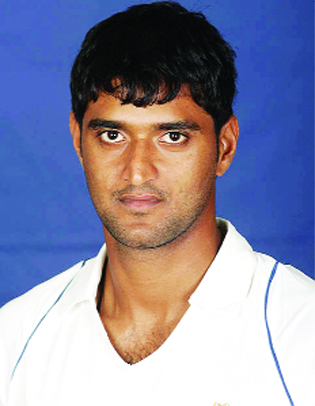 Born on May 6, 1995, Pankaj Singh is an Indian first-class cricketer, who was born in Sultanpur, Uttar Pradesh. Pankaj is a fast bowler. He was selected to the Indian Test Cricket squad for the Border-Gavaskar Trophy series of 2007-08 in Australia, but was not selected to play. He plays for the Rajasthan Royals in the Indian Premier League (IPL).[2] [3] A tall and strapping right-arm medium-fast bowler from Rajasthan, has progressed from the Under-19 level to the India A side with consistent performances since he made his first-class debut in August 2003. By 2006 he started showing signs of having matured, taking Rajasthan to the final of the Ranji Plate league, with 21 wickets at 20.95. In 2007, he was part of India A’s twin tour of Zimbabwe and Kenya, and a total of 18 wickets in the unofficial Tests and ODIs in Kenya earned him a spot for the home series against South Africa A. With Sreesanth and Munaf Patel injured, he earned a call-up to India’s Test squad to tour Australia. He signed with the Rajasthan Royals in the inaugural IPL before transferring to Royal Challengers Bangalore for the second season. His next big break came when he was included in the limited-overs sides for India’s tour of Zimbabwe, when the selectors decided to rest several senior players.
Pankaj has the distinction of swinging the ball both the ways and has the ability to hit the deck.
He has been a good performer for Rajasthan at the domestic circuit for many seasons.
Identify the Player:
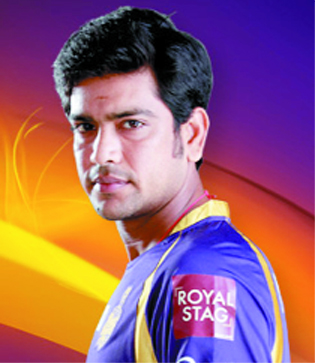
Write a brief description about him in 250 words.
Questions of this week:
1. Name the all-rounder who is new comer selected for the New Zeeland Tour of India recently?
2. For which team Iqbal Abdullah played in Indian Premier League (IPL) Season-6?
3. Who was the top scorer of the 2nd Test match of India-SA Series, which concluded recently?
4. Who scored century for J&K in the Ranji trophy quarterfinal match at Vadodara in Gujarat?
5. Who is Richard Hadlee?
Answers of the last week:
1. 29 runs 2. Pune Warriors 3. Dale Steyn 4. Jammu and Kashmir 5. Indian First Class cricketer.
The best entry of this week was received from Tushar Mahajan, H No 55 Lower Laxmi Nagar Sarwal, Jammu.
The other entries of the week were from Sanjay Dhar, Lane-1, H No-3, Upper Laxmi Nagar, Sarwal, Jammu; Rohit Bhat, Janipur, Jammu; Rajan Singh, Vijaypur, Samba: Satish Kumar, New Plot, Jammu; Dheeraj Sharma, Patoli Brahmana, Jammu and Nipun Verma, Krishna Nagar, Jammu.
Land grabbing act foiled
Thanks to prompt and determined action by the District Administration of Jammu, attempts of a land mafia to grab and damage the state land Khasra No.219 at village Pargalta close to Bajalta railway station have been stymied. A brazen faced attempt was made under cover of darkness and in a drizzle to deploy machinery to change the face of the land and inflict damage to Government property. Obviously such audacious acts take shape only when the perpetrators have covert support of sections of officialdom, be it the revenue or the police department. Apart from this, a second attempt made by the land mafia shows that they also enjoy support from sections of political leadership. Without these agencies extending clandestine support, the miscreants cannot muster courage to do what they had planned to do. The DC has rightly taken full notice and ordered filing of FIR, which has already been done. Additionally, he has ordered inquiry into the criminal act. This is the correct and legal action which he is expected to do as the head of the administration in the district. We have no doubt in our mind that the inquiry committee will submit a report of its finding and then proper and legal action will follow. We appreciate cooperation offered by the police in thwarting the conspiracy.
It may be reminded that we have, in these columns, taken up the case of land mafia spreading its tentacles in Jammu. The mafia has grown substantially and is always on the prowl to grab land wherever it can. They have developed nexus in the Revenue and Police and Forest Departments. This menace has to be eradicated once for all. Unless the involved persons are apprehended and given exemplary punishment, they may not abandon their nefarious activities.
Cipher Decipher
SUNDAY, january 12, 2014
Hi Friends! We are back with your favourite column for the week. Please have a look at OUR MESSAGE before you send in your message to us.
1. To all from Abhhe Gupta: “ The darkness is what inspires us to reach for the light”.
2. From Ruchika Jandial to all: “ A meaningful silence is always better than a meaningless words”.
3. To all from Khemlata Koul: “ Success always comes when preparations meets opportunity”.
4. From Sanjay Dhar to all: “ When there is good, there is also evil. Where there is wealth, there is bound to be poverty. Where there is health, we also find sickness. Joy and sorrow are two sides of the same coin”.
5. To all from Anil Kumar Nanda: “ Luck is nothing but a sense to recognize that right time to do what is right”.
6. From Rishab Gupta to all: “ Additional risks in life is not taking risk” .
7. To all from Rishika Raina: “ Happiness is not only how to make yourself happy but it is also how to draw a smile on others face ”.
8. From Usha Raina to all: “ Never compete with someone who has nothing to lose”.
9. To all from Neeraj Gupta: “ It is not best that we should all think alike, it difference of opinion which makes horse races”.
10. From Dr Poonam Nanda to all: “ It is not the problem, but the attitude towards problem that makes the difference”.
11. To all from Manorama Sharma: “ What lies behind us and what lies below us are tiny matters, compared to what lies within us ”.
12. From Monika Mishra to all: “ When we try to degrade others, is so doing we degrade ourselves”.
13. To all from Mrs P Jain : “ Always welcome the opportunity gifted by almighty God, once you miss it, it may be lost for ever”
BEST MESSAGE
The award of rupees 200 for this week’s best message has gone to MAHIMA SINGH R/o V.P.O. PALLANWALA, TEHSIL AKHNOOR, DISTRICT, JAMMU for the message “ Try to recapture the happiness within yourself; think of all the beauty in yourself and in everything around you and be happy”.
Congrats. The prize money would be sent to you through money order.
our message
Please do mention pin code number of areas while sending your message to EXCELSIOR.
Your message must reach us by Friday evening.
To send your message, use CIPHER-DECIPHER message chit.
Your entries should be brief and original. We use those messages devoid of hurting the sentiments of the people.
Out of the messages we receive, one of the message is selected for the award.
Haresh Singh
Swami Vivekananda in Kashmir
Rakesh Kumar Pandit
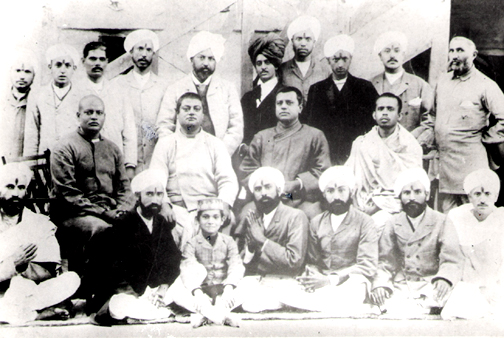
As the grateful nation celebrated the year 2013 as the 150th birth anniversary year of Swami Vivekananda and on 12th January 2014, the grateful nation will celebrate 151th birth anniversary of this Prophet of Modern India. I take this opportunity to highlight some of the important events of his Kashmir visit. During his stay in Kashmir Swami Vivekananda was in a different world altogether. He was deeply touched by the beauty of Kashmir. Swami Vivekananda visited Kashmir twice and it was on 10th September 1897, when the lotus feet of this great saint touched the beautiful and pious land of Rishis, once called as Reshver. His first visit of Kashmir was short and was not so eventful although he visited some of the places of religious and historic importance. People from all spheres of life like Sadhus, Kashmiri Pandits, students, officials went to meet him. The second visit of Swami Vivekanand to Kashmir valley was more eventful. This time a party of Europians was accompanying him. Prominent among them was Sister Nivedita (Margret Noble). He stayed in Kashmir from about mid of June 1898 to the mid of September 1898. During this stay he visited the places of religious and historical importance like Shankaracharya Hill, Hari Parvat, Martand (Matan or Bhawan), Panderthan (Pandresthan, Place of Pandavas), temples of Avantipora, Bijbehara, Moghul Gardens of Nishat and Shalimar . But the focus of this article is his visits to shrines of Shri Amarnath Ji Cave and Mata Kheer Bhawani in Tulmulla. The visits of Shri Amarnath and Mata Kheer Bhawani proved to be very unique and the visions he had at both the places remained always with him. Such was the spiritual experience of Swami Vivekananda at these places that it is very difficult to put that into words but can only be felt from the actual words of Swami Vivekananda. It also reflects the essence of both these energy centres charged with God’s presence in the vale of Kashmir.
Swami Vivekananda had great fascination for God Shiva during his childhood. As he grew older his love for Shiva, the God of monks and yogis deepened. Now in the Himalayas, the abode of God Shiva, the thought of God Shiva was uppermost in the Swami Vivekananda’s mind. It was at Achabal in Anantnag on July 25, 1898 that Swami Vivekananda expressed his intention to visit Amarnath and Sister Nivedita was allowed to join him. On 27 July, 1898 they left for the pilgrimage. Enroute they camped at various places like Phahalgam, Chandanwari, Wavjan. On August 1st, after crossing Sheshnag, Mahagunus top they reached Panchtarni (Place of five streams). On August 2, they reached the Shri Amarnath Ji Cave. When Swami Vivekananda reached the cave he was full with emotion and devotion. Swami Vivekananda entered the shrine nude except his loin-cloth and prostrated before the God-Shiva in the form of Ice-Lingam. An exalting spiritual experience came to him of which he didn’t spoke much in detail but only said, “I thought the Ice-Lingam was Shiva Himself.” When he entered the cave and came face to face with the God-Shiva, Swami Vivekananda had never felt such spiritual exaltation in visiting a holy place as in Amarnath Ji. Afterwards he also said to Sister Nivedita that the God Shiva appeared before him and granted him the grace of Amarnath, means not to die till he himself a the consent. On the journey back Swami Vivekananda and party returned to Anantnag and from there they reached on August 8, by boat to Srinagar.
Following the pilgrimage to Shri Amarnath Ji, Swami Vivekananda’s love for the Divine Mother grew intense. At Srinagar he worshipped the four year daughter of his Muslim boatman ( Swami was staying in a houseboat at Srinagar) as “Goddess Uma”. When he left Kashmir, she, tiny one carried a tray of apples for him all the way to the tonga herself. On September 30, Swami Vivekananda left for Mata Kheer Bhawani at Tulmulla, leaving strict instructions to his party not to follow him. He stayed there almost for a week. He daily performed Havan there, and worshipped the Mother with offerings of Kheer. Every morning he worshipped a Brahmin Pandit’s little daughter as “Uma Kumari.” One day at Kheer Bhawani while worshipping, the thought of the ruination and desecration of the temple by the Muslim invaders left him distressed at heart. He thought that Mother has been manifesting Her presence here for untold years, “How could the people have permitted such sacrilege without offering resistance.
If I had been here then, I would never have allowed such a thing. I would have laid down my life to protect the Mother.” Thereupon he heard the voice of the Mother Goddess saying, “What if unbelievers should enter My temple and defile My image? What is that to you? Do you protect Me, or do I protect you? Another day, in course of his worship, another thought flashed through the Swami Vivekananda’s mind that he should try to build a new temple in the place of a present dilapidated one. He even thought of trying to raise funds for this. At once the Divine Mother said to him, “My child, If I so wish I can have innumerable temples and monastic centres. I can even this moment raise a seven-storied golden temple on this very spot.” Referring to these experiences after his return, he said to his disciples, “All my patriotism is gone. Everything is gone. Now it is only Mother! Mother! I have been very wrong. I am only a little child.” Since I heard that divine voice, I have ceased making any more plans. Let these things be as Mother wishes.” It is often said that the vision at Tulmulla made him realize, what he is and for what he is in this world? Ramakrishna Parmahansa his Guru had once prophesied during a discourse with his close disciples that when Vivekananda realize who he is, he will not like to live anymore in this world and would depart from it. On July 4, 1902 Swami Vivekananda at the age of 39 years, 5 months and 24 days left his mortal cage, to reunite with the Supreme Energy of this Cosmos, thereby fulfilling his own prophecy, ” I shall not live to be forty years old.”
(The author is Assistant Professor of Physics at GDC- Bhaderwah).
Transfer Policy of Government employees
Sir,
The Government employees will get some relief after the intervention of Supreme Court of India by giving landmark notice to the State Governments for their transfer policy in respect of employees of their respective states. The decision is well appreciated by the employees and public at large, who without any fault have to be ready with their bed holdings to join their new place of postings to their utmost surprise without completing basic tenure that is two years. Even in some cases, without allowing the employees to avail joining time as if orders were issued on war footings.
In many cases, intelligent, honest, hard working employees are the victims of these orders. Their only fault is that they have no approach in the higher-ups and are poor medium category employees living hand to mouth. Their only source of income is their salary.
Recently, it was reported in this newspapers that employees who are serving in Ladakh and who have completed their tenure of two-three years have not been transferred till date from that area. If Government takes one decision of two-three year tenure in one place then what is the reason that they ignore, violate their own decisions causing serious problems for the employees who often have to face depression, heart problems and live on medication. We often read in newspapers, especially about Police Department that SHOs of respective stations are transferred within months. We see the officers being transferred, shuffled from one range to another even to other districts without giving them chance to settle. How law and order will be maintained when officers are not sure whether they have to complete two years at that post. There are many dedicated officers, employees who are sufferers.
But, there is another side of the story. Many blue eyed employees; Yes-men of bosses who have no semblance of merit and honesty are stationed at one place close to their bosses. After completing 10-15 years of service at that place, no higher-up dares to transfer them. These types of employees have their own groups, completely united and having networks fast like the 3G in communication with them. One can watch these types of employees in every department of the Government. They show that they are the bosses who run the government and without them, nothing is possible.
Yours etc………
Kaushal Kotwal
SDAO (Retd.), Jammu
Knee Arthiritis

Demand for knee replacements among the age group of 45-64 has tripled since the last two to three years.
So patients getting operated at the age of 45 need Revision surgeries to be done.
As we have growing BABY BOOMERS (young population developing advanced knee OA) bigger is the pressure on industry to have systems lasting multiple decades maybe 30 years+….. This knee replacement lasting more than 30 years is a concept which is beyond just purely an implant…..its biomaterials, accuracy, alignment, gender specific design, sizing, technology and conglomeration of all these is the answer for a knee replacement which is biological, gives high bending and longevity of more than 30 years.
New technology is specifically engineered to address the unmet market need for smaller sized women population that is still younger spectrum and wishes for surgery that is high flexion, painless, minimally invasive and can last a lifetime.
High Flexion Knee Implants with special polyethylene ATTUNE™
Attune is an innovative, comprehensive and integrated knee system created as a result of more than six years of extensive research to address unmet patient, surgeon and provider needs and is latest advancement in knee replacement options. It provides the best in class knee replacement solution for highly demanding & active lifestyles. This combines the latest in design, kinematics, engineering and materials to deliver a high level of stability and motion.
* Wear resistance results in longer lasting knees.
* Allows for greater knee bending such as sitting cross-legged
* Natural-bone conserving design.
VERILAST™
* Combination of OXINIUM™ metal alloy and “highly crosslinked” polyethylene
* A knee implant technology that combines two low-friction materials
* Oxinium reduces plastic component wear by 85% when compared to cobalt chrome
Pin-less Computer Navigation
* Latest advancements in Computer assisted knee surgery is the Pin-less Knee Navigation System.
* This procedure is far less invasive for patients as compared to conventional CAS surgery.
* No incision necessary in the shin bone or the thigh bone.
* No extra stab wounds and hole marks that you have with other navigation systems.
Drastic reduction in risk of infection and chances of injury after the surgery, which likely means a longer lasting knee.
Patient Specific Instrumentation
* Use of patient specific instruments provides a tailormade solution for each patient resulting in perfectly aligned knee implant.
* Personalized solution based on a patient’s unique anatomy.
Minimally invasive TKR & Painless Surgery
Smaller incision as compared to the traditional 10 to 12 inch incision minimizes the amount of soft tissue damage that occurs when a surgeon reconstructs a knee. The potential benefits of this approach include: Less bleeding during surgery, less post-operative pain, shorter recovery time & smaller scars for improved cosmetics.
(The author is Director & Head Max elite Institute Orthopaedics).
Hair Care During Winter

Shahnaz Husain
While travelling in winter, or on a winter vacation, one should carry Hair cream with sunscreen, herbal shampoo, hair serum, hair conditioner.
The winter hair care routine should entail oil applications with warmed oil twice a week. Pure coconut oil or olive oil may be heated and applied, followed by a hot towel wrap. Wash the hair twice a week, using less shampoo and rinse well with water. If the hair is dry, apply a creamy conditioner, leaving it on for 2 minutes and rinsing with water.
In dry and cold weather, the hair may lack moisture. Use a mild herbal shampoo and conditioner to soften the hair and make it smooth and manageable. One can also use a hair serum or leave-on type of conditioner. Take very little and apply it the same way, but do not rinse off. Apply conditioners on the ends too. A hair cream with sunscreen would provide protection from the sun. A mild herbal shampoo is a must. Carry a scarf along to protect your hair from over-exposure to the sun, as well as from wind and dust. You will need it if you are out motoring, boating or even walking.
Even during your holiday, you can use natural ingredients for your hair to improve its look. Ingredients like tea and beer may be easily available and can be used to rinse the hair and add shine to it. Beer works well for winter. Add the juice of a lemon to the beer and rinse the hair with it. Leave on for a few minutes and rinse off with plain water. It softens and smoothens the hair and also adds shine.
Or, add a tea bag to 4 to 5 cups of warm water. Remove tea bag and cool the water. Then add the juice of a lemon and use it as a last rinse. This helps to make the hair silky and shiny.
Colouring and styling should be done before the vacation. However, one can carry a hair dryer, rollers or heating rod to style the hair yourself. If hair dryer and heating rods are used, it would be necessary to use oil and conditioners to reduce hair damage.
The classic ponytail is dictating trends and is ideal for holidays. It suits most face shapes, because one can wear a pony tail high or low, with a fringe or without, or with wisps or curls falling down, with that carefully-careless look. A ponytail is actually an easy hair do. With ribbons, or other hair accessories, it can even provide a touch of glamour.
Braids are also in. One can have a side brain and tie it up with a matching ribbon.
You can do up the hair in several braids and then put them up in a pony tail with ribbons. Coloured ribbons can also be used all along the braid.
If you have frizzy hair, first apply an anti-frizz cream or spray. Comb the hair by sweeping it all to one side. Then divide it into three sections and make a loose braid and secure it with a ribbon, scrunchy or rubber band. The wisps of hair that remain can frame the face, or some may be pinned up to give you the carefully careless look.
Putting the hair up is in vogue. It can be put up with the help of hair accessories, with curls and ringlets. Long hair may be put up too, in a casual knot or chignon. It may be as a top knot, or at the nape of the neck. They can be secured with decorative clips and hair accessories.
Celebrating spirit of Lohri
Lalit Gupta
Lohri which falls on January 13 this year is one such agrarian festival which marks the waning of winter and beginning of summer. Geographically speaking, the earth leans towards the sun along the Tropic of Capricorn (Makara rekha) from the day following Lohri, also known as Winter Solstice. The earth, farthest from the sun at this point of time, starts its journey towards the sun along its elliptical orbit, thus heralding in the onset of spring. It is this transition which is celebrated as Lohri in northern India, Makara sankranti in the central part of the country and as Pongal-Sankranti in South India.
In other words Lohri marks the end of winter on the last day of Paush, and beginning of Magha (around January 12 and 13), when the sun changes its course. It is associated with the worship of the sun and fire and is observed by all communities.
Lohri, a festival of rejoice and dances, is celebrated with great fervour and festivity throughout Jammu region as elsewhere in northern India. Significance of Lohri is no more restricted to celebration only but also implies a wonderful time for people to rejoice and rejuvenate themselves from their chores and unite to share some fun and relive the cultural values. People exchange Lohri wishes to spread and celebrates the spirit of festivity.
The Bonfire Ritual:
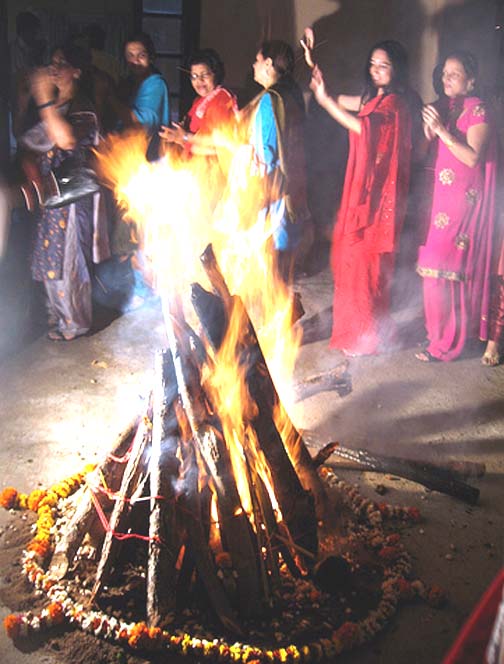
One of the essential features of Lohri is the worship of fire. The focus is on the bonfire. The Lohri fire gets sanctified and it is considered a representation of energy and spiritual strength and is lit during the festival in every household. There is puja, involving parikrama around the fire and distribution of prasad. The prasad comprises of five main items: til (sesame seed), gajak (a hardened bar of peanuts in jaggery or sugar syrup), gur (jaggery), moongphali (peanuts) and popcorn. This symbolises a prayer to Agni, the spark of life, for abundant crops and prosperity. This festival is also believed to burn all the moments of sadness and brings in warmth of happiness and love.
Legend of Lohri:
The questions like when it began and why it lost in the midst of antiquity are there to answer. There are various interesting folk stories and legends associated with this festival. The very famous story from history is that during the reign of Akbar there was a Raja of Pindi Bhattian, Dulla Bhatti. Dulla Bhatti was known, respected and loved by tribal people as he used to rob the rich and help poor. Dulla Bhatti once rescued a girl from the kidnappers and then adopted her as his daughter. Bhatti was sentenced to death by the Mughal king Akbar for revolting against him later. Since then this hero is remembered each year on Lohri and the traditional song is sung as a tribute to this hero. On this occasion, children in groups move from door to door and sing the Dulla Bhatti song:
Sunder Munderi hei!hoi
Tera kaun Bechara!hoi
Dullah Bhattiwala!hoi
Dullah di dhi viyahi!hoi
First Lohri : The festival assumes greater significance if there has been a happy event in the family during the elapsed year, like the birth of a male child or marriage. The first Lohri of a bride or a newborn baby is considered extremely auspices.
Lohri of first born daughter: Recently there is an emerging trend to celebrate the first Lohri of girl child also. This not only mirrors the changing social realities like families opting to have a single child or a family with two daughters but also testifies the phenomenal change of mindset in giving equal importance to the female child. The new value system under which daughters are considered no less than boys has found a befitting expression in Lohri celebrations.
Festivites : Lohri celebrations are never complete without music and dance, and feasting is invariably rounded off with a vigorous bit of shake-a-leg. The enthusiastic groups of young children used to go to every house and shops singings songs many days before the actual festival and the people would generally oblige them by giving them money, some eatables or even firewood as offering for the festival.
In the late evening, the people irrespective of caste, creed or faith would gather round the bonfire and do traditional dances and sing songs of joy. Logs of wood as piled up together for a bonfire in a busy chowks or a street corner and the people indulge in singings songs and dancing which symbolizes a prayer to Agni (Fire God) for abundant crops and prosperity as this festival is also associated with the harvest season.
Chajjas: Vanished heritage of Jammu
During the decades of 1960s and 70s, Lohri celebration were unique and integral part of Jammu popular culture and everyone’s childhood in the city. The festivals most distinguishing feature was Chajja, an artistic presentation of dancing peacock. Mounted on a bamboo mannequin covered with myriad shapes of ‘pattis’, flowers, made in materials like card board, colored glazed sheets, silks, crepe, satin, and decorated with pieces of mirrors, and any exotic object that was considered appropriate- these were showcases of every mohalla’s pride.
In fact making of Chhajja, was a statement of artistic and craft skills, an opportunity for local young men to hone and exhibit their aesthetic skills in handling of materials and ideas. Young boys and men of every mohalla, locality, under guidance of senior persons would get engaged in the serious business of making a Chhajja.
Since best Chhajja was also awarded on the day of Lohri, there used to be fierce competition between mohallas like Panjtirthi, Pakki Dhakki, Mastgarh etc. Every mohalla, worth its salt, would prepare a decorative and colorful Chajjaa according to available skillful hands, funds and patronage. Chhajjas would be prepared very quietly at secret destinations, without letting know the competitors details of the designs. The groups vying with each other in use of new colorful, decorative, extra shining materials would scout meticulously each city shop. There used to be extra vigil, lest the spies of the rival parties may copy details of the design, materials as the contest to come out new ideas every year was always on.
On the Lohri day Chhajjas carried by one or two young men were like flaming trails of Peacocks feathers on move and presented a spectacle for everyone. The riot of colors that moved along with group of dancers dancing in gay abundance accompanied by deafening beats of drums, would reverberate the bazaars and localities of the city.
Chajjas parties after visiting homes of relatives and friends especially those with a newlywed couple or a newly born male child, would head for their final destination of the royal palace where Maharani Tara Devi, mother of Dr Karan Singh would give away sweets and cash awards to dancing groups.
Today when Lohri celebrations have been reduced to people sending personalized Lohri greetings and fancy gifts to their dear ones, the fascinating Lohri messages and lovely Lohri SMS of ‘Happy Lorhi,, the heady days of Chajjas of Jammu in 1960s-70’s remain but only cherished memories of the vibrant folk and popular cultural practice of Duggar.
Regional Names
Lohri is celebrated throughout the country in different forms, having various regional names as a harvest festival. It is called Pongal in the South, Bhugali Bihu in Assam, Bhogi in Andhra Pradesh and Sankranti in the central part of the country. Modes of celebrating Lohri are also different, but the message conveyed by the festival, that of setting aside differences and rejoicing by celebrating the end of the harvest season and the chilly winter, is the same. The various regional names of Lohri are:
Uttarayan: Uttarayan, traditionally believed to be the starting point of the sun’s northward journey, is celebrated according to the solar calendar on 14th January. Uttarayan is celebrated all over Gujarat but the excitement is high at Ahmedabad, Surat, Nadiad and Vadodara.
International Kite Festival: From dawn to dusk, people of all ages fly kites rejoicing in the spirit of the International Kite festival of Gujarat. Falling on 14th January, the sky is enlivened by kites of different colors and hues. Kites soar in the sky, their lines moving as if alive. Crowded rooftops, fun-loving rivalry to outdo each other, and delicious Gujarati feast are the hall-marks of the day.
Pongal: In south, Pongal is a festival when god is praised with a simple faith and sincerity. Old vices are all washed out and all that is good is welcomed in this New year. This festival is of all living things, who look up to the heaven in joy and thankfulness to God for everything that He gives to man specially peace and happiness and the feeling of brotherhood.
Makar Sankranti : Makar Sankranti marks the beginning of Uttarayan, the Sun’s northward journey. Makar is called Capricorn in the western astrological calendar. Makar Sankranti falls on 14th of January every year.
Bihu/Bohaggiyo Bhishu: Bihu is the most important non-religious festival of the Assamese people. People of this state observe it every year irrespective of their class and caste.
Ganga Sagar Mela : One of the most famous festivals of India, it is held on the Ganga Sagar Island, at the mouth of the river Hooghly in Bengal. It is attended by thousands of pilgrims every year. A dip in the water at this place, during Gangasagar Mela, is considered to be extremely sacred. On the day of Makar Sankranti (January 14), when the sun makes a transition to Capricorn from Sagittarius, it is said that the bath becomes a holy source of salvation.
Healthy Foods

Prof. R.D. Gupta
Leafy vegetables : It is not possible to fulfill one’s nutrition requirements one’s nutritional requirements without having vegetables especially leafy ones in the diet. Leafy vegetables mostly consist of spinach, fenugreek leaves, drumstick, asparagus, lettuce, broccoli etc; which are available in abundance and constitute a good source of fibre besides vitamins. Main vitamins present in leafy vegetables are vitamin A, vitamin C, vitamin K and folic acid. Leafy vegetables are also a vision protector and furnish with four essential minerals viz; calcium, magnesium, iron and potassium. Always try to include one of the aforesaid leafy vegetables in diet and make darker the better.
Summer vegetables : Pumpkins are rich in beta carotene, calcium, potassium and fibre. In traditional medicines pumpkins are known to possess cooling effects and diuretic in nature, and as such, these are good for stomach upset. Yellow pumpkin is a good source of soluble fibre, which assists to fight constipation.
Bottle gourd (ghiya) and squash (tinda) contain iron and some amount of calcium. Bitter gourd (karela) possesses good quantity of iron and vitamin C, and has proved in preventing diabetes. Lady’s finger (bhindi) has good amount of calcium, folic acid and vitamin C. It is also good source of soluble fiber, and is very good for checking blood sugar levels.
Whole grains food : Whole grains food have up to 90 per cent more fibre, and essential nutrients and vitamins than refined food grains. These food grains assist to reduce cholesterol. They are also super rich in vitamins and minerals. Consuming whole grains food like wheat, barely etc; in daily diet ensure the intake of glucose immediately, which is important ingredients for brain to function perfectly as well as source of energy to various parts of the body. Whole wheat bread and pasta, and brown rice are high in essential nutrients and do not contribute to weight gain. Hence one should start for at least one day with whole wheat cereal or a whole wheat bread toast. Oats porridge or local style upma is a great breakfast option, home baked oatmeal cookies make for a mid meal snack.
Powder oatmeal and blend with milk/yoghurt for thick pan cakes topped off with dried or cut fruit and honey. It can also be mixed with dosa batter or use as dosa battar.
Nuts : Always make nuts as an essential component in the diet as they are an excellent source of proteins and vitamins especially B and E. They have proved beneficial in fighting heart disease and cancer. Although nuts are high in calories and fat yet their fat is the heart healthy kind. Nuts (chilgoza), walnut (akhroat), pumpkin and gourd seeds (coarse charmagaz) and cucumber seeds (fine charmagaz). Sesame and linseed seeds/ flaxseeds also perform the same functions as the aforesaid nuts do.
Little nuts, especially almonds are rich in antioxidants and also contain omega – 3 fatty acids. Almonds are rich in protein, healthy oils, fibre, vitamin E, magnesium and heart favourable mono and polysaturated and help to check cholesterol level. Eating a few almonds every day can be absolutely worth for them who are able to devote them, though one needs to keep an eye on the calories one consumes. About a quarter cup i.e 20-25 almonds, cashews, kernel of walnuts are good enough in a week. A handful of almonds possess 164 calories and 7g of protein which help to control what one eats. Almonds also help growing children in developing strong bones. A study done by scholars from University of Medicine and Dentistry of New Jersey, West Chester University and Loma Linda University of California (all in the US) and published in the Journal of the American College of Nutrition also confirm that almond can control diabetes if are consumed regularly.
Berries : Berries are high in fibre content and help to curb weight. They have more protective plant antioxidants than almost any other food. Antioxidants not only lower disease risks but also assist to prevent memory loss. They are rich in vitamins particularly vitamin C. Numerous studies have shown that berries offer great protection against heart disease stroke, cancer and many other diseases.
Among various kinds of berries like Indian goose berries (amla), black berries and blueberries, the last one top the antioxidant fruit in the benefits listed above. Besides, other health benefits, blueberries help to prevent high blood pressure, macular degeneration and brain damage leading to Alzheimer’s disease. Blueberry is a beautiful fruit rich not only in antioxidants but also contains vitamins which help to combat the loss of cognitive abilities that is known to deteriorate with growing age. Studies have shown that blueberries prove to be excellent in enhancing learning capacity/memory.
A cup of blueberries has 81 calories and 4g of fibre, whereas blackberries of a single cup contain 74 calories and a whopping 10 g of fibre. Raspberries contain 60 calories in one of its cup with 8g of fibre. One cup of sliced strawberries has 50 calories and 4g of fibre.
Yoghurt : Low fat or plain yoghurt is a great source of protein, calcium and vitamins. It has also healthy bacteria i.e; Lactobacilli which can fight diseases. The amino acids that yoghurt contains result in the formation of substances that are known to deal with stress and also improve memory.