

Excelsior Correspondent
SRINAGAR, June 5: Lieutenant Governor Manoj Sinha on Friday inaugurated District Emergency Operations Centre (DEOC) and Shri Amarnathji Yatra Control Room at the Deputy Commissioner’s Office, Ganderbal.
The Lieutenant Governor said that these facilities will ensure a smooth and seamless pilgrimage experience for the upcoming Shri Amarnathji Yatra.
Jatin Kishore, Deputy Commissioner Ganderbal briefed the Lieutenant Governor on the key features of the new facility.
The centre pools CCTV feeds from across Ganderbal district installed by District Administration, Police and other Security forces, for real-time monitoring at a single centralized location.
The facility is backed by a round-the-clock emergency citizen helpline to provide immediate assistance and crisis mitigation.
In order to ensure a safe and seamless pilgrimage, the Emergency Operations Centre also integrates CCTV Feeds from Baltal Base Camp, approach roads leading upto Baltal Base Camp, Parking Areas in Baltal Base Camp, Sonamarg and Manigam Transit Camp.
It will be instrumental in planning and decision-making during the annual Shri Amarnathji Yatra.
LG inaugurates DEOC, Yatra Control Room at DC Office Ganderbal

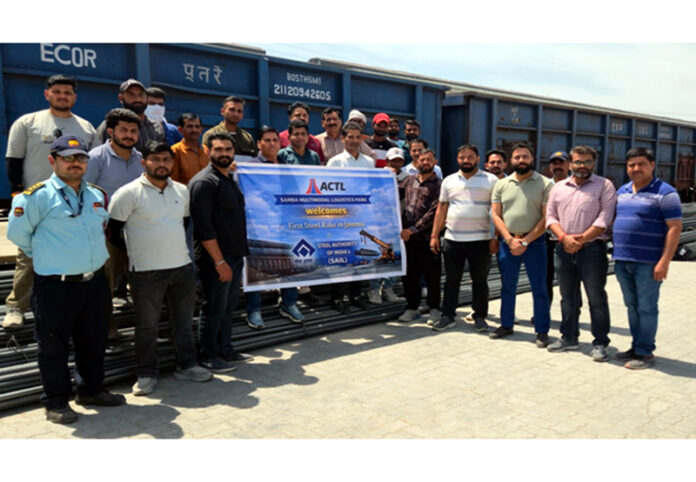
ACTL Samba facilitates successful handling of first-ever SAIL steel rake
Excelsior Correspondent
SAMBA, June 5: Associated Containers Terminal Limited (ACTL), Samba, has successfully handled the first-ever steel rake of Steel Authority of India Limited (SAIL) for its valued customers, M/s Patel Engineering, and M/s C S Constructions marking a significant milestone in the development of efficient, reliable, and cost-effective logistics infrastructure in the Union Territory of Jammu & Kashmir.
The successful operation was made possible through the collective efforts of all stakeholders involved. A key role was played by Bilal Ahmed Bhat, DGM Sales, SAIL; Vikas Vir Singh, SAIL , Sr DOM; Arish Bansal and Sr DCM Uchit Singal of Indian Railways whose coordination with all the stakeholders including Patel Engineering and CS Constructions, was instrumental in ensuring the smooth execution of the rake movement.
Jitender Khanna, General Manager of ACTL said that they always remain thankful to Department of Industries and Commerce for notable contribution made by them under the leadership of Arun Manhas, Director, Directorate of Industries & Commerce (DIC), whose efforts in promoting and facilitating rail-based logistics solutions in the region have helped bridge the gap between industry requirements and efficient transportation infrastructure.
The initiative has contributed substantially towards reducing the logistics cost of steel transportation, resulting in significant savings for stakeholders while enhancing the competitiveness of infrastructure and construction projects across the region.
The successful movement of steel through rail transport is in line with the vision of the Prime Minister of India to promote fuel conservation, reduce carbon emissions, and encourage sustainable logistics solutions.
ACTL Samba, a future-ready rail-connected logistics park, is equipped with modern cargo-handling infrastructure, mechanized equipment, warehousing facilities, and integrated transportation solutions. The facility enables efficient cargo movement, reduces dependence on long-haul road transportation, and supports the national objective of developing an environmentally sustainable and cost-effective logistics ecosystem.
The successful handling of the rake demonstrates the growing importance of multimodal logistics facilities in Jammu & Kashmir and reinforces ACTL Samba’s commitment to providing reliable, efficient, and economical logistics solutions to industries and businesses.
SBSSU introduces new industry-oriented programmes
Excelsior Correspondent
FEROZPUR, June 5: Strengthening its commitment to providing quality, employment-oriented and future-focused higher education, Shaheed Bhagat Singh State University (SBSSU), Ferozepur today introduced several new programmes designed in line with industry requirements for the academic session 2026-27.
Established under the Government of Punjab, the University is currently offering 37 academic programmes, approved by AICTE and UGC, ranging from Diploma to Ph.D. level.
The University offers high-quality education in the fields of Engineering, Management, Computer Applications, Sciences, Humanities, Agriculture, Architecture, Vocational Education and Research.
The University maintains strong linkages with leading academic institutions and industries across the country. These collaborations play a significant role in curriculum enhancement, dissemination of emerging technologies, internships, industrial training, and placement opportunities for students.
Dean Academic Affairs, Dr Rajeev Garg, while providing detailed information about the existing and newly introduced programmes, stated that keeping in view the emerging technologies and the requirements of Industry 4.0, the University has launched two new B.Tech. programmes from the current academic session.
These programmes have been designed to meet the growing demand for professionals in the fields of Artificial Intelligence, Data Analytics, Automation, Robotics and next-generation computing technologies.
The Vice Chancellor of the University, Dr Suresh Kumar Sharma, stated, “With the introduction of B.Tech in Artificial Intelligence & Machine Learning and B.Tech in Electronics & Computer Engineering, the University is further strengthening its commitment to preparing students for future technologies and emerging career opportunities. The University remains dedicated to aligning its academic programmes with industry requirements, innovation, research, and the vision of the National Education Policy (NEP-2020).”
Campus Registrar Dr Rajeev Arora informed that the University invites aspiring and enthusiastic students to explore its diverse academic programmes and become a part of this prestigious institution committed to excellence in education, innovation, research and skill development.
The economy that lies beautifully

Maj Gen Sanjeev Dogra (Retd)
sanjeev662006@gmail.com
India is officially one of the fastest growing large economies in the world. The headlines are impressive. Roads are being built. Airports are expanding. Digital payments have changed daily life. Infrastructure has visibly improved. Yet, beneath this growth story, there is a quiet unease. The rupee remains under pressure. Foreign investors have pulled out large sums from Indian equities. Too many educated young people are still searching for secure and dignified work. The stock market feels expensive and uncertain. And the common man keeps asking a simple question that no headline can answer: if the economy is doing so well, why does my life still feel so precarious?
This is not a contradiction. It is a signal. And it is the most important signal we have.
The numbers are not lying. But they are not telling the whole truth either. Economics teaches us a simple lesson that politics often resists: everything has a cost, because everything can be used somewhere else. A rupee spent on one scheme cannot be spent on another. Land used for one factory cannot be used for a hospital. And a young person’s five years spent chasing one competitive exam cannot be recovered. The moment a country forgets this arithmetic, treating resources as if they were infinite, it begins spending its future while calling it its present.
Take welfare, for example. Protecting the vulnerable is not just good politics. It is sound statecraft. Kautilya understood this clearly: the stability of the state rests on the wellbeing of its people. Food support, direct benefit transfers, and health coverage are not generosity. They are the floor below which no civilised state allows its citizens to fall. But floors are meant to stand on, not to live on permanently. When welfare stops being a bridge and becomes a destination, it quietly transforms from compassion into dependency. And once that happens, the political incentive to move people out evaporates, because the queue itself becomes a voter base.
Infrastructure makes the same promise with different packaging. A new highway from Jammu to Katra is genuinely useful. But the road itself does not create prosperity. It creates the possibility of prosperity. What actually creates prosperity is what happens along the road: the hotels that open, the local produce that finds new markets, the cold storage that stops farmers from watching their crop rot. Infrastructure is the skeleton. Without the muscle of human capability and local enterprise, it remains a very elegant skeleton doing very little.
This distinction between growth and livelihood is one India must hold in plain sight. Gross domestic product can grow on the back of large infrastructure spending, financial services, and high end consumption. But a young graduate in Udhampur does not live inside GDP. He lives inside opportunity. His question is simple. Where is the job? Government vacancies are few. Corporate hiring is selective. So he waits, moving from one coaching centre to another, and the years that should have been his most productive quietly become his most suspended. Every year a capable young person spends in this limbo is a year their energy produces nothing for the economy. Multiply that by millions, and you begin to understand why India’s demographic dividend has not yet converted cleanly into economic advantage.
Then there is the rupee. When it weakens, it tells you things that no press release will ever say. Currency pressure is not the problem. It is the symptom. A falling rupee reflects a persistent trade imbalance and a manufacturing base that is not yet deep enough to offset what we buy from the rest of the world. India imports too much of what it should be producing: electronics, energy, components, critical technologies. Each import creates a permanent structural demand for dollars. Atmanirbhar Bharat is the right instinct. But an instinct needs to become an industrial programme with specific targets, honest accountability, and the patience to wait for results that take years, not quarters. Patriotism is an excellent starting point. It is a poor substitute for policy.
The money flowing in and out of Indian markets adds another layer. Foreign Direct Investment is patient money. It builds factories, brings technology, creates jobs, and believes in the long story. Foreign Portfolio Investment is different. It enters when returns look attractive and exits the moment risk rises. When large sums leave Indian equities, it does not mean India has failed. It means sophisticated investors are asking hard questions about whether India’s growth story is backed by real productivity or by optimism with a good marketing team. The stock market, meanwhile, is not the economy. A rising index can reflect genuine confidence, or it can reflect excess liquidity looking for a home. True economic strength announces itself differently: in rising wages, expanding small businesses, growing exports, and households secure enough to plan five years ahead.
Beneath all of this runs something that resists quantification but holds everything together. Trust. Businesses invest when they trust that rules will not change arbitrarily. Young people take risks when they trust that opportunity is real. Households spend when they trust that their future income will hold. Trust is built slowly through consistent policy, fair taxation, reliable data, and the quiet daily evidence that the system is not working against ordinary people. When trust weakens, money becomes cautious. And cautious money does not build nations.
The Indian economy is not in crisis. But it is sending signals, and signals are worth reading before they become emergencies. Headline growth must translate into household confidence. Infrastructure must become employment. Welfare must build capability rather than sustain dependency. The rupee’s stability must come from what India exports, not only from what the Reserve Bank defends. Atmanirbharta must move from a slogan on hoardings to actual supply chains running through actual factories.
Jammu is a good place to think about all of this, because Jammu has never had the luxury of abstractions. This region understands scarcity, resilience, and what it means to build something meaningful under difficult conditions. It also understands that security is not only military. It is economic. Jobs for youth. Industry for towns. Income for farmers. Skills for students who deserve a future they do not have to leave home to find.
The real test of India’s economy will not come when we overtake Germany in aggregate size. It will come when a young person in Kathua or Rajouri or Poonch feels, without needing to be told by a Government advertisement, that the future is not somewhere far away, but here, within reach. India does not merely need to grow fast. It needs to grow deep. Growth must flow from the stock exchange to the shop floor, from the expressway to the village lane, from the budget speech to the household kitchen. That is the economy worth building. That is the economy worth defending.
The silent suffering of India’s senior citizens
Dr Vikas Sharma
drvikassharma20202020@gmail.com
When the evening of life becomes a time of loneliness
Every evening, in countless homes across India, an elderly mother sits quietly near a window, waiting for a phone call that may or may not come. A retired father folds the same newspaper repeatedly, not because the news has changed, but because the silence around him has not. A widow looks at old photographs before going to bed, revisiting memories because they feel more alive than the present. These scenes rarely attract attention. They are not reported in headlines, discussed in public forums, or acknowledged as a major social concern. Yet they represent one of the most significant and overlooked challenges facing our society today-the emotional suffering of senior citizens.
When people think about old age, they often imagine physical ailments such as arthritis, diabetes, hypertension, or declining eyesight. Hospitals, healthcare systems, and families devote considerable attention to these conditions, and rightly so. However, what often remains unnoticed is the emotional burden carried by many older adults. While medicines are prescribed for physical illnesses, loneliness, sadness, hopelessness, and emotional isolation frequently remain untreated. The result is a silent crisis affecting millions of elderly individuals across the country.
Growing older involves much more than biological changes. It is also a period marked by profound social and psychological transitions. Friends pass away, children leave home, retirement alters daily routines, and physical limitations gradually reduce independence. Life becomes quieter, and for many, that quietness slowly transforms into loneliness. The very people who once spent their days caring for others often find themselves with fewer people to talk to and fewer reasons to feel needed.
One of the most difficult realities of old age is the gradual shrinking of one’s social world. During younger years, people are surrounded by family responsibilities, professional commitments, social interactions, and community involvement. Their days are structured, meaningful, and busy. As years pass, these sources of engagement begin to diminish. Retirement removes professional identity, children become occupied with their own lives, and social circles become smaller. What remains is often an overwhelming amount of unstructured time and a growing sense of emotional emptiness.
Many parents dedicate their entire lives to raising children. They sacrifice personal comforts, work long hours, and invest enormous emotional energy into ensuring their children have better opportunities. Watching children succeed brings immense pride. Yet success often takes children far away from home. Across India, countless elderly parents live alone while their sons and daughters pursue careers in metropolitan cities or foreign countries. They celebrate their children’s achievements, but behind that pride often lies an unspoken loneliness.
Technology has made communication easier than ever before. Video calls, instant messaging, and social media allow families to remain connected despite geographical distances. However, technology cannot fully replace human presence. An elderly parent may receive messages every day and still feel profoundly lonely. A video call lasting a few minutes cannot replicate the comfort of sharing a meal, sitting together in the same room, or simply hearing familiar footsteps around the house. Emotional connection requires more than digital interaction; it requires time, attention, and genuine presence.
The emotional impact of retirement is another factor that is frequently underestimated. For many individuals, work provides much more than financial stability. It offers purpose, routine, social interaction, and a sense of accomplishment. A teacher influences students, a doctor treats patients, a Government employee serves the public, and a businessman engages with customers and colleagues. Retirement abruptly alters these roles. The phone stops ringing as often. Daily responsibilities disappear. Individuals who were once highly active and respected may suddenly struggle with feelings of irrelevance.
Widowhood presents another significant emotional challenge. Losing a life partner after decades of shared experiences is one of the most profound losses a person can endure. The grief extends beyond the absence of companionship. It affects daily routines, emotional support, and a sense of identity. Every room contains memories. Every festival highlights the absence of a familiar face. Every achievement and difficulty must now be faced alone. While grief is a natural response to loss, prolonged emotional isolation can have serious consequences for mental wellbeing.
What makes emotional suffering among senior citizens particularly concerning is that it often disguises itself as physical illness. Many older adults do not openly express sadness or loneliness. Instead, they complain of fatigue, body aches, sleep disturbances, headaches, digestive problems, poor appetite, or memory difficulties. Families and healthcare providers naturally focus on physical explanations, often overlooking the emotional factors contributing to these symptoms. Consequently, many elderly individuals continue to suffer silently for years without receiving appropriate support.
The fear of becoming a burden further complicates the situation. Many older adults are reluctant to discuss their emotional struggles because they do not want to worry their children or family members. They convince themselves that everyone else is busy and that their own needs are less important. They continue saying, “I am fine,” even when they are not. This tendency to suppress emotions is particularly common among generations that valued resilience, sacrifice, and self-reliance.
Another troubling aspect of aging is the gradual feeling of invisibility. Many senior citizens report feeling excluded from conversations and decision-making processes. Their opinions may be heard politely but rarely sought actively. Family discussions often revolve around subjects they find difficult to relate to, while their own experiences and stories receive less attention. In a society increasingly focused on speed, productivity, and technological advancement, older adults can feel left behind. The emotional consequences of such experiences are significant. Persistent loneliness and hopelessness can affect sleep, concentration, appetite, and physical health. They can reduce motivation to engage in social activities, maintain personal care, or pursue hobbies. In severe cases, individuals may begin questioning their purpose and value. Unfortunately, because these changes develop gradually, they are often mistaken for a normal part of aging.
Yet emotional suffering in old age should never be regarded as inevitable. Many senior citizens lead fulfilling and meaningful lives. They remain socially active, maintain friendships, participate in community events, engage in spiritual practices, and continue contributing valuable knowledge and experience. The difference often lies in the availability of emotional support and opportunities for meaningful engagement.
Families have an especially important role in promoting emotional wellbeing among older adults. Small acts of kindness can have a tremendous impact. Spending time together, listening patiently, involving elderly family members in decisions, encouraging social interaction, and acknowledging their contributions can help restore a sense of purpose and belonging. Many older adults do not seek expensive gifts or grand gestures. They simply want to feel valued, respected, and remembered.
Healthcare professionals must also pay closer attention to the emotional health of senior citizens. When older adults present with unexplained physical complaints, sleep disturbances, loss of interest, or social withdrawal, emotional factors should be explored carefully. Addressing psychological wellbeing is just as important as managing physical health conditions.
Communities, too, have a role to play. Senior citizen groups, community centers, social clubs, and volunteer opportunities can provide valuable avenues for social engagement. Creating environments where older adults feel connected and appreciated benefits not only individuals but society as a whole.
A nation’s progress should not be measured solely by economic growth or technological advancement. It should also be measured by how it treats those who have spent their lives building families, communities, and institutions. Senior citizens represent a wealth of wisdom, experience, and resilience. They deserve more than occasional visits and festival greetings. They deserve companionship, dignity, respect, and emotional care.
The greatest challenge of old age is not necessarily declining physical health. It is the feeling of becoming forgotten while still alive. If we truly wish to honor our elders, we must look beyond their medical needs and recognize their emotional needs as well. We must ensure that the later years of life are not defined by loneliness and silence but by connection, purpose, and belonging.
Because sometimes the deepest pain of old age is not found in aching joints or failing eyesight. It is found in the quiet moments when an elderly person wonders whether anyone still has the time to listen.
Heritage Connectivity Projects
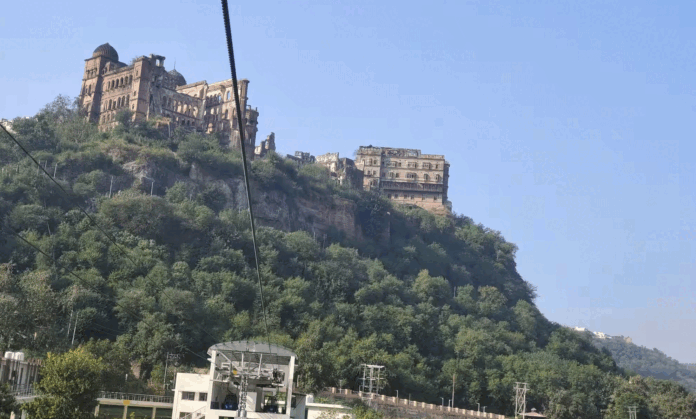
The proposed Vertical Lift and Circular Road Bridge projects were initially projected as a game-changing intervention that would permanently alter Jammu’s tourism landscape. By linking the historic Mubarak Mandi Heritage Complex with the Peerkho Ropeway Station through a modern vertical lift and further connecting the complex to the Circular Road via a 250-metre-span bridge, the administration promised a seamless mobility link. This vision was intended to integrate Jammu’s heritage assets with its religious tourism circuit, creating a continuous chain between Bahu Fort, the Mahamaya Temple, and the historic core of the city. However, the hanging fate of these connectivity projects, despite repeated retendering and years of procedural activity, stands today as a case study in bureaucratic indecision, flawed sequencing, and misplaced priorities.
The restoration and development of the Mubarak Mandi Heritage Complex itself have been crawling at a snail’s pace under the Mubarak Mandi Jammu Heritage Society, evolving into what many observers now describe as a never-ending project. While a Heritage Cafeteria with a Library has been inaugurated with much fanfare, the actual state of the palace complex tells a different story. The roads inside the complex stand completely dug out, and even the once-evergreen, lush royal garden has not been spared from excavation. The demolition of the Information Department building, along with the structures housing the Archives, Archaeology, and Museum Departments, has also been undertaken, all razed to pave the way for a parking complex. This approach suggests that the pursuit of modern amenities has come at the cost of the very historical fabric the project was meant to preserve.
The primary reason for the complete absence of bidders across three separate tendering attempts is the technical and structural risks that the administration has failed to address. The Mubarak Mandi Jammu Heritage Society has already submitted an affidavit to the High Court stating that no structure on the rear side of the complex can be restored until the backside base is strengthened from the Circular Road upwards. The 2019 Master Plan explicitly recommended that this stabilisation process should involve agencies with specific expertise in hill and retaining structures, such as the Railways or the National Highways Authority of India. Despite this, these crucial prerequisites remain ignored. Instead, the vertical lift project was granted approval based on the technical recommendation of a single academic from IIT Jammu. When firms with genuine technical competence visited the site to address pre-bid queries, they quickly realised the immense complexity involved. No amount of retendering can mask the fact that the site is currently on shaky technical ground, making it an unattractive and high-risk venture for any serious contractor.
Furthermore, the broader vision of a “heritage mobility circuit” has been severely compromised by both natural disasters and poor management. The Peerkho-Mahamaya stretch of the Jammu Ropeway remains closed due to low tourist turnout, and the accompanying restaurant space has never even opened for operation. Last year’s monsoon floods further ravaged the Peerkho ropeway station, and its reinstallation remains a remote possibility given the lack of response to earlier repair tenders. In this context, pushing for a vertical lift to an unfinished and damaged destination is neither prudent nor logical. The J&K Cable Car Corporation has also struggled to instil confidence, particularly given the recent safety records at the Jammu and Gulmarg ropeways.
The administration must now accept that the Mubarak Mandi connectivity projects cannot be undertaken in bits and pieces or under the guise of “basic amenities” while the core structures remain in disrepair. The guiding mantra must be “restore before you connect”. It makes little sense to block 27 crore rupees for a non-functional link to a site that remains a construction zone. The authorities must prioritise the structural stabilisation of the Tawi Riverside in consultation with genuine mountain engineering experts. While the National Highways Infrastructure Development Corporation Limited was reportedly approached, the lack of response calls into question a more concerted effort to engage qualified agencies. A proper explanation must be sought from the J&K Cable Car Corporation and the Heritage Society regarding these failed attempts. Until the root causes are addressed, these grand visions will remain stranded in bureaucratic files, serving only as a reminder of promises made but never delivered.
The endless cycle of violence against women

Afreena Rahim
afreenrahim00@gmail.com
Every few months, another daughter is buried. Another mother cries herself to sleep. Another father stands outside police stations and courtrooms carrying the unbearable weight of grief and helplessness. Another family is destroyed forever while the country watches for a few days and then moves on.
First Gool. Then Dharamkund. Now Budgam involving a minor. Before these, Kashmir had already witnessed countless stories that never received national attention. Many cases disappeared quietly into files, forgotten by authorities and ignored by society. And outside Kashmir, India has seen horrors that should have shaken humanity forever – Kathua, where an innocent child was assaulted and murdered; Delhi’s Nirbhaya case, where brutality crossed every limit imaginable; Hyderabad, Unnao, Hathras, Kolkata, and countless unnamed victims whose stories never became headlines because they were poor, powerless, or forgotten too quickly.
How many more names must we remember before this country finally changes?
What hurts the most is not only the crime itself. It is the silence afterward.
For a few days there is outrage. Politicians make speeches. Television channels scream for ratings. Hashtags trend. Candle marches are organized. Promises are made. Committees are formed. New “schemes” for women’s safety are announced. Governments print slogans about protecting daughters. Posters appear everywhere speaking about empowerment and security.
But where is that security on the ground?
Where is accountability?
Where is justice for families who spend years waiting while the accused use money, influence, and political connections to escape punishment?
Most Government schemes today seem designed more for newspaper advertisements than for actual implementation. Funds are announced, campaigns are launched, slogans are repeated – yet women still fear walking home safely. Parents still panic when daughters are late. Families still beg authorities to take complaints seriously. Victims still face humiliation instead of protection.
A country cannot call itself developed when its women live in fear.
Every rape is not just an attack on one woman. It destroys entire families. A mother spends the rest of her life asking herself if she could have protected her child. Fathers break silently under the weight of guilt and helplessness. Sisters stop feeling safe. Young girls begin understanding fear before they even understand freedom.
And society? Society watches.
That is perhaps the most frightening reality of all – our growing emotional numbness.
People have started consuming these tragedies like ordinary news. Another case appears, people react emotionally for a few days, and then everything returns to normal. Reels continue. Politics continues. Entertainment continues. Meanwhile, somewhere a family sits beside a grave wondering how the world moved on so quickly.
How do those responsible for justice sleep peacefully after failing another victim?
How do officials give speeches about women’s empowerment while parents continue living in terror?
How do criminals walk freely after destroying lives?
And how has society accepted all this as normal?
The truth is bitter: the crisis today is not only criminality; it is moral collapse. We are becoming a society where outrage is temporary, accountability is rare, and humanity is fading.
Women are constantly told to stay careful – don’t go out late, don’t trust people, don’t travel alone, don’t wear this, don’t do that. But why is the burden always on women to survive instead of on society to stop creating monsters?
No Government slogan can comfort a grieving mother.
No speech can erase the trauma of a survivor.
No compensation can return a lost daughter.
Real justice requires accountability. Real change requires fast and fearless punishment. Real safety requires a society that refuses to stay silent.
Until then, another headline will come. Another family will cry. Another candle march will happen. Another promise will be made.
And once again, the country will move on while another daughter becomes just another statistic.
Delhi’s Fire Tragedy
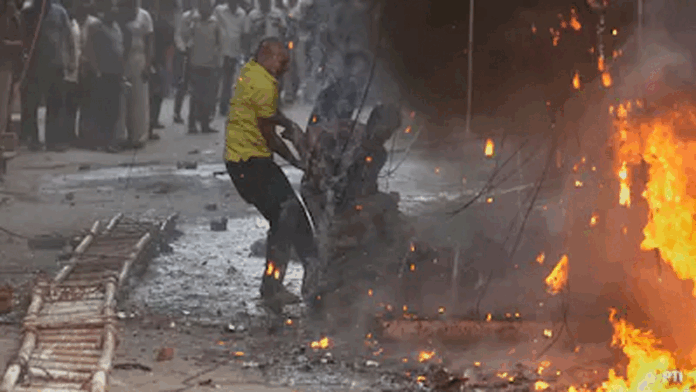
The devastating fire that ripped through the Flourish Stay BNB in Malviya Nagar is a major tragedy. At least 21 people perished, scores more were injured, and a building that had no right to be operating as it was stood as grim testimony to India’s most dangerous habit: the casual, institutionalised flouting of rules. Most victims were foreign nationals who had travelled to Delhi not as tourists, but as devoted family members, sitting vigil beside ailing relatives admitted to the Max Super Speciality Hospital a stone’s throw away.
The facts are damning. The B&B held permission for precisely six rooms under the Delhi Government’s bed and breakfast policy. It was operating twenty-five, including rooms carved out of the basement – itself a flagrant violation. A restaurant was running from the same basement. The building had a single entry and exit. This was not an accident waiting to happen; it was a catastrophe that was engineered through negligence and permitted through the collusion of multiple authorities. The MCD, the Fire Department, the Power Department and other regulatory bodies appear to have been in collective slumber. Annual inspections are mandated precisely to prevent such rogue operations. One must ask, bluntly: were those inspections ever conducted? And if they were, what were the inspectors doing? The Flourish Stay B&B was almost certainly not alone in operating beyond sanctioned capacity. Delhi’s urban villages and congested neighbourhoods are riddled with such establishments, all operating in the shadows of regulatory indifference.
One must also pause to acknowledge the rare decency shown amidst the horror. A local mattress seller spread his stock on the ground below burning windows so that desperate people might survive their fall. A woman clutching her child leapt from the third floor onto those mattresses and lived. The contrast with the dereliction of duty all around him could not be starker. India has seen this before. The Goa resort fire. Countless others. Each time, there are promises of action. Each time, those promises dissolve. This time must be different. Every B&B and budget hotel in Delhi must be inspected immediately. Those found operating beyond permitted capacity must be sealed without exception. Accountability with consequences must be established. Human lives are too precious to be bargained away for the sake of a few extra rooms and the unofficial arrangements that enable them. The dead deserve justice. The living deserve safety.
Economic challenges can be an opportunity for India

Brij Bhardwaj
newsagency12@gmail.com
The Indian economy will face challenges in days to come. These challenges have come about because of wars in West Asia and Europe which have led to a sharp rise in the price of crude oil and fertilizers. Another factor which may pose a challenge is the forecast that the country may be heading for the driest monsoon of the decade in the coming months.
Any single factor would be difficult to tackle and when combined these pose a serious challenge to our growth prospects. India, which has been recording the highest rate of growth among major economies of the world for many years, will have a drop in the coming years. In addition, there will be the pressure of inflation on account of the hike in prices of petroleum products. All this combined will make the management of the economy difficult.
The factors in our favour are a large reserve of foreign currency and gold with the Reserve Bank of India, large consumer market, and the ability to find new markets for our goods in different parts of the world. The result is that India has been able to keep the prices of petroleum products at a minimum level.
There is a more serious challenge in meeting the demand of fertilizers whose prices have also risen. At present, the same is being supplied to farmers at a highly subsidised price. A large quantity has to be imported as local production is not enough. The Government has not raised the price of fertilizers for a long time. In case it continues to be sold at the same rate, the subsidy on it will nearly double, putting a heavy burden on the State. A hike in the price of fertilizers could create unrest among farmers and may also lead to a rise in the price of food items. This problem requires planning to reduce the demand for fertilizers by finding alternative crops to grow.
Finding jobs for the growing number of unemployed youth will be another challenge, as new avenues are not opening up because local investment as well as foreign investment is not taking place. For this, the reform process will have to be given a fresh look. It has to be realised that foreign investors are not finding India as an attractive market because of frequent changes in rules and regulations. There is also a need for better coordination between the Centre and States as there are a large number of problems relating to setting up new units related to State Governments and local bodies.
A uniform set of rules and regulations will also help. To bring more foreign investment it is necessary to avoid frequent changes in regulations governing foreign companies coming to set up production units here.
In all, we can say the coming time offers challenges but also opportunities. The extent to which we are able to use them will be a test for us.There is no denying the fact that India has not emerged as a major manufacturing hub except in a few sectors. There has been more stress on importing components and assembling them. This has to change. The fact that we have a large young population which could be employed after proper education and training.
There is a huge gap between the demand for skills required which could be employed and what our system is turning out. We have the advantage of a democratic system and a stable Government, So in the next few years with changes in systems we can turn the present challenges into opportunities. With our skills and resources we not only have to find a place among the large economies of the world but also raise the per capita income and reduce inequalities.
India-UK FTA offers commercial impetus for co-creation: Chief Justice Surya Kant

LONDON, Jun 5: The India-UK Free Trade Agreement (FTA) is a “historic moment” for both nations that provides the commercial impetus for co-creation in the arena of mediation and arbitration, Chief Justice of India (CJI) Surya Kant said in London on Friday.
Delivering the inaugural address at the Indian Council of Arbitration’s (ICA) international conference on ‘Alternative Dispute Resolution (ADR) as a Catalyst for Strengthening India-UK Economic Partnership’, CJI Kant called for ensuring a level playing field and procedures proportionate to the value and urgency of disputes.
He highlighted that as both economies work towards a deeper commercial partnership, confidence in dispute resolution mechanisms is equally important.
“Just last year, the India-UK Free Trade Agreement was concluded, which was an unquestionable historic moment for both nations, because at a time when international trade discourse is marked by strain and uncertainty, India and the UK showed the world a better way forward,” said CJI Kant.
“We meet at a very significant moment in the relationship between India and the United Kingdom. Ours are two common law descriptions with a long legal conversation between them. They are also two economies seeking to give fuller meaning to a deeper commercial partnership.”
“This significant endeavour requires confidence that when disagreements arise, they will be resolved fairly, efficiently and with respect for commercial realities,” he said.
The CJI noted that the FTA, which is in the process of being implemented in the coming months, has created the “commercial impetus” for developments across two sophisticated common law jurisdictions to cohere.
“What is needed now is not comparison, but co-creation. The task is to design together an ADR corridor in which both systems lend each other credibility, talent and standards, ultimately building something neither could build alone,” he said.
Kant drew parallels between modern arbitration mechanisms and India’s ancient panchayat system, which placed trust in elders to resolve commercial disputes.
“In principle, I would say, justice is most legitimate when it is chosen freely, delivered by someone who understands your world and proportionate to what is actually at stake. Arbitration is simply what happens when you take this instinct and give it a framework,” he said.
The CJI said the commercial reality of the FTA demands an arbitration mediation protocol that preserves commercial relationships, a joint institutional framework that builds shared arbitration panels, and digital platforms that make these mechanisms accessible to businesses of every scale.
“This is where co-creation must begin,” he said, flagging concrete steps towards achieving that goal.
He suggested a joint India-UK arbitrator accreditation and training programme to build a shared pool of practitioners, an affordable institutional arbitration framework platform, and connecting arbitration with mediation through openly designed hiring protocols.
“We must ensure that arbitration is not a privilege of scale, but an instrument of justice,” he said.
The fourth edition of the ICA international conference in London brought together jurists from across India and the UK over sessions that explored hybrid ADR ecosystems for complex Indo-UK disputes beyond silos and the role of ADR in cross-border trade and investment.
While India’s Deputy High Commissioner to the UK, Kartik Pande, highlighted the “strength, maturity, and growing strategic importance” of the India-UK partnership, ICA Director General Arun Chawla highlighted efforts across both nations towards “certainty in rules, certainty in institutions, certainty in enforcement, and above all certainty in dispute resolution”. (PTI )