

‘Modi Govt has zero tolerance for terrorism’
*Op Sindoor showed India’s response to forces of terror
Neeraj Rohmetra
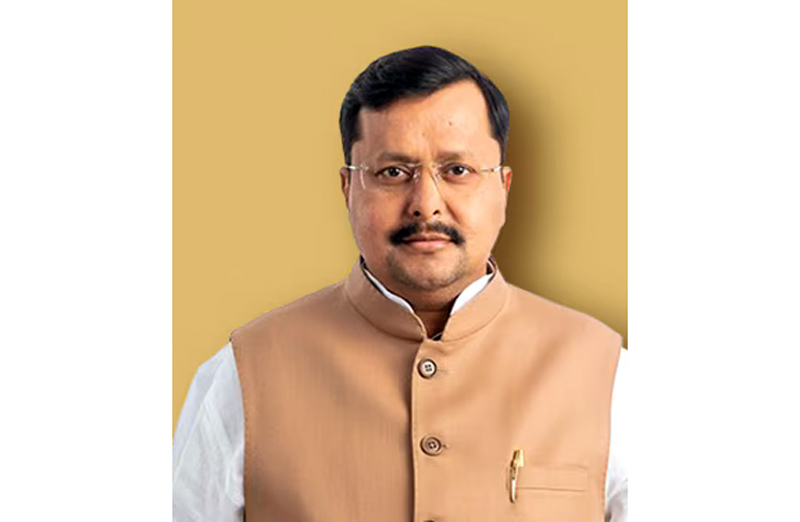
NEW DELHI, June 9: BJP president Nitin Nabin said today that the BJP Government led by Prime Minister Narendra Modi has zero tolerance for terrorism and that Jammu and Kashmir which was known for stone pelting by the youth is now recognized as Ranji Trophy champion.
Follow the Daily Excelsior channel on WhatsApp
Addressing media persons at Bharat Mandapam a day ahead of the completion of 12 years in power by the BJP-led NDA Government at the Centre and Narendra Modi as the Prime Minister, Nabin said the PM has zero tolerance policy for terrorism and Naxalism has been eliminated resulting into improvement in people’s lives.
Nabin was joined in the press conference by Union Home Minister Amit Shah, Minister of Road, Transport and Highways Nitin Gadkari, Railways Minister Ashwini Vaishnaw, Industry and Commerce Minister Piyush Goyal and Health and Medical Education Minister JP Nadda.
“The Prime Minister has zero tolerance policy for terrorism. He has brought total transformation in India’s policy towards terrorism and even the world has now recognized this,” Nabin said.
He asserted that Jammu and Kashmir where youth were known for stone pelting has now become Ranji Trophy champion.
“The Government policies have transformed thought process of youth. The Kashmiri youth who were earlier known for indulging in stone pelting have totally given up that path and are now becoming part of India’s growth story,” Nabin said.
He added that the youth of India are today becoming job givers instead of job seekers.
He said the Operation Sindoor was a clear manifestation of India’s approach towards countries sponsoring terrorists and the stern response India will give to forces supporting terrorism in any form.
“The historic abrogation of Article 370, construction of Shri Ram Janambhoomi Temple and restoration of eternal cultural heritage have infused new energy into the nation’s identity, self-respect, and cultural consciousness,” the BJP chief said.
“India was facing uncertainty, corruption and weak leadership when Narendra Modi took over as the Prime Minister in 2014. Thereafter, India is emerging as 21st century’s powerful country due to programmes and policies of the Modi Government,” he added and during 12 years the BJP gave good governance and for next 20 years it has drawn roadmap to fulfill the dream of Viksit Bharat.
The Central Government has been creating equal development opportunities in the States even where the BJP was not in power, he asserted.
Recalling the previous Congress Government’s statement that out of Re 1 sent by the Centre, only 15 paise reached the people, Nitin Nabin said due to Direct Benefit Transfer scheme of the Government of India, full Re one sent by the Centre is now reaching to the people without any mediator.
He said Rs 314 lakh crore worth annual transactions were done through the UPI.
Nabin said 12 years ago, Narendra Modi took the oath as the Prime Minister, ushering in a new era centered on service, good governance and public welfare.
“During this period, new momentum has been infused into poor’s welfare, prosperity for farmers, empowerment of women’s strength, opportunities for youth, development of health facilities, digital transformation, and unprecedented expansion of infrastructure,” he added and said at the heart of this transformative journey has been Modi’s ethos of `Pradhan Sevak’ and his unwavering commitment to service.
Nabin said the Modi era has ushered in a renewed confidence in India’s civilisational identity and cultural heritage.
The BJP president argued that Modi’s leadership had helped India move beyond what he described as a colonial mindset and instilled a fresh sense of confidence among citizens.
Highlighting the Government’s development agenda, he asserted that essential services and welfare benefits had reached millions who had long remained outside the ambit of state support. He cited the opening of Jan Dhan bank accounts, construction of toilets, expansion of healthcare services and other welfare initiatives as examples of inclusive governance.
Nabin maintained that the Government’s biggest achievement lay in ensuring direct delivery of benefits to citizens without middlemen. He highlighted flagship programmes such as Swachh Bharat Mission, Ujjwala Yojana, Ayushman Bharat, rural electrification, housing schemes and financial inclusion initiatives that have expanded access to basic amenities and public services.
He further said governance under Modi has focused on empowering citizens through transparency, technology and direct benefit transfers, ensuring that welfare schemes reached intended beneficiaries efficiently.
Reflecting on the government’s broader legacy, he said the past 12 years had generated momentum across every key sector.
“During this period, new momentum has been infused into poor welfare, prosperity for farmers, empowerment of women’s strength, opportunities for youth, development of health facilities, digital transformation and unprecedented expansion of infrastructure,” he said.
Infrastructure development figured prominently in the BJP’s presentation, with Nabin highlighting the rapid expansion of highways, airports, railway modernisation, metro rail systems and digital connectivity networks as symbols of a rapidly modernising India.
The government’s Vocal for Local campaign was also showcased as a cornerstone of its economic strategy, encouraging domestic manufacturing and promoting Indian products globally. BJP leader linked the initiative with flagship programmes such as Make in India, Startup India and Atmanirbhar Bharat, aimed at strengthening self-reliance and boosting economic growth.
He further underscored India’s growing diplomatic profile, citing the successful G20 Presidency, expanding global partnerships and the country’s increasing role in international discussions on climate action, technology, trade and development.
As the NDA government marks the completion of 12 years in office, the BJP sought to portray the Modi era as a period of national resurgence-defined by welfare-led development, cultural self-confidence, economic reforms, infrastructure growth and an ambitious roadmap to transform India into a developed nation by the centenary of its independence.
 Follow our WhatsApp channel
