

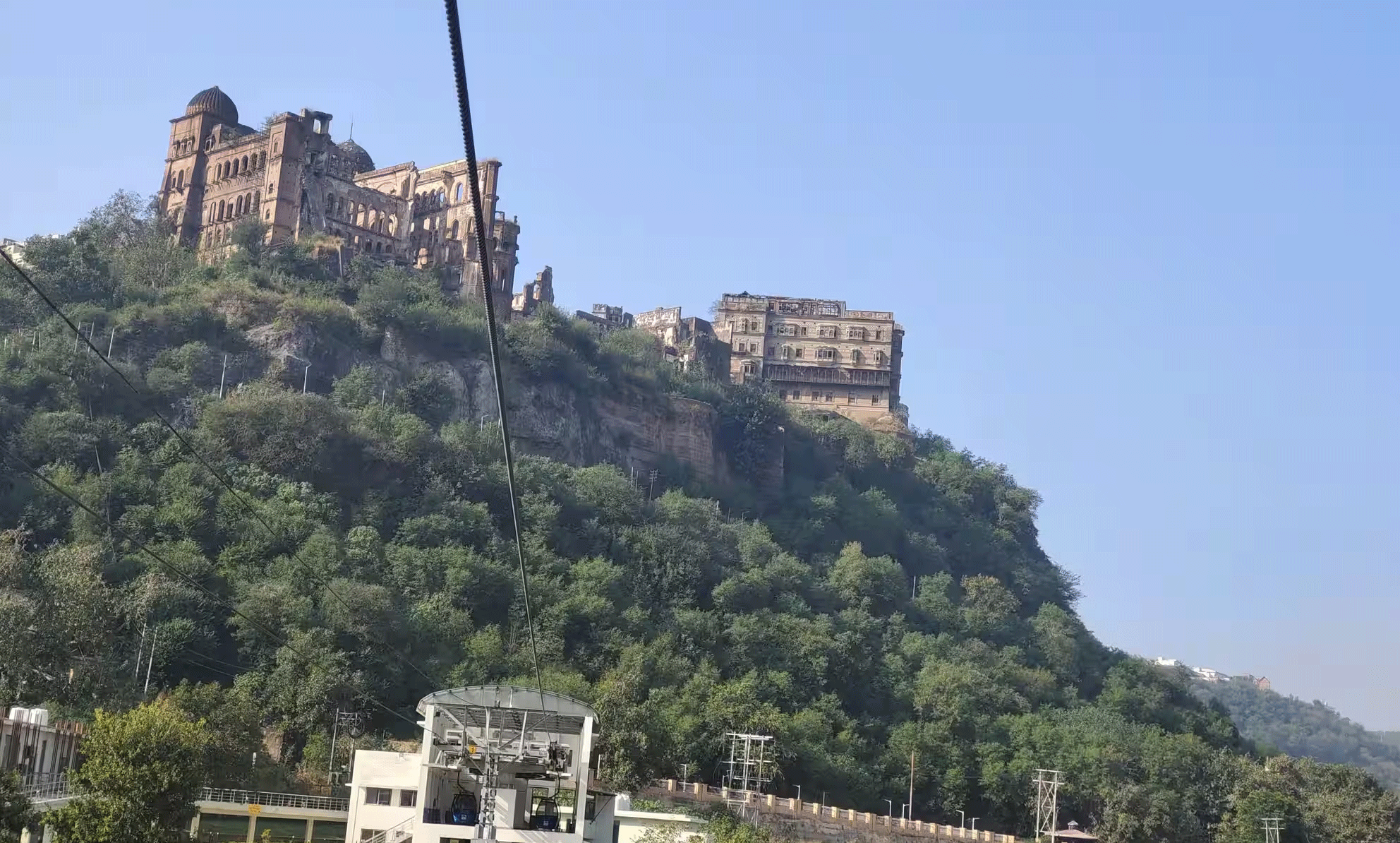
The proposed Vertical Lift and Circular Road Bridge projects were initially projected as a game-changing intervention that would permanently alter Jammu’s tourism landscape. By linking the historic Mubarak Mandi Heritage Complex with the Peerkho Ropeway Station through a modern vertical lift and further connecting the complex to the Circular Road via a 250-metre-span bridge, the administration promised a seamless mobility link. This vision was intended to integrate Jammu’s heritage assets with its religious tourism circuit, creating a continuous chain between Bahu Fort, the Mahamaya Temple, and the historic core of the city. However, the hanging fate of these connectivity projects, despite repeated retendering and years of procedural activity, stands today as a case study in bureaucratic indecision, flawed sequencing, and misplaced priorities.
The restoration and development of the Mubarak Mandi Heritage Complex itself have been crawling at a snail’s pace under the Mubarak Mandi Jammu Heritage Society, evolving into what many observers now describe as a never-ending project. While a Heritage Cafeteria with a Library has been inaugurated with much fanfare, the actual state of the palace complex tells a different story. The roads inside the complex stand completely dug out, and even the once-evergreen, lush royal garden has not been spared from excavation. The demolition of the Information Department building, along with the structures housing the Archives, Archaeology, and Museum Departments, has also been undertaken, all razed to pave the way for a parking complex. This approach suggests that the pursuit of modern amenities has come at the cost of the very historical fabric the project was meant to preserve.
The primary reason for the complete absence of bidders across three separate tendering attempts is the technical and structural risks that the administration has failed to address. The Mubarak Mandi Jammu Heritage Society has already submitted an affidavit to the High Court stating that no structure on the rear side of the complex can be restored until the backside base is strengthened from the Circular Road upwards. The 2019 Master Plan explicitly recommended that this stabilisation process should involve agencies with specific expertise in hill and retaining structures, such as the Railways or the National Highways Authority of India. Despite this, these crucial prerequisites remain ignored. Instead, the vertical lift project was granted approval based on the technical recommendation of a single academic from IIT Jammu. When firms with genuine technical competence visited the site to address pre-bid queries, they quickly realised the immense complexity involved. No amount of retendering can mask the fact that the site is currently on shaky technical ground, making it an unattractive and high-risk venture for any serious contractor.
Furthermore, the broader vision of a “heritage mobility circuit” has been severely compromised by both natural disasters and poor management. The Peerkho-Mahamaya stretch of the Jammu Ropeway remains closed due to low tourist turnout, and the accompanying restaurant space has never even opened for operation. Last year’s monsoon floods further ravaged the Peerkho ropeway station, and its reinstallation remains a remote possibility given the lack of response to earlier repair tenders. In this context, pushing for a vertical lift to an unfinished and damaged destination is neither prudent nor logical. The J&K Cable Car Corporation has also struggled to instil confidence, particularly given the recent safety records at the Jammu and Gulmarg ropeways.
The administration must now accept that the Mubarak Mandi connectivity projects cannot be undertaken in bits and pieces or under the guise of “basic amenities” while the core structures remain in disrepair. The guiding mantra must be “restore before you connect”. It makes little sense to block 27 crore rupees for a non-functional link to a site that remains a construction zone. The authorities must prioritise the structural stabilisation of the Tawi Riverside in consultation with genuine mountain engineering experts. While the National Highways Infrastructure Development Corporation Limited was reportedly approached, the lack of response calls into question a more concerted effort to engage qualified agencies. A proper explanation must be sought from the J&K Cable Car Corporation and the Heritage Society regarding these failed attempts. Until the root causes are addressed, these grand visions will remain stranded in bureaucratic files, serving only as a reminder of promises made but never delivered.
 Follow our WhatsApp channel
