

It goes to the credit of District Election Authorities in Leh to have taken the initiative of prompting 4000 strong Ladakh Scouts to exercise their right to franchise in the impending Assembly elections in J&K. The Ladakh Scouts, recruited from among the indigenous Ladakhi youth, are of crucial importance to the security of the border in Ladakh. They are locals and know the ins and outs of the geography and topography of the region that lies atop the heights of the Himalayas, which incidentally has become the world’s highest battlefield, if it comes to fighting. Along with the battalions of Indian Army, the Ladakh Scouts have been guarding the frontiers of India to its extreme north and in highly inclement weather conditions when at the peak of winter the temperature falls to -40 degrees Celsius.
Being citizens of the State, the jawans of Ladakh Scouts battalions are entitled to cast their vote on 25th of November for selection of their representative to the Legislative Assembly of the State. Indian democracy reaches even the farthest and the remotest persons on the Indian soil. Ladakh Scouts protect the country with their guns and bullets; they also have another weapon called the ballot with which they reassure that they will have their choicest representative in the Legislative Assembly of the State, where crucial matters of the development and progress of people of the State including those in the mountain fastnesses of Himalayas are discussed and decided. People feel comfortable with voting the candidates of their choice and choosing keeping in mind that they would plead the causes of the development of the region and protect the interests of the people of the region.
Though the four thousand strong voters of Ladakh Scouts are entitled to vote yet in the recent Parliamentary elections only one half of them cast the vote. And out of one half only about 860 ballots were considered valid. In this way 75 per cent of these voters remained outside the loop. The EC has taken notice of this discrepancy and under its programme of Systematic Voters’ Education and Electoral Participation (SVEEP), the District Election Officer in collaboration with the local commander and election staff visited Siachin and Nubra to speak to the jawans of Ladakh Scouts battalions that they should exercise their right to vote and the right process of sending their postal ballots. It is expected that if the Scouts cast their votes in full, it could have noticeable impact on the result of the polling. Apart from that, we consider it a very positive step on the part of the EC to educate the Scouts and others of the good sense of coming out to vote for a candidate of their choice.
Ladakh is a strategically very important region owing to the fact that it encompasses the northern frontier of the Indian Union. Of late it has come into prominence owing to the hostile stance of China with whom our border touches at in Ladakh. Chinese troops have been making unprovoked incursions into our territory and then withdrawing once confronted by the Indian troops. China claims that its limits of her western border end where there is last ethnic trace of Mongoloid race. But Ladakhis, who no doubt are of Mongoloid race, have never shown any sympathy with dictatorial political arrangement that China has. The people in Ladakh region are now part of the vast Indian democratic arrangement. They are fully conscious of the power and importance of ballot. Democratic dispensation has become part of their lives and they hold it dear to themselves. That is why the EC has taken all necessary steps to provide them the opportunity of exercising their right to vote.
With bullets and ballots
Transparency in Public Affairs Responsibility of media critical
Geetartha Pathak
The exact meaning of the Sanskrit origin word “swachh” is transparent and not clean as many of us confuse it to be. Prime Minister Narendra Modi’s ‘Swachh Bharat Abhiyan’ is an ambitious mission which seeks participation of all citizens from different age groups in order to fulfil Mahatma Gandhi’s vision of ‘clean India’. He has received tremendous response from the public. Cities and villages look neat and clean overnight. However, we are yet to get a transparent India.
NATIONAL PRESS DAY
The country has experienced rampant corruption almost in every department that includes the defence and strategic sectors on account of secret dealings between the bureaucrats, political leaders, corporate and the middlemen. In spite of the enactment of Right to Information Act 2005, right information at the right time is rarest in the country. Mega corruption in coal allocations, 2G spectrum, Commonwealth Games, Adarsh Colony, Rolls Royce etc are only a few to name. All these scams wouldn’t have happened had the process of allotment been done in a transparent manner. The exposure is thanks to the CAG and a section of enthusiastic media.
Today, on ‘National Press Day’, the Press Council of India has the theme: “Transparency in Public Affairs: The Role of the Press”. The word transparency nowadays is widely used in the affairs of Government, business and social organizations to denote openness and accountability. Transparency means operating in a way that it is easy for others to see what actions are performed. Public affairs means matters of general interest or concern, especially those dealing with current social or political issues.
Therefore, transparency in public affairs means accountability and openness of the affairs of the Government and other organizations dealing with the public. British Professor of Accountancy and co-author of book ‘Transparency: The Key to Better Governance’ David Heald stated that many societies believe that transparency would reduce governmental malfeasance through its “sunshine” effect. To him, the demand for transparency has grown rapidly, with organizations in both private and public sectors being encouraged to be more transparent. After enactment of RTI Act in India, people are talking about transparency in governance and it is now an issue in times of election, revelation of major corruptions or failure of the State.
Corruption is an old colonial phenomenon, which dates back from the beginning of the 20th century. The disinfectant sunlight could not enter the fortified castle of our country’s administration since the rule of the British. Their weapon to indulge in corruption, by siphoning public fund from the coffers, was blatant secrecy. Therefore, to achieve their mundane goal they introduced infamous acts like the Official Secret Act of India (1923), Indian Evidence Act (IEA) etc. that remain unrevised despite decades of effort. The OSA arms the administration to deny access to any information to the public and the IEA gives opportunity to the courts to decide the scope of the public’s right to inspect.
The long-wrapped shroud over the administration had begun to shake for the first time when the Supreme Court observed in the famous S. P. Gupta Vs. President of India (1982) case that the disclosure of information about the Government and the right to know about Government come from the guarantee of free speech and expression in Article 19(1) (a) of the Constitution. This observation came in a series of judgments in that period.
In spite of its limitations and shortcomings, the enactment of the RTI Act is a major step towards ensuring a participatory developmental process in the country. To make the law truly effective, the active participation of the society particularly the non-governmental organizations at large is needed. The Press can take a proactive role by simplifying and disseminating the possibilities under the RTI Act. The pervasive influence of media can affect public opinion. It has been stated that the only means of influencing what people think is precisely to control what they think about.
The media has immense power and accessibility to control what people think. On the other hand, the media itself should be transparent in processing news and views and it must impress the readers /viewers with unbiased media product. Biased information can affect public policy if the Government manipulates information in order to cast a positive or negative light on it. Depending on how transparent a news article is, one can determine its reliability and draw one’s own conclusions from the findings.
The recent revelation of ‘paid news’ phenomenon in India has eroded the credibility of a section of media. The huge spending in the publicity head by political parties during elections indulges paid news in media. Association of Democratic Reform (ADR) quoted that Radha Timblo, one of the three black money account holders in foreign banks of the list of 628 named by the Central Government at the direction of the Supreme Court donated Rs 1.18 crore to the BJP and 65 crore to Congress between 2004-2012. Such denoted money must be percolated from the mining barons and corporate houses to a section of media in the form of paid news.
The PCI has observed that many companies offer shares and debentures to the media houses in lieu of news to be published in favour of the big business and corporate houses. Paid news is a double barrel gun by which a section of media earn money for publishing advertisement in the garb of news and at the same time evades taxation for the income they earn by such scandalous ways. How then will media companies focus on black money stashed in foreign banks, when they themselves generate black money using media power?
Democracy requires the active participation of citizens. Ideally, the media should keep citizens engaged in the business of governance by informing, educating and mobilizing the public. In many western countries, radio has become a popular medium of expression, as it is less expensive and more accessible. FM and community radio have been effective instruments for promoting democracy at grassroot level by airing local issues providing an alternative source of information to official and monopolized channels. However, the Government has not allowed private and community radio to broadcast news and views except entertainment and academic programmes perhaps as a shield to sunshine effect.
Further, concentration of media ownership in the hands of a few is a matter of great concern. Now politicians are investing in media to enhance their image and to influence the political system. In view of such media environment, people are looking for alternative media to get the real picture of social and political developments and at the same time to use the new media as an instant conduit of their feelings. Social media has filled in the vacuum and hence gained immense popularity.
President George W. Bush’s administration was often criticized for being the most secretive administration in history. With this background, President Barack Obama took office in 2009 promising to lead the most transparent administration in history. However, Obama has been criticized by the media for not keeping his promise of transparency. He is criticized for secretly obtaining AP phone records to find a government leak, denial of provision of Information Act and politically driven suppression of news and information about federal agencies etc.
The UPA Government which has received accolades for enacting the RTI Act itself suppressed information pertaining to some major financial anomalies and corruptions and tried to later dilute the provisions of the Act. In many States applicants hardly get response to their queries under the Act. People often complain that they get no response to their queries from Government departments. Many departments try to find faults in RTI applications only as an excuse not to reply. Even if they do, they are vague and not to the point. Therefore, pseudo transparency has taken the place of transparency. In such an environment of non-cooperation and opacity, transparency in public affairs has turned to be a far cry.
Notwithstanding the shortcomings, the media as a whole in the country has contributed tremendously to bring transparency in governance and in public affairs. The information hungry and justice seeking people of the country are expecting more from media. We can hope that traditional, electronic and the vibrant social media can fulfil the expectation of the people by harping on the body politic to deliver transparency in a transparent way.
(The author is former Member, PCI)
Steel prices remain flat in thin trade
NEW DELHI, Nov 15: The local steel market ended on a flat note in the national capital today as prices continued to move in a tight range in limited deals and settled around previous levels.
Traders said negligible enquiries from constructions units mainly kept steel prices unaltered.
Following are today’s quotations (in Rs per tonne):
Saria Kamdhenu: 8-mm 49,900, 10-mm 49,400, 12-mm 47,000, 16-25 mm 47,700.
Amba shakti (TMT): 8-mm 45,700, 10-mm 43,400, 12-mm 42,400, 16-25 mm 42,500.
MS Angle: (50×5) (50×6) 42,000, (40×5) (40×6) 42,800.
Angle Capital (ISI) (40X5) (40×6) 44,100, (35X5)(65X6) 44,600. Girder (125X65) 41,000. (PTI)
A disciplined army
The verdict of Court Martial in which seven soldiers including the Commanding Officer of 4th Rajput Regiment have been sentenced to life imprisonment is a proof that our Army is a disciplined force and any irregularity committed by it after due inquiry will be punished according to the law. Three Kashmiri youth were killed by Army in what is now called fake encounter in the year 2010. Now, stakeholders including the Chief Minister of the State say that they are satisfied that law has taken its course and the culprits of the tragic incident have been brought to book. The indicted people have the right to appeal. The verdict delivered within a short time repudiates the allegations of civilians and others that Army does not do justice to their actions on the ground. Now, that lifer has been given to seven soldiers including officers, it should convince one and all that the Indian Army is a disciplined force where soldiers have to act within the limits of law.
We appreciate the Army playing fair in the case of this fake encounter. But at the same time, we would like to ask whether Kashmir leaders have ever protested against the armed insurgents killing innocent civilians for political reasons? Have the Kashmir leaders ever condemned innocent killing of ordinary people by the militants? Why are they silent on those killings and why don’t they demand action against them. Most of the armed insurgents, who have committed crimes against civil society, are safely put in prisons and provided all facilities of enjoying a peaceful and undisturbed life. Why does not Kashmir leadership demand that they are tried in a court of law and punished according to the law of the land? It is because these leaders have two yardsticks for adjudging crimes of similar nature; one for the security forces and one for the terrorists and armed goons.
Insurgency has not died down in Kashmir. Sporadic incidents of terrorists opening fire on army convoys are coming in regularly. Security forces cannot lower the guard and have to be vigilant. It is the duty of civilian population not to do anything that would arouse the suspicion of the security forces and force them to open fire in self defence. It is in the interests of the civilian to cooperate with the security forces in checking the movement of armed insurgents from one place to another.
Gur ends steady on some support
NEW DELHI, Nov 15: Gur prices ruled steady at the wholesale gur (Jaggery) market in the national capital today on sporadic demand amid sufficient stocks position.
Muzaffarnagar and Muradnagar gur markets also remained unchanged on some support.
Marketmen said ample supplies from manufacturing areas against scatetred buying, mainly held prices unaltered.
Following are today’s rates (in Rs per quintal):
Gur chakku Rs 2,500-2,600, pedi Rs 2,500-2,600, dhayya Rs 2,700-2,800 and shakkar Rs 2,900-3,000.
Muzaffarnagar: Rasket Rs 2,400-2,500, chakku Rs 2,200-2,450, khurpa Rs 2,200-2,300 and Ladoo Rs 2,200-2,350.
Muradnagar: Pedi Rs 2,200-2,275 and dhayya Rs 2,250-2,300. (PTI)
Freight rates fall on adequate position of trucks
NEW DELHI, Nov 15: Freight rates for nine-tonne pay load section to select destinations declined by Rs.1,000 at the local truck transport market today following easy availability of trucks against restricted cargo movements.
Transporters said heavy availability of trucks against restricted cargo movements, mainly pulled down freight rates.
Capital to Chandigarh, Gwalior, Ahmedabad and Patna rates moved down by Rs.1,000 each to Rs.17,000, Rs.14,000, Rs 20,000 and Rs 25,000.
Rates to Mumbai, Kolkata, Banglore and Thiruvananthapuram also went down by Rs 1,000 each to Rs 27,000, Rs 30,000, Rs 61,000 and Rs 77,000.
Following are today’s freights per nine-tonne load (in Rs):
Jaipur 15,000 Hyderabad 56,000 Chandigarh 17,000 Vijayawada 58,000 Ludhiana 18,000 Bangalore 61,000 Kanpur 19,000 Chennai 63,000 Indore 20,000 Mysore 65,000 Ahmedabad 20,000 Pondicherry 64,000 Baroda 23,000 Coimbatore 69,000 Patna 25,000 Kochi 74,000 Surat 25,000 Thiruvananthapuram 77,000 Mumbai 27,000 Goa 51,000 Pune 29,000 Gwalior 14,000 Kolkata 30,000 Guwahati 52,000. (PTI)
Poor Cell phone service
Sir,
This has reference to the news item ‘Poor Cell phone’ internet connecting irks subscribers’ DE Nov 13.
The telecommunication service in the State are in a shambles. No service provider is in a position to provide satisfactory service to its subscribers. These service providers just launch schemes to attract subscribers. When it comes to providing reliable service, everybody goes on back foot.
Worst is the service of Bharat Sanchar Nigam Limited. It cares two hoots for its customers. It is hardly bothered by the pleas and requests made by subscribers for efficient service. The telephone calls made through BSNL gets off and on snapped, thereby causing great inconvenience to people. Despite being in competition. BSNL fails to update its services. Its attitude towards subscribers is quite apathetic. Despite reminders to upgrade services, it has taken subscribers for granted.
It is requested to Telecom authorities to direct these service providers to provide reliable service.
Yours etc….
Ravi Sharma
Gangyal
Heavy rain forces reduction in power generation from NLC
CHENNAI, Nov 15: Heavy rains in South Tamil Nadu has forced officials of the public sector Neyveli Lignite Corporation to “partially” reduce power generation.
Mining operations have been partially affected due to excessive rainfall in Cuddalore district since November 12 and pumping out of excess water from the mines is in progress, the Neyveli Lignite Corporation said in a stock exchange filing.
“On account of the above, due to supply of wet condition of lignite, generation of power has been partially reduced in all power stations. Normalcy in operation is expected shortly”, it said.
Neyveli Lignite Corporation for the July-September 2014 period registered eight per cent growth in profit after tax at Rs 259.35 crore. The company had reported Rs 240 crore profit in the corresponding quarter of previous year.
NlC has an installed capacity of 2,740MW. It plans to increase the capacity to 4,240 MW by end of current financial year. (PTI)
Sugar prices fall on low demand, ample stocks
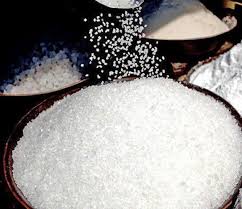
NEW DELHI, Nov 15: Sugar prices drifted by Rs 40 per quintal at the wholesale market today largely due to subdued demand form bulk consumers against adequate stocks position on persistent supplies by millers.
Marketmen said mounting stocks in the market following persistent supplies from mills mainly led to the fall in sweetener prices but scattered buying by retailers capped the fall.
Sugar ready M-30 and S-30 prices declined by Rs 40 to Rs 2,960-3,190 and Rs 2,950-3,175 per quintal.
In similar manner, mill delivery M-30 and S-30 were down by Rs 20 each to Rs 2,820-3,010 and Rs 2,810-3,025 per quintal.
In the millgate section, sugar Modinagar suffered the most by with prices falling by Rs 35 to close at Rs 2,890 per quintal.
Prices of Ramala, Bulandshar, Anupshar, Baghpat, Morna, Sakoti and Nazibabad also eased by Rs 20 each to Rs 2,850, Rs 2,920, Rs 2,820, Rs 2,860, Rs 2,850, Rs 2,900 and Rs 2,840 per quintal respectively.
Following are today’s quotations (in Rs per quintal)
Sugar retail markets – Rs 31.00-34.00 per kg.
Sugar ready: M-30 Rs 2,960-3,190 S-30 Rs 2,950-3,175.
Mill delivery: M-30 Rs 2,820-3,040 S-30 Rs 2,810-3,025.
Sugar mill gate (including duty): Mawana Rs 2,980, Kinnoni Rs 3,040 Asmoli Rs 3,000 Dorala Rs 2,970 Budhana Rs 2,965 Thanabhavan Rs 2,955 Dhanora Rs 2,920 Simbholi Rs 3,010 Modi Nagar Rs 2,890, Khatuli Rs 3,010 Dhampur (gila) Rs 2,810 Ramala Rs 2,850 Bulandshahr Rs 2,920 Anupshahr Rs 2,820 Baghpat Rs 2,860 Morna Rs 2,850 Sakoti Rs 2,900 Chandpur Rs 2,885 Nazibabad Rs 2,840 and Mawana gila 2,880. (PTI)
&&&
No scope for polarisation
Sir,
This has reference to the news item ‘Only Muslim can become CM’ DE Nov 13.
This is election time in the State. Almost every political party is in the fray. Election rallies are conducted in nooks and cranies to lure voters with promises of development, and employment. These parties have every right to lure voters to their side. But no political party has any right to polarise people on the region or religious lines. As the past practice shows, there is every apprehension that political parties won’t desist from such devious tricks.
Polarisation is in nobody’s interest in the State. The society is already divided. Further fissures will create suspicion, and animosity among people. The political parties should rather strive for unity among people.
They should provide a chance to all sections of society to participate in the State building. The State has seen much bloodshed in the past. Development is at its nadir. The State economy is in shambles. Employees and pensioners are dis-satisfied. Corruption is at its peak. The Government is dysfunctional. In these circumstances it is essential that political play a positive role, and take the State or the path of progress.
Yours etc…
Vimal Verma
Gandhi Nagar, Jammu