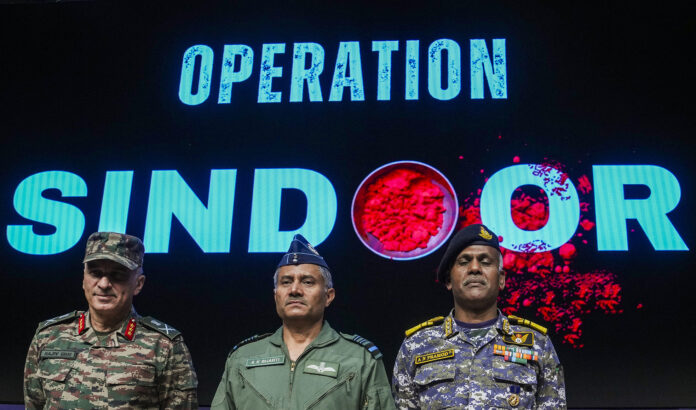
SRINAGAR, May 6: PDP president Mehbooba Mufti on Wednesday hit out at the ruling National Conference for “dragging” religious scripture into politics to divert attention from its “failures”.
“For God’s sake, do not drag Quran into politics. They (NC) are doing this to hide their failures over the past two years of being in government. People are disheartened with them,” she told reporters here.
The former chief minister was responding to a question about MLA Zadibal and NC chief spokesman Tanvir Sadiq demanding that the PDP chief and her MLAs swear by the Quran that they did not vote for the BJP in the Rajya Sabha polls in Jammu and Kashmir last year.
An RTI reply has revealed that the PDP has not appointed a chief agent for the RS polls held in October last year, prompting allegations from the NC that the opposition party’s three MLAs had voted for the BJP in the elections.
Mehbooba accused the National Conference of seeking to divert attention from its failures.
“Houses are being demolished under the garb of fighting drugs. Earlier the same thing was done under the pretext of fighting terrorism. Employees are being summarily dismissed while open merit students are going through tormenting times. All this government has done so far is being a mute spectator,” she said. The former chief minister said the NC is welcome to fight her party politically but the ruling party should spare religious scriptures while doing so. (Agencies)
National Conference Trying To Divert Attention From Its ‘Failures’: Mehbooba

‘Illegal’ House Of Drug Peddler Razed In Srinagar
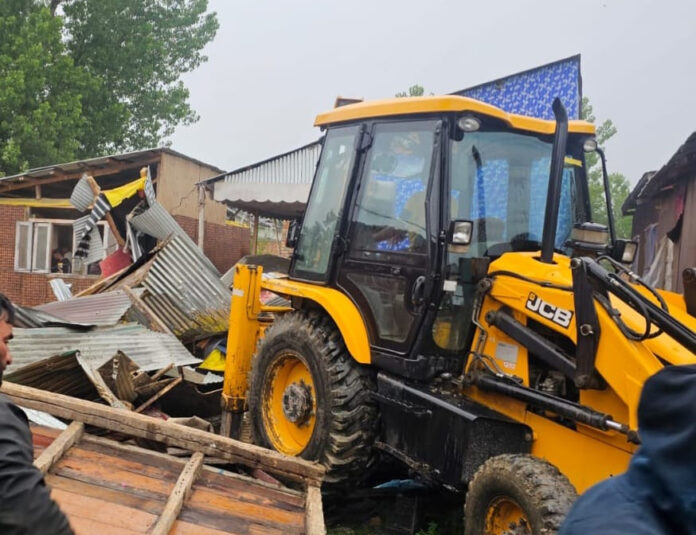
SRINAGAR, May 6: An “illegally constructed” house belonging to a drug peddler was demolished on Wednesday here in Jammu and Kashmir’s summer capital, police said.
The demolition was made in the Palpora Noorbagh area as part of the police’s Nasha Mukt Jammu & Kashmir Abhiyaan, a police spokesperson said.
He said the accused, Hilal Ahmad Sheikh, a resident of Zahidpora Hawal, at present, Pamposh Colony, Palpora Noorbagh, had encroached upon the government land there.
Sheikh has been named in multiple NDPS cases and accused of erecting the razed structure with crime proceeds, the spokesperson said.
An investigation revealed that Sheikh’s close associates and family members, too, were named in multiple drug-related cases across the valley, he said.
‘Low Intensity’ Amritsar Blast Part Of Pak ISI’s Designs On Op Sindoor Anniversary: Punjab DGP
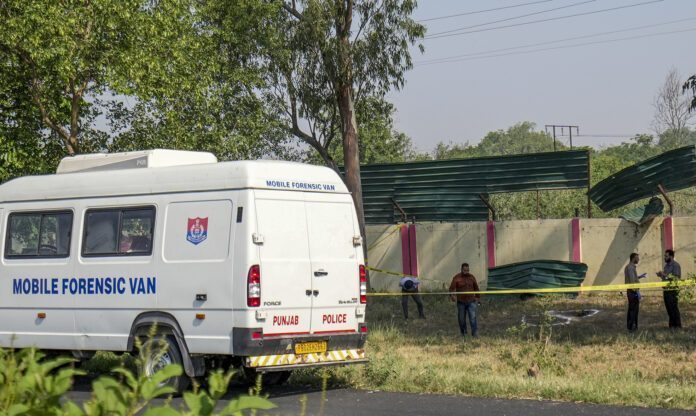
CHANDIGARH, May 6: A blast, which occurred near the army cantonment boundary wall in Amritsar’s Khasa, was a low-intensity explosion, Punjab DGP Gaurav Yadav said on Wednesday.
The blast occurred on Tuesday night, and no injuries were reported, police said.
The DGP mentioned that no group has claimed responsibility for the explosion, but it appears that Pakistan’s ISI might be behind the incident.
“We assume that, as today is the Operation Sindoor anniversary, this is part of Pakistan’s ISI designs to cause disruptions in Punjab. Punjab is fighting a proxy war on behalf of the nation against Pakistan,” he said.
Two back-to-back explosions near security establishments shook Punjab on Tuesday night, triggering panic and drawing condemnation from opposition parties, which called them efforts to “destabilise” the state.
The first explosion happened around 8 pm in Jalandhar outside the headquarters of the Border Security Force’s Punjab Frontier, while the second blast occurred at around 11 pm in Amritsar.
An investigation into both incidents is underway.
After holding a meeting with army authorities and senior officers from the Punjab Police, DGP Yadav briefed reporters on the discussions. He stated that common concerns regarding security were reviewed, and directives were issued.
He said that a meeting was also held with senior police officers of the Amritsar police commissionerate.
According to the DGP, the exact nature of the explosion and the device used will be determined pending forensic examination.
Senior officers from the Punjab Police, including the Amritsar SSP (Rural), visited the explosion site. The bomb disposal squad from the Punjab Police and BSF, along with forensic experts, sanitised the area and collected samples for scientific analysis.
The DGP noted that an FIR has been registered under relevant sections, and investigations are being conducted in close coordination with the army and other agencies. “Multiple teams are working on this utilising human intelligence, technical resources, and forensic inputs to ensure investigations are conducted in a scientific manner,” he said, asserting that the perpetrators will be arrested.
Amritsar (Rural) Senior Superintendent of Police Suhail Mir Qasim stated that police received reports of a loud sound at around 11 pm on a road in Khasa, Amritsar. “Our teams arrived on the scene immediately,” he said.
Preliminary inspections indicated that someone had thrown an explosive device towards the boundary wall, leading to the explosion, according to the SSP. Police mentioned that a piece of a tin sheet covering the boundary wall had fallen as a result of the blast. (Agencies)
Cong Declares Support To TVK, Says Alliance Covers Future Polls As Well
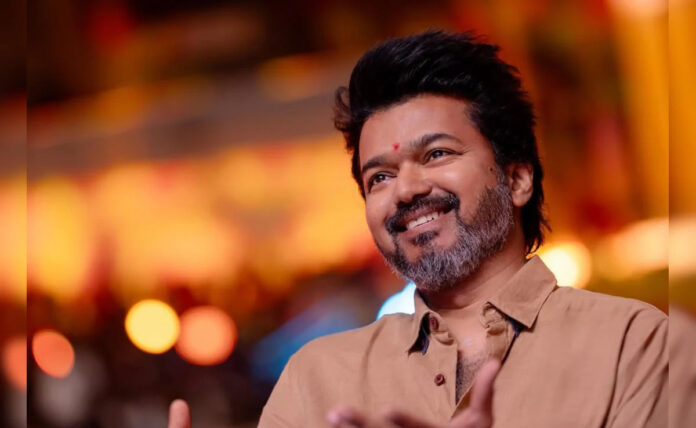
Chennai, May 6: The Congress party, a long-time ally of the DMK, on Wednesday announced support to actor-politician Vijay’s TVK to form the government in Tamil Nadu and severed ties with the Dravidian major.
The Tamil Nadu Congress Committee and the Congress Legislature Party (CLP) have decided to extend its full support to the TVK to form the government, AICC Tamil Nadu incharge Girish Chodankar said in a statement citing TVK chief Vijay’s request seeking support.
He said: “Our support shall be conditional upon the TVK keeping out from this alliance any communal forces that do not believe in the Constitution of India. This alliance between the TVK and the Tamil Nadu Congress will strive to bring back Perunthalaivar Kamaraj’s glory days of Tamil Nadu, with a strong commitment to Thanthai Periyar’s social justice ideals and Dr BR Ambedkar’s constitutional ideals in the years and decades to come.
This alliance – founded on mutual respect, appropriate share, and shared responsibility between the two parties is not only for the formation of this government, but also for future elections to the local body organisations, the Lok Sabha and the Rajya Sabha.” (AGENCIES)
Bo International’s Services Boost Hair Care Startup Growth

In recent years, Bo International has been instrumental in shaping the future of the hair care industry. Many hair care brands have taken their support to establish themselves in the hair care markets. In this article, we will study their role in the growth and success of hair care brands.
The Growing Haircare Market in India and Its Challenges
The demand for hair care products in India has been growing consistently over the last few years. This has attracted new businesses or startups to explore the hair care market. Hair care startups are also facing challenges in terms of regulatory complexities and high cost production. They can truly succeed only after overcoming these challenges.
Bo International’s Role in Empowering Haircare Startups
Now, let’s discuss the role of Bo International in empowering haircare startups:
1. Private Label Manufacturing for Haircare Startups
With private label haircare products, Bo International provides startups the flexibility of creating branded products with minimal investments. The need for setting up huge manufacturing plants or facilities is also nullified due to their support and services.
2. Custom Product Development and Formulation
The custom formulation services of Bo International helps startups create products that are unique and customised as per the brand’s vision or demands of the target audience. This also helps the brands in creating product differentiation which is the key for survival of brands in the hair care industry these days.
3. Packaging Design and Branding Support
Bo International offers custom packaging solutions that lets brands choose the packaging size, design, and material as per their branding needs. This also helps them create aesthetically appealing and unique packaging formats that also contributes to their product differentiation efforts.
4. Regulatory Support and Quality Assurance
With the regulatory compliance support, Bo International allows brands to sell their products without any obstacles. Also, they provide product certifications and quality control services which helps the brands in acquiring certifications such as GMP, ISO, and more. This helps brands in further asserting the effectiveness of their products in the market.
Addressing Key Barriers Faced by Haircare Entrepreneurs
Regulatory compliance and high production costs are the two primary concerns that startups face in the hair care market these days. Lack of support in these departments hinders their growth and sales. The services such as quality control, bulk production, and regulatory compliance support helps brands address these barriers effectively and grow in the market.
Bo International’s Approach to Helping Haircare Startups Scale
Here’s how Bo International approaches when it comes to helping the haircare startups scale their business:
1. Flexible Manufacturing Solutions for Small Hair Care Startups
With low Minimum Order Quantities (MOQs), Bo International helps brands in managing their initial production costs. Along with that, customised production helps brands in asserting their dominance in the niche markets without committing to huge initial costs.
2. Custom Formulation and Packaging Services
To help brands reflect their unique personality in terms of packaging and product formulas, Bo International offers custom packaging solutions and customisable product formulas. This helps them in achieving the product differentiation essential to survive in the competitive landscape of the hair care sector.
3. Regulatory Compliance and Quality Assurance
Navigating regulatory complexities is much easier for the brands due to the consistent support of Bo International. They help brands in acquiring certifications such as GMP and ISO and also provide quality control services. This provides them with a smoother entry into the hair care market.
4. Speed to Market and Scaling Solutions
The streamlined processes set up by Bo International helps hair care startups minimise the time-to-market. This saves much of their time, money, and efforts. Also, it enables them to manage quick product launches which eventually helps them scale their business across multiple regions and geographical boundaries.
Conclusion: Bo International’s Role in Haircare Startup Growth
Bo International helps hair care startups in launching their products faster and maintaining differentiation across the product categories. They provide regulatory support and scalable solutions all of which are essential to thrive and grow in the market. Contact their support team today or visit their official website to explore more of their offerings today!
Punjab CM Mann calls twin blasts ‘minor’, blames BJP for creating atmosphere of fear
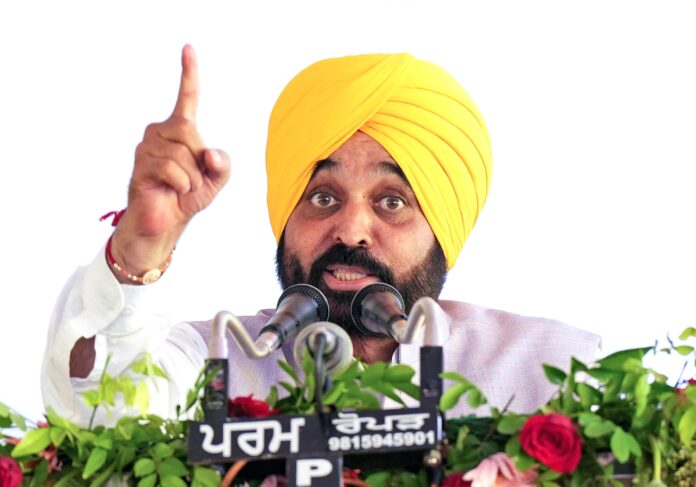
CHANDIGARH, May 6: Terming the twin blasts in Amritsar and Jalandhar “minor”, Punjab Chief Minister Bhagwant Mann on Wednesday accused the BJP of being responsible and said this was how the party was ‘preparing’ for the upcoming assembly elections in the state.
The BJP wants to create an atmosphere of fear, Mann told reporters, adding that the party wanted to scare people into getting their votes.
“BJP is a communal party. The assembly elections are over in West Bengal, and they (BJP) have said that now it is Punjab’s turn, which indicates that these minor blasts are part of their preparation for the Punjab assembly elections,” the chief minister said, adding that investigations are underway.
Man further alleged that the BJP always sought to gain votes by inciting violence and intimidating the public.
“I urge the BJP to cease such tactics. Punjab is a peaceful state. We are the people who always seek the welfare of the world,” Mann said while speaking to reporters in Anandpur Sahib.
He claimed that the BJP had a penchant for stirring up trouble in states where it is contesting elections.
Noting the significance of the newly enacted anti-sacrilege law, Mann stated that it counteracts the BJP’s efforts to provoke conflict between communities.
“With the anti-sacrilege law in place, no one will engage in sacrilegious acts at their behest,” he said, further alleging that the law contradicts the BJP’s agenda.
In reference to the BJP’s approach, Mann expressed concern, saying, “The BJP claims it is ready for Punjab. Are they trying to scare people with these minor blasts to secure votes? Punjab has already experienced dark times in the past.”
Two blasts occurred on Tuesday night, one outside the Border Security Force’s Punjab Frontier headquarters in Jalandhar and another near the army cantonment area in Khasa, Amritsar. (PTI)
Op Sindoor Paid Dividends, But War Not Sustainable, Says Farooq Abdullah
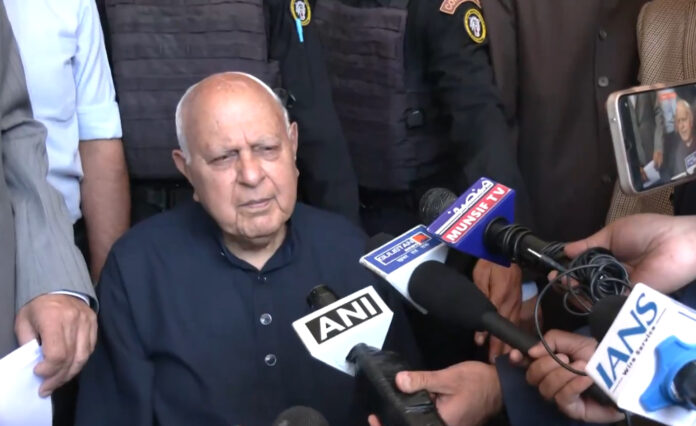
SRINAGAR, May 6: National Conference president Farooq Abdullah on Wednesday said ‘Operation Sindoor’ has paid its dividends, but asserted that “wars do not bring a solution, only misery”.
“(Operation) Sindoor has paid its dividends. I think there is no more question of wars. Wars do not bring a solution, they just bring misery. Look at Ukraine and the destruction there, look at the Middle East. Look at the situation of gas (supplies) here. It will take Qatar a year or two to restore gas supplies,” Abdullah told reporters at party headquarters here.
To another question about the Gulf situation, the former chief minister said the world was not ready for war, as prevailing economic conditions were bad.
“Don’t panic, the world isn’t ready for war. Economic conditions of every country are already bad, and no country wants war. The Middle East has most of the oil and gas, and if pressure continues, then the situation in the world will be so bad that it will be difficult to survive,” he added.
Asked about the recent assembly election results, the NC president said he sees the results like everyone else.
“How will I see, I see it like you are seeing. The results have come, Mamata (Banerjee) is not accepting (the results), she says there was huge rigging. This is the situation in Bengal. Tamil Nadu is getting a new government. Congress won in Kerala, the BJP won in Assam. What else is there?” he said.
When asked if he sees any impact of special intensive revision (SIR) of electoral rolls in the elections, Abdullah said, “There was an impact of everything.” He also said the opposition INDIA bloc is already strong and there is nothing lacking in it.
In response to a question about blasts in Punjab, the former Union minister said blasts have been happening in India, and there was nothing new. “You should not panic,” he told reporters.
On the opposition targeting the NC government in J-K, Abdullah said it is good that the opposition is doing its job.
“If they don’t, how will they survive? Let them say what they want. Our party is working the way it has to, and we will continue to do so,” he added. (Agencies)
Key IPL Matches to Watch in May 2026
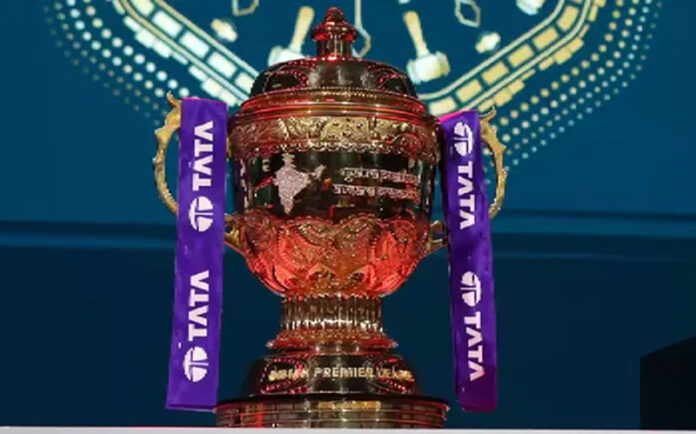
May is where the IPL is decided, with execution and individual form separating the teams that push on from those that fall away.
As the Indian Premier League moves into May, the tone of the competition starts to change. Early momentum gives way to scoreboard pressure, and the table begins to reflect more than just form. Punjab Kings have set the pace with five wins from their first six matches, while established sides such as Mumbai Indians and Chennai Super Kings are already under pressure to recover ground. Rajasthan Royals and Royal Challengers Bengaluru remain close enough to challenge, but consistency will define the next phase.
Why May defines the IPL season
By this point in the tournament, experimentation fades. Roles are clearer, selection calls sharper and results begin to carry playoff consequences.
Markets reflect that shift. Punjab Kings are priced at +230 to win the title on Stake, ahead of Royal Challengers Bengaluru at +350 and Rajasthan Royals at +500. Mumbai Indians sit at +700, a reminder that reputation still influences perception despite inconsistent results so far.
If you are tracking how these markets evolve during the IPL, offers such as the Stake Promo Code India, as outlined by Oddspedia, provide access to match betting, player markets and in-play opportunities, alongside real-time odds comparisons across bookmakers.
Those markets are driven by what happens on the field. Teams with multiple contributors shorten quickly, while those relying on individual performances drift.
Abhishek Sharma’s 323 runs from his first seven innings place him firmly in the Orange Cap conversation at +550, while Prince Yadav’s 13 wickets in seven matches have moved him into contention for the Purple Cap at +1500. Those numbers illustrate how quickly standout performances begin to influence both team results and expectations around the competition. That context carries directly into the key matchups ahead.
Here are the fixtures that will define May and have a decisive say in who wins the 2026 IPL.
Chennai Super Kings vs Mumbai Indians (May 2, M.A. Chidambaram Stadium, Chennai)
History gives this fixture weight, but current form tells a different story. Neither side has found sustained rhythm. Chennai’s campaign has at least been supported by their bowling, with Anshul Kamboj taking 13 wickets in his first six matches and priced at +425 in the Purple Cap race.
Batting remains the issue. Ayush Mhatre’s 201 runs stand out, but there has been little consistency beyond that. Mumbai face similar concerns. No batter features prominently in the Orange Cap standings, with Rohit Sharma out at +8000, while the bowling unit has yet to produce a consistent strike option.
That lack of cohesion has already been evident in their meeting at Wankhede, where momentum shifted without either side taking control.
The broader picture remains unchanged, with both teams still searching for balance across their first six matches, something also reflected in the buildup to this rivalry renewal.
This is a fixture defined more by pressure than dominance.
Gujarat Titans vs Punjab Kings (May 3, Narendra Modi Stadium, Ahmedabad)
Punjab Kings arrive as the most consistent batting unit in the competition so far, with four players already past 200 runs. Cooper Connolly’s average of 55.75 and Priyansh Arya’s strike rate above 240 highlight their aggressive approach in the powerplay.
That intent was clear in their performance against Mumbai Indians, where the top order set the tone early and controlled the game.
Gujarat bring balance. Shubman Gill’s 265 runs from five innings place him at +600 in top batsman markets, while Jos Buttler remains a factor at +1800. With the ball, Prasidh Krishna and Kagiso Rabada have combined for 22 wickets in the early phase and are priced at +500 and +800, respectively, in the Purple Cap race.
Depth against structure makes this one of the most telling matchups of the month.
Punjab Kings vs Royal Challengers Bengaluru (May 17, Himachal Pradesh Cricket Association Stadium, Dharamsala)
Late-season games frequently expose how teams are built. Punjab’s approach has been collective, with contributions spread across the lineup. Shreyas Iyer, Prabhsimran Singh, and Connolly all priced between +1600 and +2000 in top batsman markets.
Bengaluru rely more on a core group. Virat Kohli’s 247 runs from six innings place him firmly in the Orange Cap race at +550. With the ball, Bhuvneshwar Kumar’s 10 wickets have given them control, which is reflected in his +900 price in the Purple Cap market.
Punjab build totals through depth, while Bengaluru operate through structure. That contrast will define the contest in Dharamsala.
Mumbai Indians vs Rajasthan Royals (May 24, Wankhede Stadium, Mumbai)
By the final round, the margin for error disappears. The Rajasthan Royals are one of the most balanced sides in the competition. Yashasvi Jaiswal’s 245 runs from seven innings place him at +1600 in top batsman betting, while Vaibhav Sooryavanshi’s strike rate above 220 sets the tone early.
Their bowling has matched that output. Jofra Archer and Ravi Bishnoi have combined for 22 wickets and are priced at +700 and +800 to finish as the tournament’s leading wicket-taker.
A 40-run win over Lucknow Super Giants highlighted that balance, with Archer’s spell setting the tone.
Mumbai’s challenge is very different. Without consistent returns with either bat or ball so far, they are likely to need a complete performance rather than isolated moments.
The stretch that decides everything
Consistency will define May. Punjab Kings have set the standard through depth, Royal Challengers Bengaluru remain competitive through structure and Rajasthan Royals continue to offer balance.
For Mumbai Indians and Chennai Super Kings, the equation is simpler: every result matters, and recovery depends on sustained execution across both innings.
While no one can say what might happen between now and June, what is certain is that a lot can happen over 30 days, especially if you consider that a night is a long time in the IPL. Indeed, you can’t win the IPL in May, but you can lose it.
Indian-origin company director fined for under-declaring imported car values in Singapore
Red Lines Redrawn; Need For Stronger Air, Cyber Warfare Capabilities: Experts On Op Sindoor Lessons