

Excelsior Correspondent
SRINAGAR, May 3: Police today foiled an illegal timber smuggling attempt in the Sangerwani area of Pulwama and recovered a significant quantity of illicit timber.
According to officials, Police Post Sangerwani received reliable information that one individual, identified as Liaqat Ahmad Doie, son of Nizam-ud-Din Doie, a resident of Sonabanjer, had concealed illegally procured forest timber in a Kotha at Badi Behak.
Acting swiftly, a special police team launched a raid in coordination with officials from the Forest Department.
During the search operation, the team recovered and seized six wooden beams and seven raw round logs from the location, police said.
The seized timber was later handed over to the Forest Department for further action.
In this connection, FIR No. 76/2026 has been registered under Section 303(ii) of the Bharatiya Nyaya Sanhita and Section 26 of the Forest Act, and further investigation is underway.
Illicit timber seized

NCC for Life Skills
Dr Jyoti Malhotra Kapoor
drjyoti0104@gmail.com
Ongoing Globalization and universal digitalization in the modern scenario, WHO, UNICEF/CBSE and UNESCO urge the significance of instilling 21ist century skills amongst youth of a country. The skills are required to move with the pace of ongoing developments and technical advancements. Educational sectors at state and national level are trying their best to inculcate these skills beginning at foundational level and continuing thereafter as prosperity of a nation is directly reflected by the youth of a nation. Various policies are developed year after year so as to bring improvisation rather revolution in education sector of a country as this is the sector from where all the sections of societies emerge and is a leading sector on which the development, evolution and wellbeing of a country leans on. Hence education should foster responsible, self-reliant and compassionate citizens. To achieve and imbibe such qualities, life skills play a significant role. Life skills are a group of psychosocial competencies and interpersonal skills that help people/citizens/educators/students, make informed decisions, solve problems, think critically and with creativity, communicate effectively, build healthy relationships, empathize with others and cope with and manage their lives in a healthy and productive manner. Also, according to WHO, Life Skills are “the abilities of adaptive and positive behavior that enable individuals to deal effectively with the demands and challenges of everyday life.”
Taking into consideration the challenges and imbibition of life skills in youth of a country, National Cadet Corps (NCC) plays a significant role. NCC, a youth organization has its beginning in the’ University Corps’ created in the Indian Defense Act 1917, with the objective to make up the shortage of Army. In 1920, University Corps was replaced by University Training Corps (UTC) and UTC was renamed as University Officers Training Corps (UOTC) in 1942. In 1946, a committee under Pandit HN Kunjru was set up and NCC came into existence on 16th July 1948 under the act, Act XXXI of 1948 under the ministry of defense (MOD). Since then, the NCC is contributing immensely in helping the youth in developing personality traits like physical strength, psychological, socio- emotional, intellectual values and morals necessary for a healthy lifestyle and character building. NCC has grown step by step and is open to both schools and universities but it cannot provide coverage to large number of educational institutions due to the sanctioned strength at each level. It is important to mention that NCC got an inter service image when air wing in 1950 and naval wing in 1952 were added to it. Elementary military training was given to school students, junior division(JD), college students, senior division (SD) being trained as potential officers of the army. In 1949, the girls division was introduced to give equal opportunity to school and college going girls. Due to popular demand and followed by Chinese aggression, NCC training was made compulsory in 1963. However, again NCC was made voluntary in 1968 in response to resistance by some students and suggestions of some vice chancellors.
Induction into NCC is on voluntary basis. Students, both boys and girls, in schools and colleges can join NCC with no distinction made on the basis of caste, creed, status, community and province, at the age of 13 years in junior division/Junior wing (boys/girls) class VIII to X, and senior division/senior wing from class XI onwards.
Keeping in mind four cardinal principles (obey with smile, be punctual, work hard without fuss and make no excuses and tell no lies) and NCC motto (unity and discipline),NCC students are always taken care of by their Associated NCC Officers (ANOs).ANOs undergo rigorous training for 3 months at OTA Gwalior (for women) and OTA Kamptee Nagpur(for men) and are appointed to train NCC cadets in their respective institutions and during camps in addition to JCOs (junior commissioned officers) & NCOs (non- commissioned officers).ANOs are regarded to be the most important and the only backbone of running institutionalized NCC.
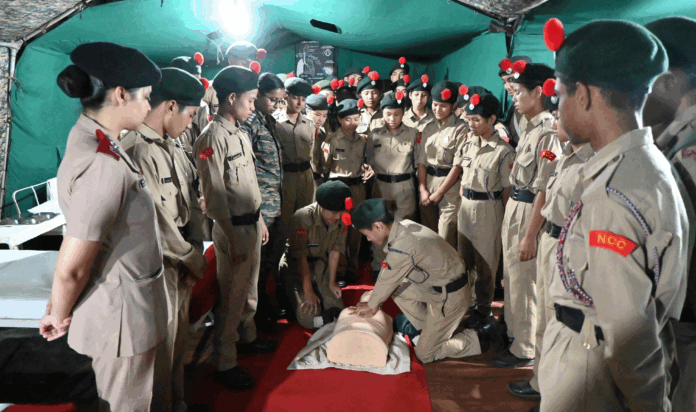
First and foremost, effort has to build and boost the morale of NCC cadets and make them motivated and inclined to future trainings.NCC teaches respect for diverse religion, language, culture, ethnicity, lifestyle and habitat, instill a sense of national unity and social cohesion and sensitivity to the needs of poor and socially disadvantaged fellow citizens,understanding the values of honesty, truthfulness, sacrifice,perseverance and hard work.In NCC trainings, NCC camps are organized where importance of time, punctuality, discipline, collaboration with team, interpersonal relationships, communication, personal hygiene and cleanliness are of utmost importance. While in a camp, to be on time on ground, early in the morning (4-4.30 am) for running, body exercises, yoga by an instructor in a camp teaches NCC cadets the value of time and judicious use of same.
Time management is a set of skills, tools and systems that work together to help you to achieve outstanding results, both personally and professionally. The skill helps NCC cadets in reducing or eliminating wasted time and to make an effort to have more productive time each day thereby improving their performance to achieve long term goals. Another most important aspect of NCC training is to inculcate leadership traits in youth of our country aligned with character building, comradeship to mold them into a responsible citizens and leaders across various fields.NCC acts as an experimental laboratory, translating theoretical knowledge into behavioral competencies. During institutional trainings and in camps, cadets are placed in positions of command fostering team coordination, responsibility and thereby making the best of a problem solving skill with accountability. Certain camps like BLC (Basic leadership courses and ALC (Advanced leadership Courses) are designed to boost up their personality and soft skills.
Senior wing / senior division NCC cadets are given some adventurous activities like mountaineering, trekking and rock climbing which cultivate courage, teamwork and self-confidence. Regular drills and Parades in camps instill self-discipline and attention booster. Love for uniform and badges is automatically inculcated among NCC cadets and camps like Republic day camp (RD Camp) and Ek Bharat Shrestha Bharat (EBSB) camp promote national integration, patriotism, love for nation and people of country thereby promoting unity in diversity and teamwork with fellow NCC cadets of different regions and religions. Structured interactions in camps help NCC cadets improve verbal communication and interpersonal skills. During parades, NCC cadets are given a chance to command the squad and manage peers helping boost up their morale and self-confidence in a disciplined way. Trainings do develop ability to withstand tension, frustration and disagreement.
NCC cadets are wonderfully trained to manage disasters efficiently. Disasters can be because of earthquake, bomb blasts, short circuiting, and gas explosion. Fire emergencies can evoke havoc resulting in loss of life and property. Firefighting, a vital component of fire management, requires skills to handle fire extinguishers and different types of fires besides basic principles to control fires. Training includes practical demonstrations, rescue techniques and in routine classes by the experts and ANOs. Fire- fighting is frequently taught during combined annual training camps (CATC), annual training camps (ATC) or as a part of specialized disaster management trainings. Fire- fighting training fosters a sense of responsibility and bravery in cadets making them effective responders during crisis.
NCC plays a significant role in providing comprehensive basic military training to youth of a country studying in schools and colleges through weapon training, rifle drill, map reading and visa-viz. preparing cadets for ‘B’ and ‘C’ certificate examinations. In weapon training, cadets are made aware of different rifles (.22 Rifle NO 2 Mark IV, .22 Delux and .03 Rifle No. 1 Mark III bolt action Rifles). Till few years back Indian Army was using 7.62 mm SLR and 5.56 INSAS Rifles. Presently AK-203 (7.62×39mm) has replaced older 5.56mm INSAS rifles. Cadets are practically demonstrated stripping of Rifle, cleaning and assembling of rifle. Cadets are informed to take care of their rifles in different areas viz., humid, desert, and polar areas. Loading and unloading of rifles is taught and the cadets are made to practice personally in presence of an instructor / ANO/GCI (girl cadet instructor)/JCO or NCO. After theoretical knowledge cadets are taught principles of firing which lead to correct aiming and perfect alignment prior to operating trigger of rifle. Cadets are taught about four positions of firing, while lying is most accepted and being taught in NCC camps.
The culmination of all trainings in the NCC is the conduct of certificate examinations and passing of these examinations are mandatory for the cadets as these certificates help them getting certain benefits for job employability besides learning and achieving life skills. Certificate ‘A’ for .JW/JD NCC cadets (Class IX-X) after completion of 2 years of NCC training become eligible to appear for ‘A’ certificate exam while Senior wing/Senior Division (SW/SD) NCC cadets after completion of 2 years training became eligible for ‘B’ certificate exam. Such candidates after passing ‘B’ certificate exam appear for ‘C’ certificate exam at the end of 3rd year (1st year of college).
Though a balanced diet, regular exercise and sports play a significant role in overall development of a person but while keeping in mind inculcating of life skills in one’s life make a person ready to meet and handle diverse situations. NCC training of cadets through different camps and trainings teaches life skills as leadership traits with flexibility and responsibility, collaboration effective communication, maintaining interpersonal relationships, problem solving attitude, critical thinking, time management besides discipline, punctuality, initiative, civic sense like personal and societal norms including cleanliness, plantation drive, following traffic rules and compassionate behavior. Presently all the schools and colleges are not given NCC as of their specified limited strength, I do recommend NCC as an elective subject in all institutions and maximum students to be enrolled in NCC keeping in mind the holistic development and inculcating life skills as it in the need of hour.
Shiv Sena flags concerns over press freedom in J&K
Excelsior Correspondent
JAMMU, May 3: On the occasion of World Press Freedom Day, the Jammu and Kashmir unit of Shiv Sena (Uddhav Balasaheb Thackeray) expressed deep concern over the state of press freedom in the country.
Party’s J&K chief, Manish Sahni said that India’s ranking at 157 in the 2026 report by Reporters Without Borders (RSF), below Pakistan and Bangladesh, is a serious warning for the democratic system.
In a press statement, Sahni said that journalists in the Union Territory of Jammu and Kashmir are facing “institutional, economic and legal pressures.” He raised concerns that provisions related to content verification and advertisement allocation under the Media Policy 2020 could adversely affect independent journalism. Dependence of local media on Government advertisements was also cited as a major factor contributing to economic pressure.
He added that there is a clear demand for a fair review of cases registered against journalists, an end to unnecessary summons and coercive actions, restoration of press institutions, and implementation of a concrete policy for the safety and welfare of journalists.
Police destroy poppy
Excelsior Correspondent
SRINAGAR, May 3: Continuing its crackdown on narcotics cultivation, police today destroyed an illegally grown opium poppy crop, spread over about four marlas of orchard land in the Larnoo area of Anantnag.
According to officials, Police Station Larnoo received credible information that an individual, identified as Ghulam Ahmad Sheikh alias Ama Khoja, a resident of Deesu, had allegedly cultivated opium poppy plants in his orchard at Lovlupora village.
Acting on the tip-off, police registered FIR No. 24/2026 under Section 8/18 of the NDPS Act and launched an investigation.
During the operation, a police team, accompanied by an Executive Magistrate, reached the site and destroyed the illicit crop.
‘Natrang’ stages Hindi play ‘Aag’
Excelsior Correspondent
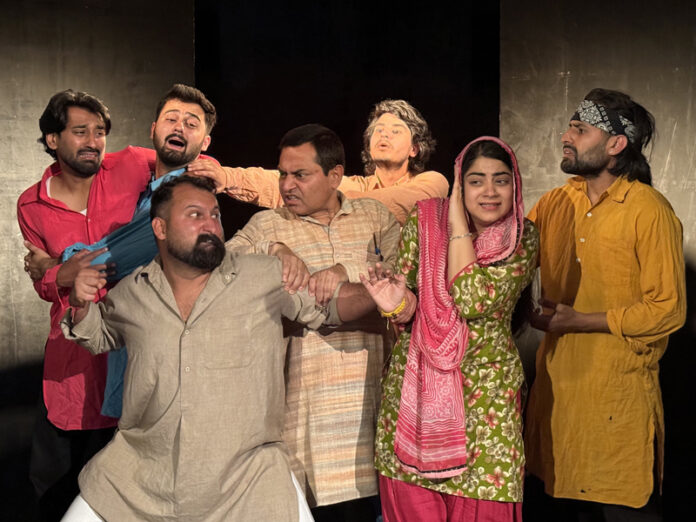
JAMMU, May 3: Theatre group ‘Natrang’ here today staged Balwant Thakur’s Hindi play ‘Aag’ under the direction of Neeraj Kant.
The play showcases how the drug-menace is ruining generations.
Inspired by the 100-day anti-drug campaign led by J&K Lieutenant Governor, Natrang has given a powerful new dimension to the movement by spreading awareness through theatre.
Balwant Thakur, who has specially written this play to address the growing drug menace, emphasized that theatre remains one of the most compelling mediums for engaging audiences.
The play was not based on one story-line but as an experiment multiple stories were woven by the playwright.
In a sequence a young boy is shown struggling for a good company after passing the school and joining the college. He is isolated for not being the consumer of intoxicants. All those around him treat him like a child which frustrates him and to prove that he has grown-up as a young man, he finds the easiest way by consuming intoxicants.
Similarly other sequence showed a rural inhabitation particularly with men-folk drowned in alcohol. One more sequence showed a drunkard man lost his way home and a local escorting him to his home and on reaching home in the middle of the night the drunkard man starts beating his sleeping wife and kids. When the escort intervenes, he is blamed for having bad intentions towards his wife.
Actors who performed in the play were Neeraj Kant, Brijesh Avtar Sharma, Mahikshit Singh, Aadesh Dhar, Vishal Sharma, Mihir Gujral and Kananpreet Kour; presentations were done by Soujanya Shekhar and the show was coordinated by Mohd. Yaseen.
NEET-UG 2026 held across 551 cities in India, 14 abroad

NEW DELHI, May 3: The NEET-UG 2026 examination was conducted on Sunday across 551 cities in India and 14 cities abroad.
Union Education Minister Dharmendra Pradhan visited the National Testing Agency (NTA) headquarters to assess on-ground readiness for the examination, officials said.
During the visit, the minister oversaw key operational aspects, including examination logistics, coordination with centres, and monitoring systems put in place to conduct the test seamlessly, they said.
Officials briefed him on measures taken to handle the large number of candidates and maintain discipline at examination venues.
The NEET-UG 2026 examination was conducted by the NTA for nearly 23 lakh registered candidates at centres across the country under strict protocols, officials said.
NEET-UG continues to be one of the largest undergraduate entrance examinations in India and serves as the gateway for admission to MBBS, BDS and other allied medical programmes across institutions in the country. (PTI)
RSS Chief Mohan Bhagwat Visits Gurudwara

MUMBAI, May 3: Rashtriya Swayamsevak Sangh Sarsanghchalak Mohan Bhagwat who was on a personal visit in neighbouring Navi Mumbai on Sunday, visited the Shri Guru Singh Sabha Gurudwara in Kharghar and offered his prayers.
On the occasion Gurudwara Prabandhak Committee honored him with a Siropa (robe of honor) and a Kirpan.
The RSS chief was in Navi Mumbai to attend a wedding in the family of Vithal Kamble, a senior member of the organisation.
Before attending the wedding function, Bhagwat visited two temples, including the local Balaji temple, and the gurdwara, said Charandeep Singh, member of the Maharashtra State Minority Commission, who was present. (UNI)
BJP chief meets representatives of Japan’s LDP, discusses deepening of organisational linkages
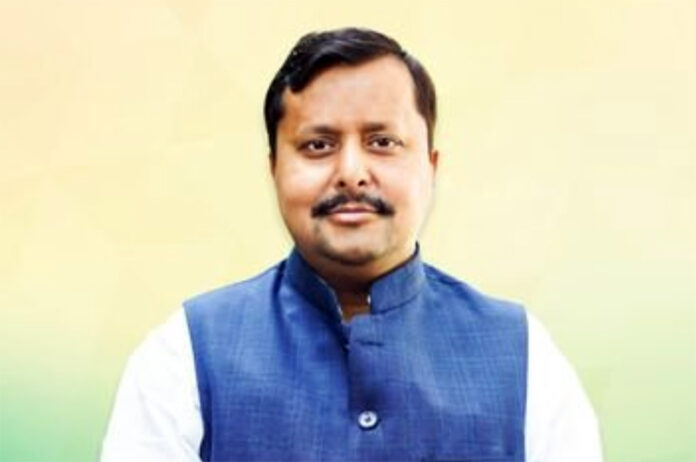
NEW DELHI, May 3 : BJP president Nitin Nabin met a high-level delegation from Japan’s Liberal Democratic Party (LDP) here on Sunday and discussed ways to strengthen party-to-party engagement as well as India-Japan partnership and cooperation in the Indo-Pacific region.
The Japanese delegation, led by LDP’s policy research council chairperson Kobayashi Takayuki, called on Nabin at the BJP headquarters.
“Welcoming Kobayashi to India, Nabin described India-Japan relations as a strong partnership rooted in shared democratic values and mutual respect,” the BJP’s foreign affairs department in-charge Vijay Chauthaiwale said in a statement after the meeting.
“Both sides discussed ways to strengthen party-to-party engagement through structured dialogue at various levels of leadership. The discussions focused on fostering greater exchange of ideas, sharing best practices, and enhancing institutional cooperation between the Bharatiya Janata Party and Japan’s Liberal Democratic Party,” he added.
The interaction reflected a shared commitment to deepening organisational linkages and promoting continued dialogue, further strengthening the India-Japan partnership and cooperation in the Indo-Pacific region, he added.
The LDP delegation’s meeting with Nabin was part of the “Know BJP” initiative launched by the party when Union minister J P Nadda was its president.
During the interaction, Chauthaiwale said Kobayashi appreciated the deep-rooted cultural connection between India and Japan, noting the strong civilisational links that continue to bind the two nations.
“He (Kobayashi) acknowledged that under the leadership of Prime Minister Narendra Modi, India-Japan relations have witnessed significant growth and acquired new momentum,” Chauthaiwale said.
“He also referred to flagship collaborations such as the Mumbai-Ahmedabad High-Speed Rail project, noting that the bullet train initiative stands as a symbol of the strong strategic and developmental partnership between the two countries,” the BJP leader said.
During the meeting, Chauthaiwale said, Nabin underscored that the close personal rapport between Prime Minister Narendra Modi and former Prime Minister of Japan Shinzo Abe has played a defining role in elevating bilateral ties to new heights and giving strategic direction to the partnership.
“Nabin shared insights into the BJP’s vision, organisational structure, and its people-centric approach to political engagement. He highlighted the ‘Know BJP’ initiative as an important platform to enhance international understanding, encourage exchange of ideas, and strengthen ties with political parties and leaders across the world,” he added.
Nabin also highlighted India’s strong focus on youth-driven development, emphasising flagship initiatives such as Make in India, Startup India, and Aatmanirbhar Bharat, which are empowering young entrepreneurs and strengthening India’s economic self-reliance, Chauthaiwale said.
“He further spoke about key social welfare initiatives, including health insurance schemes under Aatmanirbhar Bharat, and the ‘Lakhpati Didi’ initiative, which is playing a transformative role in advancing women’s empowerment and financial independence at the grassroots level,” he added. (PTI)
FIR registered after judicial officer’s suicide in Safdarjung, family alleges harassment
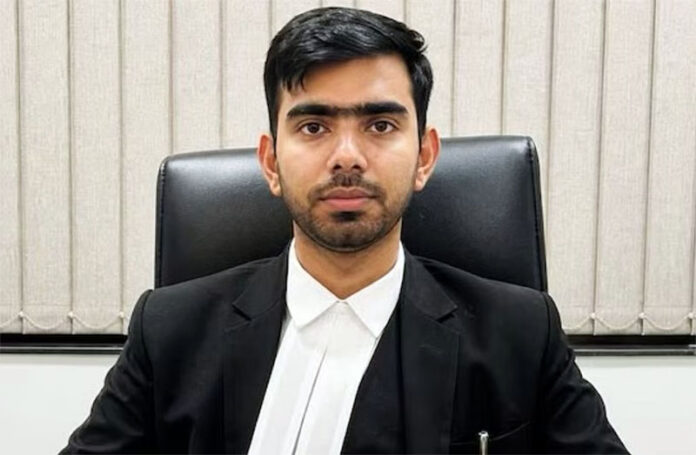
NEW DELHI, May 3 : Police have registered a case following the death of a 30-year-old judicial officer, Aman Kumar Sharma, who died allegedly by suicide at his residence in the Safdarjung area of Delhi, officials said.
According to police, an FIR has been lodged on the complaint of the deceased’s father, and an investigation has been initiated to examine the circumstances leading to the incident.
Family members have alleged that Sharma had been under distress due to ongoing domestic disputes. A relative claimed that Sharma had called his father around 10 pm on the day of the incident and expressed that it had become difficult for him to continue living. His father subsequently travelled from Alwar and reached Delhi later that night.
The relative further alleged that Sharma had been facing conflicts with his wife over the past two months and had complained of harassment. The family also alleged that his sister-in-law, an IAS officer posted in Jammu, frequently interfered in his personal life, contributing to the strain.
Police said the matter is under investigation and all allegations made by the family are being examined. The exact cause behind the suicide will be ascertained after a detailed probe.
(UNI)
In Punjab, Haryana CM Saini urges OBC community to support BJP in assembly polls

CHANDIGARH, May 3: Haryana Chief Minister Nayab Singh Saini Sunday called upon the OBC community in Punjab to unite, saying that their collective strength could ensure the BJP forms the next government in the state.
Addressing an OBC Sammelan in Punjab’s Rupnagar, he also said the BJP works for everyone and gives equal representation to all sections of society.
Saini said the people of Punjab, who had given a strong mandate to the Aam Aadmi Party (AAP) in the last election, now feel disappointed with the state government’s performance.
Referring to the confidence motion brought in the Assembly by the Bhagwant Mann government during special session on Friday, he said the Punjab chief minister should also list how many promises made during the last elections have been fulfilled so far.
Addressing the gathering, the Haryana chief minister, who belongs to the OBC community, said the community has a proud history and has contributed greatly to nation-building.
However, it is unfortunate that for a long time, this community did not get the respect and opportunities it deserved in Punjab, he alleged.
He urged the community to prepare for the upcoming elections in Punjab, scheduled to be held early next year, and spread awareness about the BJP at the grassroots level.
Saini said that under the leadership of Prime Minister Narendra Modi, social justice has been implemented in both policy and intent.
The prime minister himself belongs to the OBC community and has worked to bring backward and poor sections into the mainstream, he said.
He also claimed that the BJP has not treated OBCs as a votebank but has empowered them by giving leadership roles.
There are 27 OBC ministers in the Union Cabinet and OBC chief ministers in five BJP-ruled states, which shows respect for the community, he said.
Saini further said that the OBC Commission was given constitutional status under the leadership of Prime Minister Modi, which was a historic step.
He further said that 27 per cent reservation has been provided to the OBC community in medical and higher education, increasing opportunities for youth.
He appealed to the OBC community to unite and join the BJP, and to strengthen the party in Punjab.
The Haryana chief minister also accused the AAP-led Punjab government of doing injustice towards the OBC community and said people must raise their voice to secure their rights.
BJP leader and Rajya Sabha MP Satnam Singh Sandhu, Punjab BJP working president Ashwani Sharma, BJP Parliamentary Board member Iqbal Singh Lalpura, and other senior leaders were present during the conference.
Later, addressing another event in Ludhiana, Saini appealed to the people of Punjab to form a BJP government in the next Assembly elections.
Saini assured that all welfare schemes running in Haryana will also be implemented in Punjab. He also urged people to reject AAP, alleging that it had made false promises.
He also said that the doors of the Haryana CM’s house are always open for the people of Punjab, assuring that any work related to them or their family members would be taken up and full assistance will be provided.
Saini was addressing the ‘Maharishi Kashyap Jayanti Samaroh’ in Ludhiana.
Paying tribute to Maharishi Kashyap, the chief minister said that he was a great social reformer.
He described the Kashyap community as brave, hardworking and self-respecting, and said that they have immense potential.
He also shared details of the schemes being run by the Haryana government for the welfare of the Kashyap community and other backward classes. (PTI)