MUMBAI, May 1: The Mumbai Cricket Association on Friday named Sayali Satghare, Saima Thakor and Humaira Kazi as the Icon Players for the inaugural T20 Mumbai Women’s League.
Sayali will represent SoBo Mumbai Falcons, while Saima and Humaira will play for Thane Sky Risers and Aakash Tigers respectively.
Both Sayali and Saima have been part of the India set-up and bring international experience to the league, while Humaira is a consistent domestic and India A performer.
MCA President Ajinkya Naik said: “The selection of Icon Players sets a strong foundation for the inaugural T20 Mumbai Women’s League. This league has been envisioned as a long-term platform to nurture talent, strengthen the domestic structure and contribute meaningfully to the growth of the women’s game in India.”
Meanwhile, the player auction for both the T20 Mumbai League and the T20 Mumbai Women’s League will be held on Saturday.
A total of 2,411 players, including 2,048 men and 363 women, have registered for the auction before making the final pruning.
Teams in the women’s league will have a squad size of 16 to 18 players, while men’s teams will comprise 18 to 20 players. (PTI)
Excelsior Correspondent
Srinagar, May 1: The police destroyed illicit poppy cultivation and registered multiple cases during a coordinated anti-drug crackdown across Baramulla, Handwara and Shopian districts.
Officials said the action was part of an intensified drive to curb narcotics cultivation under ongoing anti-drug initiatives.
In Baramulla, police acting on specific inputs detected illegal poppy cultivation in the Pinjoora area on land owned by Bashir Ahmad Malik.
The crop was destroyed on the spot in the presence of a Magistrate and officials from the Excise, Revenue and Agriculture departments.
A case (FIR No. 53/2026) has been registered, and samples of the crop were seized for investigation.
In Handwara, a joint team of Police, Revenue, Excise and Agriculture departments conducted a raid in the Pohrupeth area of Chogul, where poppy cultivation was found on land belonging to Jehangir Ahmad Dar.
The crop was destroyed on the spot in the presence of a Magistrate, and samples were sealed. Police said FIR No. 86/2026 has been registered at Police Station Handwara, and further investigation is underway.
Meanwhile, in Shopian, police said illicit poppy cultivation was detected in the Sindoo Shirmal area on land owned by Khazir Mohd Bhat.
The crop was destroyed, and a case (FIR No. 74/2026) has been registered at Police Station Shopian.
Srinagar, May 1: The police today arrested seven alleged drug peddlers and registered multiple cases under the NDPS Act during coordinated operations across Anantnag, Handwara and Sopore.
Officials said five accused were arrested in Anantnag in four separate cases during naka and routine patrolling.
At Sagam in Kokernag, two persons-identified as Aqib Nissar Rangraze of Anantnag and Umar Yousuf Mahroo of Kishtwar-were apprehended after a vehicle was intercepted.
Police said 13.36 grams of heroin was recovered from their possession.
At Mehmoodabad Bridge, another accused, identified as Rameez Bashir Bhat of Tilwangund, was arrested with 2.65 grams of heroin-like substance.
During patrolling at Gutligund, police arrested Sabzar Ahmed Sofi of Hallan Verinag and recovered 92 grams of charas powder and 20 grams of charas.
In a separate action at Khrety Lovlupora, Adil Ahmad Sheikh of Larnoo was arrested, and police recovered 2.3 kilograms of ganja along with 18 grams of charas from his possession.
In Handwara, a suspect identified as Bilal Ahmad Bhat of Drusu Jagir, Baramulla, was apprehended during naka at Utingroo Badchatri after attempting to flee. Some quantity of Charas was recovered from him.
Similarly, in Sopore, police arrested Imran Ahmad Kana of Sidiq Colony during naka checking.
Officials said charas-like substance along with habit-forming drugs, including Buscopan, Vernor and Prochlorperazine Maleate tablets, were recovered from his possession.
All accused have been taken into custody, and further investigation is underway to establish backward and forward linkages of the narcotics network, police said.
Excelsior Correspondent
Srinagar, May 1: The police today sealed two medical shops for violations and carried out an anti-drug awareness rally as part of ongoing enforcement and outreach efforts in north Kashmir’s Baramulla.
Officials said the action was taken in coordination with the Drug Department at Sharkwara, where one shop was found operating without a valid licence, while another-identified as Hakeem Medicate-was sealed for non-compliance with prescribed standard operating procedures.
Excelsior Correspondent
SRINAGAR, May 1: The police seized nine vehicles during a series of enforcement drive against illegal mining in Pulwama and Shopian districts.
The action was part of an ongoing drive to curb the unlawful extraction and transportation of minerals in south Kashmir.
In Pulwama, a tipper (JK13A-5547) was intercepted at Hawal Crossing during naka and found transporting illegally extracted sand.
The vehicle was seized, and a case (FIR No. 71/2026) was registered at Police Station Rajpora.
In a separate operation, Police Post Newa laid a naka at Newa Market, where two dumpers (JK04G-0557 and JK01AH-1068) were intercepted. The vehicles were found loaded with illegally extracted clay, and the drivers failed to produce valid documents.
Both the vehicles were seized, and a case has been registered at Police Station Pulwama, officials said.
Further, during a night domination exercise, police intercepted a dumper (JK05M-1165) and a tipper (JK22-3767) involved in illegal mining activities.
Both vehicles were seized, and FIR No. 51/2026 was registered at Police Station Litter.
In Shopian, police seized two dumpers and two tippers engaged in unauthorised extraction and transportation of minerals from the Hef Rambiara area near Ahchan Bridge. A case (FIR No. 66/2026) has been registered at Police Station Zainapora, and further investigation is underway.
NEW DELHI, May 1: England have widened their lead over reigning world champions India in the latest women’s ODI rankings, sitting on a clear four-point lead at No. 2, while Harmanpreet Kaur’s team are third in the list. Australia remain on top of the table with 163 ranking points.
India, who clinched their maiden ODI World Cup title with a win over South Africa last year, have since played three ODIs, suffering a 0-3 series sweep against Australia.
“England have increased their lead over India from one to four points and are on 128. India (124), South Africa (100), New Zealand (93) and Sri Lanka (89) are the other teams to retain their positions,” said ICC in a release.
In the previous rankings, India had 125 points, just one behind England’s 126.
Meanwhile, Australia continue to top the rankings; despite a four-point drop.
Sri Lanka have gained six points after the update, reducing the gap with New Zealand from 13 to four while Bangladesh have overtaken Pakistan to reach seventh position.
“Thailand and the Netherlands drop out of the table for now as they haven’t played the requisite eight ODIs in the past three years. Thailand need to play one more ODI and the Netherlands two more in order to regain their rankings,” the release added. (PTI)
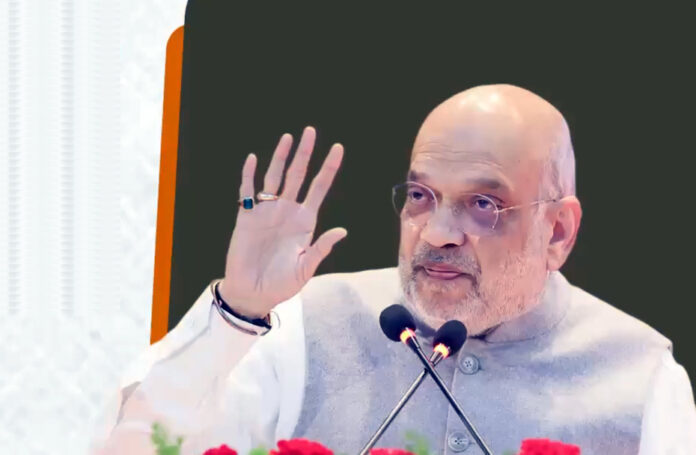
Union Home Minister Amit Shah addresses religious gathering in Leh on Friday.
‘Ladakhis took bullets on chest to protect nation’
Return of sacred relics of Buddha
after 75 years historic re-union
LMF, Mother Dairy agreement to
connect UT to national markets
Sanjeev Pargal
JAMMU, May 1: Union Home Minister Amit Shah said today that Ladakh had long pending demand of Union Territory status due to lack of development and the Central Government decision has brought visible changes across different sectors. He declared that the UT remained at the centre of Government’s development agenda.
He said formation of the Sindhu Infrastructure Development Corporation would play an important role in promoting industrial growth in Ladakh in the coming years as we want this border region to become self-reliant.
Follow the Daily Excelsior channel on WhatsApp
On last-day of his two-day visit to the UT of Ladakh, Shah today inaugurated the exposition of sacred holy relics of Tathagata Buddha and the 2569th Buddha Purnima celebrations at Jivetsal in Leh. He also laid the foundation stone of 10,000 liters per day dairy plant in Kargil and launched a series of dairy development initiatives for Ladakh through virtual mode.
He said he has visited the Union Territory after seven years and was glad to be there on Buddha Purnima. Click here to watch video
“Ladakh is a model of rapid transformation since the 2019 bifurcation of the erstwhile state of Jammu and Kashmir,” the Home Minister said and listed sweeping political, social and economic changes in the Union territory.
Asserting that Ladakh had an old demand to be made a Union territory, he said the basic reason for this demand was that development was not taking place here.
The Leh Apex Body (LAB) and Kargil Democratic Alliance (KDA), the twin bodies of Ladakh, have been agitating for last over five years seeking Statehood and Sixth Schedule status for Ladakh. Though the demand hasn’t been formally rejected by the Centre, the indications are enough that the Government of India is averse to the demands though it was open to giving certain legislative rights and protections through the Hill Development Councils.
Shah was accompanied by Lieutenant Governor of Ladakh Vinai Kumar Saxena, Union Home Secretary Govind Mohan and various other dignitaries.
“Ladakh has now seven districts and 193 Panchayats, with five new districts – Sham, Nubra, Changthang, Zanskar and Drass – created and notifications already issued. Local languages had also been given administrative recognition. Earlier only Hindi and English were in use, but now Bhoti, Purgi and Urdu have also been accorded importance, the Home Minister said, adding the road length has also increased from about 1,799 km before 2019 to 4,040 km now.
He said work on the Zojila tunnel is in progress, construction of the Shinkun La tunnel has started and a new civil airport is also coming up.
Shah said Ladakh’s budget has risen from Rs 1,000 crore when it was part of the erstwhile Jammu and Kashmir State to Rs 6,000 crore now.
Asserting that development in the UT is because of the vision of Prime Minister Narendra Modi, he said that the number of bridges has risen from 19 to 72, a three-time increase while the mobile towers have increased from 344 to 653, and helipads have gone up from seven to 41. The snow-clearing machines, crucial for the region, have increased from 60 to 215. The grid-related works have gone up from 145 to 184, while distribution of have risen from 1,182 to 3,153.
“I am giving these figures on this scale because after becoming a Union Territory, it (Ladakh) has remained the focus of the Narendra Modi Government, the focus of the Prime Minister of the country, and so many development works have taken place together,” he said, adding the impact of better infrastructure was visible in road connectivity, with the Zojila Pass, which earlier remained shut for 127 days, remaining closed for only 19 days this year. Besides, the Kargil-Leh road, which earlier remained closed for nearly 175 days, was shut for only 11 days.
He said that VSAT connectivity has been extended to all Panchayats and major work has been undertaken to upgrade telecom towers. In the education sector, Sindhu Central University has been established, 174 ICT labs set up, 130 smart classrooms created, 40 science laboratories built and 24 Atal Tinkering Labs established.
He said Ladakh became a fully literate administrative unit in 2024 and claimed there was no illiterate person left in the region.
“Nearly 98 per cent households have been provided tap water connections under the Har Ghar Jal scheme, while substantial work has also been carried out in agriculture and horticulture,” he said.
Shah described the return of sacred relics of Lord Buddha to Ladakh after 75 years as a “historic reunion” and said that the UT has remained a “living land of dharma” that preserved and nurtured Buddhist knowledge for centuries.
Stressing the relevance of Buddha’s teachings in modern times, Shah said the message of peace, compassion and the middle path was even more important today than it was 2,500 years ago.
“Ladakh has been a living land of dharma for centuries. When the Dalai Lama comes here, he says this land is not merely a geographical land but a living laboratory of Buddhist culture and compassion,” Shah said in his address after inaugurating the exposition of sacred holy relics of Tathagata Buddha.
He said the land of Ladakh has preserved and nurtured knowledge.
“Whenever Buddhism faced crises, this land worked to protect the teachings of Buddha. And when peace returned, it helped to expand and carry forward that preserved wisdom. Unless one internalises knowledge and makes it a part of oneself, liberation is not possible. Knowledge is incomplete without spiritual practice, while spiritual practice without knowledge is blind. Therefore, the union of spiritual practice and knowledge is the right path. Even with these, if there is no moral discipline, one cannot lead a truly wise life. The basis of a life of wisdom is moral discipline,” the Home Minister said.
Highlighting Ladakh’s role in the spread of Buddhism, Shah said Kashmir was once an ancient centre of Buddhist studies, Mahayana philosophy and Buddhist art, from where Ladakh first came into close contact with Buddhism. Emperor Ashoka’s envoys laid the foundation of Buddhist influence in Ladakh through Kashmir and Gandhara, while Mahayana Buddhism expanded in the region during the Kushan period between the first and third centuries CE.
The Silk Route linking Kashmir, Leh, Yarkand, Khotan and Tibet became a channel not only for trade but also for ideas, monks, manuscripts and artistic traditions. Later, Tibetan influence between the seventh and tenth centuries further enriched Ladakh through Mahayana and Vajrayana traditions, Shah added.
He said it was through Ladakh and adjoining routes that the teachings of Tathagata Buddha, which originated in India, spread to China and several other countries.
“The message that emerged from the land of Ladakh has become a guiding force that helps many people around take their lives forward. The presence of these sacred relics in Ladakh reminds us that India’s civilisation has, for thousands of years, given the message of peace and coexistence,” he said, adding that in a diverse region like Ladakh, this message becomes even more relevant.
He said the return of the relics has boosted the significance of Buddha Purnima for the people of Ladakh.
“These sacred relics have come to Ladakh after 75 years. It is as if Buddha himself is present here today,” Shah said, adding that the followers of Buddhism and other religions in Ladakh and Kargil would draw spiritual energy from the relics alike.
Extending Buddha Purnima greetings to the locals, the minister said that the teachings of Lord Buddha, especially the message ‘Appo Deepo Bhava’ (be your own light), continue to inspire people towards self-reliance and higher purpose.
Stressing the relevance of Buddha’s teachings in modern times, Shah said the message of peace, compassion and the middle path was even more important today than it was 2,500 years ago.
“Amid conflict and unrest, only the path of peace and compassion can provide solutions,” he said.
Shah also appealed to the Ladakh administration to ensure smooth arrangements so that followers of all faiths, especially Buddhists, could visit and pay obeisance to the relics.
Later, addressing another gathering in Leh after launching several dairy projects, Shah praised the people of Ladakh and Kargil for their patriotism and sacrifices in safeguarding the country’s borders.
“Whenever danger came from across the border, the people of Ladakh stood in defence of the nation before the Army reached. The Army reached later. First, the people of Ladakh took bullets on their chests to protect the nation,” Shah said, adding that the whole country — from Kashmir to Kanyakumari and from Dwarka to Kamakhya — knows and appreciates this history.
Union Minister of Fisheries, Animal Husbandry and Dairying Rajiv Ranjan Singh alias Lalan Singh, Ministers of State SP Singh Baghel and Goerge Kurien and LG Ladakh Vinai Kumar Saxena were also present in the function.
Maintaining that ITBP and the Army are major buyers in Ladakh, with around 18,000 soldiers stationed at the borders, he expressed confidence that their requirements of milk, curd, and paneer will be met by this plant. He further stated that a mobile laboratory costing Rs 45 lakh has also been launched, which will greatly help in maintaining milk quality.
“The Android-based AMCS app too has been launched, enabling dairy farmers to transparently monitor their milk accounts on a single platform. This will also boost their confidence,” he said, adding that five livestock farmers who were honoured today are an inspiration for all livestock farmers of Kargil and Leh.
Shah said that Ladakh Milk Federation (LMF) and Mother Dairy have signed an agreement, which will connect Ladakh to national markets. He said that Ladakh’s organic products should get access to the large market of Delhi. He urged the National Dairy Development Board (NDDB) to facilitate a tripartite MoU with the National Cooperative Organic Limited. He added that while Mother Dairy products should be sold here, arrangements should also be made for marketing Ladakh’s products across the country through Mother Dairy and other cooperatives.
He announced plans for a major expansion of the dairy sector in Ladakh and Kargil, including the setting up of a 50,000 liter-per-day milk processing plant in Leh.
The Government is committed to strengthening dairy infrastructure in Ladakh and Kargil to ensure sustainable livelihood and enhance the income of dairy farmers, Shah said.
“We are also working to further strengthen infrastructure in Ladakh as well as in Kargil. In the coming days, a new dairy plant with a processing capacity of around 50,000 liters per day will be set up in Leh at an estimated cost of Rs 70 crore,” he said.
Shah said that cattle breeding centers will also be established in Leh and Kargil at a cost of around Rs 4 crore each to provide high-yielding breeds suited to local climatic conditions and around 500 improved cattle are planned to be introduced annually, with a long-term goal of nearly tripling livestock numbers in the region over the next decade.
Need to decongest Srinagar, existing assets could be monetized
Fayaz Bukhari
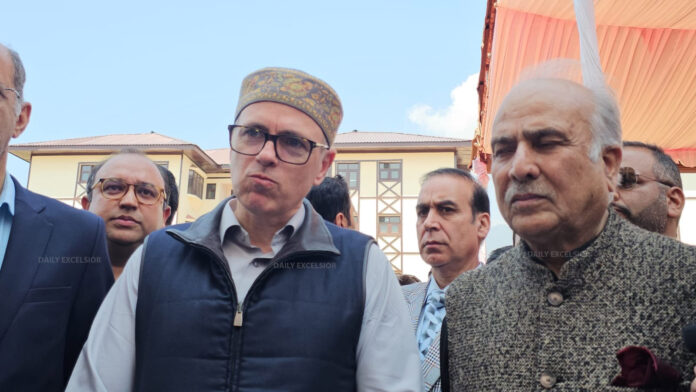
Srinagar, May 1: Chief Minister Omar Abdullah today accused opposition People’s Democratic Party (PDP) of peddling lies regarding the status of Urdu to distract public attention from their political alliance with the Bharatiya Janata Party (BJP).
Speaking to reporters in Pampore, Omar accused the PDP and its leader Iltija Mufti of spreading misinformation on the issue. Iltija on Wednesday had claimed that the Chief Minister was trying to remove Urdu from the collective history of Jammu and Kashmir.
“They are doing politics based on falsehood. I challenge them to show the order where Urdu has been dropped,” he said, adding that there is a clear distinction between seeking public comments and implementing a decision.]
Follow the Daily Excelsior channel on WhatsApp
The Chief Minister reiterated that no order has been issued to remove Urdu from the examination process. “We asked for feedback, but some people misrepresented it. There is no question of dropping Urdu,” he said.
Click here to watch video
“May Allah protect us from people who cannot differentiate between truth and falsehood. Unfortunately, the leaders of this Jamaat do not see anything other than lies. We asked them to show the order where Urdu was dropped; they only showed the order where public comments were sought,” he said.
Omar expressed surprise over the controversy surrounding a proposal to drop Urdu from recruitment examinations for key revenue posts and took a swipe at PDP leader Iltija Mufti’s understanding of the administrative process.
“She is a young girl, but she is educated. Do I have to teach her more?” he said.
The Chief Minister said the file remains pending with him and has not been approved.
“I have neither cleared it nor will I. It was moved by the department, but we sought public feedback as it is our responsibility as an elected Government,” he added.
Omar said that by raising the Urdu issue, the PDP is attempting to divert attention on allegations that it helped the BJP in the Rajya Sabha elections in J&K.
“They helped the BJP and do not want people to focus on that, so they have raised the issue of Urdu. Whatever we are facing today is due to the PDP facilitating the BJP in J&K. Internally, they are aiding the BJP,” he alleged.
The Chief Minister dismissed exit polls predicting a BJP victory in the West Bengal Assembly elections, asserting that the projections would be proven wrong once results are declared.
He said exit polls have often failed to accurately reflect electoral outcomes.
Referring to the previous West Bengal Assembly elections, he noted that most exit polls had forecast a BJP win, but the final results differed significantly.
“So far, no exit polls have been correct. Five years ago, all exit polls predicted victory for the BJP, but the outcome was otherwise,” he said.
He added that the results would soon provide clarity. “By Monday, when we take the salute at the Secretariat, results will start to emerge.”
He said the exit polls would be proven wrong, adding that some agencies did not release projections as they may have anticipated different outcomes.
On the rising prices of essential commodities, Omar said price hikes were likely after the conclusion of elections in key states across the country.
The Chief Minister called for an end to the conflict in West Asia. “There is no justification for war. I hope the US shows wisdom so that the conflict ends and fuel prices come down,” he said.
On electoral integrity, Omar said he does not believe in pre-poll rigging but stressed the importance of safeguarding Electronic Voting Machines (EVMs) after polling.
He also alleged manipulation through the Special Intensive Revision (SIR) process by the Election Commission of India, warning that any irregularities could have serious implications.
The Chief Minister on the occasion inaugurated 368 newly constructed residential quarters for government employees at Sempora in Pampore, developed across 23 blocks at an estimated cost of Rs 90.65 crore.
He said the Government ensured timely completion of accommodation facilities ahead of the Darbar Move, adding that the structures would be allotted to employees.
Omar underscored the need to decongest Srinagar, suggesting that existing Government housing assets in areas such as Jawahar Nagar and the MLA hostel could be monetised while new residential clusters are developed for employees, senior officers and legislators.
Guidelines, multi-agency action plan to curb climate risks
Mohinder Verma
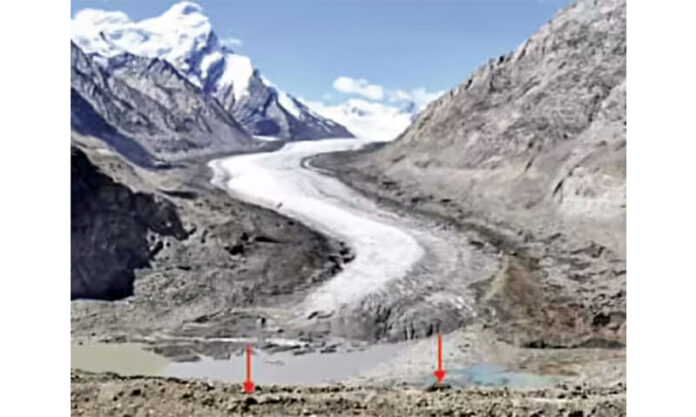
JAMMU, May 1: Amid growing focus on climate resilience, 179 high-altitude glacial lakes in Ladakh are under continuous scientific watch, with experts closely tracking their behaviour through monthly monitoring. The initiative aims to detect temporal changes in water spread area, identify vulnerable lakes and support timely action to safeguard downstream areas from potential hazards.
This has been conveyed by the Central Water Commission (CWC) to the National Green Tribunal (NGT), which is examining the issues of climate crisis, water scarcity and glacier retreat in Ladakh region.
Informing that it is undertaking extensive and systematic monitoring activities, the CWC said, “we are monitoring a total of 2843 glacial lakes and water bodies in the Himalayan Region using advanced Remote Sensing Techniques. Specifically, for Ladakh, we are monitoring 179 glacial lakes and 26 water bodies (with a water spread area of above 10 Hectares. This monitoring is being conducted on a monthly basis from June to October each year, providing crucial data on the behaviour of these water bodies”.
Follow the Daily Excelsior channel on WhatsApp
Claiming that monitoring programme in Ladakh is being progressively expanded, the CWC further informed the National Green Tribunal that while monitoring of 3 large glacial lakes and several water bodies commenced in 2011, an additional 12 glacial lakes were brought under monitoring in 2022. The monitoring of remaining 164 glacial lakes in Ladakh commenced from June last year, demonstrating a phased and comprehensive approach to cover the entire region.
In response to the need for strengthening water management and monitoring glacier dynamics, the CWC has developed and finalized a criterion for risk indexing of the Glacial Lakes. “This scientific framework has been designed to identify and rank glacial lakes based on their likelihood of failure and the potential from a Glacial Lake Outburst Flood (GLOF) event”, the CWC said, adding “the criteria evaluates 12 key factors including the lake’s size, change in size over time and stability of slopes and downstream vulnerabilities”.
Based on the risk indexing, a detailed assessment of 15 glacial lakes in Ladakh was conducted. The results reveal that none of the lakes fall under the high risk category so far. Only, two lakes fall under the moderate risk category and 12 lakes fall under the low risk category. This data driven risk assessment allows for targeted and prioritized mitigation and management strategies ensuring that resources are directed towards areas of genuine concern.
To standardise safety measures, the Central Water Commission has issued two crucial guidelines—Guideline for assessment of GLOF specific to river valley projects in Indian Himalayan Region (IHR), which provide a comprehensive framework for identifying vulnerable glacial lakes and simulating GLOF scenarios to ensure the safety of infrastructure projects.
Similarly, guideline for structural measures to mitigate adverse effect of GLOF on dams/barrages has been designed for engineers and planners and support the integration of risk reduction strategies into infrastructure design.
“These guidelines are instrumental in ensuring that development activities in the fragile Himalayan region are conducted with the best standards of safety and environmental consideration”, the CWC said.
Moreover, the CWC has initiated inter-agency coordination to address these complex environmental challenges. A Steering Committee for Monitoring of Glaciers has been constituted under the chairmanship of the Secretary, Department of Water Resources, RD & GR, MoJS. This committee brings together key national agencies such as National Institute of Hydrology (NIH), National Remote Sensing Centre (NRSC), Wadia Institute of Himalayan Geology, Geological Survey of India (GSI) and CWC, among others, to unify efforts in glacier studies, consolidate data on a GIS-based web portal and develop predictive models for the behaviour of Himalayan glaciers.
“The CWC is not only aware of the challenges in Ladakh but has also implemented a robust, scientifically-grounded and institutionally backed framework to monitor, assess and mitigate the risks associated with climate change and its impact on water resources”, read an official document submitted to the National Green Tribunal.
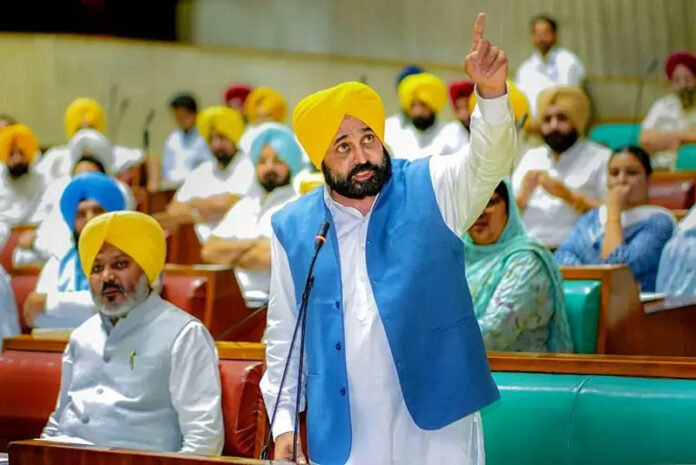
CHANDIGARH, May 1: The Punjab Assembly on Friday witnessed high drama after Congress MLA Sukhpal Singh Khaira made an allegedly objectionable remark against Chief Minister Bhagwant Mann during an intense argument over the alleged use of mobile phone in the house by the legislator.
During the one-day special session of the Punjab Vidhan Sabha here, Mann accused Khaira of using a mobile phone when Speaker Kultar Singh Sandhwan was reading out an official resolution on the revision of wages.
After rising from his seat, the Chief Minister pointed to the speaker, claiming that Khaira is busy on his mobile phone and urged him to ask the Congress MLA what Sandhwan had said about the resolution.
Follow the Daily Excelsior channel on WhatsApp
The speaker then asked Khaira to maintain order in the house and listen to the resolution carefully.
Mann then asked Khaira, “Why don’t you go out and then use it (mobile phone),” which led to a strong verbal altercation during which the opposition MLA hurled an accusation against the chief minister. Meanwhile, the speaker appealed for order and insisted that the chair be addressed.
However, both Mann and Khaira continued arguing and could be seen pointing fingers at each other as the proceedings of the house were disrupted.
The AAP MLAs also rose from their seats with Finance Minister Harpal Singh Cheema condemning Khaira for his conduct and demanded action against him.
Cheema further alleged that Khaira “always tries to disturb the house” as he spoke about his conduct in the assembly.
The incident occurred as an official resolution on the revision of wages was presented at the special session by Labour Minister Tarunpreet Singh Sond who said it paid homage to labourers on the International Workers’ Day.
“Workers are the axis of construction of the nation, the community, the state and society. Every construction project succeeds only through their blood and sweat,” the resolution read.
As per the resolution, “The base rate of minimum wages for the working class in Punjab was last revised in the year 2012. Although the dearness allowance has continued to increase since 2012, there has been no increase in the base rate of minimum wages.
On this sacred occasion of May Day, in this special session of the legislative assembly, this house proposes to revise and increase the minimum wages of labourers and strongly recommends to the government to take a decision regarding the increase of minimum wages for workers, so that the contributions of the workers can be acknowledged.” (PTI)