Monday, May 4, 2026
E-Paper
Home Blog Page 50

Executive Committee of Home for Aged & Infirm discusses welfare measures
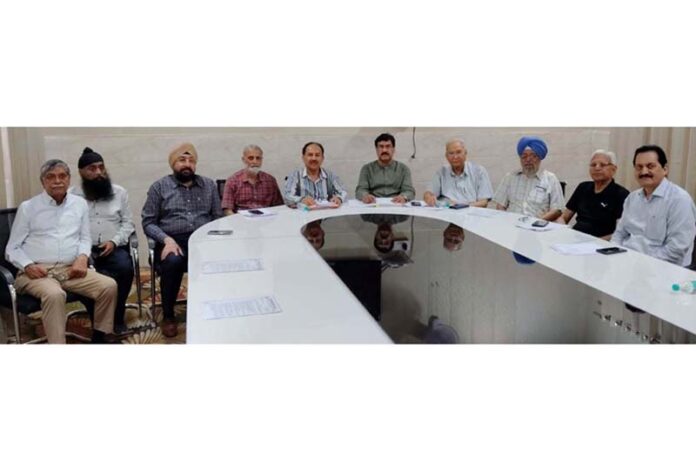
Members of Executive Committee of Home for the Aged & Infirm during a meeting in Jammu on Friday.

Excelsior Correspondent
JAMMU, May 1: A meeting of the Executive Committee of the Home for Aged & Infirm, Ambphalla was held here today under the chairmanship of Pankaj Gupta, president.
At the outset, Dr. Dinesh Gupta, secretary, welcomed all the participants and after this agenda items were discussed and decisions were taken.
The members deliberated upon key administrative, financial and welfare-related matters. The income & expenditure account for March, 2026 and details of major donations received during the month were reviewed and approved.
The members also took a note of new admissions and approved action.
The House appreciated the continued support and visits by various institutions and dignitaries, acknowledging their encouraging observations regarding the facilities and services provided at the Home.
Approval was accorded for the enrolment of new life members during the month under review.
The Committee also reviewed the progress regarding installation of lifts in the Home.
A detailed discussion was also held on the existing scheme of providing financial assistance to the poor and needy beneficiaries. The House resolved to review and rationalize the scheme to enhance its effectiveness and outreach.
During meeting, members also interacted with the inmates and staff to personally assess the quality of services and facilities being provided and to address any concerns related to their welfare.
Those present in the meeting were Prem Gupta, IGP (retired), patron along with Vijay Gupta, joint secretary and members of the Managing Committee-S. Rattandeep Singh Anand, Satpal Sharma, S. Rajinder Singh, Dr. Surinder Kumar and Vijay Dhawan.
The meeting concluded with a vote of thanks.

SJAC announces grand rally on May 3 over 88% submergence
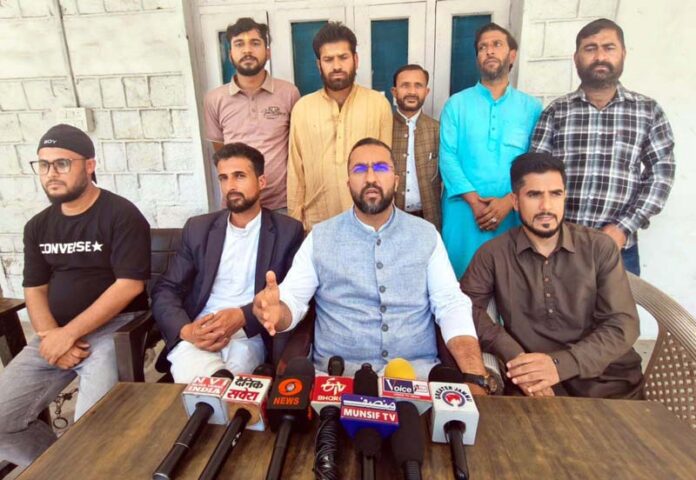
Members of SJAC addressing press conference at Ramban on Friday. -Excelsior/Parvaiz

Sawalkote Hydel Project row

* Opposes road connectivity via Pancheri
Excelsior Correspondent
RAMBAN, May 1: Sawalkote Joint Action Committee (SJAC) today declared to hold grand rally at Ramban on May 3 in connection with submergence of over 88% area, non-payment of compensation to the people as per normal rate and road connectivity through Udhampur instead of Ramban.
Addressing a press conference here today, SJAC president, Advocate Fairoz Khan, alongwith other members- Muzaffar Lone, Mohd Akhtar, Sadam Bali, Mohd Irshad Rather, Wakeel Singh, Surjeet Singh and others raised serious concerns over the continued uncertainty surrounding the Sawalkote Hydroelectric Project.
The Committee highlighted the persistent lack of clarity regarding the proposed road diversion. It noted that the matter has already been formally escalated through communication dated April 13, 2026, wherein Member of Parliament Dr Jitendra Singh forwarded a proposal submitted by MLA Udhampur (West), Pawan Kumar Gupta, to Union Minister Manohar Lal Khattar. The proposal reportedly suggests routing road connectivity to the project through Pancheri in Udhampur instead of Ramban. The SJAC stated that such developments have created confusion and anxiety among the residents of Ramban regarding their rightful stake in the project.
The Committee also expressed concern over reports indicating a possible shift of the project site by 2–3 kilometers away from Ramban. It warned that such a move could reduce Ramban’s role to that of a reservoir zone while the district continues to bear the environmental and social costs. The SJAC stated that if the project is shifted in this manner, Ramban will face a disproportionate burden of submergence, with an estimated 88% of the affected land falling within the district.
Further, the Committee questioned the continued delay in the opening of tenders and the absence of a clearly defined and time-bound execution plan. It emphasized that prolonged ambiguity undermines public confidence and adversely impacts local development planning, livelihoods, and economic expectations.
The SJAC also raised the issue of land acquisition and compensation, stating that several affected families have either received inadequate compensation or have had their land acquired but left unused for years. The Committee demanded that all compensation be ensured strictly in accordance with the Right to Fair Compensation and Transparency in Land Acquisition, Rehabilitation and Resettlement Act, 2013.
JAC demanded official clarification regarding the road diversion plan, declaration of the tender opening schedule and a fixed project execution timeline, fair and lawful compensation in accordance with land acquisition laws and return of unused acquired land or revised compensation as per law, comprehensive rehabilitation and resettlement policy for all affected families and guaranteed wage security for workers and affected families.
Committee declared that on May 3, the grand rally will commence from Dak Bungalow Ramban and proceed via Bus Stand Ramban to Bali Bazar, and culminate back at Dak Bungalow, Ramban.

Iran dying to make a deal, says Trump
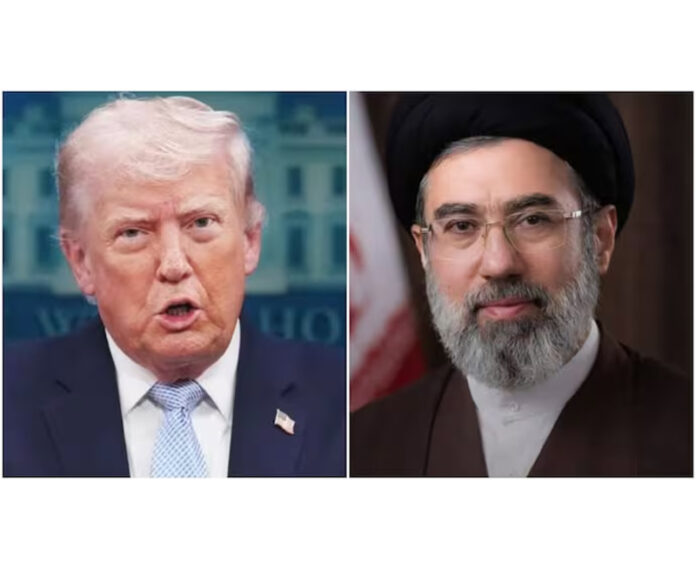
WASHINGTON, May 1: US President Donald Trump has said that Iran was “dying to make a deal” to end the now paused war and virtually ruled out resuming air strikes.
Trump’s remarks during a media interaction at the Oval Office on Thursday afternoon came at a time when Iran threatened fresh strikes if the US resumed the war which has been paused since the warring sides agreed to a ceasefire on April 8.
“I don’t know that we need it,” Trump said to a question on whether he was getting “antsy to break the ceasefire”.
The US president claimed that the military action had sharply degraded Iran’s capabilities.
“Their navy is gone. Their air force is gone… their drone factories are about 82 per cent down. Their missile production had also been hit. Their missile factories are almost 90 per cent down,” he said.
“We obliterated that nuclear capacity of theirs,” Trump said, adding that the Iranian economy was crashing as a result of the US blockade of the Strait of Hormuz.
“They’re not getting any money from oil. And hopefully, it can be worked out very soon,” he added.
“Iran is dying to make a deal,” Trump claimed, adding that only a limited group was aware of the status of negotiations.
“Nobody knows what the talks are except for myself and a couple of other people,” he said.
The US president also utilised the occasion to reiterate the claim to have stopped eight wars, including the India-Pakistan war last year, by threatening to levy tariffs on both the countries.
“But I settled eight wars. And in every case, the people, the prime ministers or presidents wrote letters thanking me,” Trump said.
“And in the case of India, the biggest one would have been Pakistan, India. And the prime minister of Pakistan said, I saved 30 to 50 million lives. But it could have been more than that,” the US president said.
Trump said two nuclear nations were at war and 11 aircraft were shot down.
“They were in the first week of what would have been a very bad war. And I got it solved. You know how I got it solved? By the use of tariffs. I said, “I’m going to charge you tariffs if you guys keep fighting,” the US president said.
Trump has repeatedly claimed credit for stopping the India-Pakistan conflict since May 10 last year, when he announced on social media that the two neighbours had agreed to a “full and immediate” ceasefire after talks mediated by Washington.
India has consistently denied any third-party intervention (PTI)

Iran’s supreme leader vows to protect nuclear, missile capabilities
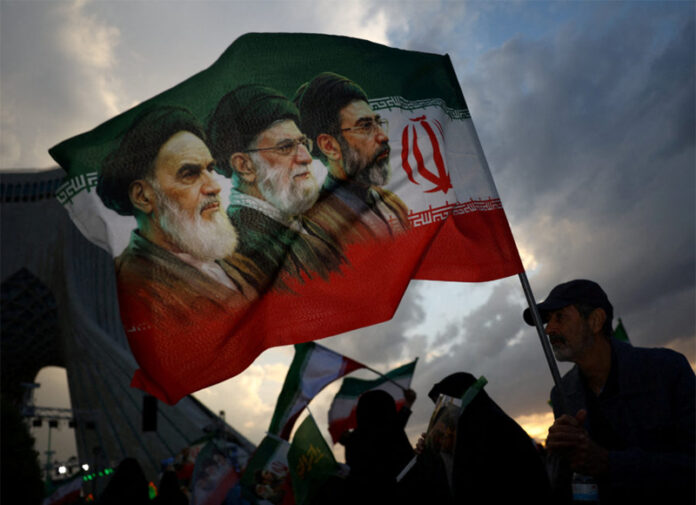
DUBAI, May 1 : Iran’s supreme leader defiantly vowed to protect the Islamic Republic’s nuclear and missile capabilities, which US President Donald Trump has sought to curtail through airstrikes and as part of a wider deal to cement the war’s shaky ceasefire.
In a statement read by a state television anchor on Thursday, Ayatollah Mojtaba Khamenei said the only place Americans belonged in the Persian Gulf is “at the bottom of its waters” and that a “new chapter” was being written in the region’s history. Khamenei has not been seen in public since taking over as supreme leader following the killing of his father in the war’s opening airstrikes.
His remarks come as Iran’s economy is reeling and its oil industry is being squeezed by a US Navy blockade halting its tankers from getting out to sea. The world economy is also under pressure as Iran maintains its chokehold on the Strait of Hormuz, through which a fifth of all crude oil is transported. On Thursday, the global benchmark for oil, Brent crude, traded as high as USD 126 a barrel.
That shock to oil supplies and prices is putting pressure on Trump, who is floating a new plan to reopen the critical passageway used by the US’s Gulf allies to export their oil and gas.
Under the plan, the US would continue its blockade on Iranian ports, while coordinating with allies to impose higher costs on Iran’s attempts to subvert the free flow of energy, according to a senior administration official, who spoke on condition of anonymity because they were not authorized to comment publicly.
In a cable sent Tuesday, the US State Department instructed American diplomats around the world – except those in Belarus, China, Cuba and Russia – to seek their host government’s support for the Trump administration’s call for assistance in establishing a “maritime freedom construct” that would ensure free and unimpeded access to shipping through the strait.
“This commitment reflects broad international consensus on the need for coordinated action to counter Iranian maritime provocations and ensure navigational rights and freedoms in the Strait of Hormuz,” said the cable, a copy of which was obtained by The Associated Press on Thursday.
The initiative, being led by the State Department and the Pentagon’s Central Command, “is a fundamentally defensive response to protect the rights of all countries to navigate international waters freely and safely and to hold Iran accountable for its aggressive and illegal actions to impede the free flow of commerce,” the cable said.
At the same time, Trump has also floated possible changes to US troop presence in allied countries in Europe. The day after the president announced his administration was conducting a review on potentially reducing the US troop presence in Germany, he was asked by a reporter whether he’d weigh pulling US forces out of Italy and Spain, which have sparred with the United States over the use of bases for Iran-related operations.
“Why shouldn’t I?” Trump answered. “Italy has not been of any help to us, and Spain has been horrible, absolutely horrible.”
Ceasefire shaken as Strait remains shut
———————————————–
The US blockade – which, as of Thursday, has turned back some 44 commercial vessels, according to US Central Command – is designed to prevent Iran from selling its oil, depriving it of crucial revenue while also potentially creating a situation where Tehran has to shut off production because it has nowhere to store oil.
A recent Iranian proposal would push negotiations on the country’s nuclear program to a later date. Trump said one of the major reasons he went to war was to deny Iran the ability to develop nuclear weapons. Iran has long maintained that its program is peaceful, though it enriched uranium at near-weapons-grade levels of 60 per cent.
Pakistan on Thursday said it was still facilitating indirect talks between the US and Iran aimed at easing tensions, but that Islamabad would also welcome direct communication between the two sides, even by phone.
“If the two parties can engage in real-time conversations, that could ease the sticking points,” said Ministry of Foreign Affairs spokesperson Tahir Andrabi at a weekly news briefing. He declined to share details of any Iranian or US proposals.
Speaking to mark Persian Gulf Day in Iran, Khamenei’s remarks signalled that nuclear issues and Iran’s ballistic missile program wouldn’t be traded away.
“Ninety million proud and honourable Iranians inside and outside the country regard all of Iran’s identity-based, spiritual, human, scientific, industrial and technological capacities – from nanotechnology and biotechnology to nuclear and missile capabilities – as national,” Khamenei said.
Khamenei referred to America as the “Great Satan,” a long hurled insult by Iranian leaders toward the US since the 1979 Islamic Revolution.
Khamenei signals Strait will remain shut
————————————————
In his remarks, Khamenei seemed to signal Iran would maintain its control over the waterway, which sits in the territorial waters of Iran and Oman. Iran had been charging some ships reportedly USD 2 million apiece to travel through the strait.
He said that Iran’s control of the Strait of Hormuz will make the Gulf more secure, and that Tehran’s “legal rules and new management” of the strait will benefit all the region’s nations.
However, the world considered the strait an international waterway, open to all without paying tolls. Gulf Arab nations, chief among them the United Arab Emirates, have decried Iran’s control of the strait as akin to piracy.
Crackdown intensifies in Iran
———————————–
Iran announced Thursday it hanged a 21-year-old man over charges stemming from the nationwide protests in January, the judiciary’s Mizan news agency reported.
The agency identified the executed man as Sasan Azadvar, from Isfahan. It said he was hanged for the crime of “effectively cooperating with the enemy by attacking police officers” during the protests.
Activists and rights groups say a crackdown on dissent, including a wave of executions, has further intensified since the US-Israel war with Iran.
U.N. Human Rights Chief Volker Turk said on Wednesday that at least 21 people have been executed since the start of the war.
Iran routinely holds closed-door trials in which defendants are unable to challenge the accusations they face, rights groups say, warning that several other people remain at risk of execution.
Fighting continues in southern Lebanon
———————————————-
Despite a ceasefire between Israel and Lebanon-based, Iran-backed Hezbollah militants, the group has continued to claim attacks on Israeli troops in southern Lebanon. Israel’s military said one of its soldiers was killed in battle there Thursday, raising the troop casualties to 17 since the Iran war started.
Air raid sirens sounded multiple times in border communities in northern Israel on Thursday, too. The Israeli military said it struck military structures used by Hezbollah, and the Lebanese Health Ministry said 9 were killed in strikes, including women and children.
Late on Thursday, the foreign ministry of the United Arab Emirates – which has come under attack by Iran during war – announced a travel ban for its citizens covering Iran, Lebanon and Iraq, and urged those already in those countries to return home. (AP)

Karnataka launches state-led Centre of Excellence for Space Technology in Bengaluru
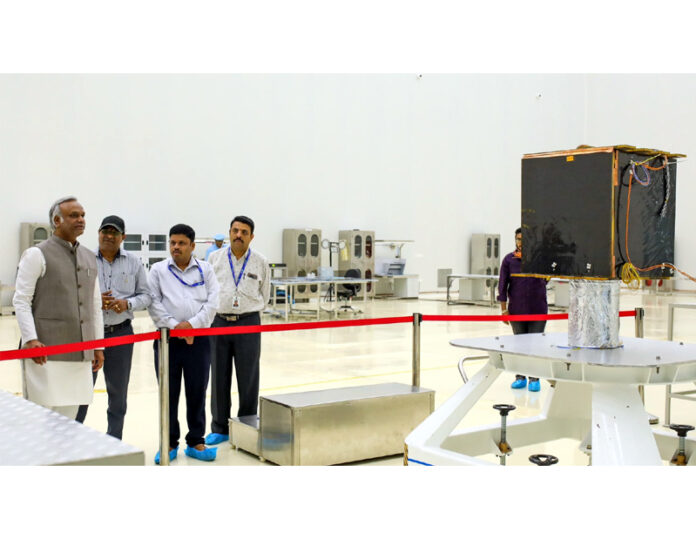
BENGALURU, May 1 : In a significant boost to India’s rapidly expanding space economy, the Karnataka government on Friday launched the country’s first state-led Centre of Excellence for Space Technology here, officials said.
The initiative is aimed at strengthening India’s capabilities to translate space innovation into scalable commercial outcomes, they said.
The Centre, established by the Government of Karnataka through the Karnataka Innovation and Technology Society in collaboration with SIA (Satcom Industry Association India) -India, was inaugurated by Minister for Electronics, IT/BT, and Rural Development and Panchayat Raj, Priyank Kharge, in the presence of senior officials and industry leaders, officials said.
Speaking at the launch, Minister Kharge said that Karnataka has consistently been at the forefront of India’s technology and innovation journey. With the launch of this Centre of Excellence for Space Technology, we are extending that leadership into one of the most strategic sectors of the future.
“Our focus is not just on advancing research, but on creating an ecosystem where innovation can translate into real-world applications, economic growth, and high-quality jobs. This Centre will play a critical role in positioning Karnataka as a key driver of India’s space economy,” he said.
According to an official statement, the CoE SpaceTech Foundation has been established under a Memorandum of Agreement between KITS and SIA-India to drive research and innovation in space technologies, industry-aligned training, startup incubation and cross-sector applications, it said.
The Centre has also formalised strategic MoUs with multiple industry and academic partners to support research in space biotech and microgravity, enable collaboration, build talent pipelines, and provide startups with training and market access, it added. (PTI)

Adani unveils internal overhaul to speed up decisions, reshape partnerships
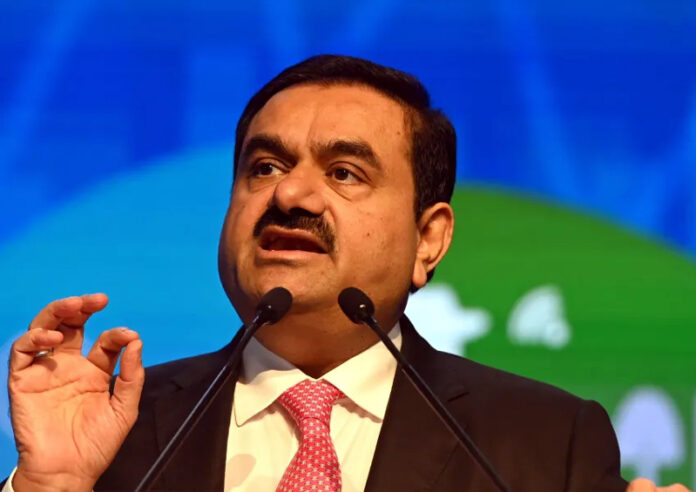
NEW DELHI, May 1 : Billionaire Gautam Adani on Friday outlined a sweeping internal transformation plan for the Adani Group, centred on faster decision-making, stronger contractor partnerships and large-scale workforce skilling, as he linked the conglomerate’s growth to India’s broader development ambitions.
Speaking to employees on International Labour Day, Adani said the group would adopt a “three-layer model” to flatten hierarchies and accelerate execution.
“We want decisions that currently take three days…to be made in just three hours,” he said.
The Adani group chairman also announced a “partnership model” aimed at consolidating vendors and contractors into a smaller pool of accountable partners, alongside a renewed push on training and career progression through initiatives, such as the proposed Adani Training Academy.
“These three changes…are incomplete without one another,” he said, describing them as foundational to sustaining growth across the group’s businesses.
“We’ve begun work on three major transformations, three pillars,” he said.
“The first pillar is the 3-layer model. As organisations grow larger, decisions become slower, and things take longer to move from one level to another. We don’t want this to happen.”
The three-layer model aims to flatten the organisation so that responsibility is clear and decisions can be made quickly.
“When layers are reduced, decisions are made faster, work speed increases, and the entire organisation is filled with new energy,” he said.
The second pillar, he said, is the Partnership Model.
“Our employees provide direction to the work, while our partners – contractors, suppliers, and vendors – execute that work on the ground and give it momentum. However, as we expanded our operations, a challenge emerged.”
Today, at many of the Adani group sites, more than 100 contractors are working simultaneously. Coordinating so many people requires a distinct organisational framework. This takes time, creates additional hierarchical layers, and slows down the decision-making process.
“We intend to change this. Our endeavour is to work with a selected group of strong and reliable partners. Who can take responsibility for the entire task and complete it better, faster, and more effectively. This will simplify coordination, reduce layers, clarify responsibility, and distribute the pace of work,” he said.
The goal of the Partnership Model is not just to complete projects but also empower people to move forward, he said.
“The third pillar is – Learning and Development. If we are to maintain momentum in our work, and if we are to make enduring partnerships it is important that our people continue to learn. We want to ensure that there is a clear and defined path for every individual to advance and progress,” he said.
If someone is unskilled, they should become semi-skilled; from semi-skilled, they should progress to being skilled; and eventually, they should rise to become a supervisor, manager, or leader.
And for this, the conglomerate is setting up the Adani Training Academy to help individual upgrade skills and learn technology.
Adani framed the overhaul within India’s long-term economic trajectory, referencing Prime Minister Narendra Modi’s goal of transforming the country into a developed nation by 2047.
“This resolve cannot be fulfilled through the efforts of any single individual…over 1.4 billion citizens…must unite,” he said.
The ports-to-power conglomerate is in the midst of an aggressive expansion phase.
Adani said the group, which built assets worth about Rs 2 lakh crore over its first 35 years, expects to add a similar amount in a single year. “This isn’t just a number – it’s the result of all your hard work,” he told employees.
He cited key infrastructure projects – including the Mundra port, Vizhinjam port in Kerala, a large renewable energy park in Khavda in Gujarat, and the Navi Mumbai International Airport – as examples of the group’s role in “nation-building”.
On social infrastructure, Adani highlighted the redevelopment of Dharavi in Mumbai, calling it “perhaps, the world’s largest and most challenging endeavour in human transformation”.
“We did not make this decision for the sake of profit…Dharavi has stood as a symbol of our collective failure,” he said, adding that the project aims to improve living standards for residents.
Adani also detailed workforce-focused measures, including prioritising local hiring, expanding skill development programmes and improving worker welfare. The group plans to build air-conditioned housing for 50,000 workers in Mundra and Khavda, along with a large-scale kitchen facility in Mundra to serve up to 1,00,000 meals daily.
Reflecting on the company’s growth from a 20-member team to a workforce of more than 4,00,000, Adani said: “Even if I may not be able to remember every name, the bond I share with you…remains just as strong”.
Invoking a moral of collective contribution, he added: “It does not matter whether your contribution is big or small; what matters is whether you made a contribution at all”.
Positioning employees as central to India’s growth story, Adani concluded: “You are not merely employees…you are nation-builders”. (PTI)

Several leaders call on LG

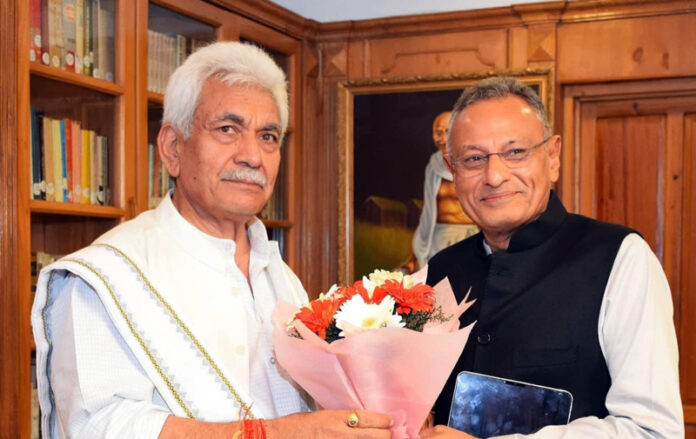
MP Sanjay Seth meeting LG on Friday.

Excelsior Correspondent
SRINAGAR, May 1: Sanjay Seth, Member of Parliament Rajya Sabha called on Lieutenant Governor Manoj Sinha, today.
Er. Aijaz Hussain, former DDC member and BJP leader also called on Lieutenant Governor.
Syed Mohammad Altaf Bukhari, President, J&K Apni Party called on Lieutenant Governor.

Century-Long Rail Odyssey
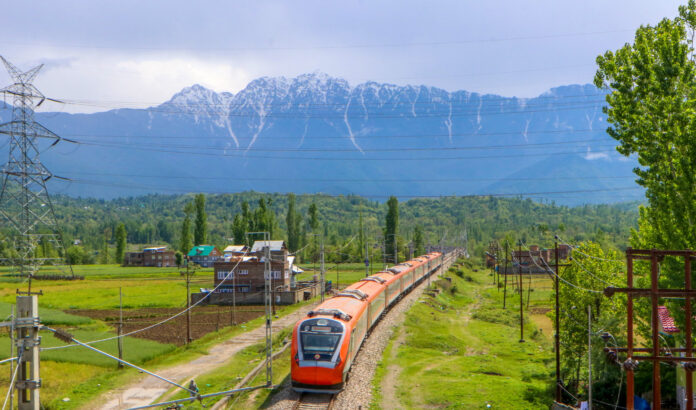
Few infrastructure stories in independent India carry the weight of history, heartbreak, and eventual triumph as profoundly as Jammu and Kashmir’s railway journey. The flagging off of the direct Jammu-Srinagar Vande Bharat Express is the culmination of a saga that spans colonial ambition, the catastrophe of partition, the compulsions of war, and decades of engineering endeavour against one of the planet’s most forbidding terrains. The story begins, remarkably, before Independence. Under the visionary Dogra Maharajas, Jammu was connected by rail to Sialkot – a link that proved to be a remarkable engine of commerce and social mobility. So promising was the potential of rail connectivity that the Dogra rulers even commissioned a survey for a Jammu-Srinagar rail link – a dream that, had history been kinder, might have been realised generations sooner. Then came 1947. Partition did not merely redraw borders – it silenced the Jammu-Sialkot rail line overnight. The bustling trade dissolved. Jammu, which had enjoyed a measure of rail-borne modernity, found itself suddenly isolated, its railway inheritance severed, and its connectivity with a newly independent India non-existent. There was a grievous gap: no rail connectivity existed with the rest of India, leaving the region dependent on roads and the ancient rhythms of mountain travel. For a quarter of a century, the region’s strategic and economic potential was constrained by roads alone.
It was war, ultimately, that forced a rethink. The 1962 conflict with China, followed by the 1965 and 1971 wars with Pakistan, made it unmistakably clear to New Delhi that rail access to Jammu was not a luxury but a strategic imperative. Troop movements, logistical supply chains, and civilian resilience all demanded a dependable rail corridor. In 1973, the Pathankot-Jammu line was commissioned, restoring rail connectivity between Jammu and the Indian heartland after a gap of 26 years. It was an overdue corrective, though the Valley remained as distant as ever from the national rail network. The nineteen-nineties brought renewed urgency and fresh surveys for a Jammu-Srinagar rail connection. Acknowledging the colossal financial and engineering burden, planners wisely adopted a phased approach. Jammu-Udhampur was tackled first, followed by Udhampur-Katra. Simultaneously, Kashmir Valley saw its own incremental progress: a rail service between Budgam and Anantnag commenced in 2008, with the Srinagar-Qazigund track becoming operational in 2009. Yet the two ends of the corridor remained stubbornly unjoined, separated by the forbidding Pir Panjal range and its uncompromising geology.
That final, audacious connection fell to this generation of engineers and political leaders. Under Prime Minister Narendra Modi, the Rs 43,780-crore Udhampur-Srinagar-Baramulla Rail Link received the decisive push it needed. With 36 tunnels spanning 119 kilometres and 943 bridges – several holding world records for height and span – the USBRL stands as one of the supreme feats of civil engineering in Indian history. In June 2025, PM Modi flagged off the first train between Katra and Srinagar. But Jammu-Srinagar connectivity was the missing link. On 30th April 2026, Railway Minister Ashwini Vaishnaw extended that service all the way to Jammu Tawi, closing the last remaining gap and delivering complete, unbroken rail connectivity between J&K’s twin capitals.
The transformation on the ground is already palpable. What was once a gruelling, weather-dependent half-day crawl on the National Highway is now a five-hour, all-weather journey in air-conditioned comfort, carrying up to 1,400 passengers per run. Cement prices in the Valley have fallen; tonnes of apples and horticultural produce now reach mainland markets far more swiftly. Students, patients, soldiers, pilgrims, and businessmen alike have gained a dependability that the mountain road could never offer. Chief Minister Omar Abdullah is right to press the case for a dry inland port in J&K – the next logical step to unlock the full economic potential that rail now makes possible. And with the Government’s commitment already expressed to the Poonch-Rajouri and Uri rail links, the network continues to grow.
From the silenced whistle of the Jammu-Sialkot line to the triumphant hum of Vande Bharat threading through the Himalayas, J&K’s rail story is one of loss, perseverance, and, at last, arrival. The dream has not merely arrived at the platform – it has departed, on schedule, into a transformed future.

Britney Spears charged with driving under the influence of alcohol and drugs

LOS ANGELES, May 1: Britney Spears was charged in California with driving under the influence of drugs and alcohol, authorities said.
The 44-year-old pop star was on Thursday charged with a single misdemeanour count of driving under the combined influence of alcohol and at least one drug, the Ventura County District Attorney’s Office said.
A Spears representative had no immediate comment.
The criminal complaint does not specify what kind of alcohol or drugs, or what amount, Spears is accused of having used.
Spears, who has since entered substance abuse treatment, was arrested March 4 after she was pulled over for driving her black BMW fast and erratically on US 101 near her home, the California Highway Patrol said. She appeared to be impaired, took a series of field sobriety tests, was arrested on suspicion of driving under the influence of a combination of alcohol and drugs and was taken to a Ventura County jail, the CHP said.
She was released on bail the following day. Police completed their investigation and presented it to prosecutors on March 23.
A representative at the time called Spears’ actions “completely inexcusable” and said it would ideally be “the first step in long overdue change that needs to occur in Britney’s life.”
Spears voluntarily checked into a substance abuse treatment facility just over a month after the arrest, her representative said.
Spears’ arraignment is set for Monday. Because it is a misdemeanor charge, she will not be required to appear in court, prosecutors said.
Prosecutors said the case will be handled according to their standard protocol for defendants with no DUI history, no crash or injury on the road and a low blood-alcohol level.
In court on Monday, Spears will be offered what is commonly known as a “wet reckless,” allowing a defendant to plead guilty and get a year of probation, credit for any time served in jail, a required DUI class and state-mandated fines and fees, prosecutors said.
The offer is common especially for defendants who have independently shown motivation to address their problems and seek treatment, the district attorney’s office said.
The singer has a home in Ventura County just outside the Los Angeles County line. Her arraignment will be held in the city of Ventura, a seaside community of about 110,000 people about 70 miles (113 kilometers) northwest of downtown LA.
The onetime teen pop phenomenon and “Mickey Mouse Club” alum became a defining superstar of the 1990s and 2000s with hits like “Toxic”, “Gimme More” and “I’m a Slave 4 U”.
Most of Spears’ albums have been certified platinum, according to the Recording Industry Association of America, with two diamond titles: 1999’s ” … Baby One More Time” and 2000’s “Oops! … I Did It Again”.
Spears became a tabloid focus in the early 2000s, and a source of public scrutiny, as she battled mental illness and paparazzi documented the details of her private life.
In 2008, Spears was placed under a court-ordered conservatorship, run primarily by her father and his lawyers, that would control her personal and financial decisions for well over a decade. It was dissolved in 2021.
Since then, she has married and divorced, and released a bestselling, tell-all memoir, “The Woman in Me.”
She has essentially been retired as an artist in recent years, releasing only a few collaborative singles since her last full album in 2016. (AP)

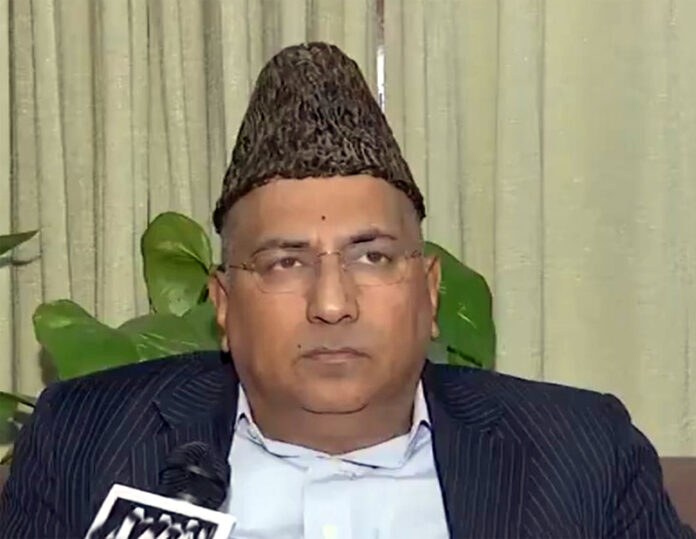
Khatana flays NC Govt for depriving tribals of land rights
Excelsior Correspondent
KATHUA, May 1: Senior BJP leader and Member of Parliament (Rajya Sabha), Gulam Ali Khatana, visited Panchayat Pangli in Nagri, near here, today.
While interacting with local residents and members of the Tribal community, Khatana raised concern over the issue of land allotment to homeless, landless, and document-less Nomadic Tribes in Jammu & Kashmir. He questioned the Government led by Chief Minister, Omar Abdullah for not implementing the provision of five marla land to these vulnerable sections, stating that the lack of land ownership deprives them of access to various State and Central welfare schemes.
Khatana further stated that previous administrative efforts under the Lieutenant Governor aimed to provide land to such communities, but alleged that these initiatives were halted by the present Government. He emphasized that Nomadic and Tribal populations, who have historically played a vital role in safeguarding border areas, are today facing neglect and are being unfairly linked with social issues such as drug abuse.
He accused the current administration of deliberately depriving these communities of basic amenities for political considerations and urged immediate intervention to ensure justice, dignity, and development for the affected population.
A large number of people from the Tribal community participated in the gathering and expressed their concerns regarding land rights, access to welfare schemes and overall development.
Khatana assured the community that their issues would be strongly taken up at appropriate forums and reiterated his commitment to the welfare and upliftment of marginalized sections in Jammu & Kashmir.
Other prominent present included, Ali Mohd Chechi, State general secretary, BJP ST Morcha, Jammu & Kashmir UT, Additional SP Kathua, DSP HQ Kathua, SHO Kathua, Senior BJP Gujjar leader, Choudhary Sultan, Haji Roshan Din, Lambardar Murad Ali, Haji Alam, Maskeen Pradhan, Lal Hussain Chechi, vice president, ST Morcha Kathua, BJP and Mohd Sadeeq Chechi.