

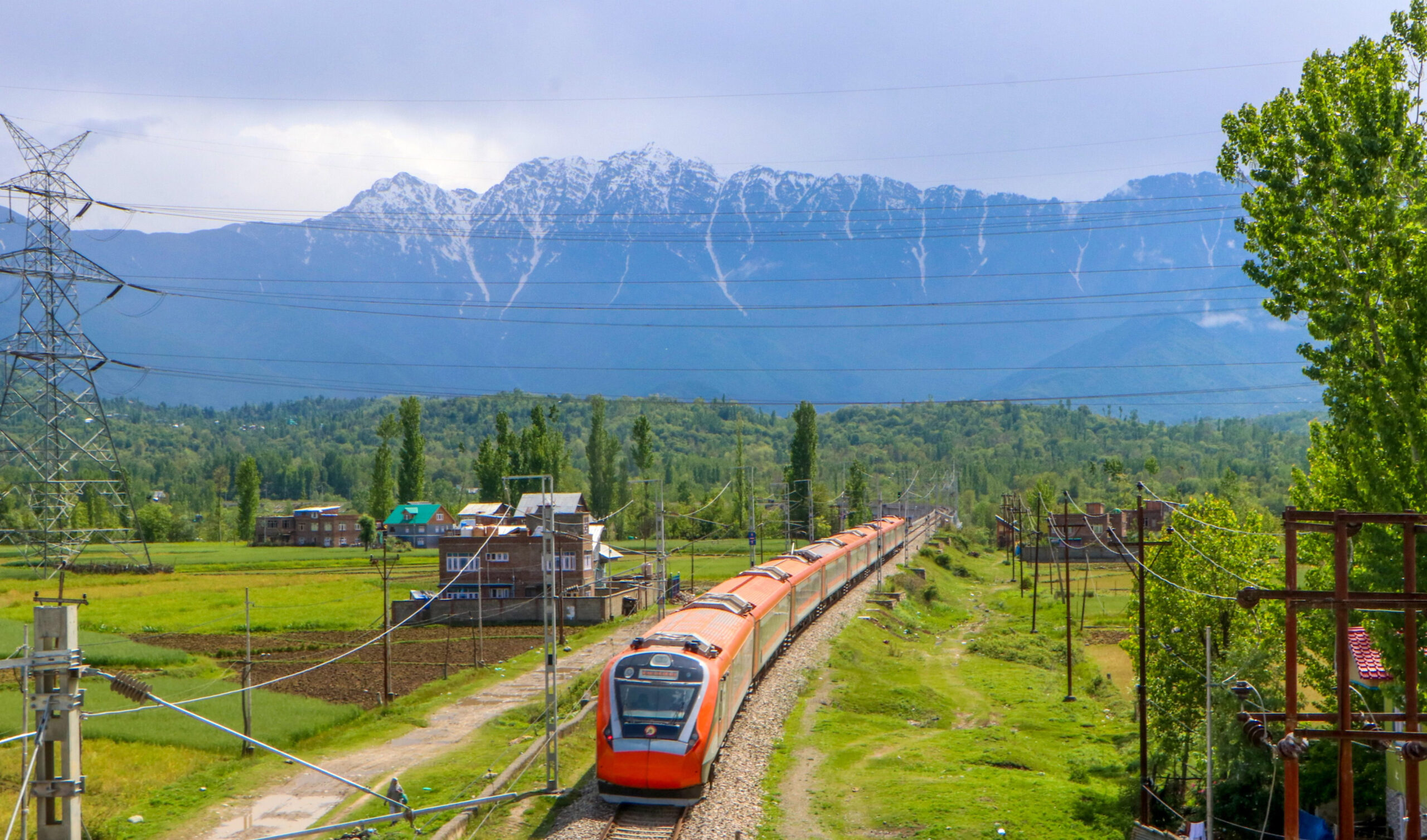
Few infrastructure stories in independent India carry the weight of history, heartbreak, and eventual triumph as profoundly as Jammu and Kashmir’s railway journey. The flagging off of the direct Jammu-Srinagar Vande Bharat Express is the culmination of a saga that spans colonial ambition, the catastrophe of partition, the compulsions of war, and decades of engineering endeavour against one of the planet’s most forbidding terrains. The story begins, remarkably, before Independence. Under the visionary Dogra Maharajas, Jammu was connected by rail to Sialkot – a link that proved to be a remarkable engine of commerce and social mobility. So promising was the potential of rail connectivity that the Dogra rulers even commissioned a survey for a Jammu-Srinagar rail link – a dream that, had history been kinder, might have been realised generations sooner. Then came 1947. Partition did not merely redraw borders – it silenced the Jammu-Sialkot rail line overnight. The bustling trade dissolved. Jammu, which had enjoyed a measure of rail-borne modernity, found itself suddenly isolated, its railway inheritance severed, and its connectivity with a newly independent India non-existent. There was a grievous gap: no rail connectivity existed with the rest of India, leaving the region dependent on roads and the ancient rhythms of mountain travel. For a quarter of a century, the region’s strategic and economic potential was constrained by roads alone.
It was war, ultimately, that forced a rethink. The 1962 conflict with China, followed by the 1965 and 1971 wars with Pakistan, made it unmistakably clear to New Delhi that rail access to Jammu was not a luxury but a strategic imperative. Troop movements, logistical supply chains, and civilian resilience all demanded a dependable rail corridor. In 1973, the Pathankot-Jammu line was commissioned, restoring rail connectivity between Jammu and the Indian heartland after a gap of 26 years. It was an overdue corrective, though the Valley remained as distant as ever from the national rail network. The nineteen-nineties brought renewed urgency and fresh surveys for a Jammu-Srinagar rail connection. Acknowledging the colossal financial and engineering burden, planners wisely adopted a phased approach. Jammu-Udhampur was tackled first, followed by Udhampur-Katra. Simultaneously, Kashmir Valley saw its own incremental progress: a rail service between Budgam and Anantnag commenced in 2008, with the Srinagar-Qazigund track becoming operational in 2009. Yet the two ends of the corridor remained stubbornly unjoined, separated by the forbidding Pir Panjal range and its uncompromising geology.
That final, audacious connection fell to this generation of engineers and political leaders. Under Prime Minister Narendra Modi, the Rs 43,780-crore Udhampur-Srinagar-Baramulla Rail Link received the decisive push it needed. With 36 tunnels spanning 119 kilometres and 943 bridges – several holding world records for height and span – the USBRL stands as one of the supreme feats of civil engineering in Indian history. In June 2025, PM Modi flagged off the first train between Katra and Srinagar. But Jammu-Srinagar connectivity was the missing link. On 30th April 2026, Railway Minister Ashwini Vaishnaw extended that service all the way to Jammu Tawi, closing the last remaining gap and delivering complete, unbroken rail connectivity between J&K’s twin capitals.
The transformation on the ground is already palpable. What was once a gruelling, weather-dependent half-day crawl on the National Highway is now a five-hour, all-weather journey in air-conditioned comfort, carrying up to 1,400 passengers per run. Cement prices in the Valley have fallen; tonnes of apples and horticultural produce now reach mainland markets far more swiftly. Students, patients, soldiers, pilgrims, and businessmen alike have gained a dependability that the mountain road could never offer. Chief Minister Omar Abdullah is right to press the case for a dry inland port in J&K – the next logical step to unlock the full economic potential that rail now makes possible. And with the Government’s commitment already expressed to the Poonch-Rajouri and Uri rail links, the network continues to grow.
From the silenced whistle of the Jammu-Sialkot line to the triumphant hum of Vande Bharat threading through the Himalayas, J&K’s rail story is one of loss, perseverance, and, at last, arrival. The dream has not merely arrived at the platform – it has departed, on schedule, into a transformed future.
 Follow our WhatsApp channel
