NEW DELHI, Apr 29 : Exit polls for the high-stakes Assembly elections across West Bengal, Tamil Nadu, Kerala, Assam, and Puducherry on Wednesday revealed a politically uneven landscape, with West Bengal emerging as the most fiercely contested and unpredictable battleground, even as clearer and more consistent mandates appeared to take shape in the other four states.
In West Bengal (294 seats), the high-voltage contest between the Trinamool Congress and the Bharatiya Janata Party has produced sharply divergent projections across agencies, underscoring both the intensity of the campaign and the deep polarisation among voters.
Among the major pollsters, Axis My India projected a comfortable victory for the TMC, estimating 177-187 seats, while placing the BJP at 142-171 seats, suggesting a strong but ultimately short challenge. In stark contrast, a BJP internal survey indicated a potential upset, projecting the party at around 174 seats and the TMC at about 110, pointing towards a possible regime change.
Adding to the fractured picture, P-MARQ (P Matrize) gave the BJP an edge with 146-161 seats, while projecting the TMC at 120-140. JVC also pointed to a BJP advantage, forecasting 138-159 seats for the party and 131-152 for the TMC, suggesting a tight and possibly knife-edge finish. Meanwhile, Poll Diary placed the BJP in a strong position with 142-171 seats, while the TMC was seen trailing at 99-127.
This unusually wide spread-from a clear TMC majority to a possible BJP victory-makes West Bengal the most volatile and closely watched contest of this election cycle, echoing past instances where exit polls struggled to capture the final outcome. The projections reflect a deeply divided electorate, with the TMC holding its ground in rural and minority-dominated regions, while the BJP continues to expand its footprint in urban centres and border districts, leaving several constituencies too close to call.
In contrast, the electoral picture outside Bengal appears far more settled.
In Tamil Nadu (234 seats), exit polls show near-unanimity in projecting a decisive victory for the DMK-led alliance, with estimates consistently placing it in the 150-180 seat range, comfortably ahead of the AIADMK-led alliance at 50-80 seats. The numbers point to a clear mandate and continuity, with minimal variation across agencies.
In Kerala (140 seats), projections suggest a possible political shift, with the Congress-led United Democratic Front (UDF) appearing poised for a comeback after a decade. The Axis My India exit poll estimates the UDF at 78-90 seats, well above the majority mark, while the ruling Left Democratic Front (LDF) is projected at 49-62 seats. The BJP-led NDA is expected to remain marginal with 0-3 seats.
In Assam (126 seats), projections are largely aligned, indicating a clear return of the BJP-led NDA. Axis My India has placed the NDA at 88-100 seats and the Congress-led alliance at 24-36, while other agencies broadly estimate the NDA in the 75-100 seat range against 25-50 for the opposition, pointing to a comfortable majority and reaffirming incumbent strength.
In Puducherry (30 seats), exit polls indicate a fragmented but NDA-leaning outcome, with most projections giving the alliance 16-22 seats, compared to 8-14 for the Congress-DMK bloc. Smaller players and independents, though marginal, could still influence the final outcome in a closely contested Assembly.
Taken together, the exit polls suggest a multi-layered national verdict shaped by strong regional dynamics-with the TMC holding ground but under pressure in Bengal, the DMK firmly in command in Tamil Nadu, Kerala tilting towards a UDF resurgence, and the BJP-led NDA consolidating its position in Assam while maintaining an advantage in Puducherry.
Yet, it is West Bengal that stands apart, with sharply conflicting projections making it the epicentre of uncertainty and the defining story of these elections. With counting scheduled on May 4, the exit polls remain only an early indicator-and if past trends are any guide, the final verdict, particularly in Bengal, could still defy even the most confident projections.
NEW DELHI, Apr 29: The Ministry of Road Transport and Highways has proposed amendments to vehicle emission rules to widen the scope for higher ethanol blends and alternative fuels, paving the way for flex-fuel and pure biofuel vehicles across all vehicle categories.
The draft changes to the Central Motor Vehicles Rules, 1989 aim to provide for wider use of fuels, such as E85 (a blend of 85 per cent ethanol with petrol) and E100 (which would allow vehicles to run on nearly pure ethanol), as well as B100 biodiesel and hydrogen-CNG combinations.
India has already achieved 20 per cent blending of ethanol (produced from biomass like sugarcane, corn or rice) with petrol to create a cleaner-burning fuel, reducing reliance on imported crude oil and cutting carbon emissions.
In an April 27 gazette notification, the ministry said the changes would be taken up after a 30-day public consultation period, during which stakeholders can submit objections or suggestions.
Among key proposals, the draft raises the vehicle weight limit from 3,000 kg to 3,500 kg, bringing regulation in sync with global standards for light commercial vehicles. This means more vans, pickups, and small trucks will now fall under the same emission testing rules.
It recognises fuels with higher blends of renewable biofuels – E20 (20 per cent ethanol blended petrol), E85 (85 per cent ethanol), E100 (100 per cent ethanol) and B100 (100 per cent biodiesel).
Until now, the rules mostly spoke about E10 and E20. This amendment opens the regulatory door for flex-fuel vehicles and pure biofuel vehicles across all vehicle categories – two-wheelers, three-wheelers, passenger cars, and heavy vehicles.
The notification also updates fuel definitions and standards, including replacing references to “Hydrogen+CN” with “Hydrogen+CNG”.
It also corrects specific emission intensity metric measuring the mass of pollutant (in milligrams) emitted per unit of energy produced to “mg/kWh” from earlier “Mg/kWh”.
The World-Harmonised not-to-exceed (WNTE) emission limit has been corrected from “60” to “600”.
WNTE is a global methodology that limits heavy-duty engine emissions during real-world, in-use operation, rather than just in a laboratory. It sets a maximum permissible level for NOx and PM emissions across a broad range of engine speeds, loads, and ambient temperatures.( PTI)
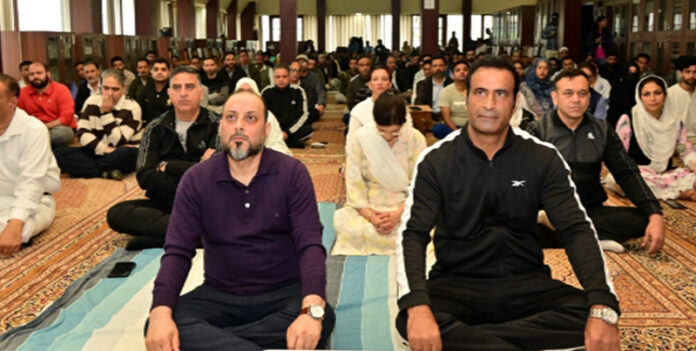
Judicial officers participating in a Yoga session at District Court Complex, Mominabad, Srinagar.
Excelsior Correspondent
SRINAGAR, Apr 29: Under the patronage of Justice Arun Palli, Chief Justice of High Court of Jammu & Kashmir and Ladakh (Patron-in-Chief, J&K Judicial Academy), and guidance of the Chairperson and Members of the Governing Committee for J&K Judicial Academy, a special session titled “Yoga for Mental Fitness” was organised at the District Court Complex, Mominabad, Srinagar for Judicial Officers and staff of Srinagar District, in collaboration with the Isha Foundation.
The session was inaugurated by Naseer Ahmad Dar, Director, J&K Judicial Academy, who highlighted the importance of physical and mental well-being in judicial functioning. He stressed that effective administration of justice requires sustained concentration, emotional balance and resilience, and emphasized that yoga can significantly enhance professional efficiency and overall well-being.
The programme focused on yoga as a holistic practice that harmonises body, mind and breath. Participants were encouraged to adopt simple and consistent wellness practices in daily life to improve clarity of thought, reduce stress and build resilience.
The Academy expressed gratitude to the Isha Foundation for its expert guidance and collaboration. Appreciation was also extended to Haq Nawaz Zargar, Principal District and Sessions Judge Srinagar, for logistical support.
The session witnessed active participation and was widely appreciated. It concluded with a vote of thanks by Tabasum, Chief Judicial Magistrate Srinagar, who thanked all stakeholders for their cooperation and successful conduct of the programme.
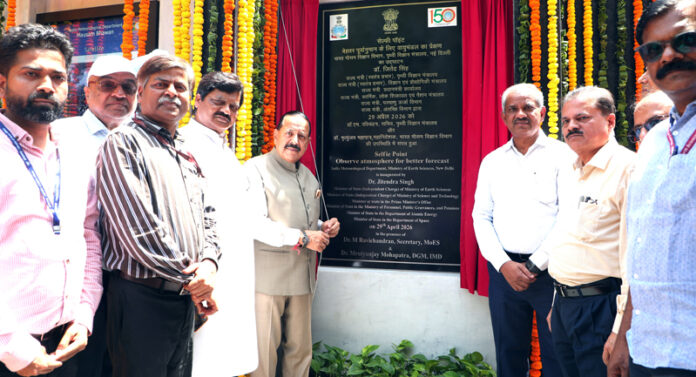
Union Minister Dr Jitendra Singh inaugurating a Selfie Point, depicting a Weather Radar, at India Meteorological Department (IMD) headquarters, at Lodhi Road, New Delhi on Wednesday.
Excelsior Correspondent
NEW DELHI, Apr, 29: India has significantly expanded its Doppler Weather Radar (DWR) network since 2014, increasing from 14 operational units to 50, marking over 250% rise. These additions, covering over 87% of the country, improve forecasting for cyclones, heavy rain, and thunderstorms under the India Meteorological Department (IMD), with 50 more planned under Mission Mausam.
This was stated here today by Union Minister of State (Independent Charge) for Science & Technology and Earth Sciences, Dr. Jitendra Singh speaking to the media after inaugurating a Selfie Point, depicting Weather Radar, at the entrance gate of India Meteorological Department (IMD) headquarters, at Lodhi Road, here. The event was held in the presence of the Secretary, Ministry of Earth Sciences, Dr. M. Ravichandran, and Director General of Meteorology, IMD, Dr. Mrutyunjay Mohapatra, along with senior officials and scientists.
The Minister said, this transformation has been made possible due to the high priority accorded to the sector by the Government under the leadership of Prime Minister Narendra Modi, leading to greater accuracy, accessibility and public trust in forecasts.
Dr Jitendra Singh said that India’s meteorological services have undergone a remarkable transformation over the last decade. From a time when weather forecasts were often met with scepticism, the system today provides highly reliable and precise predictions used by a wide spectrum of users, from farmers and homemakers to pilots and event planners. He said that people now routinely check weather updates on their mobile phones before stepping out, reflecting the growing trust and reach of IMD services.
Referring to advancements in forecasting, he highlighted the introduction of ‘Nowcast’ services, which provide highly localised and accurate forecasts for the next three hours. He said that such real-time information is crucial for disaster preparedness, urban planning and day-to-day decision-making. He added that India’s forecasting capability has reached a stage where it can provide detailed inputs on rainfall intensity, type of precipitation, possibility of hailstorms, and even the size of raindrops.
Dr. Jitendra Singh also spoke about the role of Doppler Weather Radar technology in strengthening India’s weather monitoring system. These radars use the Doppler effect to track the movement and velocity of weather systems, enabling accurate and timely forecasts. The modern radars deployed by IMD are equipped with dual-polarization technology, allowing precise identification of precipitation types such as rain, hail and drizzle, improved rainfall estimation, and better detection of severe weather events while minimizing false signals.
Dr Jitendra Singh said that the expanding radar network enables continuous monitoring of the atmosphere over large distances and supports early warnings for cyclones, thunderstorms, heavy rainfall and other extreme weather events. It also plays a critical role in aviation safety, agricultural planning and disaster risk reduction.
Highlighting the broader impact, the Minister said that India’s forecasting capabilities are also benefiting neighbouring countries, reflecting the country’s commitment to global cooperation and shared resilience.
The Minister also referred to the government’s focused initiatives such as Mission Mausam, aimed at strengthening weather and climate services, and the ongoing expansion of radar infrastructure, including installations in vulnerable regions like Jammu & Kashmir following recent extreme weather events.
KOLKATA, Apr 29 : West Bengal’s high-stakes assembly elections ended on Wednesday with a massive voter turnout of 91.66 per cent in the second and final phase, capping one of the most intense electoral contests in the recent years and setting the stage for a far-reaching verdict on whether chief minister Mamata Banerjee will continue her dominance or the BJP will break the TMC’s hold in the state.
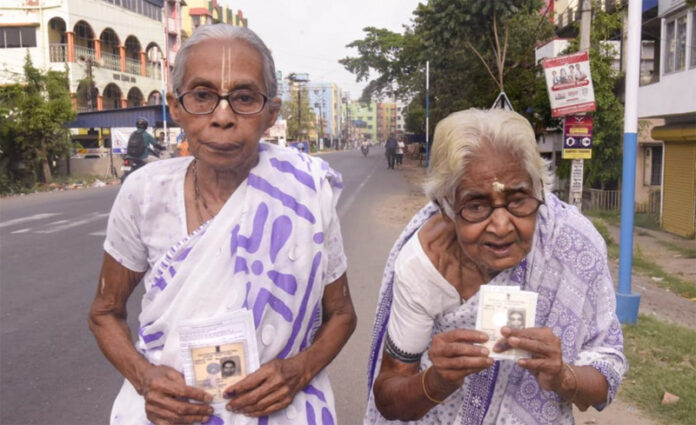
With 91.66 per cent at the closing of the voting, and reportedly lakhs of voters still waiting in queues to cast their ballots, the second phase of polls across 142 constituencies in South Bengal looked poised to match the first phase’s record voter participation of 93.19 per cent.
The metropolis of Kolkata recorded a turnout of around 87 per cent at that time, with Purba Bardhaman district topping the chart at 92.46 per cent.
A communication from the Election Commission said 91.66 per cent turnout was recorded in the second phase of polls till 7.45 pm, putting the combined poll percentage over the two-phases at 92.47 per cent. The first phase of polling was held on April 23 and the counting will be on May 4.
“This is the highest-ever recorded poll-participation since Independence in West Bengal,” it said.
The sheer scale of participation gave the election an immediate political message – voters were not indifferent. They had turned out in numbers large enough to make every narrative contested and every claim of momentum politically loaded.
If the first phase tested whether the BJP could retain its north Bengal citadel, the second and final round was always the real battle for the saffron party on whether it could breach the ruling TMC’s southern fortress of Kolkata, Howrah, Hooghly, Nadia, North and South 24 Parganas and Purba Bardhaman.
At the centre of the larger political fight stood Bhabanipur, no longer merely a south Kolkata constituency but Banerjee’s political refuge, her emotional home turf and the BJP’s chosen psychological battlefield.
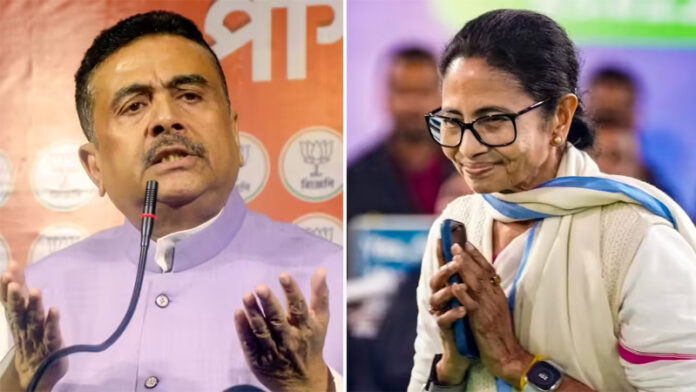
Banerjee, 71, seeking a fourth consecutive term after 15 years in power, faced Leader of Opposition Suvendu Adhikari in a prestige battle widely seen as a symbolic rematch of Nandigram, where Adhikari had defeated her in 2021 after crossing over from the TMC to the BJP.
Five years later, the duel shifted to Banerjee’s own bastion. For the TMC, retaining Bhabanipur is about protecting the chief minister’s authority in her own backyard. For the BJP, breaching it would puncture the aura of invincibility around Bengal’s most powerful political figure.
The constituency witnessed nearly 87 per cent polling, sharply up from around 61 per cent in the 2021 assembly polls and 57 per cent in the bypoll that brought Banerjee back to the House.
Banerjee – who usually votes later in the day and prefers staying indoors on the day of polls – broke convention and hit the ground before 8 am, moving through Chetla, Padmapukur and Chakraberia areas following complaints of alleged intimidation of local TMC leaders.
As she sat outside a booth amid heavy deployment of central forces, Adhikari arrived there and declared, “I will not allow any hooliganism.” He opposed Banerjee moving around with “50-60 people” with her.
Banerjee accused the BJP of trying to “rig” the election by using central forces, election observers and officials.
“The BJP wants to rig this election. Polls in Bengal are usually peaceful. Is there a goonda raj here?” she said, alleging intimidation of TMC polling agents and late-night visits by CRPF personnel to party workers’ homes.
“The atrocities by the central forces are unprecedented. What is happening is not at all free and fair polls. But despite all this, we have full faith that we will win,” she said after casting her vote.
Adhikari dismissed the charges as “frustration”, claiming Banerjee had realised that “not a single vote was coming her way”.
Tension flared again in Kalighat when Adhikari visited another booth, and TMC workers raised slogans against him. Police resorted to a lathi-charge to disperse the crowd as BJP supporters answered with counter-slogans.
Reports of sporadic tension were also received from some other areas amid sights of long queues at polling stations, booth-level flare-ups, and political bickering.
In Kolkata’s Entally, BJP candidate Priyanka Tibrewal alleged that the TMC’s polling agents tried to assault her after she objected to overcrowding inside a booth and a lack of voter privacy.
In Panihati, BJP candidate and the R G Kar victim’s mother, Ratna Debnath, faced protests, while her party colleague in Basanti, Bikash Sardar, alleged that “200 to 250 TMC goons” attacked his vehicle and assaulted his driver.
The TMC, meanwhile, accused the central forces of exercising brute force on the general voters at Falta’s Belsingha village, especially women, who were beaten up during a move to disperse a crowd from near a polling station.The party also alleged CAPF high-handedness on women and a four-year-old child at Sathachhia in Howrah and on villagers at Ausgram in Purba Bardhaman district.
“In the name of ensuring security, central force jawans are not sparing even women who were brutally lathi-charged. TMC protests this highhandedness of the male jawans who exercised brute force on unarmed villagers. We draw the EC’s attention to such illegal actions of the CAPF and ask the poll body to issue cease-and-desist orders against such use of force. We believe, people of Bengal will respond to this on EVMs,” Anirban Banerjee, party spokesperson, said.
The BJP also alleged that in several polling stations in Falta, the option to vote for the party was blocked using a tape over EVM poll buttons, and demanded repolls in the affected booths.
Sate’s Chief Electoral Officer Manoj Agarwal said repolling is likely to be announced in booths where EVMs were found tampered with. However, the order will only be issued after authorities receive reports from the district election officer or election observers regarding allegations of EVM tampering, such as using tapes or a blot of ink, he said.
Amid Bengal’s charged political landscape, the balance of forces between anti-incumbency and the recalibration of electoral rolls is likely to determine the delicate arithmetic of power at Nabanna, the state’s administrative nerve centre.
Of the 142 seats that voted on Wednesday, the TMC had won 123 in 2021, leaving just 18 for the BJP and one for the ISF. Together, North and South 24 Parganas, Kolkata and Howrah account for 91 of Bengal’s 294 assembly seats,nearly one-third of the House. Without cracking this southern belt, there is no realistic road to Nabanna for the saffron party.
For the TMC, the arithmetic is equally blunt: Hold South Bengal, and Mamata Banerjee’s road to a fourth straight term remains open.
The high turnout gave both camps political ammunition. For the TMC, it signalled that Banerjee’s welfare politics, women-centric schemes and personal connect remain intact despite corruption allegations, recruitment scams, anti-incumbency and sustained attacks over governance.
For the BJP, the same turnout reflected silent anger against the ruling regime, consolidation of anti-TMC votes and a possible mandate for change after years of trying to convert Lok Sabha momentum into assembly power.
Yet, beneath the headline turnout lay the election’s deepest undercurrent- the Special Intensive Revision (SIR) of electoral rolls, which saw over 90.83 lakh names deleted statewide, nearly 12 per cent of the electorate, radically redrawing Bengal’s political map before a single vote was cast.
The exercise shrank the electorate from 7.66 crore to 6.77 crore, injecting both a statistical and political dimension to the voter turnout figures. With a reduced denominator, even comparable participation pushed turnout percentages higher, reshaping the social and electoral composition of the voter base.
The deepest cuts occurred in the districts that traditionally hold power: North and South 24 Parganas, Murshidabad, Nadia, Malda, Hooghly, Howrah and Kolkata. North 24 Parganas alone lost 12.6 lakh names, South 24 Parganas 10.91 lakh, Murshidabad 7.48 lakh, Nadia 4.85 lakh, Malda 4.59 lakh, Kolkata nearly 6.97 lakh and Howrah around six lakh.
In more than 120 constituencies, deleted names exceed either the 2021 victory margin or the 2024 Lok Sabha lead, turning turnout from a statistic into a post-poll argument over who was counted and who was not.
Polling itself largely followed Bengal’s familiar election script – long queues, booth-level clashes, accusations and counter-allegations.
Yet compared to earlier Bengal elections marked by widespread booth capturing, killings and sustained violence, this remained among the more peaceful contests, helped by record deployment of nearly 2,450 companies of central forces across the state. (PTI)
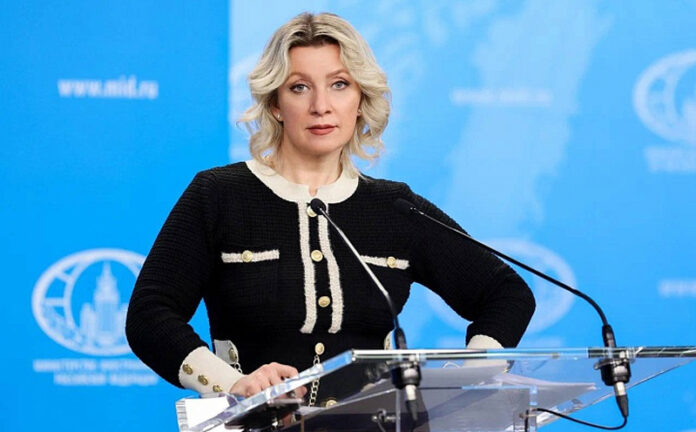
MOSCOW, April 29 : Moscow intends to further increase the military-technical cooperation with New Delhi, and it is ready for a joint development and licensed production of weapons, Russian Foreign Ministry spokeswoman Maria Zakharova said in an interview with the Indian information portal Firstpost.
“Russia intends to continue building up military-technical cooperation with New Delhi. Supplies of military products in a wide range for all branches of the Indian armed forces are carried out at mutually agreed deadlines,” Zakharova said.
Moscow is also ready for a joint licensed production of arms, the diplomat said.
“Russia is ready not only to export finished military products, but also to implement promising projects, including in the field of joint development, licensed production of modern weapons and modernisation of various types of equipment,” the diplomat added.
She pointed out that the Russian armed forces are confident in their strategic initiative and are moving forward in the special operation zone.
“Currently, the Russian armed forces are confident in their strategic initiative and are moving forward,” Zakharova said.
Commenting on the West Asia crisis, Maria Zakharova said that Russia is ready to assist in resolving the acute international situation around Iran.
“We are always ready to assist in resolving this acute international situation,” Zakharova said.
Excelsior Correspondent
JAMMU, Apr 29: The High Court of Jammu & Kashmir and Ladakh has directed the respondent authorities to submit a fresh status report indicating the progress made on the ground in a long-pending Public Interest Litigation (PIL) concerning healthcare gaps and deficiencies across the Union Territory of Jammu and Kashmir.
A Division Bench comprising Chief Justice Arun Palli and Justice Rajnesh Oswal passed the direction while hearing connected PILs—PIL No. 2/2018, PIL No. 37/2013 and PIL No. 16/2018 which seek to address the healthcare crisis in Jammu and Kashmir.
The High Court noted that the Public Interest Litigation filed by Citizens Forum Jammu has been pending since 2018 and aims to address serious concerns relating to the healthcare system in the Union Territory. It further observed that numerous affidavits have been filed by the respondent authorities from time to time pursuant to earlier orders passed by the court.
During the hearing, Amicus Curiae Advocate S S Ahmed, appearing along with Advocates Supriya Chouhan and Zulkarnain Chowdhary, drew the attention of the court to the suggestions and response filed by him in PIL No. 16/2018 in terms of earlier orders dated February 21, 2024 and October 28, 2024.
The suggestions placed before the court indicated district-wise staff strength of Medical Officers in Jammu Division, besides details regarding non-gazetted and Class-IV employees in Jammu as well as Kashmir province. The Amicus had also submitted multiple suggestions to effectively address the concerns and grievances raised in the petitions.
Appearing for the respondent authorities, counsel sought time to place the latest position before the court. The Division Bench granted one week’s time to file a status report indicating the progress, if any, achieved on the ground so far.
The court also directed that the report must disclose the steps taken by the authorities in terms of the suggestions submitted by the Amicus Curiae for addressing healthcare-related deficiencies in J&K.
The matter has been adjourned and listed for further consideration on May 20, 2026.
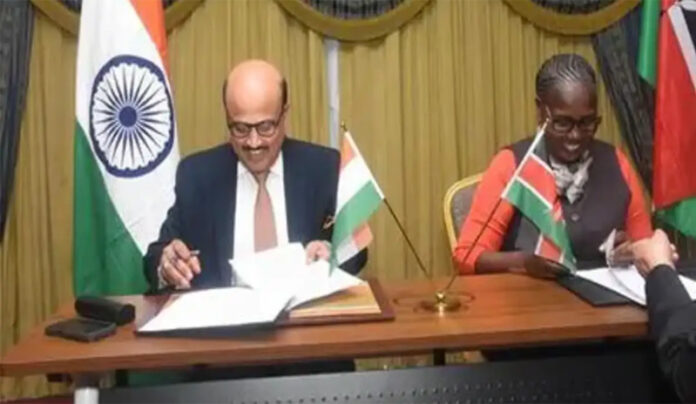
NEW DELHI, Apr 29 : India and Kenya have discussed the possibility of settling trade transactions in local currencies to further promote two-way commerce, an official statement said on Wednesday.
Discussions on digital public infrastructure covered collaboration on UPI-like payment systems, Bharat Connect and digital platforms to enhance financial inclusion, which also helps officials of the two nations.
These issues were discussed in the India-Kenya Joint Trade Committee meeting on April 27-28.
It was co-chaired by Commerce Secretary Rajesh Agrawal and Principal Secretary, State Department for Trade, Kenya, Regina Akotah Ombam, in Nairobi.
“Both sides acknowledged the potential for promoting trade settlement in local currencies. The possibility of adopting a Local Currency Settlement (LCS) mechanism was also discussed,” the Commerce Ministry said.
It was noted that Kenyan banks have opened Special Rupee Vostro Accounts (SRVAs) with Indian banks, and greater utilisation of this framework could facilitate smoother bilateral transactions.
The two countries have discussed ways to enhance trade diversification, address market access issues and leverage complementarities in sectors, such as engineering goods, pharmaceuticals, agriculture and electronics.
It said that an MoU was also signed between the Central Board of Indirect Taxes and Customs (CBIC) and the Kenya Revenue Authority (KRA) for the exchange of pre-arrival customs information, with emphasis on streamlining customs procedures and improving ease of doing business.
The total bilateral trade stood at USD 4.31 billion in 2025–26, reflecting an increase of 24.91 per cent from USD 3.45 billion in 2024–25. (PTI)
*Seeks truth on players’ representation
Excelsior Sports Correspondent
JAMMU, Apr 29: The High Court of Jammu & Kashmir and Ladakh has taken serious note of issues concerning democratic functioning, fairness and compliance with the Sports Code in recognized sports associations across the Union Territory, while hearing a Public Interest Litigation titled Bakhtawar Singh and Others Versus UT of J&K and others.
A Division Bench comprising Chief Justice Arun Palli and Justice Rajnesh Oswal was hearing WP(C)PIL No. 7/2025, in which questions have been raised regarding the functioning of sports associations, eligibility of office bearers representation of sportspersons and women players, district units and financial discipline.
In response to the earlier order dated April 7, 2026, the Jammu and Kashmir Sports Council filed an affidavit through its Secretary, stating that the Council is committed to ensuring fairness, democratic functioning and compliance with the applicable Sports Code. The Council further submitted that every possible effort is being made to implement the National Sports Development Code, 2011, the Sports Council guidelines, the Sports Code 2013 and mandatory guidelines issued by the J&K Sports Council.
The Sports Council informed the court that it has undertaken a systematic exercise to bring recognized sports associations in line with norms relating to their constitutions, democratic elections, eligibility of office bearers, representation of sportspersons, district units and financial discipline. It was also stated that associations were cautioned that continued non-compliance would invite financial and regulatory consequences.
As an immediate corrective measure, the Council said it has withheld grants of the concerned associations without abruptly derecognizing them, so that sportspersons are not adversely affected.
During the hearing, counsel appearing for the Sports Council submitted that, under the governing norms, associations seeking recognition are required to ensure that at least 25 percent of their members are outstanding sportspersons and 10 percent are women players, with equal voting rights to district units and associations in the elections of the executive body.
It was further submitted that in recent elections conducted under the Council’s supervision, there was no violation of these conditions.
The Court was also informed about developments concerning the J&K Badminton Association. However, counsel for the petitioners, S S Ahmed, disputed whether the mandatory requirement of including 25 percent outstanding sportspersons and 10 percent women players in the associations was actually being followed. He sought time to place a specific affidavit before the Court indicating the true and actual position.
Taking note of the submissions, the Division Bench deferred the matter and posted it for further consideration on May 21, 2026.
Counsels appearing in the matter included Advocates S S Ahmed, Supriya Chouhan and M Zulkernain Chowdhary for the petitioners; Monika Kohli, Senior AAG, for two respondents; Anshuja Tak for third respondent; Azim H Laskar and Bikas K Gupta and Amjid Maqbool through virtual mode for fourth respondent.
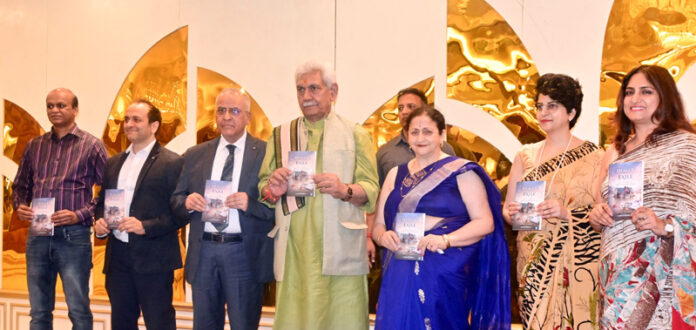
Jammu, Apr 29: The Lieutenant Governor, Manoj Sinha, today launched the book, “Healer in Exile: The Untold Story of Dr. Sushil Razdan” authored by his son Sachin Razdan.
Addressing the gathering, the Lieutenant Governor said that Dr. Sushil Razdan stands among India’s leading neurologists and his contributions in the medical field remain unmatched.
“The story of Dr. Sushil Razdan’s life conveys a significant lesson of committing yourself to the selfless service of others. It is a sacred duty to place the needs of the person before you above your own and see society not merely as a city or village, but as a community of responsibilities, where true fulfilment lies in dedicating one’s strength to the care of its most vulnerable population,” the Lieutenant Governor said.
The Lieutenant Governor said that the central message of this book is profound and what makes a doctor truly exceptional is not only skill in treatment, but the ability to serve with compassion.
“Today, some experts in healthcare claim that artificial intelligence will transform the healthcare sector and it will deliver treatments with flawless precision. I hold a different view. Technology can indeed support diagnosis and treatment in important ways, but it cannot replace the spirit of service. No instrument of AI can embody or substitute this essence of care with compassion,” the Lieutenant Governor said.
The Lieutenant Governor said that Dr. Sushil Razdan bore the anguish of being uprooted from his soil. He said the pain of leaving behind roots and cherished homes defies expression and like countless fellow Kashmiri Pandits, Dr. Razdan endured this sorrow, yet he remained steadfast, striving to preserve his heritage, values and spirit of self-less service.
“Dr. Sushil Razdan has touched millions of lives, ensuring with utter devotion that patients recover to nurture families and contribute to nation-building,” the Lieutenant Governor said.