Excelsior Correspondent
JAMMU, Apr 29: Police today claimed to have recovered over Rs 14 lakh in cash and 23.59 grams of heroin-like substance from the residences of two drug peddlers from Suchetgarh area here.
Officials said acting on specific information received from the reliable sources, a team of Police Station RS Pura raided the residences of Younis Khan and Bashir Ahmed, both residents of Satowali near Ground Tehsil Suchetgarh, District Jammu, and recovered 14,07,800 in cash and 23.59 grams heroin like substance from their possession.
While one of them was arrested during the police action, another managed to escape from the spot, they said.
The duo was accordingly booked in case FIR number 80/2026 under sections 8, 21, 22, and 29 of the NDPS Act registered at Police Station RS Pura and further investigation taken up.
Excelsior Correspondent
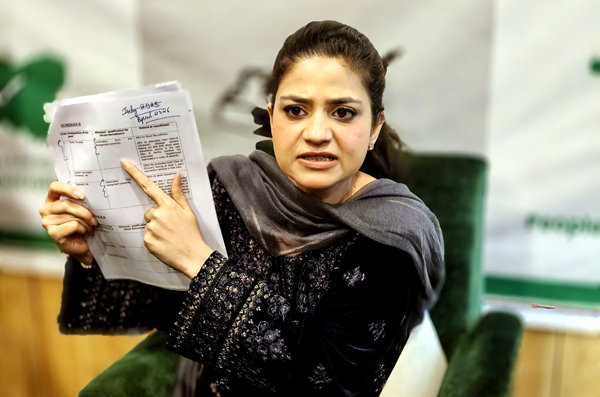
SRINAGAR, Apr 29: Peoples Democratic Party (PDP) leader, Iltija Mufti, today accused Omar Abdullhah-led Government of “systematically attempting to remove Urdu from administration, recruitment, and collective history of Jammu and Kashmir,” calling it an assault on “identity, culture and youth.”
Targeting Chief Minister Omar Abdullah during a press conference, who also heads the Revenue Department, the PDP leader asked, “Why are there so many repeated orders that undermine Urdu? Why do you want to remove Urdu from our collective history? You want to erase our past. You want to erase our future. So, you have no right to sit on that chair.”
She added that he had promised to protect Jammu and Kashmir’s identity during the elections. Click here to watch video
Referring to protests held a day earlier, Iltija said, “You all know that yesterday we protested against the removal of Urdu from the recruitment exam. Our protest was successful. We also had an argument with the police.”
She added that later the Chief Minister’s Advisor and the Deputy Chief Minister held a press conference denying any such plan. “Today, I am here to fact-check the claims of our Chief Minister,” she said.
The PDP leader claimed she had documentary proof and asserted that there is no doubt the Government is attempting to remove Urdu from the system, despite having “50 MLAs.”
Outlining a timeline, she alleged that the process began on July 9, 2025, when the Revenue Department ordered the digitization of records in English. “Despite knowing that all revenue records have been in Urdu for over 100 years, you said you would digitize only in English. You removed Urdu from the system,” she said, claiming this created confusion among officials.
She also cited changes to recruitment rules under SRO 74, alleging that on April 14, 2026, Urdu was removed as a requirement. “You do not need knowledge of Urdu,” she said, adding that the notification was issued “quietly, in the dark.”
Iltija emphasized that Urdu serves as a link language in the linguistically diverse region. “In Jammu and Kashmir, everyone’s mother tongue is different-mine is Kashmiri, someone else’s is Gojri, another’s is Pahadi-but we communicate with each other in Urdu,” she said, accusing the Government of attacking “the foundation of our history.”
Highlighting the employment impact, she said the move would harm local youth. “Our young men and women are already unemployed, and many are fluent in Urdu. Why do you want to exclude them from recruitment? This is also an attack on the youth of Jammu and Kashmir,” she said.
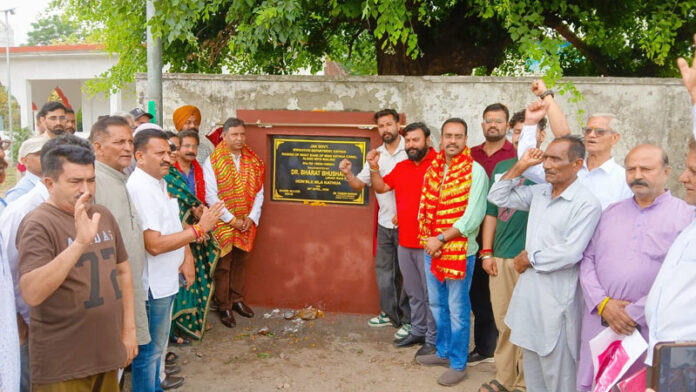
MLA Kathua, Dr Bharat Bushan inaugurating Kathua Canal development works on Wednesday.
Excelsior Correspondent
KATHUA, Apr 29: Member Legislative Assembly Kathua, Dr. Bharat Bhushan, today inaugurated an ambitious development work on right side of Kathua Canal near the District Employment Office, here.
An amount of 30 lakhs has been spent on the work, the funds for which were provided by MLA under Constituency Development Scheme. The work was executed by Irrigation Division Kathua under the supervision of Yogesh Sharma, Executive Engineer.
Speaking on the occasion, Dr. Bharat Bhushan stated that the project is a significant step towards improving public safety and accessibility. The raised embankment and newly installed railing will help reduce the risk of accidents besides improving landscape of the area.
Importantly, the development is expected to greatly benefit morning walkers and residents of Lower Shiva Nagar. The improved canal bank now provides a safer and more convenient pathway for daily walks, promoting a healthier lifestyle. The addition of railings enhances security, especially for elderly citizens and children, making the area more accessible and user-friendly. Residents of Lower Shiva Nagar will also experience improved surroundings, better connectivity and an overall enhancement in the quality of life.
The MLA reiterated the commitment to inclusive development, ensuring that infrastructure projects serve both functional and community welfare purposes.
National Awardee Teacher, Sanjay Sehgal, City Mandal president, Rahul Dev Sharma, district Mahila Morcha president, Sushma Mahajan, Ravinder Pathania, Rickey Risam, president Sabras Sahitya Sangam, T. R. Sumbria, Xen Irrigation, Yogesh Sharma, Youth leader, Amit Sudan, and prominent persons of the area were present on the occasion. The citizens of Kathua thanked MLA for taking the initiative and hoped that tempo of development will be continued further.
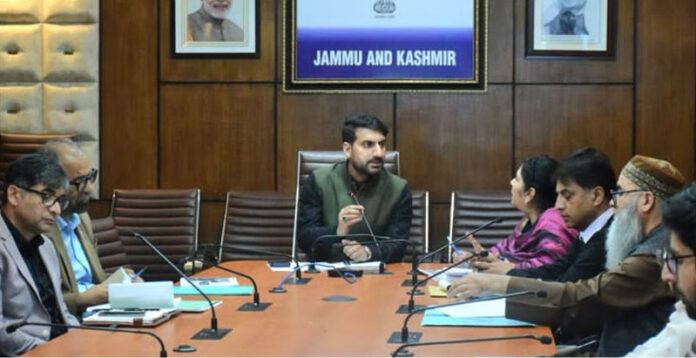
Secretary, RDD Mohammad Aijaz Asad chairing a meeting on Wednesday.
Excelsior Correspondent
SRINAGAR, Apr 29: Secretary, Rural Development (RDD) & Panchayati Raj, Mohammad Aijaz Asad today chaired a high-level review meeting under the Swachh Bharat Mission-Grameen and directed all Deputy Commissioners to prepare comprehensive District Sanitation Plans within one week for universal door-to-door waste collection across rural Jammu & Kashmir.
The Secretary said the District Sanitation Plans must begin with Panchayat-wise mapping of existing rural sanitation infrastructure created by the Department, including Segregation Sheds, Plastic Waste Management Units (PWMUs), compost pits, soakage facilities, waste collection points, transport vehicles and other sanitation assets, so that these are effectively integrated into the waste collection chain.
He instructed districts to design Panchayat-wise collection routes, assess manpower needs and establish linkages between household waste collection and scientific processing/ disposal facilities. He added that cluster-wise review meetings would be held after submission of district plans.
The Secretary stressed that several sanitation assets in the past had been created at unsuitable locations and therefore future planning must ensure optimum utility, accessibility and long-term sustainability.
He further directed strict implementation of the Solid Waste Management Rules-2026, making four-stream segregation at source mandatory-wet waste, dry waste, sanitary waste and special care waste. Domestic hazardous waste such as medicines, paints and thermometers, he said, must also be separately handled.
To ensure sustainability, Mohammad Aijaz Asad said that dedicated funds have now been earmarked as a dedicated allocation for door-to-door collection, segregation and operation & maintenance of sanitation assets. However, he emphasised that user charges must be regularly collected so that the system remains financially viable.
He observed that waste management should not become a “leaking bucket” dependent only on repeated Government funding, adding that long-term success depends on community ownership, cost recovery and efficient local management.
The Secretary asked districts to verify sanitation coverage data, especially where limited coverage has been reported and directed Assistant Commissioners Panchayats to reconcile figures with Deputy Commissioners before finalisation of plans.
Earlier, Director General Rural Sanitation Anoo Malhotra gave a detailed presentation on progress achieved and the roadmap under SBM-G Phase-II, highlighting expansion of source segregation and participation of Gram Panchayats, SHGs and NGOs.
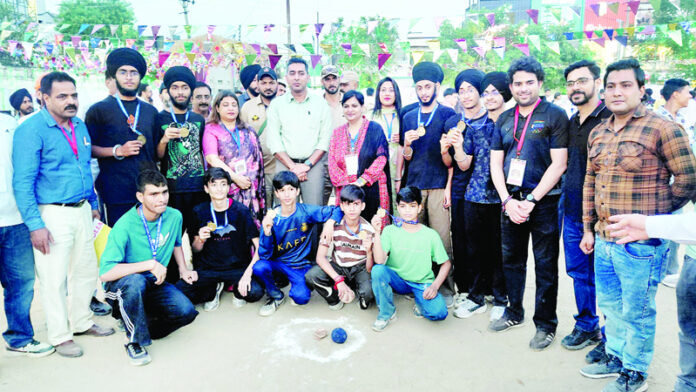
Dr Shahid Iqbal Choudhary during ‘Back to Bachpan’ event.
*Event evokes nostalgia for innocence: Dr Shahid
Excelsior Correspondent
JAMMU, Apr 29: Under the golden haze of a Jammu afternoon, laughter pierced the chaos of adult life, raw, unfiltered and utterly free. Hundreds converged on the sprawling Dussehra Ground in Gandhi Nagar for “Back to Bachpan,” a heartwarming initiative by the Directorate of Youth Services and Sports, J&K.
This event whisked the participants back to the playgrounds of their youth, reigniting forgotten joys.
“This programme evoked deep nostalgia for the innocence, simplicity and unbridled fun of childhood,” said Commissioner Secretary Youth Services and Sports, Dr. Shahid Iqbal Choudhary, who graced the occasion as the chief guest. His eyes sparkled like a child is discovering a cricket ball, as he rallied volunteers, dusted off ancient rules and transformed the field into a living time machine, fueled by his own memories of chasing langris down narrow gullies.
Banners fluttered with the message: Back to Bachpan -Where Joy Had No Price Tag. Families poured in-parents with wide-eyed children, grandparents sharing bubbling tales, young professionals trading briefcases for barefoot sprints.
Organized by the Directorate of Youth Services and Sports, J&K, the programme brought families together to play childhood games. People took part in tug of war and hopscotch, with parents, grandparents and young professionals all joining in. A teacher who played hopscotch said she had not played since Class 3. The event aimed to help adults relive simple joys and take a break from busy routines.
In the game of Kanchey, marbles clinked inside a circle as players placed bets and showed off their skills. Children and adults used their fingers to flick the glass marbles, bringing back the memories of old Jammu bazaars.
The egg-and-spoon race made everyone laugh. Five-year-olds and grandfathers tried to balance the wobbling eggs on spoons. When one egg fell and splattered, the crowd cheered loudly. “That’s the fun of it!” Dr. Shahid said, wiping sweat from his face.
In the Langri Taang relay, players hopped on one leg using wooden clappers. A young boy did a somersault and won the race. After the win, people of all ages came together for a big group hug.
As the sun set and the sky glowed like a childhood evening, strangers turned into friends and worries faded away. A father lifted his daughter for one last tug of war pull and said, “This is what I missed giving you.” An elderly woman held a marble in her hand and said, “Childhood was our real superpower.”
Dr. Shahid exclaimed, “We didn’t just play games today. We reclaimed joy, the pure, unscripted kind no app can replicate.”
Earlier, in her welcome address,. Anuradha Gupta, Director General of Youth Services and Sports, declared ‘Back to Bachpan’ not merely an event but a promise to preserve innocence. She reaffirmed the department’s commitment to the Fit India Mission. She said traditional food dishes hit the stalls today.
Joint Director Youth Services and Sports, Vinakshi Koul extended vote of thanks.
Under starlit skies, the crowd dispersed, leaving Jammu’s spirit forever rejuvenated by the playground battles’ timeless thrill.
An Intensive Care Unit is not simply another ward in a hospital. It is the last line of defence – a place where the margin between survival and death is measured not in days but in minutes, and where the quality of care delivered can determine which side of that margin a patient falls on. The Supreme Court has recognised this fundamental truth and, in doing so, has performed a service of profound national importance. The expert committee has laid down, at last, a clear and enforceable minimum standard for ICUs across the country. The guidelines are comprehensive and unambiguous. They define the physical infrastructure an ICU must possess – dedicated space, reliable power backup, and access to operating theatres and laboratories. They specify the equipment that must be present at every bedside: oxygen, suction, ventilators, defibrillators, cardiac monitors and infusion pumps. Most critically, they address staffing, mandating round-the-clock medical supervision and nurse-to-patient ratios that reflect the genuine dependency of the critically ill.
That such standards did not already exist in codified, binding form is itself a damning reflection of how long the lives of vulnerable patients have been left to chance. A person admitted to an ICU is, by definition, entirely dependent on the human beings and the machines around them. They cannot advocate for themselves. They cannot walk out if the equipment fails or the ward is understaffed. Smaller hospitals, particularly in rural and remote India, will point to the expense of equipment upgrades and the difficulty of recruiting trained intensivists. The guidelines themselves acknowledge the reality of such gaps, providing for interim staffing norms and the use of tele-ICU and e-ICU technology to link smaller units with higher centres. But economic constraint cannot become a permanent excuse for substandard care.
The Supreme Court has set 18 May as the deadline to submit action plans identifying specific gaps and implementation strategies. Local administrations must approach this task with the seriousness it demands. The levelled classification of ICUs, making it mandatory for even entry-level units to meet defined norms, means there is no facility too small to be held accountable. The guidelines have been given. The standards are clear. What remains is the will – at every level of governance – to implement them with the urgency that the preservation of human life requires. No budget constraint, no administrative inconvenience and no institutional inertia can outweigh that obligation.
A civilian donating blood during a camp in Mankote Sector of Poonch.
Excelsior Correspondent
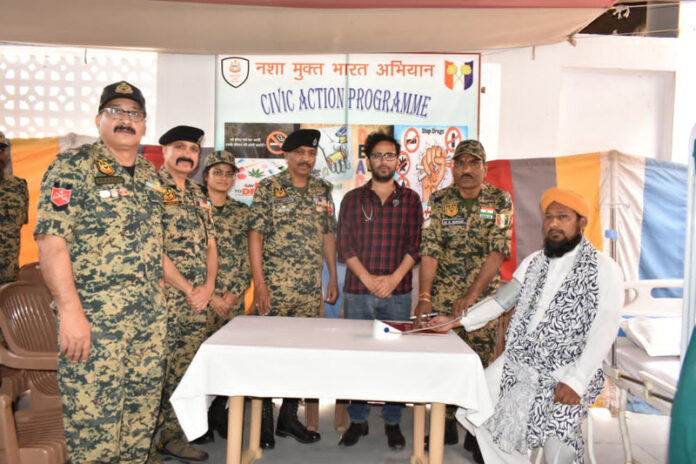
POONCH, Apr 29: In a commendable humanitarian initiative, the 182 Battalion of Border Security Force (BSF) organized a blood donation camp at its Unit Hospital in Mankote (Uchhad), coinciding with the observance of the 1st anniversary of Operation Sindoor and the ongoing 100-day Nasha Mukt Bharat Abhiyan.
The camp, held from 10:30 AM to 2:00 PM at the Battalion Headquarters Uchhad, witnessed enthusiastic participation from BSF personnel as well as local civilians, reflecting a strong spirit of service and community partnership.
The event was officiated by YPS Chauhan, 2 IC/Offier Commandant of 182 Battalion BSF, in the presence of Chief Medical Officer Poonch, Dr Parvaiz Ahmed Khan, who supervised the medical arrangements and ensured strict adherence to all health protocols.
Dr Sajid Mujtaba Khan, Medical Officer PHC Mankote, along with his team, Tejender Singh, Senior Lab Technician from District Hospital Poonch, and Dr Moumita Halder, Assistant Commandant/ Medical Officer of the unit, were also present during the camp.
A total of 26 units of blood of different groups were collected during the drive. Among the donors were 25 BSF personnel and one civilian volunteer. Around 20 civilians, including Sarpanchs and prominent members from nearby villages, attended the camp and interacted with BSF officials, strengthening civil-force relations.
The collected blood units have been deposited in the Blood Bank of District Hospital Poonch to cater to emergency medical requirements, including accident cases and critical surgeries.
Dr Parvaiz Ahmed Khan appreciated the voluntary contribution of BSF personnel and termed the initiative as life-saving, emphasizing the importance of such camps in addressing urgent healthcare needs. He also lauded the efforts of the Commanding Officer and medical staff of 182 Battalion BSF for organizing the event successfully.
Dr Sanjeev Digra and others felicitating Rahul Yadav.
Excelsior Correspondent
JAMMU, Apr 29: Under the leadership of Managing Director, Rahul Yadav, Jammu Kashmir Power Development Corporation (JKPDC) donated vital medical supplies for the thalassemia patients registered with Thalassemia Day Care Centre, Department of Paediatrics, SMGS Hospital, Jammu.
These items like infusion pumps, hemoglobinometers, along with haemoglobin estimation strips and Injection Desferrioxamine will boost treatment accessibility for the thalassemia patients. Regular blood transfusions & Iron chelation are the essential components for the optimal care and management of Thalassemia patients. Injection Desferrioxamine and infusion pumps are one of the key elements for iron chelation in patients with high iron overload. Digital hemoglobinometers help in ensuring adequate blood transfusion in these patients.
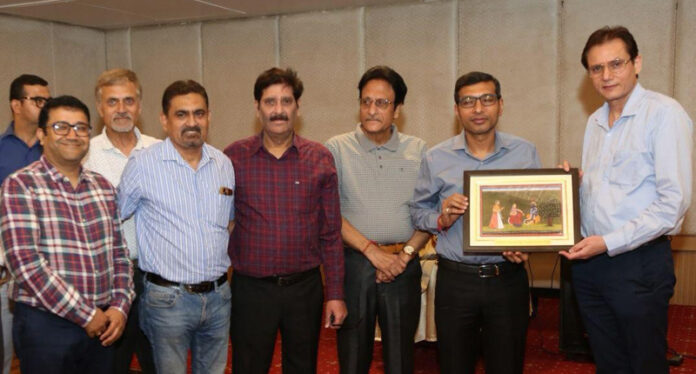
As a token of gratitude, J&K Thalassemia Welfare Society and Department of Paediatrics, SMGS Hospital, GMC Jammu, felicitated Rahul Yadav, Santosh Kumari – Director Finance JKPDC and Bunty Bhola – Deputy General Manager JKPDC for this generous and noble gesture.
On this occasion, SSP Railways, Shailender Singh was also thanked for his constant support towards the welfare of individuals with thalassemia. Dr V P Choudhary, former Professor & Head Haematology AIIMS New Delhi; Dr J S Arora, General Secretary, National Thalassemia Welfare Society, New Delhi, and Dr Naresh Gupta, Chairperson, Haemophilia and Health Collective of North and former Director- Professor MAMC, New Delhi, were also honoured on this occasion for their ongoing work in advancing care and support services for individuals with Thalassemia & Haemophilia.
Dr Sanjeev Kumar Digra, Head of Paediatrics Department in SMGS Hospital, Jammu, presided over the event.
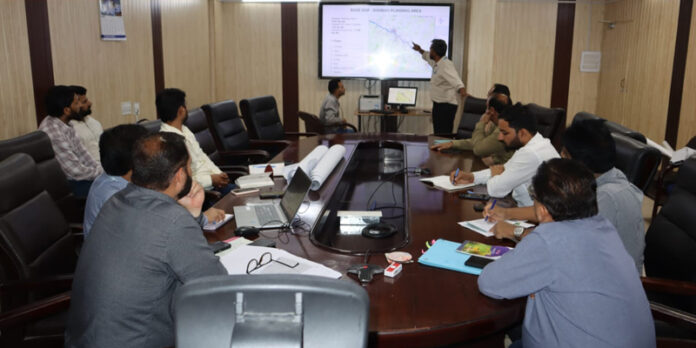
RAMBAN, Apr 29: The District Administration Ramban is in the process of formulating a GIS-based Master Plan for Ramban and Banihal Townships envisaging planned urban development and sustainable infrastructure growth.
The draft for the plan was reviewed at a meeting held today under the directions of Deputy Commissioner Mohammad Alyas Khan. Chief Planning Officer Dr. Shakeeb Ahmed Rather; DFO Anil V. John; CEO Municipal Council Ramban Sudershan Jamwal; Executive Officer Municipal Committee Banihal Ishan, besides revenue officers and officials of stakeholder departments attended the meeting.
Domain experts associated with the project, including Dr. Ashfaque Alam, Team Lead for Urban and Regional Planning- Land Management and Governance and Dr. Mayank Dubey, Deputy Team Lead for Urban Mobility and Infrastructure Planning, delivered a detailed PowerPoint presentation on the proposed master plan and sought comments and suggestions from the stakeholder departments.
The presentation covered key aspects of the plan, including the base map of the planning area, demographic and socio-economic overview, planning methodology, survey framework, ground-truthing survey conducted by Sankalan, primary and household surveys, traffic count survey, secondary data collection, objectives and scope of the master plan and geo-referencing challenges.
Detailed discussions were held on the urban planning issues concerning the twin towns, including infrastructure requirements, traffic management, land use planning and civic amenities.
The domain experts also apprised the participants about further course of action for formulation of the final master plan for the Highway Towns. Suggestions and observations conveyed on behalf of the Deputy Commissioner, along with inputs from stakeholder departments, were noted by the concerned experts for incorporation in the final draft.
The meeting emphasized the importance of a comprehensive and practical planning framework to facilitate systematic urban expansion and improved governance in both towns of the district.
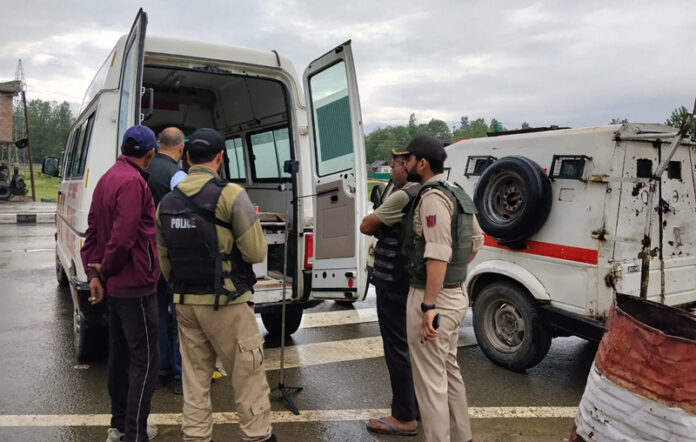
Kulgam police conducting drug abuse test on Srinagar Jammu National Highway. -Excelsior/Sajad Dar
Excelsior Correspondent
Srinagar, Apr 29: Police in Kulgam today conducted rapid urine drug abuse tests on drivers plying along the National Highway within district limits as part of a focused drive to ensure road safety and curb substance abuse.
The checking drive, officials said, was aimed at identifying drivers operating vehicles under the influence of narcotic or psychotropic substances, which officials said pose a serious threat to public safety and can lead to fatal road accidents.
Several drivers were screened during the operation using rapid testing kits, officials said.
Police said the drive forms part of a zero-tolerance policy against drug abuse and added that such operations will continue in the future to ensure safer roads for commuters.
Senior Superintendent of Police Kulgam Anayat Ali Chowdhary appealed to transporters and drivers to stay away from drugs, follow traffic regulations and cooperate with law enforcement agencies in the larger interest of public safety.