

Excelsior Correspondent
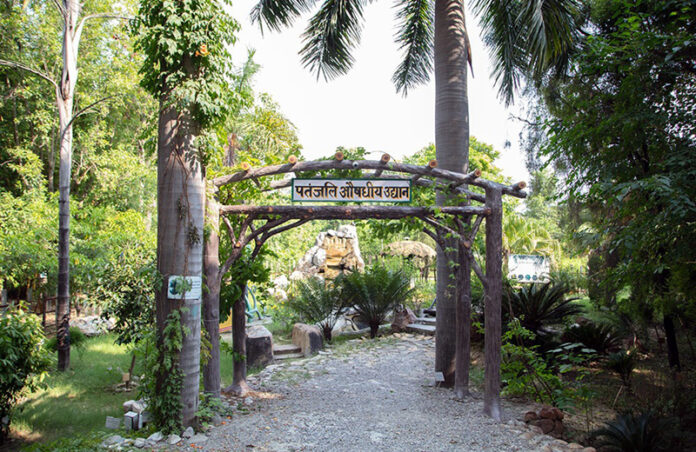
JAMMU, Apr 27: Sandalwood cultivation, once largely confined to South India, is gaining ground in the north, with a model developed by Patanjali in Uttarakhand demonstrating its viability under suitable conditions.
The ‘Chandan Van’ initiative, led by Acharya Balkrishna, has shown encouraging results, prompting farmers and institutions across several districts to adopt the high-value crop.
Nearly two decades ago, Acharya Balakrishna began experimenting with sandalwood cultivation at Patanjali’s research centre and medicinal gardens in Haridwar, at a time when such efforts were almost non-existent in North India. Scientific studies on the planted saplings yielded positive outcomes, paving the way for expansion into districts like Pauri and beyond.
Experts note that sandalwood is a semi-parasitic plant that derives nutrients from the roots of host species, making scientific cultivation practices and proper management essential for success.
The initiative was partly inspired by historical references to sandalwood presence in Uttarakhand’s Manikut hills, from where the wood was once transported to Kannauj in Uttar Pradesh. Subsequent field studies confirmed limited natural occurrence, encouraging organized plantation efforts in the region.
Beyond agriculture, the model is being projected as a tool to address migration from the hill state. Speaking at a conference at Indian Institute of Technology Roorkee, Acharya Balakrishna said sustainable livelihoods could be created locally by utilizing regional resources effectively.
He cited the example of Yamkeshwar block, where barren land was transformed into a green cover through plantation drives suited to local climatic conditions, including sandalwood. During a visit, Uttar Pradesh Chief Minister Yogi Adityanath expressed surprise at the transformation of once-unproductive land into dense greenery.
According to Patanjali, sandalwood cultivation requires relatively small landholdings and matures in 10–15 years, with each tree potentially yielding returns of Rs 1–1.5 lakh. Proponents believe large-scale adoption of the ‘Chandan Van’ model could enhance farmer incomes while creating sustainable employment opportunities in Uttarakhand’s hill regions.
Patanjali’s ‘Chandan Van’ model expands sandalwood cultivation to North India
Restoration of Art 370 remains core agenda of NC: Farooq
* Says dual Govt system detrimental to J&K
Excelsior Correspondent
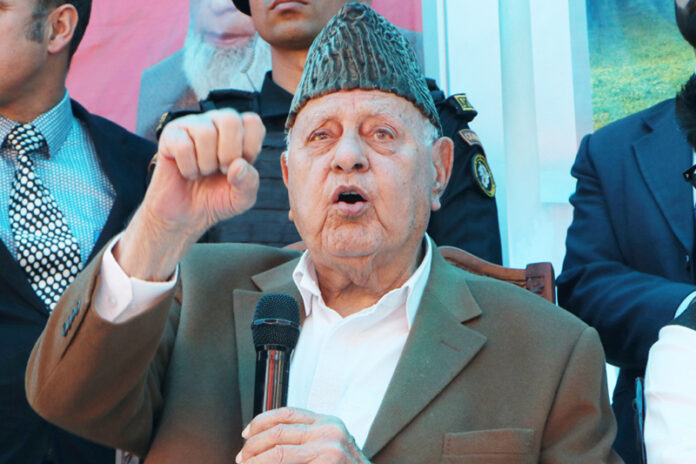
SRINAGAR, Apr 27: Former Chief Minister and National Conference president Dr Farooq Abdullah today reaffirmed the party’s core stand on protecting the rights and dignity of the people of Jammu and Kashmir including restoration of Article 370.
He said this while addressing a gathering in Budgam, asserting that the foundation of the Jammu and Kashmir National Conference rests on its sincere and selfless cadre, as well as the immense sacrifices of Kashmir’s martyrs. He said these martyrs laid down their lives for the dignity, self-respect and freedom of the people from centuries of oppression and subjugation.
Farooq added that the first democratically elected government of the National Conference granted constitutional and democratic rights to the people and brought a historic transformation through land ownership rights.
“Under the leadership of Sher-e-Kashmir Sheikh Muhammad Abdullah, landmark reforms significantly reduced poverty, deprivation, and illiteracy, enabling ordinary citizens, who had tilled the land for years without fair compensation to become land owners overnight,” he said.
These reforms, he said, transformed the lives of the poor and laid the foundation for a more prosperous and stable society. He said that Late Abdullah not only empowered the people but also secured internal autonomy for the State. However, he said these constitutional protections were gradually eroded, one by one in an unconstitutional and undemocratic manner and whatever remained, was fully abolished in 2019, with the active support of the People’s Democratic Party.
Warning against misleading narratives, former J&K Chief Minister said that restoration of Article 370 remains the core agenda of the National Conference, and there is no question of stepping back from this struggle. He reaffirmed that the party will continue to fight for the rights of the people of Jammu and Kashmir under all circumstances. Farooq said the party is consistently raising the issue of restoring democratic and constitutional rights at every platform.
Stressing the urgency of restoring Statehood, Dr Farooq said it is essential for enabling an elected government to function effectively and take key decisions without unnecessary obstacles.
He further said that a dual system of governance in a sensitive region like Jammu and Kashmir could lead to instability and chaos. In a democracy, he noted, a government elected by an overwhelming majority cannot be ignored, nor can hurdles be justified in its functioning.
Abdullah added that the Prime Minister and Home Minister had promised restoration of Statehood soon after elections, but more than a year and a half has passed since the formation of the elected government. He said the Centre must fulfill its commitment without further delay and pointed out that the Supreme Court has also directed the Centre to restore Statehood at the earliest, leaving no justification for continued delay.
He said National Conference Government remains committed to public welfare, with ministers and MLAs, working tirelessly to address grievances and ensure relief to the people.
The scourge of road accidents in Jammu region
Chanakya Charan Dass “Tikri”
jagmohansharma1602@gmail.com
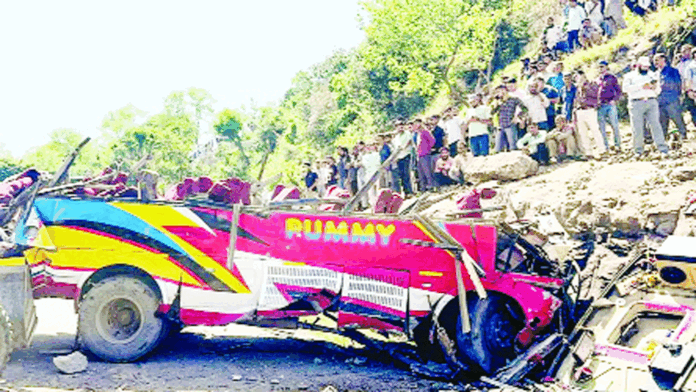
On 20th of April 2026 a heart-rending accident took place in village Kaghote near Ramnagar, in Jammu Division of JandK. The bus was carrying passengers to the District Head Quarter, Udhampur for their daily errands. By all accounts, the bus plunged 100 meters down the road and fell upon an auto-rickshaw carrying passengers on a road down below.
What must be noted here is that the bus that rolled down from the upper section of the road, on to the lower section, was overloaded and so was the auto-rickshaw down below, on which this ill-fated bus landed in totally mangled condition. As per the reports in the print media, the bus was carrying 65 passengers on the winding hilly stretch while its seating capacity was only 42. The auto-rickshaw was carrying 17 passengers while its capacity was 9.
The tragic accident claimed 21 lives while 62 were injured. It is understood from the account of the survivors that the accident happened when the overcrowded and speeding bus could not negotiate a blind curve on the road & fell down the gorge after its tyre burst.
A few things that come out very clearly from this accident are that there was overloading, not only of the bus but also of the auto-rickshaw down below. The bus was over speeding. What was the physical condition of the bus? Was it roadworthy? And, finally, did the driver have a valid license to drive in hilly areas?
The timing, 10 o’clock, of the bus and the auto-rickshaw was such that the people of the adjoining areas must have had a reason to be in Udhampur in time to attend to their work in the offices, schools and colleges. Thus, the overloading of the vehicular transport must not have been incidental but because there must have been scarce availability of transport at the time of peak passenger demand. You can see scenes of overloading of buses & other vehicular traffic all around Jammu region, especially in the rural areas.
It is therefore incumbent on the authorities to ponder over these questions as the road accidents in JandK are happening far too often resulting in loss of precious life. I am not going into the details deliberately as I am fully aware that these problems are known to the concerned authorities and they must ponder them over as otherwise this is not going to be the last accident – unfortunate as it is!!
It’s not an easy thing to say, but yes, I am compelled to say this with a very heavy heart as we are not learning from our past accidents that have consumed innumerable lives throughout JandK!! The accidents make news, they are bemoaned for a few days, compensations for the dead and injured are announced and then life is back on the old track. No systemic effort seems to be made to ensure that such accidents don’t occur again!!
However, it is not only the authorities but also, we “the people” as a society who should be careful about our own safety. We are not safety conscious as a society and take life for guaranteed. That is why it is not uncommon to see drivers driving on the wrong side of the road instead of taking a “U”-turn, for example, at the specified location. This habit of several drivers is not limited to the internal roads of our cities and towns (it’s bad in any case) but also on the national highways where the traffic is moving at a much greater speed and therefore the risk of accidents multiplies several folds. For easy access to their villages/homes the divider between the lanes on the NH is seen to be dug up by residents/localities at several places. It is not uncommon to see motorcyclists drive over the broad dividers and appear suddenly in front of the fast moving traffic on NH from nowhere.
It’s not uncommon to see drivers riding motorcycles, scooters or scooties without helmets or maybe just keeping these gadgets on their heads and not tying them up onto the chin. A helmet, not properly tied, may bluff a policeman, but it is no security against the watchful gaze of the “Yamraj”, when it comes to the shove, God forbid. The drivers don’t care for the traffic lights and just move on irrespective of whether the lights are green, red or orange. In any case there are not many traffic lights working in Jammu city, though installed. However, wherever they are installed and working the drivers should adhere to the protocol not only for their own safety, but for the safety of the others too.
We, as a society, are also not averse to overloading in buses. We somehow relish it. We come across several instances where the passengers (young and old) relish sitting on the roof of the buses, especially the students. The students and younger generation “enjoy” hanging on to whatever portion of the running buses that they can latch on to. They don’t even listen to the sane advice. I think they believe they are fashionably “WOKE” and none has a right to advise them.
There was yet another young boy who probably wanted to fly at the speed of bullet train on the flyover near Maheshwar, Samba around a week back. He was travelling towards Jammu. We also happened to be travelling in the direction of Jammu that day & passed by the accident spot 5 minutes after it had happened. There were vehicle parts and mauled angle iron pieces all around. The police were also there. Because of the high speed the young boy could not control his car on the curve of the flyover and jumped over the divider, which was protected by angle iron, hit a dumper and a fuel tanker that was travelling in the opposite direction towards Delhi and then was literally thrown back to his own lane by the force of the impact. His car was smashed, car engine was ripped apart, rear and front of the car was smashed into a “peda.” The driver side of the tanker was ripped apart & the tyre flattened. The airbags in the car saved the young driver from the jaws of death. He was lucky and so were his parents!! He, probably, was an exception but several are not.
Recently a very unfortunate accident happened in Jammu in which a young and promising girl from a local college lost her life when the door of the bus she was travelling in got unlocked, probably because the bus experienced a jump on the road and she was thrown out of the door because of the imbalance. The students of the college were headed for a picnic. A picnic that could have been a joyful and memorable moment for the students turned into a huge unforgettable tragedy for the life.
Incidentally, these observations are from the posts I read on the social media.
Obviously, there was an outrage. In the heat of the moment and in anger the basic point is usually lost. The tragedy gets a back seat, and allegations and counter allegations fly fast. These are also driven by the social media.
Here again, my mind went back to the safety precautions that could have been taken to avoid this unfortunate incident. It is very easy to blame the teacher accompanying the students in the bus. At least this is what I see on the social media. But is that right? Did she have a say in the hiring of the buses? No!! Did she have the qualification or authority to certify the roadworthiness of the buses? No!! Did she have the authority to check the driving licence of the drivers driving the buses? No!! Did she have any control over the conductor of the bus? No!!
In the foreign countries there is a specified teacher to student ratio when they are accompanying the students on picnics or educational tours. It is normally 1 to 10. Here we have one teacher for more than 50 students. The teacher is essentially a teacher, who should devote his/her energies towards educational upliftment of the students even when outdoors. The teacher can make it a mix of entertainment and studies to make it more joyful. That is all.
The role of a teacher on such occasions can be likened to be that of a shepherd. The only difference being that he/she is not shepherding sheep but teenagers who are bubbling with wit, energy and sometimes with mischief too.
It isn’t easy for one teacher to control 50 or more students of college going age in the outdoors. There have been cases in many colleges where, for example, a couple of students became a cause of anxiety to teachers as at the time of returning home from the picnic and headcount they realized that some students were missing. Search parties found the students in inebriated state in nearby fields. In another incident some students were found to have returned from the picnic spot with their girl/boy friends without informing the teachers. There have also been cases during picnics when young lives were lost while they were making video reels in precarious areas.
Therefore, the emphasis should be on avoiding such unfortunate mishaps again. There should be a set and foolproof protocol from hiring the buses to ensuring that adequate number of teachers are available in each bus with the students and sense of discipline is inculcated in the minds of the students. I would even suggest sending the parents of some of the students in each bus while their wards are going on a picnic. There should be no compromise on the quality of buses and the operators. If there is an iota of doubt it is better to cancel the trip rather than take a risk?
Finally, it must be emphasized that the safety of citizens on the road must become a part of the society we live in. It is a 24×7 requirement and every citizen must contribute his/her bit into it. It is no use breaking traffic rules while you are travelling with your children on a bike or in a car. I always feel perturbed when I see motorcyclists jumping over a divider while their kids are sitting with them. What examples are these adults setting for the children?
The government should revisit and establish as to which areas of JandK require more passenger buses and what should be their frequency of plying on a particular route. It must also determine roadworthiness of the vehicles a fresh especially those running in far flung areas. There should be no compromise on drivers breaking the rules and the “powerful” should stay away from interfering with the lawbreakers. There should be frequent orientation programmes at district/panchayat level for the drivers of commercial vehicles.
It is not an easy task but with grit and determination at government and societal level it is doable.
Otherwise, accidents have happened, will happen and will continue to happen and lives will continue to be lost!!
LG meets injured at GMC Udhampur
Excelsior Correspondent
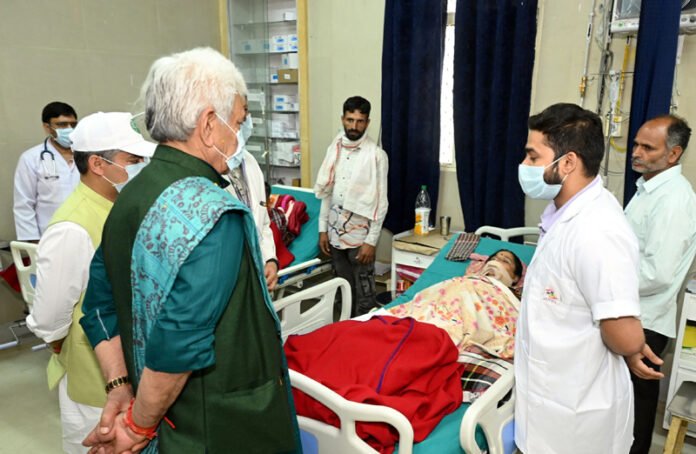
UDHAMPUR, Apr 27: Lieutenant Governor Manoj Sinha today visited Government Medical College, Udhampur to inquire about the health and well-being of those who sustained injuries during the unfortunate road accident in Ramnagar, Udhampur on April 20.
The Lieutenant Governor was briefed by a team of senior doctors on the health condition of the injured undergoing treatment at the hospital. He directed the hospital administration to ensure the best possible medical care for their early recovery.
CM inaugurates conference on emerging technologies in engineering at GCET
Excelsior Correspondent
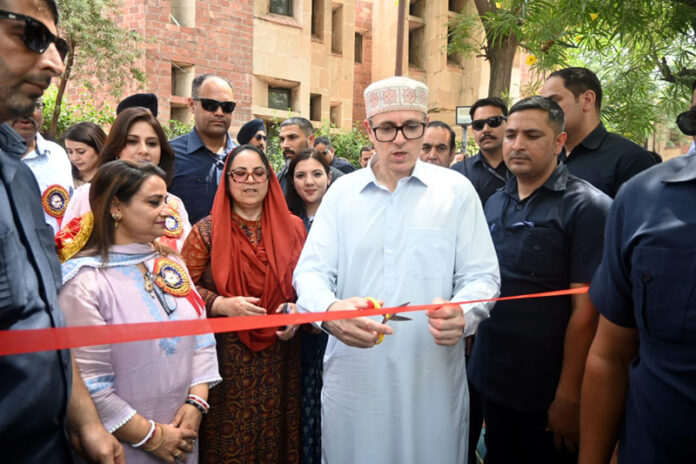
JAMMU, Apr 27: Chief Minister Omar Abdullah today inaugurated the 11th National Conference and Exhibition on Emerging and Innovative Trends in Engineering Technology (NCEITEET) at Government College of Engineering and Technology (GCET), Jammu, underscoring the need to harmonize technological advancement with cultural heritage while fostering innovation-driven growth among youth.
The two-day event is being organised by GCET Jammu in technical collaboration with Indian Institute of Technology (IIT) Kharagpur and in association with World Consortium of Universities.
On the occasion, the Chief Minister also inaugurated the newly constructed School of Architecture (SoA) building at GCET, developed at a cost of Rs 19.71 crore, and extended his best wishes to the faculty and students. Emphasizing the significance of architecture, he urged students to adopt a forward-looking approach while staying rooted in the region’s cultural and historical identity.
“While it is important to embrace modernity, it is equally important to remember where we come from. Not every building needs to be made of glass and steel. Our structures must reflect our heritage and preserve our cultural ethos,” he said, expressing concern over the declining focus on heritage conservation in both public and private construction across Jammu and Kashmir.
Highlighting the conference theme, the Chief Minister described it as relevant and thought-provoking, particularly for its focus on emerging technologies like artificial intelligence and machine learning. He termed the deliberations as an “eye-opener,” especially in the context of tourism.
Reflecting on his experience as Tourism Minister, he noted that leveraging AI could significantly enhance visitor experience, destination management and service delivery in Jammu and Kashmir. However, he cautioned that technological integration must be balanced with employment generation.
“In a region like ours, where unemployment remains a concern, we must ensure that technology complements human effort rather than replacing it. Tourism is not just an economic driver but also a major source of livelihood across regions and sectors,” he said.
The Chief Minister emphasized that while attracting tourists to Jammu and Kashmir is not difficult, ensuring repeat visits requires delivering a consistently enriching experience. He cited diverse tourism segments including pilgrimage tourism such as Mata Vaishno Devi, border tourism at places like Suchetgarh, and leisure tourism across the Valley and other regions, stressing the need to enhance infrastructure and services across all segments.
Addressing infrastructure gaps at GCET, the Chief Minister announced that funds shall be provided this year for the construction of an auditorium to provide better facilities for students and academic events.
He also responded positively to a student’s request for an incubation centre, assuring that the government would make every effort to establish such a facility within the institution and for which work to be started from this year. He underscored the importance of nurturing a startup ecosystem and enabling youth to become job creators.
On the occasion, the Chief Minister released the e-proceedings of the conference, comprising 28 shortlisted research papers along with messages. He also visited various exhibition stalls showcasing innovative models and projects by students from engineering, technology and management institutions across Jammu and Kashmir and other parts of the country. Interacting with participants, he took keen interest in their ideas and even keenly observed demonstrations given by students.
Speaking at the event, Minister for Education Sakeena Itoo emphasized the critical role of innovation and research in shaping the future of education. “Innovation today is not a luxury but a necessity. Our institutions must evolve as centres of excellence, research and innovation,” she said.
MLA Nagrota Devyani Rana, Organizing Chairperson from Indian Institute of Technology Kharagpur Prof. Raja Dutta, and Principal/Director GCET Sameru Sharma also addressed the gathering, highlighting the significance of collaborative research, academic excellence and innovation-driven growth.
DyCM chairs Sub-Committee meet on Gair Mumkin Khads
Excelsior Correspondent
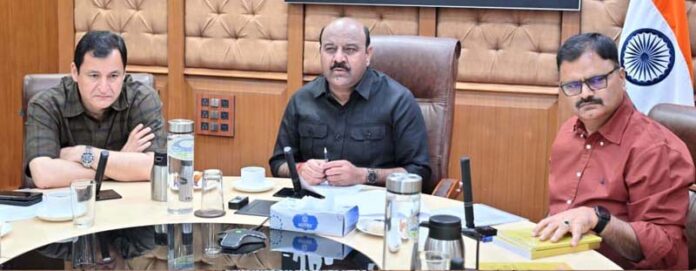
JAMMU, Apr 27: Deputy Chief Minister, Surinder Choudhary, today chaired a meeting of the Sub-Committee constituted to examine the issues related to Gair Mumkin Khads in Jammu and Kashmir at the Civil Secretariat, here.
The Committee stressed on protection of all flood zone areas, however, asserted on identification of chronic areas of Gair Mumkin Khads to effectively address the long-standing public concerns across all districts.
The meeting was attended by Minister for Jal Shakti, Forest, Ecology & Environment and Tribal Affairs, Javed Ahmad Rana and Minister for Agriculture Production, Rural Development & Panchayati Raj, Cooperative and Election Departments, Javid Ahmad Dar, as members of the Sub-Committee.
Additional Chief Secretary, Jal Shakti Department, Shaleen Kabra, briefed the Sub-Committee on the current status of Gair Mumkin Khads.
The Deputy Chief Minister directed that chronic areas of Gair Mumkin Khads be identified on priority. Stressing on protection of all flood prone areas, he instructed the concerned departments to submit detailed reports in a time-bound manner. He further sought inputs and suggestions to address the issues faced by the public concerning Gair Mumkin Khads.
Speaking on the occasion, the Deputy Chief Minister underscored the importance of pro-public and practical decision-making to ensure the amicable redressal of genuine grievances. He directed the concerned authorities to expedite and ensure timely completion of zone-wise mapping, particularly in chronic areas.
The Sub-Committee held detailed deliberations on the existing status of Gair Mumkin Khads, daryas and nallahs, along with related concerns, with the objective of providing relief to the public wherever warranted.
The Deputy Chief Minister also called for sensitization of all stakeholders and emphasized the need for scientific mapping of Gair Mumkin Khads, nallahs and adjacent non-cultivable waste lands.
The members of the Sub-Committee put forth valuable suggestions and highlighted various public concerns requiring urgent attention.
Putting forward his suggestions, Minister of Irrigation and Flood Control Department, Javed Ahmad Rana said that coordinated efforts are required by the concerned departments to ensure timely resolution of public concerns.
Speaking at the outset, Minister Agriculture Production, Javid Ahmad Dar asserted on addressing the genuine concerns of the public.
Among others, the meeting was attended by Secretary Revenue Rajeev Ranjan, Chief Engineer I&FC, Special Secretary Revenue, and other concerned officers.
Chenab region back on development track after a decade: Javed Rana
Excelsior Correspondent
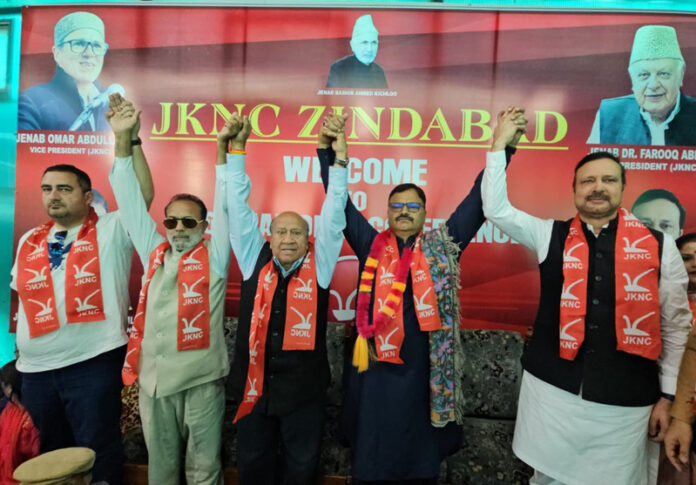
KISHTWAR, Apr 27: Senior leader of Jammu and Kashmir National Conference and Minister for Jal Shakti, Forest & Tribal Affairs, Javed Rana, today asserted that the far-flung areas of the Chenab region are witnessing a long-awaited revival in development after nearly a decade.
He emphasized that under the leadership of Chief Minister Omar Abdullah, the Government is actively working on multiple fronts to accelerate progress and ensure balanced and inclusive growth across the region.
He made these remarks while addressing a massive gathering of party functionaries in Kishtwar. The function was organized by District President Kishtwar, Tanvir Ahmad Kichloo, and was attended by several senior leaders including Member of Parliament (Rajya Sabha) Sajjad Ahmad Kichloo, Provincial President Jammu Rattan Lal Gupta, Pooja Thakur former DDC Chairperson Kishtwar, Fasial Hussain former DDC, OBC Chairman Abdul Gani Teli, JKNCSU President Harshvardhan Singh, and Arun Pal Singh.
Rana outlined several pro-people welfare measures undertaken by the Omar Abdullah-led Government in the Chenab region, ranging from infrastructure upgrades to strengthening key institutions in the health and education sectors. He highlighted the Government’s proactive and hands-on approach during recent weather calamities, detailing the relief and rehabilitation measures undertaken to support affected communities.
Rana reaffirmed that the Government treats the Chenab region at par with other areas, while also according it additional priority due to its historical backwardness.
Speaking on the occasion, Sajjad Ahmad Kichloo (MP) expressed concern over the delay in the restoration of statehood. However, he noted that despite these challenges, the Omar Abdullah-led administration is making steady progress to ensure equal opportunities and equitable development for the people of the Chenab region. He also demanded from the Centre restoration of the special status snatched from the people of J&K.
Provincial President Rattan Lal Gupta, in his address, urged party functionaries to gear up for the upcoming Urban Local Body (ULB) and Panchayat elections. He called upon them to take the government’s pro-people and pro-Jammu initiatives to every doorstep, strengthening grassroots outreach and engagement.
Among others who were present included:- Imtiyaz Zargar, Rajinder Kumar Sen, Mohinder Parihar, Mohd Sultan Malik, Ramzan Mohd Malik, Block Presidents and Block Secretaries.
US’ great gamble- its assumptions in Iran war
Vishal Sharma
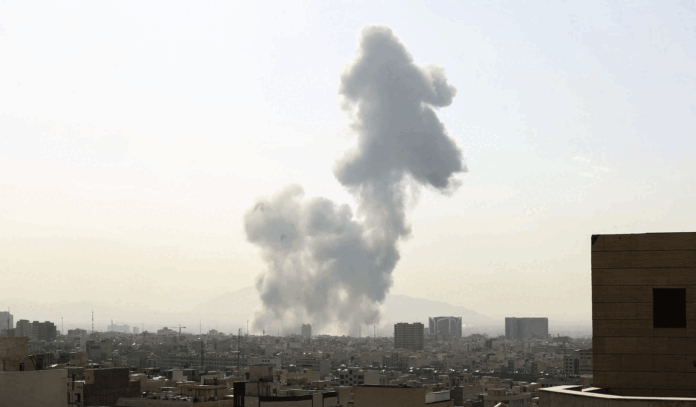
Iran has taken on two of the preeminent military powers of the world and still come out as more than also- ran in the fight. In fact, if anything, its resilience and retaliatory strikes on Israel, Gulf countries and on the US assets in and around Gulf region has shown that wars are not won with the cutting edge war fighting technologies and resource rich militaries alone. A little bit of character and pride in country’s values is also needed. When a country collectively decides to fight it out not that it has to because there is a war thrust on it, but because the adversary is hell bent on berating its civilizational heritage and wiping it out from the face of the earth, the writing on the wall for the adversary is too clear to be missed. When the battle becomes existential, the character of a nation comes to the fore and the clarion call from the powers that be to rally around the flag becomes more than a rallying cry, deriving its sustenance from the perceived greatness of a nation; it’s millennia old history. The war whoop becomes a holy gospel for the people of the country and in some cases even for those who until then may not have even made up their minds.
Before 27th Feb when the first bombs dropped on Tehran, Iran was reportedly faced with some measure of dissension from within. There were reports that some sections of people hostile to the establishment demonstrated on the streets beginning in late December 2025 and continuing into early 2026. These demonstrations were met with a violent crackdown by security forces. Some media reports indicated that thousands of people were killed, with over 2,000 deaths reported by the Human Rights Activists News Agency by mid-January.Protests took the shape of street demonstrations, nightly rooftop chants, and defiance of restrictions despite intense security presence and internet shutdowns. Before the heavy hand of the Iran’s Basij militia squashed these demonstrations, the agitators even urged the US president, Donald J Trump to intervene and liberate Iran from IRGC. After reports of deadly force against protesters hit the international media headlines, Trump threatened to intervene, stating in early January that if Iran killed peaceful protesters, the U.S. would come to their rescue, famously tweeting that the U.S. was “locked and loaded and ready to go”. On January 13, Trump even directly addressed Iranian demonstrators, telling them “Help is on its way” and urging them to “take over your institutions”.Even Israeli Prime Minister Benjamin Netanyahu called on Iranian citizens to overthrow the Tehran regime during a televised address dedicated to the joint military operation against Iran launched by Israel and the US on 28th Feb.
“In the coming days, we intend to do everything we can to give the Iranian people the opportunity to gain freedom, so I am once again addressing the Iranian people and saying: do not sit idly by, very soon the moment will come when you must take to the streets to finish the job and overthrow the totalitarian regime,” Netanyahu said in a speech broadcast on Israeli TV
Help did arrive, but it was too little too late. By then the protestors had paid with their lives.
There have not been reports of any mass protests in Iran ever since. Since IRGC has made Iran net blind, there may be a possibility that some dissensions may have happened, but curbed immediately. Be that as it may, it does not appear that any protest against IRGC has been able to reach the critical threshold where it could become a nuisance for the IRGC and, as a result, throw spanner in its war plans. Remember, IRGC has had its hands full any way on the war front. For the most part, it has been running around the country to save itself and its assets from the continuous US-Israeli bombing until the ceasefire intervened. Furthermore, IRGC controlled Basij militia has also not had a free run to really go around bullying the anti IRGC people into submission. With its leader assassinated, its cadres for the most part have been busy avoiding bombs that kept raining on them until a few weeks ago. This then raises a question: why have the anti -establishment sections in Iran not so much as even tried to rally their supporters and ramp up protestations across Iran? If they could do so when IRGC leaders were alive and in control and when Tehran had unfettered control of power levers, why have they not been able to raise a banner of revolt against the IRGC? They did it when IRGC death squads were more likely to hunt them down and kill them. In contrast, odds on them being persecuted on a scale comparable to that before Feb 28 were low by all imaginable calculations.
There would have been another added benefit of anti IRGC or establishment chaos on the streets of Tehran and elsewhere now when there is understandably considerable disarray in the ranks of IRGC and the political establishment. It would have emboldened both Trump and Netanyahu to press ahead with the kinetic campaign. It is less likely that Trump would have announced the ceasefire and begun parleys with Tehran if civil strife within Iran had been all too visible. To Trump’s dismay, he did not get what he came looking for in Iran, upending in many ways predominantly the rationale for war against Iran.
There is a widespread view that Tehran was not bending over backwards to seek cessation of hostilities with the US and Israel although by all measures it has suffered immense death and destruction in the now paused air campaign. Trump’s hands in many ways have been forced by the resilience and counter action shown by Tehran and inexplicable absence of anti establishment cries on the streets of Iran. The logic that partially guided the initiation of war against Iran( the other strand of logic being denuclearising Iran)would have only got buttressed by a series of protests against the Tehran establishment during the war. For Trump, therefore, it couldn’t have more bitterly humiliating as he finds that his prognosis on quick Venezuela type operation in Iran has been bereft of vacuity.
The two week ceasefire announced on April 8 has been indefinitely extended by Trump on April 21-22. Trump’s extended the ceasefire hoping that Tehran will submit a plan to end the war permanently. But he wants the war to end on his terms, based on his 15 point formula. He is not willing to consider Tehran’s counter plan of 10 point programme. In the meantime while guns have fallen silent and skies over Tehran and in Gulf and Israel are calm, Trump has laid a siege on Strait of Hormuz with the objective of choking Iran’s economy. Economic blockade is an act of war and Tehran’s made its position on it very clear. First round of talks in Islamabad has failed as Tehran refused to agree to one sided concessions. Having burnt his fingers in air campaign, Trump now thinks that Tehran can be forced to cut a deal with an economic blockade. His first assumption as regards internal dissension acting as a fifth columnist in Iran has miserably failed. Let us see whether his second assumption on Tehran capitulating to an economic blockade will turn out to be true.
Nasha Nigrani Samitis constituted across Jammu district
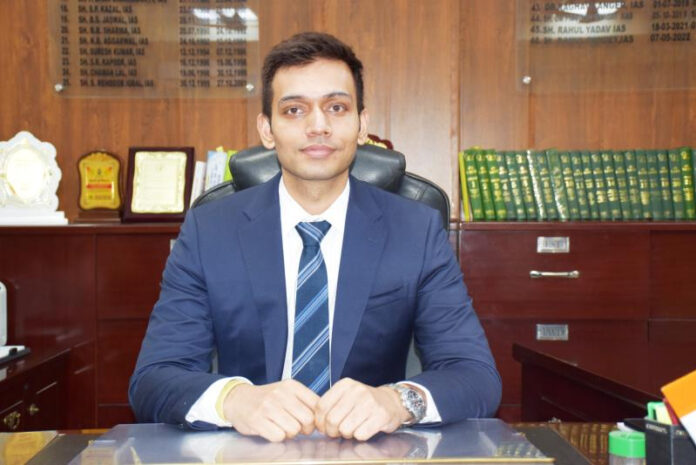
100-day anti-drug drive gets grassroots push
Excelsior Correspondent
JAMMU, Apr 27: In a decisive move to intensify the fight against drug abuse, the District Magistrate Jammu Dr Rakesh Minhas has ordered the constitution of Village/Ward-Level Nasha Nigrani Samitis across the district, marking a major step towards a community-driven anti-drug mechanism under the ongoing 100-day campaign.
The order underscores that the growing menace of drug abuse poses a serious threat to public health, social harmony and youth development, necessitating sustained local vigilance and collective responsibility. It emphasizes that community participation is crucial for early identification, intervention, and effective information flow.
These Samitis will comprise responsible local residents and function as grassroots surveillance and support units aimed at detecting, preventing and responding to drug-related activities in villages and urban wards.
A District Control Room has already been established within the Emergency Operations Centre (EOC) in the Deputy Commissioner’s office, integrating officials from Police, Health and Social Welfare Departments to ensure real-time coordination and response.
Each Nasha Nigrani Samiti has been entrusted with a comprehensive four-fold mandate, beginning with detection and surveillance. Members will report the sale of banned substances, identify individuals showing signs of addiction and maintain confidential village register. They will also monitor suspicious activities such as drug peddling, unusual movement of unknown persons, and even drone or cache activity near villages.
Importantly, the Samitis have been tasked with flagging the informal sale of prescription drugs such as tramadol, codeine syrups, alprazolam, and pregabalin. They may also organize day and night vigil at key entry and exit points to prevent infiltration by drug peddlers.
The order clearly delineates the role of Samitis as support-oriented rather than punitive. Members will act as the first non-stigmatizing point of contact for families, guiding addicts towards treatment facilities and ensuring follow-up on rehabilitation. It explicitly bars any member from approaching law enforcement for action against addicts, reinforcing a humane and reformative approach.
A robust reporting mechanism has been put in place, mandating weekly reports to Block Development Officers (BDOs) every Friday. These reports will cover new cases, referrals, awareness activities and intelligence inputs. For urgent cases such as active peddling or a child in danger, the Samiti must immediately inform the EOC, which will act within a strict timeline-forwarding the case within one hour, seeking action taken reports within 12 hours and providing feedback within 24 hours. Delays will be escalated to the Deputy Commissioner and SSP.
The order categorically prohibits Samitis from exercising any executive or policing powers. Activities such as raids, searches, detention, intimidation, or public shaming are strictly barred. Misuse of membership for personal, political, or financial gain will invite immediate removal.
Confidentiality has been stressed as paramount, with all information, including the identity of addicts and families, to remain strictly protected.
Block Development Officers have been made directly accountable for the functioning of Samitis, including weekly reviews, field visits and consolidation of reports. At the sub-divisional level, SDMs and Superintendents of Police will conduct bi-monthly performance reviews and forward intelligence inputs to the EOC.
At the district level, annual anti-drug awards will be conferred on Independence Day and Republic Day to recognize the best-performing Samiti, most active youth member and top-performing BDO.
To incentivize performance, the best Samiti in each block will receive community assets such as sports equipment or notice boards, funded through MGNREGS or the District Mineral Fund. This initiative signals a shift towards a decentralised, community-led model in combating drug abuse, placing responsibility and empowerment directly in the hands of the people.
IGP Jammu, DIG UR Range review crime, security situation in Udhampur
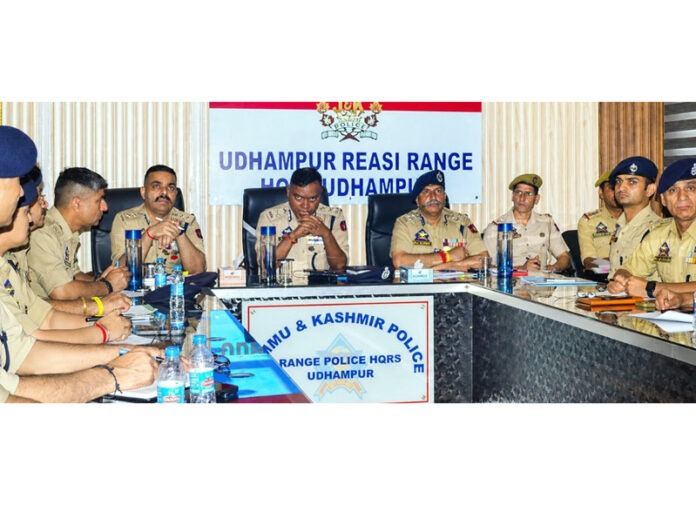
Excelsior Correspondent
JAMMU, Apr 27: Inspector General of Police (IGP) Jammu Zone, Bhim Sen Tuti, along with DIG Udhampur-Reasi (UR) Range, Shiv Kumar Sharma today chaired a crime-cum-security review meeting at Range Police Headquarters Udhampur to assess the law and order, crime control and security arrangements in the district.
Senior Superintendent of Police Udhampur, Amritpal Singh, and other supervisory officers attended the meeting.
The officers reviewed progress under the Nasha Mukt Jammu and Kashmir Abhiyaan, functioning of the Emergency Response Support System (ERSS), investigation of important cases and the overall security scenario.
The IGP Jammu Bhim Sen Tuti directed officers, particularly SDPOs, to personally visit crime scenes and ensure fair, professional and time-bound investigations.
He said quality investigation is essential for strengthening the justice delivery system and public confidence. The DIG stressed effective supervision, accountability and better coordination among field units, while asking officers to use technology-driven systems like ERSS for quicker response and improved public service delivery.