

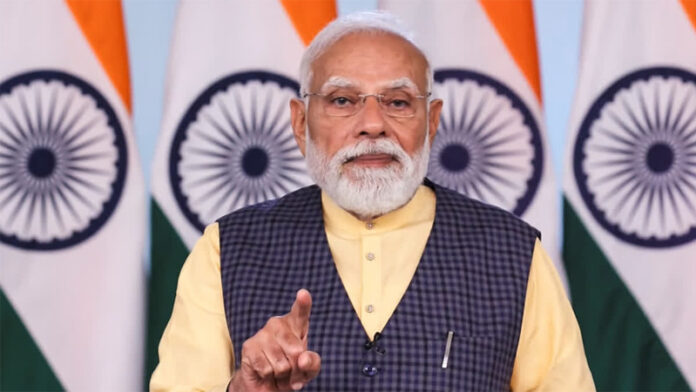
NEW DELHI, Apr 27 : Prime Minister Narendra Modi on Monday hailed the India-New Zealand free trade agreement as a landmark moment in the two countries’ partnership and said the pact will greatly benefit farmers, youth, women, MSMEs, startups, and students, among others.
Modi also said that the investment commitment of USD 20 billion by New Zealand will further strengthen the bilateral cooperation in agriculture, manufacturing, innovation and technology, paving the way for a more prosperous and dynamic future for both countries.
“Today marks a landmark moment in the India-New Zealand partnership! I am delighted that the India-New Zealand FTA signed today will add unprecedented momentum to our developmental partnership. It reflects the deep trust, shared values and ambition that bind our two nations,” he said in a post on X.
“This agreement will greatly benefit our farmers, youth, women, MSMEs, artisans, startups, students and innovators. It will open new avenues for growth, create opportunities and deepen our synergy across sectors,” the prime minister said.
Earlier, Modi said the FTA also expands opportunities for students and skilled professionals, alongside support for agricultural productivity and investment commitments.
He also quoted Commerce and Industry Minister Piyush Goyal, who said the India-New Zealand FTA removes tariffs on Indian exports, boosting labour-intensive sectors and strengthening MSMEs, while ensuring that sectors like agriculture and dairy remain fully protected.
India and New Zealand on Monday inked a free trade agreement, aimed at boosting two-way commerce and investments.
The pact was signed by Commerce Minister Goyal and visiting New Zealand’s Trade and Investment Minister Todd McClay.
The FTA provides duty-free access for 100 per cent of India’s exports to New Zealand, covering all tariff lines or produce categories, and is expected to significantly boost MSMEs and employment by enhancing competitiveness in labour-intensive sectors such as textiles, apparel, leather, footwear, gems and jewellery, engineering goods, and processed foods. (PTI)
India-New Zealand FTA to greatly benefit farmers, youth, MSMEs: PM Modi
RCB beat DC by 9 wickets in IPL
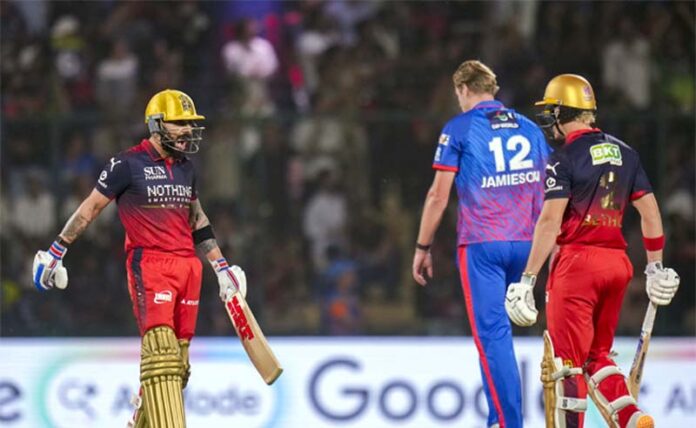
NEW DELHI, Apr 27: Royal Challengers Bengaluru continued their impressive run, thrashing Delhi Capitals by nine wickets in their IPL match here on Monday.
Opting to bowl, pace duo of Bhuvneshwar Kumar (3/5) and Josh Hazlewood (4/12) shared seven wickets, while Rasikh Salam Dar (1/21) and Syuash Sharma (1/7) also contributed as RCB bowled out DC for 75 — lowest score of this season.
For DC, Abishek Porel (30), David Miller (19) and Kyle Jamieson (12) provided some respectability to the total after being reduced to 8 for 6 in 4th over.
In reply, Devdutt Padikkal (34), Jacob Bethell (20) and Virat Kohli (23) completed the chase in 6.3 overs.
Brief Score:
DC: 75 all-out in 16.3 overs (Abishek Porel 30; Bhuvneshwar Kumar 3/5, Josh Hazlewood 4/12).
RCB: 77 for 1 in 6.3 overs (Devdutt Padikkal 34; Kyle Jamieson 1/42). (PTI)
India to be second country to operate commercial ‘Fast Breeder Nuclear Reactor’: Dr Jitendra
Excelsior Correspondent
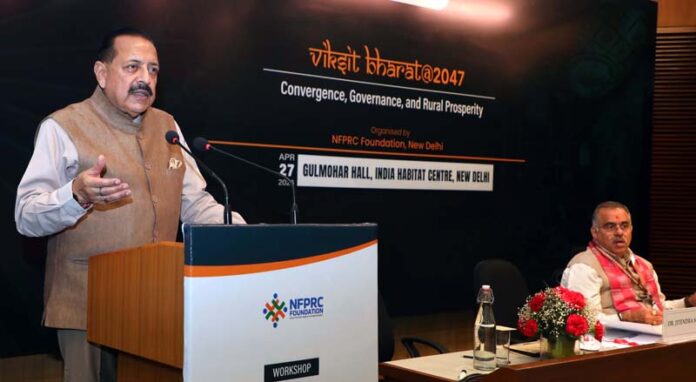
NEW DELHI, Apr 27 : Union Minister Dr Jitendra Singh today said that after Russia, India will be the second country in the world operating a commercial-level fast breeder reactor.
Delivering keynote address at a workshop of MPs and MLAs, on “Small Modular Reactors” the Minister elaborated that India has achieved a significant milestone by developing an indigenously designed 500 MWe Prototype Fast Breeder Reactor (PFBR) at Kalpakkam, Tamil Nadu, which achieved first criticality on April 6, 2026. Developed by the Indira Gandhi Centre for Atomic Research (IGCAR) and built by BHAVINI, this reactor marks the start of the second stage of India’s three-stage nuclear power program, using uranium-plutonium mixed oxide fuel to produce more fuel than it consumes. With this achievement, India moves toward leveraging its vast thorium reserves in the third stage of its nuclear strategy. Once fully operational, India will be the second country in the world after Russia operating a commercial-level fast breeder reactor, he added.
The workshop was organised by National General Secretary BJP, Tarun Chugh.
Dr Jitendra Singh further explained that the significance of this achievement lies in the fact that with this, India moves toward leveraging its vast thorium reserves in the third stage of its nuclear strategy. Once fully operational, India will be the second country in the world after Russia operating a commercial-level fast breeder reactor.
Currently, Russia is the only country operating commercial Fast Breeder Reactors (FBRs), with India in the advanced stage of commissioning its own. While several nations have historically developed or operated experimental fast reactors—specifically the USA, UK, France, Japan, Germany, and China—most of these programs are currently shut down.
Referring to recent developments in India’s three-stage nuclear programme, Dr Jitendra Singh said that the successful establishment of the Prototype Fast Breeder Reactor marks a significant step towards the second stage of the programme, enabling more efficient utilisation of nuclear fuel and paving the way for future use of India’s vast thorium reserves.
The Minister emphasized that only a limited number of countries have made advancements in Fast Breeder Reactor technology, placing India in a distinguished global position in advanced nuclear capability.
The Minister further stated that nuclear energy will play a crucial role in India’s clean energy transition and long-term sustainability goals, particularly in achieving the target of 100 GW nuclear power capacity by 2047.
Highlighting emerging requirements, Dr. Jitendra Singh said that sectors such as Artificial Intelligence, data infrastructure and advanced manufacturing will increasingly depend on reliable and continuous sources of clean energy, where nuclear power will be indispensable.
The Minister also underlined the importance of initiatives such as Small Modular Reactors (SMRs), policy support, and SHANTI Act enabling greater participation of the private sector in scaling up India’s nuclear energy capacity. He said, under the recently launched “Nuclear Mission” , with an allocation of Rs 20,000 cr, five SMRs are planned by 2033.
PNB holds MSME outreach programme at Warehouse in Jammu
Excelsior Correspondent
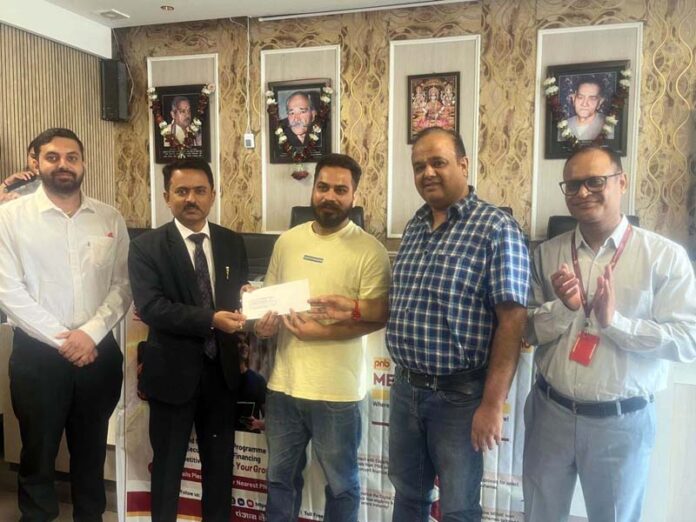
JAMMU, Apr 27: Punjab National Bank (PNB), Jammu Circle, today organised an MSME outreach programme at Warehouse in Jammu to promote financial support for small and medium enterprises.
Deepak Gupta, President Traders Federation Warehouse Nehru Market, attended the event as Chief Guest and appreciated the bank’s proactive efforts in promoting entrepreneurship and facilitating easy access to finance for MSMEs.
The programme was presided over by Pankaj Kumar Verma, Circle Head, Jammu Circle, along with Dharmesh Dwivedi, Deputy Circle Head; Sachin Jindal, MCC Head; Sumeet Singh Kanwal, PLP Head, and other senior bank officials.
During the programme, sanction letters worth Rs 14.50 crore were distributed among eligible customers to support business expansion, while fresh business leads worth Rs 121.49 crore were generated.
Bank officials also informed participants about various MSME schemes, simplified loan procedures, competitive interest rates and faster credit processing facilities.
Speaking on the occasion, officials said MSMEs play a key role in employment generation and economic growth, and reiterated the bank’s commitment to strengthening the sector through customer-focused initiatives.
Hyundai Motor India offers big discounts ahead of May 1 price increase

Excelsior Correspondent
JAMMU, Apr 27: Hyundai Motor India today announced a price increase across its vehicle range effective from May 1, 2026.
The company is currently offering significant benefits on several of its popular models for a limited period.
Discounts include up to Rs 35,000 on Hyundai Verna, up to Rs 60,000 on Hyundai Alcazar, up to Rs 50,000 on Hyundai i20, up to Rs 45,000 on Hyundai Aura and up to Rs 60,000 on Hyundai Grand i10 Nios.
In addition to these discounts, customers can avail extra benefits of up to Rs 20,000, taking the total savings to as much as Rs 1,00,000, depending on applicable terms and conditions.
With only a few days remaining to purchase vehicles at current prices, customers are rushing to take advantage of the ongoing offers.
The automaker has attributed the upcoming price hike to rising production costs and evolving market conditions, which have impacted overall manufacturing expenses.
With the deadline approaching, dealerships are witnessing a surge in customer inquiries and bookings.
Buyers are keen to finalize their purchases before the revised prices come into effect.
Customers planning to buy a new vehicle are advised to visit their nearest Hyundai showroom at the earliest to make the most of the current offers and avoid the impending price hike.
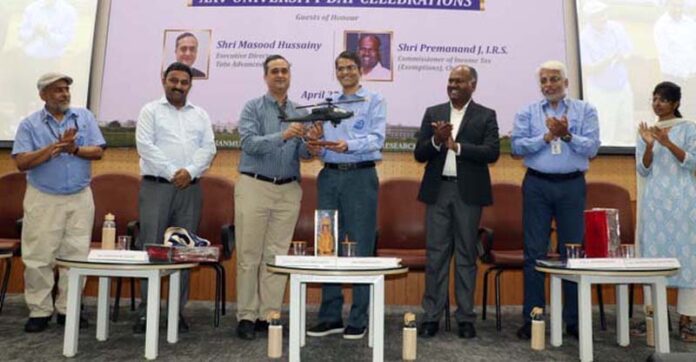
SASTRA signs MoU with Tata Advanced Systems
Excelsior Correspondent
JAMMU, Apr 27: The Thanjavur based SASTRA Deemed University and Hyderabad based Tata Advanced systems today signed an MoU, to promote capacity building, research, training & other formal modes of engagement between the two organisations.
The MoU was signed as part of SASTRA’s 25th University Day celebrations in which the Executive Director of TASL Masood Hussainy was a guest of honour.
In his special address, Hussainy committed for a long term relationship with SASTRA and appreciated the University for its Continuous Growth and capacity building activities.
The Commissioner of Income Tax, J Premanad was also a guest of honour and applauded SASTRA for its various social interfacing activities and for its proactive measures to multidimensional progress.
He urged students to address societal challenges and use their creative problem solving skills for solutions.
The vice-chancellor Dr S Vaidhya Subramaniam in the 2025-26 annual report outlined various achievements of SASTRA during the academic year.
In the academic year 2025-26, research & consultancy projects worth Rs 120 Crores were received, over 1,200 papers were published in reputed journals, over 3,900 job offers made by 247 corporate recruiters, infrastructure addition worth Rs 160 Crores, social outreach projects worth Rs 6 Crores, are some of the notable achievements.
The best outgoing student awards for various categories and disciplines were also presented during the annual day celebrations.
Subharti University holds 11th Convocation Ceremony
Excelsior Correspondent
MERRUT, Apr 27: The 11th Convocation Ceremony of Swami Vivekanand Subharti University today was held with great grandeur at the university’s Maangalya Auditorium.
During the convocation, more than 2,500 degrees were conferred upon students.
The ceremony was graced by the Governor of Gujarat, Acharya Devvrat, as the chief guest, while the deputy Governor of Kebbi State, Nigeria, Umar Abubakar Tafidan Kabbi, attended as the guest of honour.
Darshana Devi, First Lady of Gujarat, along with several distinguished guests from Nigeria including Umar Garba Dustin Mari, Shaifiyu Abubakar Juro and Ishah Abubakar Tunaga were also present.
Among local dignitaries were trustee Dr Rohit Ravindra, CEO Dr Shalya Raj, Executive Officer Dr Krishnamurthy, Acharya Kuldeep, Anil Kumar and Jagat Singh Dausa.
The ceremony was presided over by Chancellor Dr Stuti Kacker.
In his address, Governor Acharya Devvrat said that convocation marks not the end of education but the beginning of new responsibilities.
He emphasized the importance of lifelong learning, moral values and respect for parents and teachers.
Devvrat expressed concern over the increasing number of old-age homes in India, stating that such trends are not part of traditional Indian culture.
Addressing the gathering, guest of honour urged students to actively contribute to nation-building and social development.
He highlighted that education should not be limited to personal growth but should benefit society at large.
Vice-Chancellor Prof (Dr) Pramod Kumar Sharma presented the university report and welcomed the guests.
He stated that the institution, accredited with an ‘A’ grade by NAAC, is making continuous progress in research, innovation, startups, and global collaborations.
Gold medals were presented to 45 undergraduate toppers, while 23 postgraduate toppers received certificates of excellence.
Chancellor medals were awarded to Dr Eben S. John (Best Student) and Kumari Aastha Gupta (Best Student – Female), along with the Sanghamata Mukti Bhatnagar Memorial Medal.
Chancellor Dr Stuti Kakkad congratulated all degree and medal recipients and highlighted the university’s growing international collaborations.
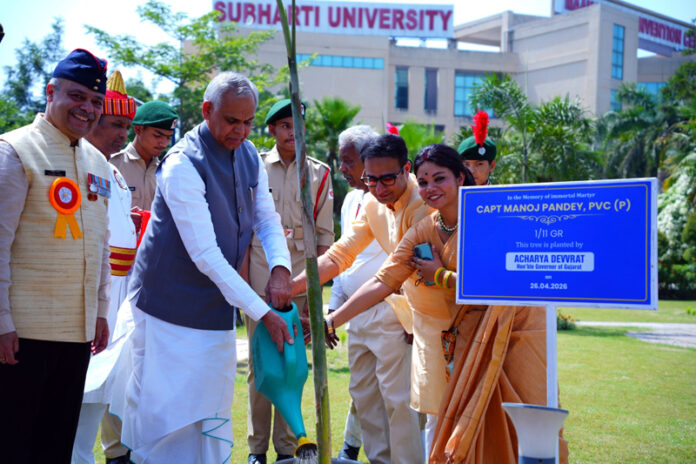
Among others who were present included Dr G K Thapliyal, Dr Kapil Kumar, Dr Vaibhav Goyal, Dr Geeta Parvanda, Dr Pintu Mishra, Dr Sokindra Kumar, Dr Reena Vishnoi, Dr Sudhir Tyagi, Dr Pankaj Kishore Mishra, Dr Nikhil Srivastava, Dr Manoj Kapil, Dr Padma Mishra and Dr Dhiren Ajit Nair.Governor of Gujarat, Acharya Devvrat planting a sapling during an event on Monday.
Patanjali’s ‘Chandan Van’ model expands sandalwood cultivation to North India
Excelsior Correspondent
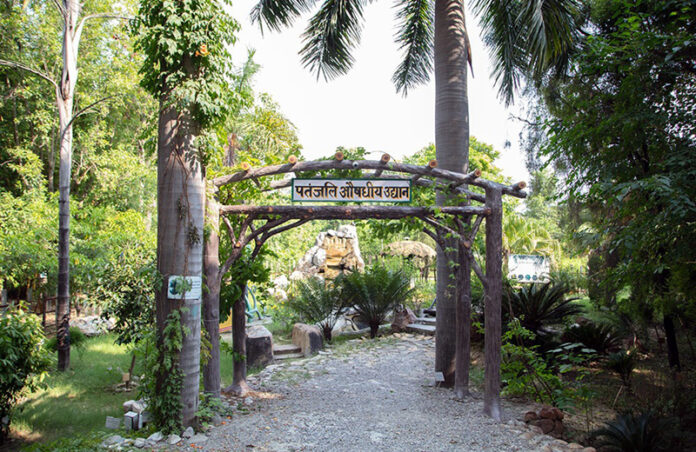
JAMMU, Apr 27: Sandalwood cultivation, once largely confined to South India, is gaining ground in the north, with a model developed by Patanjali in Uttarakhand demonstrating its viability under suitable conditions.
The ‘Chandan Van’ initiative, led by Acharya Balkrishna, has shown encouraging results, prompting farmers and institutions across several districts to adopt the high-value crop.
Nearly two decades ago, Acharya Balakrishna began experimenting with sandalwood cultivation at Patanjali’s research centre and medicinal gardens in Haridwar, at a time when such efforts were almost non-existent in North India. Scientific studies on the planted saplings yielded positive outcomes, paving the way for expansion into districts like Pauri and beyond.
Experts note that sandalwood is a semi-parasitic plant that derives nutrients from the roots of host species, making scientific cultivation practices and proper management essential for success.
The initiative was partly inspired by historical references to sandalwood presence in Uttarakhand’s Manikut hills, from where the wood was once transported to Kannauj in Uttar Pradesh. Subsequent field studies confirmed limited natural occurrence, encouraging organized plantation efforts in the region.
Beyond agriculture, the model is being projected as a tool to address migration from the hill state. Speaking at a conference at Indian Institute of Technology Roorkee, Acharya Balakrishna said sustainable livelihoods could be created locally by utilizing regional resources effectively.
He cited the example of Yamkeshwar block, where barren land was transformed into a green cover through plantation drives suited to local climatic conditions, including sandalwood. During a visit, Uttar Pradesh Chief Minister Yogi Adityanath expressed surprise at the transformation of once-unproductive land into dense greenery.
According to Patanjali, sandalwood cultivation requires relatively small landholdings and matures in 10–15 years, with each tree potentially yielding returns of Rs 1–1.5 lakh. Proponents believe large-scale adoption of the ‘Chandan Van’ model could enhance farmer incomes while creating sustainable employment opportunities in Uttarakhand’s hill regions.
Restoration of Art 370 remains core agenda of NC: Farooq
* Says dual Govt system detrimental to J&K
Excelsior Correspondent
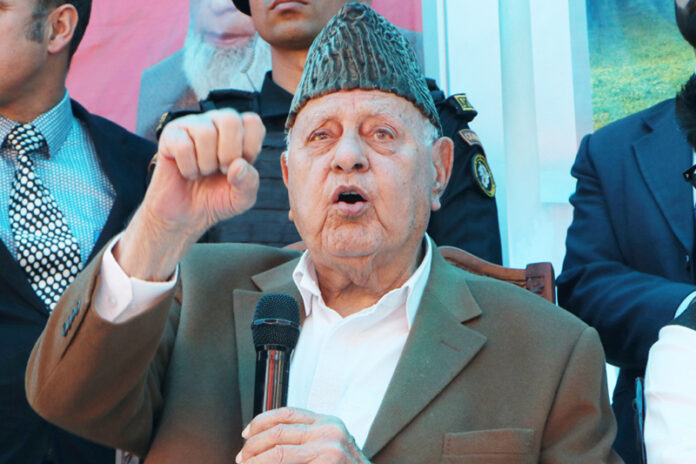
SRINAGAR, Apr 27: Former Chief Minister and National Conference president Dr Farooq Abdullah today reaffirmed the party’s core stand on protecting the rights and dignity of the people of Jammu and Kashmir including restoration of Article 370.
He said this while addressing a gathering in Budgam, asserting that the foundation of the Jammu and Kashmir National Conference rests on its sincere and selfless cadre, as well as the immense sacrifices of Kashmir’s martyrs. He said these martyrs laid down their lives for the dignity, self-respect and freedom of the people from centuries of oppression and subjugation.
Farooq added that the first democratically elected government of the National Conference granted constitutional and democratic rights to the people and brought a historic transformation through land ownership rights.
“Under the leadership of Sher-e-Kashmir Sheikh Muhammad Abdullah, landmark reforms significantly reduced poverty, deprivation, and illiteracy, enabling ordinary citizens, who had tilled the land for years without fair compensation to become land owners overnight,” he said.
These reforms, he said, transformed the lives of the poor and laid the foundation for a more prosperous and stable society. He said that Late Abdullah not only empowered the people but also secured internal autonomy for the State. However, he said these constitutional protections were gradually eroded, one by one in an unconstitutional and undemocratic manner and whatever remained, was fully abolished in 2019, with the active support of the People’s Democratic Party.
Warning against misleading narratives, former J&K Chief Minister said that restoration of Article 370 remains the core agenda of the National Conference, and there is no question of stepping back from this struggle. He reaffirmed that the party will continue to fight for the rights of the people of Jammu and Kashmir under all circumstances. Farooq said the party is consistently raising the issue of restoring democratic and constitutional rights at every platform.
Stressing the urgency of restoring Statehood, Dr Farooq said it is essential for enabling an elected government to function effectively and take key decisions without unnecessary obstacles.
He further said that a dual system of governance in a sensitive region like Jammu and Kashmir could lead to instability and chaos. In a democracy, he noted, a government elected by an overwhelming majority cannot be ignored, nor can hurdles be justified in its functioning.
Abdullah added that the Prime Minister and Home Minister had promised restoration of Statehood soon after elections, but more than a year and a half has passed since the formation of the elected government. He said the Centre must fulfill its commitment without further delay and pointed out that the Supreme Court has also directed the Centre to restore Statehood at the earliest, leaving no justification for continued delay.
He said National Conference Government remains committed to public welfare, with ministers and MLAs, working tirelessly to address grievances and ensure relief to the people.
The scourge of road accidents in Jammu region
Chanakya Charan Dass “Tikri”
jagmohansharma1602@gmail.com
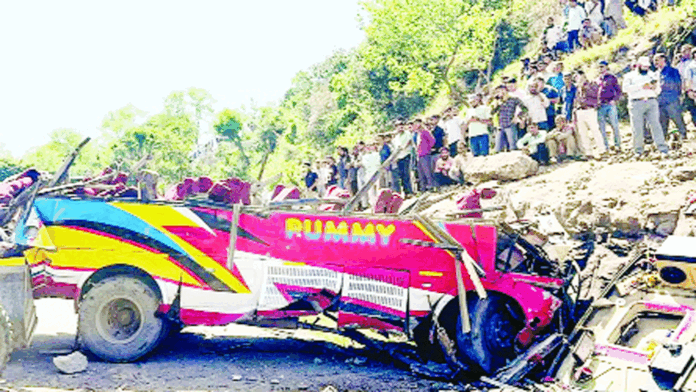
On 20th of April 2026 a heart-rending accident took place in village Kaghote near Ramnagar, in Jammu Division of JandK. The bus was carrying passengers to the District Head Quarter, Udhampur for their daily errands. By all accounts, the bus plunged 100 meters down the road and fell upon an auto-rickshaw carrying passengers on a road down below.
What must be noted here is that the bus that rolled down from the upper section of the road, on to the lower section, was overloaded and so was the auto-rickshaw down below, on which this ill-fated bus landed in totally mangled condition. As per the reports in the print media, the bus was carrying 65 passengers on the winding hilly stretch while its seating capacity was only 42. The auto-rickshaw was carrying 17 passengers while its capacity was 9.
The tragic accident claimed 21 lives while 62 were injured. It is understood from the account of the survivors that the accident happened when the overcrowded and speeding bus could not negotiate a blind curve on the road & fell down the gorge after its tyre burst.
A few things that come out very clearly from this accident are that there was overloading, not only of the bus but also of the auto-rickshaw down below. The bus was over speeding. What was the physical condition of the bus? Was it roadworthy? And, finally, did the driver have a valid license to drive in hilly areas?
The timing, 10 o’clock, of the bus and the auto-rickshaw was such that the people of the adjoining areas must have had a reason to be in Udhampur in time to attend to their work in the offices, schools and colleges. Thus, the overloading of the vehicular transport must not have been incidental but because there must have been scarce availability of transport at the time of peak passenger demand. You can see scenes of overloading of buses & other vehicular traffic all around Jammu region, especially in the rural areas.
It is therefore incumbent on the authorities to ponder over these questions as the road accidents in JandK are happening far too often resulting in loss of precious life. I am not going into the details deliberately as I am fully aware that these problems are known to the concerned authorities and they must ponder them over as otherwise this is not going to be the last accident – unfortunate as it is!!
It’s not an easy thing to say, but yes, I am compelled to say this with a very heavy heart as we are not learning from our past accidents that have consumed innumerable lives throughout JandK!! The accidents make news, they are bemoaned for a few days, compensations for the dead and injured are announced and then life is back on the old track. No systemic effort seems to be made to ensure that such accidents don’t occur again!!
However, it is not only the authorities but also, we “the people” as a society who should be careful about our own safety. We are not safety conscious as a society and take life for guaranteed. That is why it is not uncommon to see drivers driving on the wrong side of the road instead of taking a “U”-turn, for example, at the specified location. This habit of several drivers is not limited to the internal roads of our cities and towns (it’s bad in any case) but also on the national highways where the traffic is moving at a much greater speed and therefore the risk of accidents multiplies several folds. For easy access to their villages/homes the divider between the lanes on the NH is seen to be dug up by residents/localities at several places. It is not uncommon to see motorcyclists drive over the broad dividers and appear suddenly in front of the fast moving traffic on NH from nowhere.
It’s not uncommon to see drivers riding motorcycles, scooters or scooties without helmets or maybe just keeping these gadgets on their heads and not tying them up onto the chin. A helmet, not properly tied, may bluff a policeman, but it is no security against the watchful gaze of the “Yamraj”, when it comes to the shove, God forbid. The drivers don’t care for the traffic lights and just move on irrespective of whether the lights are green, red or orange. In any case there are not many traffic lights working in Jammu city, though installed. However, wherever they are installed and working the drivers should adhere to the protocol not only for their own safety, but for the safety of the others too.
We, as a society, are also not averse to overloading in buses. We somehow relish it. We come across several instances where the passengers (young and old) relish sitting on the roof of the buses, especially the students. The students and younger generation “enjoy” hanging on to whatever portion of the running buses that they can latch on to. They don’t even listen to the sane advice. I think they believe they are fashionably “WOKE” and none has a right to advise them.
There was yet another young boy who probably wanted to fly at the speed of bullet train on the flyover near Maheshwar, Samba around a week back. He was travelling towards Jammu. We also happened to be travelling in the direction of Jammu that day & passed by the accident spot 5 minutes after it had happened. There were vehicle parts and mauled angle iron pieces all around. The police were also there. Because of the high speed the young boy could not control his car on the curve of the flyover and jumped over the divider, which was protected by angle iron, hit a dumper and a fuel tanker that was travelling in the opposite direction towards Delhi and then was literally thrown back to his own lane by the force of the impact. His car was smashed, car engine was ripped apart, rear and front of the car was smashed into a “peda.” The driver side of the tanker was ripped apart & the tyre flattened. The airbags in the car saved the young driver from the jaws of death. He was lucky and so were his parents!! He, probably, was an exception but several are not.
Recently a very unfortunate accident happened in Jammu in which a young and promising girl from a local college lost her life when the door of the bus she was travelling in got unlocked, probably because the bus experienced a jump on the road and she was thrown out of the door because of the imbalance. The students of the college were headed for a picnic. A picnic that could have been a joyful and memorable moment for the students turned into a huge unforgettable tragedy for the life.
Incidentally, these observations are from the posts I read on the social media.
Obviously, there was an outrage. In the heat of the moment and in anger the basic point is usually lost. The tragedy gets a back seat, and allegations and counter allegations fly fast. These are also driven by the social media.
Here again, my mind went back to the safety precautions that could have been taken to avoid this unfortunate incident. It is very easy to blame the teacher accompanying the students in the bus. At least this is what I see on the social media. But is that right? Did she have a say in the hiring of the buses? No!! Did she have the qualification or authority to certify the roadworthiness of the buses? No!! Did she have the authority to check the driving licence of the drivers driving the buses? No!! Did she have any control over the conductor of the bus? No!!
In the foreign countries there is a specified teacher to student ratio when they are accompanying the students on picnics or educational tours. It is normally 1 to 10. Here we have one teacher for more than 50 students. The teacher is essentially a teacher, who should devote his/her energies towards educational upliftment of the students even when outdoors. The teacher can make it a mix of entertainment and studies to make it more joyful. That is all.
The role of a teacher on such occasions can be likened to be that of a shepherd. The only difference being that he/she is not shepherding sheep but teenagers who are bubbling with wit, energy and sometimes with mischief too.
It isn’t easy for one teacher to control 50 or more students of college going age in the outdoors. There have been cases in many colleges where, for example, a couple of students became a cause of anxiety to teachers as at the time of returning home from the picnic and headcount they realized that some students were missing. Search parties found the students in inebriated state in nearby fields. In another incident some students were found to have returned from the picnic spot with their girl/boy friends without informing the teachers. There have also been cases during picnics when young lives were lost while they were making video reels in precarious areas.
Therefore, the emphasis should be on avoiding such unfortunate mishaps again. There should be a set and foolproof protocol from hiring the buses to ensuring that adequate number of teachers are available in each bus with the students and sense of discipline is inculcated in the minds of the students. I would even suggest sending the parents of some of the students in each bus while their wards are going on a picnic. There should be no compromise on the quality of buses and the operators. If there is an iota of doubt it is better to cancel the trip rather than take a risk?
Finally, it must be emphasized that the safety of citizens on the road must become a part of the society we live in. It is a 24×7 requirement and every citizen must contribute his/her bit into it. It is no use breaking traffic rules while you are travelling with your children on a bike or in a car. I always feel perturbed when I see motorcyclists jumping over a divider while their kids are sitting with them. What examples are these adults setting for the children?
The government should revisit and establish as to which areas of JandK require more passenger buses and what should be their frequency of plying on a particular route. It must also determine roadworthiness of the vehicles a fresh especially those running in far flung areas. There should be no compromise on drivers breaking the rules and the “powerful” should stay away from interfering with the lawbreakers. There should be frequent orientation programmes at district/panchayat level for the drivers of commercial vehicles.
It is not an easy task but with grit and determination at government and societal level it is doable.
Otherwise, accidents have happened, will happen and will continue to happen and lives will continue to be lost!!