

Excelsior Correspondent
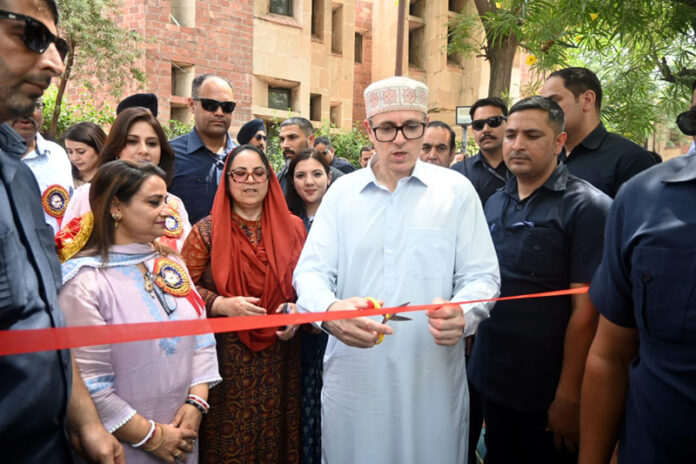
JAMMU, Apr 27: Chief Minister Omar Abdullah today inaugurated the 11th National Conference and Exhibition on Emerging and Innovative Trends in Engineering Technology (NCEITEET) at Government College of Engineering and Technology (GCET), Jammu, underscoring the need to harmonize technological advancement with cultural heritage while fostering innovation-driven growth among youth.
The two-day event is being organised by GCET Jammu in technical collaboration with Indian Institute of Technology (IIT) Kharagpur and in association with World Consortium of Universities.
On the occasion, the Chief Minister also inaugurated the newly constructed School of Architecture (SoA) building at GCET, developed at a cost of Rs 19.71 crore, and extended his best wishes to the faculty and students. Emphasizing the significance of architecture, he urged students to adopt a forward-looking approach while staying rooted in the region’s cultural and historical identity.
“While it is important to embrace modernity, it is equally important to remember where we come from. Not every building needs to be made of glass and steel. Our structures must reflect our heritage and preserve our cultural ethos,” he said, expressing concern over the declining focus on heritage conservation in both public and private construction across Jammu and Kashmir.
Highlighting the conference theme, the Chief Minister described it as relevant and thought-provoking, particularly for its focus on emerging technologies like artificial intelligence and machine learning. He termed the deliberations as an “eye-opener,” especially in the context of tourism.
Reflecting on his experience as Tourism Minister, he noted that leveraging AI could significantly enhance visitor experience, destination management and service delivery in Jammu and Kashmir. However, he cautioned that technological integration must be balanced with employment generation.
“In a region like ours, where unemployment remains a concern, we must ensure that technology complements human effort rather than replacing it. Tourism is not just an economic driver but also a major source of livelihood across regions and sectors,” he said.
The Chief Minister emphasized that while attracting tourists to Jammu and Kashmir is not difficult, ensuring repeat visits requires delivering a consistently enriching experience. He cited diverse tourism segments including pilgrimage tourism such as Mata Vaishno Devi, border tourism at places like Suchetgarh, and leisure tourism across the Valley and other regions, stressing the need to enhance infrastructure and services across all segments.
Addressing infrastructure gaps at GCET, the Chief Minister announced that funds shall be provided this year for the construction of an auditorium to provide better facilities for students and academic events.
He also responded positively to a student’s request for an incubation centre, assuring that the government would make every effort to establish such a facility within the institution and for which work to be started from this year. He underscored the importance of nurturing a startup ecosystem and enabling youth to become job creators.
On the occasion, the Chief Minister released the e-proceedings of the conference, comprising 28 shortlisted research papers along with messages. He also visited various exhibition stalls showcasing innovative models and projects by students from engineering, technology and management institutions across Jammu and Kashmir and other parts of the country. Interacting with participants, he took keen interest in their ideas and even keenly observed demonstrations given by students.
Speaking at the event, Minister for Education Sakeena Itoo emphasized the critical role of innovation and research in shaping the future of education. “Innovation today is not a luxury but a necessity. Our institutions must evolve as centres of excellence, research and innovation,” she said.
MLA Nagrota Devyani Rana, Organizing Chairperson from Indian Institute of Technology Kharagpur Prof. Raja Dutta, and Principal/Director GCET Sameru Sharma also addressed the gathering, highlighting the significance of collaborative research, academic excellence and innovation-driven growth.
CM inaugurates conference on emerging technologies in engineering at GCET
DyCM chairs Sub-Committee meet on Gair Mumkin Khads
Excelsior Correspondent
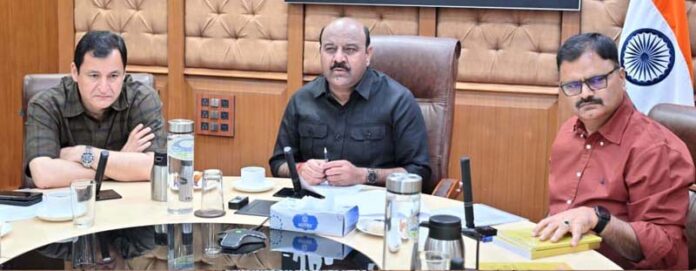
JAMMU, Apr 27: Deputy Chief Minister, Surinder Choudhary, today chaired a meeting of the Sub-Committee constituted to examine the issues related to Gair Mumkin Khads in Jammu and Kashmir at the Civil Secretariat, here.
The Committee stressed on protection of all flood zone areas, however, asserted on identification of chronic areas of Gair Mumkin Khads to effectively address the long-standing public concerns across all districts.
The meeting was attended by Minister for Jal Shakti, Forest, Ecology & Environment and Tribal Affairs, Javed Ahmad Rana and Minister for Agriculture Production, Rural Development & Panchayati Raj, Cooperative and Election Departments, Javid Ahmad Dar, as members of the Sub-Committee.
Additional Chief Secretary, Jal Shakti Department, Shaleen Kabra, briefed the Sub-Committee on the current status of Gair Mumkin Khads.
The Deputy Chief Minister directed that chronic areas of Gair Mumkin Khads be identified on priority. Stressing on protection of all flood prone areas, he instructed the concerned departments to submit detailed reports in a time-bound manner. He further sought inputs and suggestions to address the issues faced by the public concerning Gair Mumkin Khads.
Speaking on the occasion, the Deputy Chief Minister underscored the importance of pro-public and practical decision-making to ensure the amicable redressal of genuine grievances. He directed the concerned authorities to expedite and ensure timely completion of zone-wise mapping, particularly in chronic areas.
The Sub-Committee held detailed deliberations on the existing status of Gair Mumkin Khads, daryas and nallahs, along with related concerns, with the objective of providing relief to the public wherever warranted.
The Deputy Chief Minister also called for sensitization of all stakeholders and emphasized the need for scientific mapping of Gair Mumkin Khads, nallahs and adjacent non-cultivable waste lands.
The members of the Sub-Committee put forth valuable suggestions and highlighted various public concerns requiring urgent attention.
Putting forward his suggestions, Minister of Irrigation and Flood Control Department, Javed Ahmad Rana said that coordinated efforts are required by the concerned departments to ensure timely resolution of public concerns.
Speaking at the outset, Minister Agriculture Production, Javid Ahmad Dar asserted on addressing the genuine concerns of the public.
Among others, the meeting was attended by Secretary Revenue Rajeev Ranjan, Chief Engineer I&FC, Special Secretary Revenue, and other concerned officers.
Chenab region back on development track after a decade: Javed Rana
Excelsior Correspondent
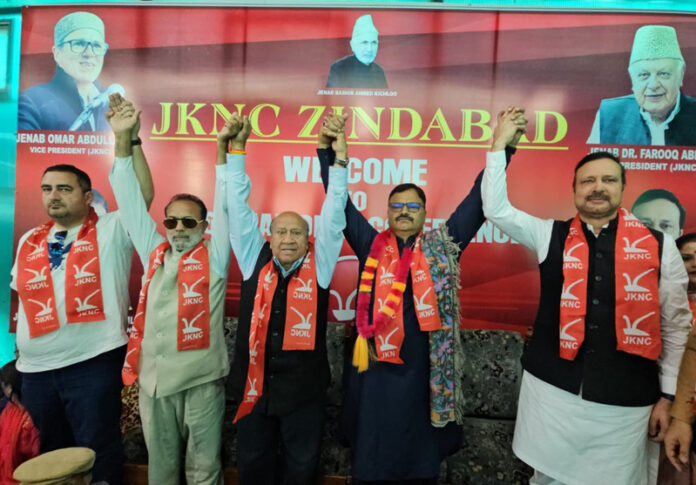
KISHTWAR, Apr 27: Senior leader of Jammu and Kashmir National Conference and Minister for Jal Shakti, Forest & Tribal Affairs, Javed Rana, today asserted that the far-flung areas of the Chenab region are witnessing a long-awaited revival in development after nearly a decade.
He emphasized that under the leadership of Chief Minister Omar Abdullah, the Government is actively working on multiple fronts to accelerate progress and ensure balanced and inclusive growth across the region.
He made these remarks while addressing a massive gathering of party functionaries in Kishtwar. The function was organized by District President Kishtwar, Tanvir Ahmad Kichloo, and was attended by several senior leaders including Member of Parliament (Rajya Sabha) Sajjad Ahmad Kichloo, Provincial President Jammu Rattan Lal Gupta, Pooja Thakur former DDC Chairperson Kishtwar, Fasial Hussain former DDC, OBC Chairman Abdul Gani Teli, JKNCSU President Harshvardhan Singh, and Arun Pal Singh.
Rana outlined several pro-people welfare measures undertaken by the Omar Abdullah-led Government in the Chenab region, ranging from infrastructure upgrades to strengthening key institutions in the health and education sectors. He highlighted the Government’s proactive and hands-on approach during recent weather calamities, detailing the relief and rehabilitation measures undertaken to support affected communities.
Rana reaffirmed that the Government treats the Chenab region at par with other areas, while also according it additional priority due to its historical backwardness.
Speaking on the occasion, Sajjad Ahmad Kichloo (MP) expressed concern over the delay in the restoration of statehood. However, he noted that despite these challenges, the Omar Abdullah-led administration is making steady progress to ensure equal opportunities and equitable development for the people of the Chenab region. He also demanded from the Centre restoration of the special status snatched from the people of J&K.
Provincial President Rattan Lal Gupta, in his address, urged party functionaries to gear up for the upcoming Urban Local Body (ULB) and Panchayat elections. He called upon them to take the government’s pro-people and pro-Jammu initiatives to every doorstep, strengthening grassroots outreach and engagement.
Among others who were present included:- Imtiyaz Zargar, Rajinder Kumar Sen, Mohinder Parihar, Mohd Sultan Malik, Ramzan Mohd Malik, Block Presidents and Block Secretaries.
US’ great gamble- its assumptions in Iran war
Vishal Sharma
Iran has taken on two of the preeminent military powers of the world and still come out as more than also- ran in the fight. In fact, if anything, its resilience and retaliatory strikes on Israel, Gulf countries and on the US assets in and around Gulf region has shown that wars are not won with the cutting edge war fighting technologies and resource rich militaries alone. A little bit of character and pride in country’s values is also needed. When a country collectively decides to fight it out not that it has to because there is a war thrust on it, but because the adversary is hell bent on berating its civilizational heritage and wiping it out from the face of the earth, the writing on the wall for the adversary is too clear to be missed. When the battle becomes existential, the character of a nation comes to the fore and the clarion call from the powers that be to rally around the flag becomes more than a rallying cry, deriving its sustenance from the perceived greatness of a nation; it’s millennia old history. The war whoop becomes a holy gospel for the people of the country and in some cases even for those who until then may not have even made up their minds.
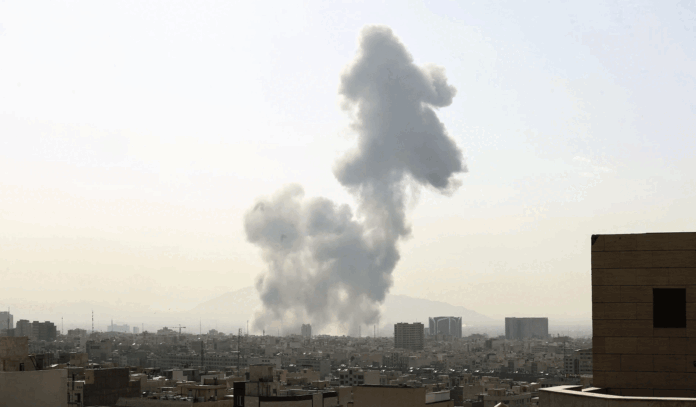
Before 27th Feb when the first bombs dropped on Tehran, Iran was reportedly faced with some measure of dissension from within. There were reports that some sections of people hostile to the establishment demonstrated on the streets beginning in late December 2025 and continuing into early 2026. These demonstrations were met with a violent crackdown by security forces. Some media reports indicated that thousands of people were killed, with over 2,000 deaths reported by the Human Rights Activists News Agency by mid-January.Protests took the shape of street demonstrations, nightly rooftop chants, and defiance of restrictions despite intense security presence and internet shutdowns. Before the heavy hand of the Iran’s Basij militia squashed these demonstrations, the agitators even urged the US president, Donald J Trump to intervene and liberate Iran from IRGC. After reports of deadly force against protesters hit the international media headlines, Trump threatened to intervene, stating in early January that if Iran killed peaceful protesters, the U.S. would come to their rescue, famously tweeting that the U.S. was “locked and loaded and ready to go”. On January 13, Trump even directly addressed Iranian demonstrators, telling them “Help is on its way” and urging them to “take over your institutions”.Even Israeli Prime Minister Benjamin Netanyahu called on Iranian citizens to overthrow the Tehran regime during a televised address dedicated to the joint military operation against Iran launched by Israel and the US on 28th Feb.
“In the coming days, we intend to do everything we can to give the Iranian people the opportunity to gain freedom, so I am once again addressing the Iranian people and saying: do not sit idly by, very soon the moment will come when you must take to the streets to finish the job and overthrow the totalitarian regime,” Netanyahu said in a speech broadcast on Israeli TV
Help did arrive, but it was too little too late. By then the protestors had paid with their lives.
There have not been reports of any mass protests in Iran ever since. Since IRGC has made Iran net blind, there may be a possibility that some dissensions may have happened, but curbed immediately. Be that as it may, it does not appear that any protest against IRGC has been able to reach the critical threshold where it could become a nuisance for the IRGC and, as a result, throw spanner in its war plans. Remember, IRGC has had its hands full any way on the war front. For the most part, it has been running around the country to save itself and its assets from the continuous US-Israeli bombing until the ceasefire intervened. Furthermore, IRGC controlled Basij militia has also not had a free run to really go around bullying the anti IRGC people into submission. With its leader assassinated, its cadres for the most part have been busy avoiding bombs that kept raining on them until a few weeks ago. This then raises a question: why have the anti -establishment sections in Iran not so much as even tried to rally their supporters and ramp up protestations across Iran? If they could do so when IRGC leaders were alive and in control and when Tehran had unfettered control of power levers, why have they not been able to raise a banner of revolt against the IRGC? They did it when IRGC death squads were more likely to hunt them down and kill them. In contrast, odds on them being persecuted on a scale comparable to that before Feb 28 were low by all imaginable calculations.
There would have been another added benefit of anti IRGC or establishment chaos on the streets of Tehran and elsewhere now when there is understandably considerable disarray in the ranks of IRGC and the political establishment. It would have emboldened both Trump and Netanyahu to press ahead with the kinetic campaign. It is less likely that Trump would have announced the ceasefire and begun parleys with Tehran if civil strife within Iran had been all too visible. To Trump’s dismay, he did not get what he came looking for in Iran, upending in many ways predominantly the rationale for war against Iran.
There is a widespread view that Tehran was not bending over backwards to seek cessation of hostilities with the US and Israel although by all measures it has suffered immense death and destruction in the now paused air campaign. Trump’s hands in many ways have been forced by the resilience and counter action shown by Tehran and inexplicable absence of anti establishment cries on the streets of Iran. The logic that partially guided the initiation of war against Iran( the other strand of logic being denuclearising Iran)would have only got buttressed by a series of protests against the Tehran establishment during the war. For Trump, therefore, it couldn’t have more bitterly humiliating as he finds that his prognosis on quick Venezuela type operation in Iran has been bereft of vacuity.
The two week ceasefire announced on April 8 has been indefinitely extended by Trump on April 21-22. Trump’s extended the ceasefire hoping that Tehran will submit a plan to end the war permanently. But he wants the war to end on his terms, based on his 15 point formula. He is not willing to consider Tehran’s counter plan of 10 point programme. In the meantime while guns have fallen silent and skies over Tehran and in Gulf and Israel are calm, Trump has laid a siege on Strait of Hormuz with the objective of choking Iran’s economy. Economic blockade is an act of war and Tehran’s made its position on it very clear. First round of talks in Islamabad has failed as Tehran refused to agree to one sided concessions. Having burnt his fingers in air campaign, Trump now thinks that Tehran can be forced to cut a deal with an economic blockade. His first assumption as regards internal dissension acting as a fifth columnist in Iran has miserably failed. Let us see whether his second assumption on Tehran capitulating to an economic blockade will turn out to be true.
Nasha Nigrani Samitis constituted across Jammu district
100-day anti-drug drive gets grassroots push
Excelsior Correspondent
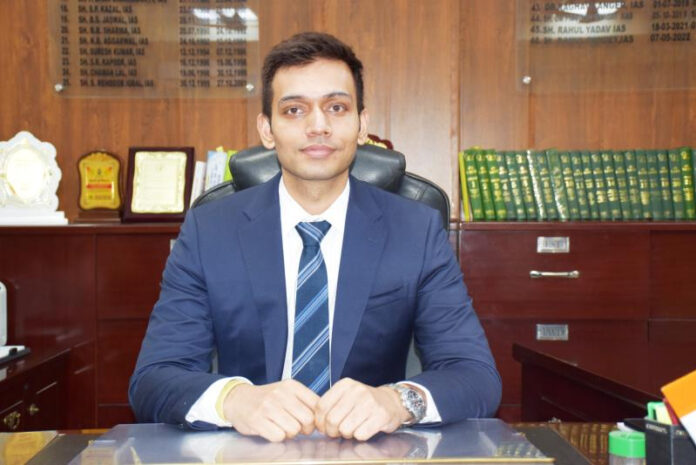
JAMMU, Apr 27: In a decisive move to intensify the fight against drug abuse, the District Magistrate Jammu Dr Rakesh Minhas has ordered the constitution of Village/Ward-Level Nasha Nigrani Samitis across the district, marking a major step towards a community-driven anti-drug mechanism under the ongoing 100-day campaign.
The order underscores that the growing menace of drug abuse poses a serious threat to public health, social harmony and youth development, necessitating sustained local vigilance and collective responsibility. It emphasizes that community participation is crucial for early identification, intervention, and effective information flow.
These Samitis will comprise responsible local residents and function as grassroots surveillance and support units aimed at detecting, preventing and responding to drug-related activities in villages and urban wards.
A District Control Room has already been established within the Emergency Operations Centre (EOC) in the Deputy Commissioner’s office, integrating officials from Police, Health and Social Welfare Departments to ensure real-time coordination and response.
Each Nasha Nigrani Samiti has been entrusted with a comprehensive four-fold mandate, beginning with detection and surveillance. Members will report the sale of banned substances, identify individuals showing signs of addiction and maintain confidential village register. They will also monitor suspicious activities such as drug peddling, unusual movement of unknown persons, and even drone or cache activity near villages.
Importantly, the Samitis have been tasked with flagging the informal sale of prescription drugs such as tramadol, codeine syrups, alprazolam, and pregabalin. They may also organize day and night vigil at key entry and exit points to prevent infiltration by drug peddlers.
The order clearly delineates the role of Samitis as support-oriented rather than punitive. Members will act as the first non-stigmatizing point of contact for families, guiding addicts towards treatment facilities and ensuring follow-up on rehabilitation. It explicitly bars any member from approaching law enforcement for action against addicts, reinforcing a humane and reformative approach.
A robust reporting mechanism has been put in place, mandating weekly reports to Block Development Officers (BDOs) every Friday. These reports will cover new cases, referrals, awareness activities and intelligence inputs. For urgent cases such as active peddling or a child in danger, the Samiti must immediately inform the EOC, which will act within a strict timeline-forwarding the case within one hour, seeking action taken reports within 12 hours and providing feedback within 24 hours. Delays will be escalated to the Deputy Commissioner and SSP.
The order categorically prohibits Samitis from exercising any executive or policing powers. Activities such as raids, searches, detention, intimidation, or public shaming are strictly barred. Misuse of membership for personal, political, or financial gain will invite immediate removal.
Confidentiality has been stressed as paramount, with all information, including the identity of addicts and families, to remain strictly protected.
Block Development Officers have been made directly accountable for the functioning of Samitis, including weekly reviews, field visits and consolidation of reports. At the sub-divisional level, SDMs and Superintendents of Police will conduct bi-monthly performance reviews and forward intelligence inputs to the EOC.
At the district level, annual anti-drug awards will be conferred on Independence Day and Republic Day to recognize the best-performing Samiti, most active youth member and top-performing BDO.
To incentivize performance, the best Samiti in each block will receive community assets such as sports equipment or notice boards, funded through MGNREGS or the District Mineral Fund. This initiative signals a shift towards a decentralised, community-led model in combating drug abuse, placing responsibility and empowerment directly in the hands of the people.
IGP Jammu, DIG UR Range review crime, security situation in Udhampur
Excelsior Correspondent
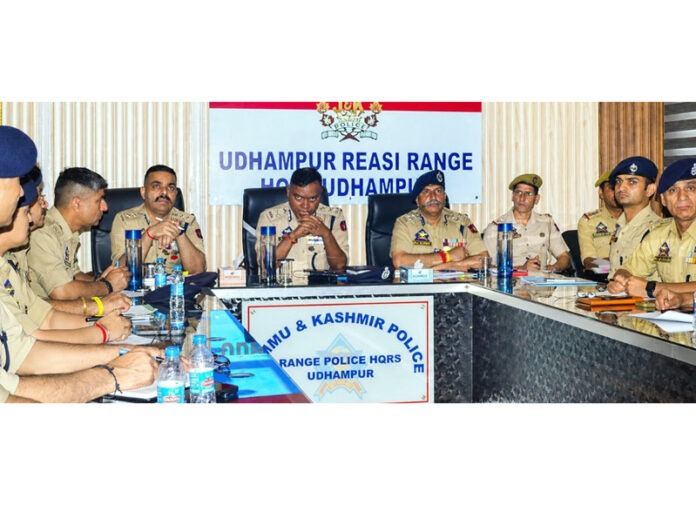
JAMMU, Apr 27: Inspector General of Police (IGP) Jammu Zone, Bhim Sen Tuti, along with DIG Udhampur-Reasi (UR) Range, Shiv Kumar Sharma today chaired a crime-cum-security review meeting at Range Police Headquarters Udhampur to assess the law and order, crime control and security arrangements in the district.
Senior Superintendent of Police Udhampur, Amritpal Singh, and other supervisory officers attended the meeting.
The officers reviewed progress under the Nasha Mukt Jammu and Kashmir Abhiyaan, functioning of the Emergency Response Support System (ERSS), investigation of important cases and the overall security scenario.
The IGP Jammu Bhim Sen Tuti directed officers, particularly SDPOs, to personally visit crime scenes and ensure fair, professional and time-bound investigations.
He said quality investigation is essential for strengthening the justice delivery system and public confidence. The DIG stressed effective supervision, accountability and better coordination among field units, while asking officers to use technology-driven systems like ERSS for quicker response and improved public service delivery.
Ease of business leads to surge in registered companies in J&K: RoC
Excelsior Correspondent
SRINAGAR, Apr 27: The number of registered companies in Jammu and Kashmir has nearly tripled from around 2,500 before 2019 to between 7,000 and 8,000 at present, officials of the Ministry of Corporate Affairs said today, attributing the surge to reforms aimed at improving the ease of doing business in the Union Territory.
CLICK HERE TO WATCH VIDEO
Haamid Bukhari, Registrar of Companies (RoC) for J&K and Ladakh, said the pace of company incorporation has accelerated significantly as reform targets set by the ministry have been achieved.
“The expansion reflects growing confidence and a widening corporate base in the region,” he said.
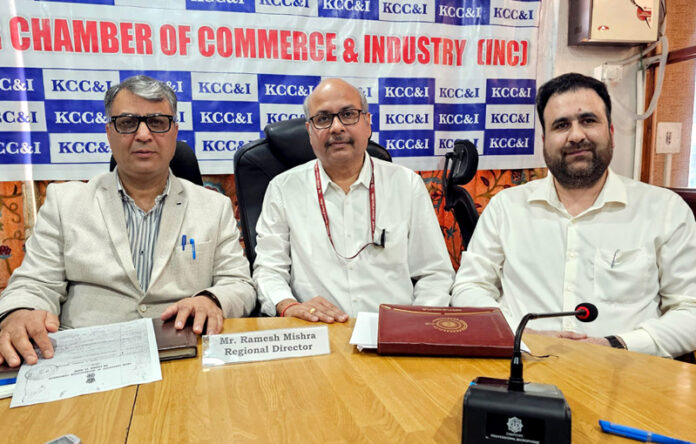
Bukhari was speaking to reporters after an interactive session organised by the Kashmir Chamber of Commerce and Industry (KCCI) with Ramesh Mishra, Regional Director (North), Ministry of Corporate Affairs, in Srinagar.
Highlighting a key initiative, Bukhari announced that the Prime Minister’s Internship Scheme will be rolled out across all districts of J&K.
The scheme targets unemployed youth aged 18-25 who are not in employment, education or training, and aims to provide paid internship opportunities in coordination with the J&K Government.
“The third phase of the pilot project has already been launched at the national level,” he said.
KCCI President Javed Tenga termed the visit significant, noting that it marked the first direct interaction of a Regional Director of the ministry with the Valley’s business community.
The meeting was attended by former presidents, executive members, chartered accountants, company secretaries and representatives of various firms and institutions.
During the interaction, KCCI presented a detailed memorandum highlighting key concerns faced by companies in the region.
These included limited participation of J&K-based firms in the internship scheme, issues related to Director Identification Numbers (DIN), delays in updating company records, and the absence of an effective grievance redressal mechanism.
The Chamber also sought a one-time settlement scheme for closure of inactive companies.
Responding to the concerns, Mishra said the issues were substantive and reflected genuine operational challenges. He assured continued engagement and said efforts would be made to address them.
Bukhari added that many concerns were system-driven but would be taken up at appropriate levels, including the RoC, regional offices and the ministry.
The business body urged that the RoC office in Srinagar be made fully functional on the earlier Darbar Move pattern, citing inadequate staffing and delays caused by routing matters through Jammu.
It pointed out that the Kashmir Valley accounts for nearly 55 per cent of the total companies registered in the Union Territory.
Concerns were also raised about stakeholders in Ladakh, with KCCI calling for a camp office or dedicated helpdesk in the region to improve accessibility.
On the internship scheme, the Chamber noted that only one local company-J&K Bank-features among nearly 2,000 participating firms nationwide, despite a large number of applicants from J&K.
KCCI further flagged persistent technical glitches on the MCA21 portal, including server downtime, non-availability of forms, failed SRN generation, payment issues and document upload errors.
Additional issues raised included pendency in adjudication and compounding cases, recurring problems with DIN KYC filings, DSC validation, and lack of clarity in compliance norms for small companies and startups.
ACB presents chargesheet against PWD employee in graft case

Excelsior Correspondent
SRINAGAR, Apr 27: The Anti-Corruption Bureau (ACB) today presented a chargesheet before a designated court here against a former Public Works (Road & Building) Department employee, who was booked in a graft case in the year 2022.
An ACB official said the chargesheet was presented against Rafiq Ahmad Sheikh of Bamloora, Ganderbal, then computer operator PWD(R&B) Circle Ganderbal, in case FIR number 07/2022 registered under section 7 of the Prevention of Corruption Act 1988 at Police Station ACB Srinagar before the court of Additional Special Judge, Anti-Corruption Court Srinagar for judicial determination.
According to him, Sheikh was booked on March 2, 2022 on a written complaint alleging demand of Rs 4000 as bribe for issuance of contractor card D-class.
He said after investigation of the allegations independently, a trap was laid and the accused was caught red-handed while accepting Rs 4000 as bribe from the complainant.
The ACB official added that based on the facts and circumstances together with cogent evidence brought on record, the investigation established the commission of offence under section 7 of the Prevention of Corruption Act 1988 against the accused public servant.
He said after completing the investigative/departmental formalities, the chargesheet was presented before the court today for judicial determination, with June 10 set as next date of hearing in the case.
All relief card holders get 11 kgs of ration: Govt

Excelsior Correspondent
JAMMU, Apr 27: The Relief Organisation today reiterated that the integration of migrant ration cards on the NFSA database scheme is being done in compliance with the relevant Government Orders and rules.
In a statement issued here it said that ration distribution is being carried out by the Food, Civil Supplies & Consumer Affairs Department in accordance with the Special Relief Ration Scheme for Kashmiri/Jammu Migrants notified vide Government Order No. 15-JK (FCS&CA) of 2026 dated 05.03.2026, from all 32 designated ration depots in Jammu district, including Mini Township Jagti which houses 5,252 migrant families.
It further said all relief ration card holders, whether PHH, NPHH, or Special Category, continue to receive 11 kg of free ration per person per month along with one kg of sugar, while migrants under the non-relief category such as pensioners, categorized as NPHH, are entitled to ration at Government-approved NFSA rates. The Government of J&K, through S.O. 392 and S.O. 393 of 2024 dated 13.08.2024, has amended the J&K Food Security Rules, 2021 and the Targeted Public Distribution (Control) Order, 2023 to integrate migrant ration cards into the NFSA database, thereby enabling the migrants to avail benefits of various social sector schemes.
Further, Government Order No. 27-JK (DMRRR) of 2025 dated 16.05.2025 has clarified that the existing scale of ration distribution and norms for inclusion, deletion, bifurcation, conversion and corrections will continue under the Relief Organisation without change, the statement said.
It said these clarifications have been widely communicated through public notices and information campaigns and approximately 450 migrant families have already availed benefits of social security and welfare schemes after this integration.
Dept of Paediatrics in GMC Jammu organizes ‘Haematology Update’
Excelsior Correspondent
JAMMU, Apr 27: The Department of Paediatrics, SMGS Hospital, Government Medical College (GMC), Jammu, organised the academic event “Haematology Update – Jammu 2026” at the SMGS Hospital Jammu.
The conference served as a dynamic platform for knowledge exchange on the diagnosis, management, and emerging innovations in both benign and malignant haematological disorders, including Anaemia, Thalassemia, Leukaemias, Haemophilia and other bleeding disorders.
Chief Executive Councillor Kargil, Ladakh, Dr Mohd Jaffer Akhoon presided over as the chief guest of the inaugural ceremony of this event. He emphasised the need to extend the benefits of treatment and care to the individuals suffering from blood disorders, such as haemophilia, living in far-flung areas, such as Kargil.
Dr Ashutosh Gupta, Principal and Dean, GMC Jammu; Dr Amita Trehan, Head of the Pediatric Hematology Oncology Division, PGIMER Chandigarh; Dr Ashok Gupta, former HOD Pediatrics and Dr SP Yadav HOD Pediatric Hematology Oncology Medanta Medicity Gurugram and the President of Hematology Oncology Chapter of Indian Academy of Pediatrics were the guests of honour. Dr Dara Singh, Medical Superintendent, SMGS Hospital was the special guest.
Dr Sanjeev Kumar Digra, Professor & HOD Paediatrics, GMC Jammu, apprised the gathering that the Department of Paediatrics is running a Thalassemia Day Care Centre, a comprehensive Haemophilia Day Care Centre and a dedicated 20-bedded Pediatric Haematology Oncology ward wherein the children suffering from blood cancers, aplastic anaemia, other blood disorders and malignancies are being treated.
Renowned speakers such as Dr V P Choudhary former HOD Haematology AIIMS New Delhi; Dr Naresh Gupta, Chaiperson Haemophilia & Health Collective of North Dr. Amita Trehan, Dr J S Arora, General Secretary National Thalassemia Welfare Society, Dr S P Yadav, Dr K K Koul former HOD Pathology, Dr Richa Jain Professor , Dr Shruti Kakkar Professor Paediatrics CMC Ludhiana, Dr Deepika Gupta Hematologist Narayna Hospital Kakryal, Dr Varun Koul, Dr Sandesh Ganju, Dr Adrija Mishra shared valuable clinical insights and recent research updates.
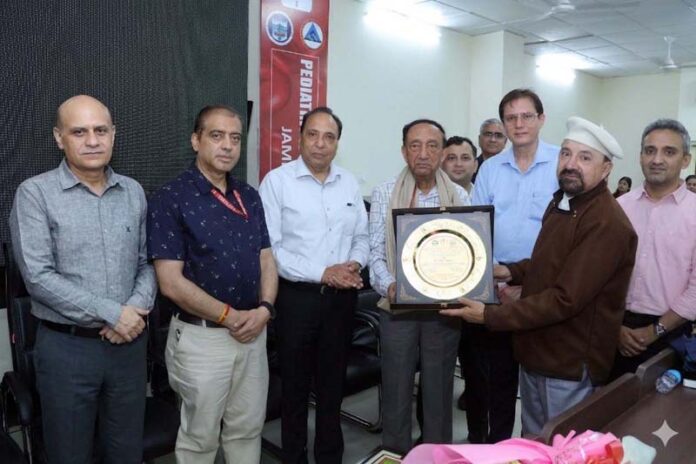
In the inaugural ceremony, renowned Paediatrician and former HOD Paediatrics, GMC Jammu, Professor Dr K B Gupta was bestowed with life time achievement award by the Indian Academy of Paediatrics Jammu Branch.