

A Collective Moral Call to Protect Our Future
Mohammad Ayaz Raina
ayazraina@gmail.com
Jammu & Kashmir, often described as paradise on earth, stands as a symbol of natural beauty, cultural richness, and human resilience. Its snow-capped mountains, lush green valleys, sparkling rivers, and serene lakes have long inspired poets, travellers, and dreamers alike. Yet, beneath this breathtaking landscape, a silent and dangerous crisis is unfolding, one that threatens not only individuals but the very soul of society. Drug abuse, once considered a distant concern, has now emerged as one of the most pressing challenges confronting Jammu & Kashmir today.
In a significant and timely step, Hon’ble Lieutenant Governor Manoj Sinha launched a 100-day intensive campaign under the Nasha Mukt Jammu & Kashmir Abhiyan. His strong and clear message, “Do not trouble the innocent, and do not spare the guilty,” reflects the seriousness of the issue and the commitment required to address it. This initiative is not merely a governmental programme; it is a collective call to every citizen to actively participate in safeguarding the future of our youth and preserving the social fabric of the Union Territory.
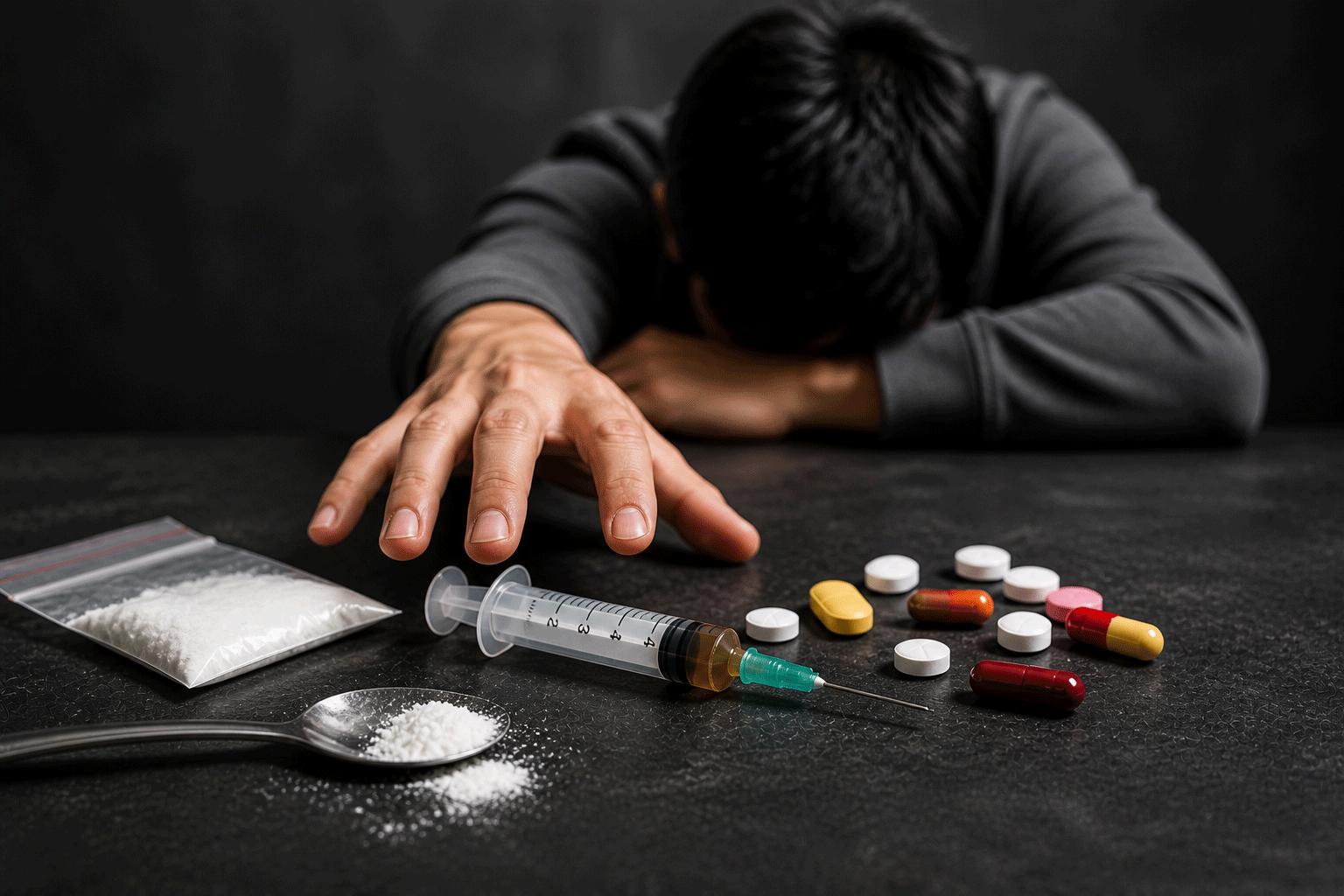
The scale of the problem is deeply alarming. Estimates suggest that nearly 13.5 lakh individuals in Jammu & Kashmir are affected by substance abuse, a figure significantly higher than the national average. What is even more concerning is the increasing involvement of young people, including adolescents aged 10 to 17. Substances such as heroin and other opioids dominate the drug landscape, causing severe health complications and, in many cases, leading to life-threatening diseases such as Hepatitis C and HIV due to unsafe practices like injecting drugs.
At the same time, recent data highlights a worrying upward trend in reported cases. According to the Crime in India 2022 report by the National Crime Records Bureau, the number of cases registered under the Narcotic Drugs and Psychotropic Substances Act for possession of drugs for personal use increased from 289 in 2020 to 357 in 2021 and further to 394 in 2022. While this rise partly reflects improved detection and reporting under intensified government efforts, it also underlines the growing seriousness of the issue.
Drug addiction leaves a devastating impact on every aspect of life. It damages vital organs, including the brain, heart, liver, and lungs, while also affecting mental health, leading to anxiety, depression, and cognitive decline. In educational institutions, students suffering from addiction often lose concentration, perform poorly, and gradually lose interest in studies. Many begin skipping classes and, in severe cases, drop out of school altogether. The long-term consequences extend to career prospects as well, with addiction diminishing confidence, skills, and opportunities, often pushing individuals toward legal troubles that can permanently affect their future.
Understanding the warning signs is crucial for early intervention. Physical symptoms such as red eyes, sudden weight loss, poor hygiene, and frequent illness may indicate substance use. Behavioural changes, including mood swings, irritability, secrecy, and withdrawal from family and friends, are equally significant indicators. In schools, a noticeable decline in academic performance, lack of focus, and changes in peer groups should not be ignored.
Parents play a central role in prevention. A nurturing and open environment at home, where children feel comfortable sharing their concerns, can act as a strong protective factor. Parents must also serve as role models and guide their children towards healthy lifestyles. Monitoring activities, encouraging sports and creative engagement, and educating children about the harmful effects of drugs are essential steps.
Educational institutions, too, carry a significant responsibility. Schools must actively engage in awareness programmes, including regular discussions during morning assemblies and classroom interactions. Teachers, being close to students, are often the first to notice changes and must act as mentors with empathy and care.
The legal framework also plays a vital role. Under the Narcotic Drugs and Psychotropic Substances Act, possession, use, or trafficking of drugs is a serious offence punishable by imprisonment and fines. Awareness of these legal consequences is essential, especially for youth who may unknowingly put their future at risk.
Recognising the seriousness of the situation, the Government of India has adopted a comprehensive and coordinated approach through the Nasha Mukt Bharat Abhiyaan and the National Action Plan for Drug Demand Reduction. These efforts have reached over 91.5 lakh people in Jammu & Kashmir, including more than 6 lakh youth, through large-scale awareness campaigns. A strong support system has also been established, including Integrated Rehabilitation Centres for Addicts (IRCAs), Community-Based Peer Led Intervention (CPLI) centres for children, Outreach and Drop-In Centres (ODICs), and 20 Addiction Treatment Facilities (ATFs) in government hospitals with support from All India Institute of Medical Sciences. Additionally, five District De-addiction Centres (DDACs) provide integrated services, supported by a toll-free helpline number 14446 for counselling and assistance. Educational initiatives such as Navchetna modules and teacher training programmes have further strengthened prevention, with over 16,000 institutions actively participating in awareness-building.
At the same time, it is important to recognise that recovery is possible. Many individuals have successfully overcome addiction and rebuilt their lives. Public figures like Sanjay Dutt have shared their recovery journeys, inspiring others. Similarly, individuals like Kanishka Mukherjee have turned their struggles into a mission to help others through rehabilitation efforts. These stories remind us that with determination and support, transformation is always possible.
However, the fight against drug abuse cannot be won by the government alone. It requires collective responsibility. Parents, teachers, community leaders, religious scholars and youth must work together to create a strong support system. Compassion is essential; those struggling with addiction need support and guidance, not stigma.
Across major world religions, there is a shared message against substance abuse. In Islam, intoxicants are forbidden as they harm both the mind and the spiritual connection. Hinduism emphasises self-control and purity, while Sikhism strictly prohibits intoxicants and promotes disciplined living. Christianity teaches that the body is sacred, and Buddhism advocates mindfulness free from intoxicants. Judaism also stresses the protection of health and well-being.
Religious scholars and leaders play a vital role by spreading awareness during sermons and gatherings, guiding people towards a drug-free life. Schools also play a crucial role, especially through morning assemblies where students can be regularly sensitised about the harmful effects of drugs and encouraged to make responsible choices.
India, one of the youngest nations in the world, has immense potential, with nearly 65 per cent of its population under 35. This demographic strength can drive progress only if the youth remain healthy, focused, and free from addiction. Their energy must be channelled into education, innovation, sports, and nation-building.
Ultimately, the vision of a Nasha Mukt Jammu & Kashmir is both realistic and achievable. It demands collective effort, awareness, and commitment from every individual. Every step towards prevention and rehabilitation brings us closer to a healthier society.
Protecting Jammu & Kashmir from the menace of drugs is not just a responsibility; it is a moral duty. If we truly take pride in the beauty of this land, we must also ensure the well-being of its people. Let us stand united, act responsibly, and work with determination to build a future where every young mind thrives in health, dignity, and hope. The future of a nation rests in the hands of its youth, and a drug-free youth ensures a strong, progressive, and prosperous India.
 Follow our WhatsApp channel
