

By Anjan Roy
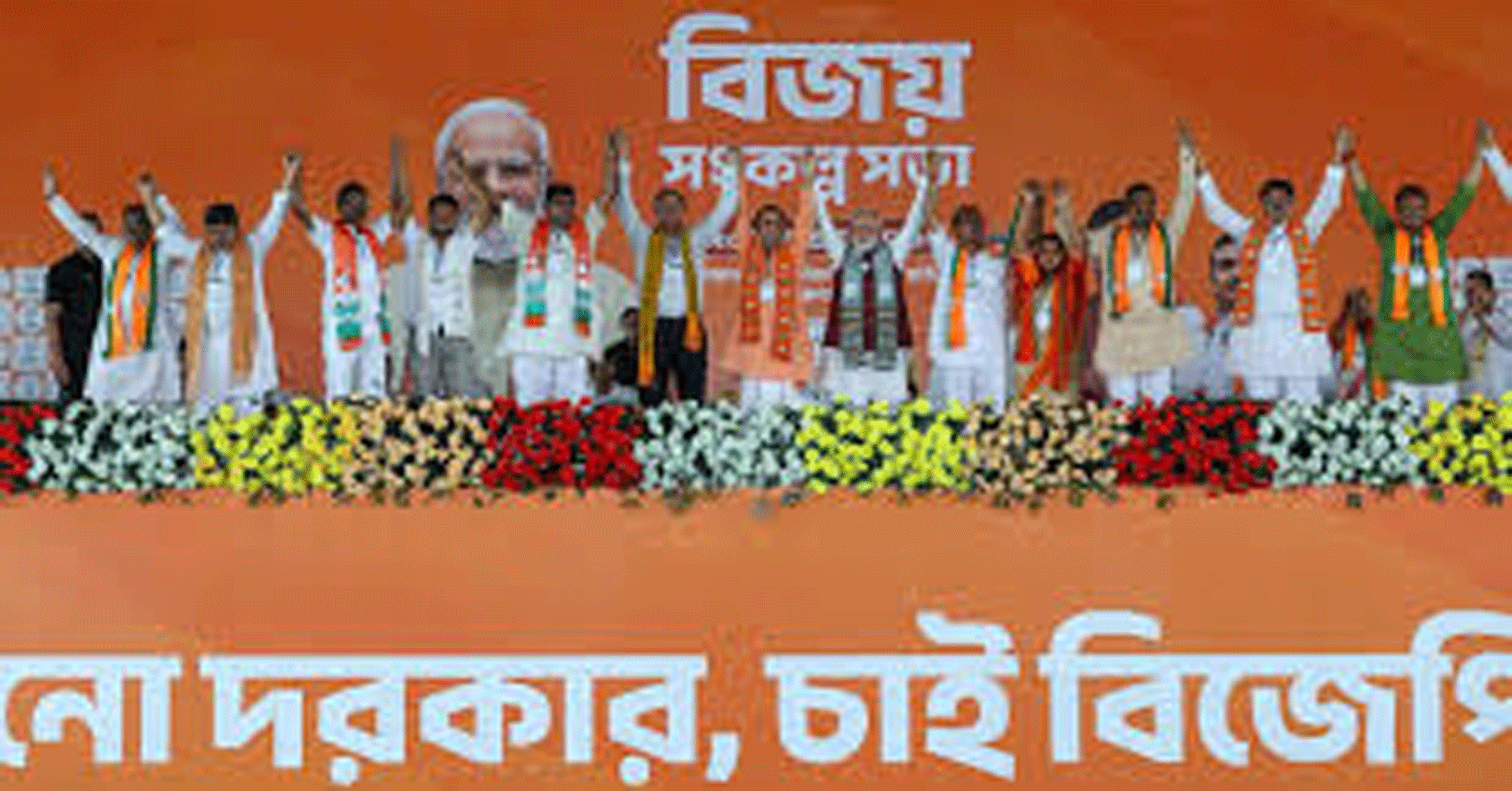
KOLKATA: With Subhendu Adhikari sworn in as the first BJP chief minister of Bengal on Sunday May 10, an altogether new chapter is begun in the state. With that the recalcitrant, screaming Mamata Banerjee goes into the penumbra of political oblivion.
At its mega swearing in ceremony on the Brigade Parade ground, BJP had harked back to its beginnings invoking memories of Dr Shyama Prasad Mukherjee, who had established the Jan Sangh, precursor of present day BJP.
For a moment the swearing in ceremony was a journey back in time, invoking the early days when the party was founded. Although Dr Mukherjee began his seminal efforts in Bengal, the BJP could come to power in Bengal after seventy five years.
Ninety seven year old, Makhan Lal Sarcar, had accompanied Shyama Prasad to Kashmir in 1951 to protest against conceding special status to the state by Jawaharlal Nehru’s government immediately after Independence. Before that, Shyama Prasad had joined the national government as the first industry minister.
Unfortunately, Shyama Prasad died on this journey of protest in a Kashmir jail and there is a deep suspicion that he was murdered in prison. The BJP master of ceremonies, in fact, referred to the incident and maintained that Dr Mukherjee was indeed murdered.
Makhan Lal Sarcar was honoured by the prime minster, who presided over the entire ceremony, offering him a shawl. While draping the shawl on him, the prime minster even stooped down to touch the nonagenarian’s feet. It turned out to be an emotional moment.
Makhan Lal was subsequently arrested by Delhi police and jailed. At his trial in a Delhi court in early fifties, the then Makhan Lal a young man, the judge asked the reason for his arrest. Delhi police disclosed that the accused had sung a song which was considered offensive.
A spirited Makhan Lal had sung a high patriotic song and on learning, this the Delhi court judge asked the young man to sing the song in court.
On hearing the song in court, the judge ordered that the Delhi police should immediately release him, organise a first class ticket for Makhan Lal to his home in Siliguri in Bengal and also provide him a princely sum of Rs100 to cover his incidental costs during the journey home. The BJP deftly appropriated the entire saga as its struggle for seeking legitimacy in its early days and these went down very skillfully into the people.
In many other ways, the ceremony had become much more than a simple event for swearing in of a new chief minister.
It transcended into an elaborate show on “Bengaliyana” of the BJP in the state. The deliberate attempt at this demonstration of the Bengali cultural orientation of the party was to refute Mamata Banerjee’s allegation that BJP was anti-Bengal and did not have linkage with the Bengali persona.
First the date for swearing in was deliberately chosen —on 25th of Baisakh— the birth anniversary of Rabindranath Tagore, Bengal’s deepest identification of its cultural self. Prime minster had first paid his obeisance to the poet offering flowers in front of a large portrait on the dais.
The party had organised a veritable kaleidoscope of Bengal’s cultural spread with some folk dances of adivasis to the drum beats of Durga Puja. Above all, to drive home the political pungency, there were twenty five stalls of “jhalmudi” which prime minster had partaken in course of his election campaign much to the chagrin of Mamata Banerjee.
Having successfully organised such a mega show, it now devolves on BJP to successfully deliver the huge promises and meet the massive expectations of the people from the new BJP government. (IPA Service)
 Follow our WhatsApp channel
