

Rohit Tikoo
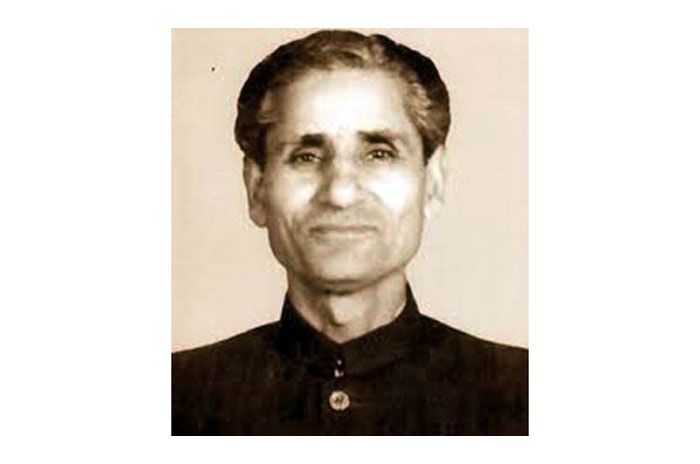
Thirty-six years ago, terrorism took Sarwanand Kaul Premi and his son Virender Kaul from us. They were not merely killed. They were killed for their convictions, for their refusal to abandon their homeland, and for their choice of dignity over fear.
Premi Ji was a towering intellectual figure and a living embodiment of Kashmir’s composite culture. His command over six languages, Hindi, Urdu, Kashmiri, Persian, English, and Sanskrit, placed him in an exceptionally small class of scholars. He translated Rabindranath Tagore’s Gitanjali, the Bhagavad Gita, and the Ramayana into Kashmiri, carrying the wisdom of one tradition into the heart of another. His original works, including Kalami Premi and Bhakti Kusum, numbered more than three dozen publications.
He was also a freedom fighter. During the Quit India Movement, he worked underground and faced arrest. In 1946, Mahatma Gandhi personally invited the 22-year-old Premi for a meeting and presented him with a photoframe bearing one of his own Hindi poems, an act of recognition from Bapu to a young patriot from Kashmir. The bitterest irony of his story is this: the man Gandhi welcomed as a comrade in India’s freedom struggle would, forty-four years after independence, be dragged from his home in the dark and killed.
During the 1986 communal riots in South Kashmir, when temples were desecrated and economic boycotts threatened to fracture the valley, Premi walked directly between the two communities. He spoke of centuries of shared life, of Kashmiriyat, of bonds that no political manipulation could permanently sever. His words carried weight because his life gave them credibility.
28 April 1990: The Night They Did Not Return
By early 1990, the armed insurgency had driven most Kashmiri Pandits from the valley. Premi stayed. He remained in Soaf Shali, in his ancestral home, with his library, his manuscripts, and the work of a lifetime.
On the night of 28 April 1990, armed extremists arrived at his door. They cut the local power supply, forced their way in, and looted the house systematically, taking gold, jewellery, Pashmina shawls, literary manuscripts, and works in progress. Then they demanded that Premi accompany them to meet their Commander.
His younger son Virender refused to let his father go alone. Father and son walked out into the darkness together and did not come back.
On 1 May 1990, police found their bodies hanging from a tree. Their arms and legs had been broken. Their eyes had been gouged. Virender Kaul left behind a young widow and an infant son, eighteen months old.
Thirty-Six Years, Still No Justice
Rajinder Kaul, the elder son, has spent nearly four decades fighting on two fronts: preserving his father’s legacy and compelling the state to acknowledge what was done to his family. Since 1994, he has moved from the National Human Rights Commission to the State Human Rights Commission to the Jammu and Kashmir High Court. Each door opened, but rarely led to resolution.
Justice, after thirty-six years, remains elusive.
Official recognition arrived in time, through posthumous gold medals, named institutions, postal covers, and metro panels, but no one has been held accountable for the murders of a poet and his son.
Remembering is not enough. If Sarwanand Kaul Premi’s story is to mean anything, it must move beyond tribute into accountability. A nation that honours its freedom fighters cannot allow their deaths to remain unanswered.
The call is simple, but urgent: Acknowledge. Document. Act.
When justice is endlessly deferred, it fails not only the dead. It fails the living.
 Follow our WhatsApp channel
