

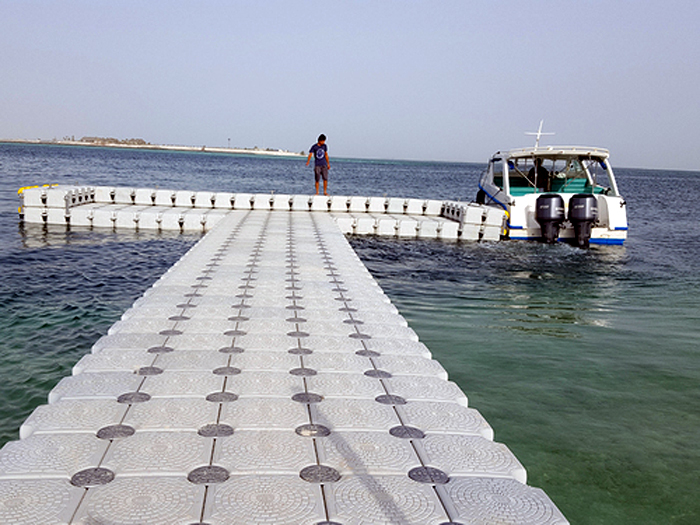
For too long, Jammu and Kashmir has sold itself on a single postcard. Snow-capped peaks, saffron fields, the houseboats of Dal Lake – beautiful, yes, but a narrow frame for a Union Territory of extraordinary geographic and cultural depth. The announcement that the Inland Waterways Authority of India will develop ten floating jetties across J&K’s national waterways is therefore not merely an infrastructure story. It is an invitation to reimagine what tourism in this region can become. Water-based tourism is among the most powerful tools a destination can deploy – and among the most underutilised in J&K rivers. Its appeal is both elemental and economic. There is something deeply human about moving through a landscape on water: the pace slows, the perspective shifts, and the traveller is drawn into the scenery rather than rushing past it. A river cruise along the Jhelum through Srinagar’s historic ghats, or a leisure sail on the Chenab beneath the shadow of the world’s highest railway bridge, offers an experience no highway can replicate. It converts a transit corridor into a destination.
The economic argument is equally compelling. Water transport is among the most energy-efficient modes of moving people, consuming a fraction of the fuel that road journeys demand. More importantly for J&K, river tourism generates wide and localised economic multipliers. Jetties need maintenance crews; cruise vessels need operators, guides, and hospitality staff; riverside stops catalyse food stalls, craft markets, and homestays. Every rupee invested in a floating jetty at Akhnoor or Sohar radiates outward into communities that have long waited for diversified livelihoods beyond agriculture and the narrow peak-season tourism calendar.
Crucially, the project aligns with a global moment. Cruise tourism is one of travel’s fastest-growing segments worldwide. Domestic travellers increasingly seek experiential and sustainable alternatives to conventional itineraries. J&K, with three notified national waterways and some of the most spectacular riparian scenery on the subcontinent, is positioned to capture this demand – but only if the infrastructure arrives in time to meet it. The Rs 100 crore commitment, the MoU between IWAI and the J&K Government, and the targeted July 2026 completion for jetty construction signal genuine political will. The task now is delivery. Ecological safeguards must be non-negotiable, as these rivers are the lifeline of J&K. Community participation in planning and operations should ensure the benefits stay local. J&K’s rivers have carried civilisations. It is time, once more, to let them carry the future.
 Follow our WhatsApp channel
