

Chaitanya Sharma
As the vibrant festivals of Raksha Bandhan and Shri Krishna Janmashtami approach, the skies above Jammu are once again beginning to mirror a rich cultural legacy-Patang Baazi, the art of kite flying. Once the heart and soul of festive celebrations in the region, this tradition is now facing the threat of fading into memory.
A Soaring Tradition from Duggar Roots
Kite flying was once at its absolute peak-a form of entertainment and passion for people of all ages, especially in the Old City of Jammu, such as Pacca Danga, Purani Mandi, Jain Bazaar, and Moti Bazaar. These experiences are etched deeply into never-fading memories, especially for those who grew up during the 1980s and 1990s.
In the cultural heartland of Duggar Pradesh, kite flying was celebrated with a passion that bordered on obsession. While rural areas held a quiet appreciation for the tradition, it was in the cities-especially across Jammu’s rooftops-that the sky turned into a vibrant arena of skill, creativity, and friendly rivalry. Locally known as Guddi, these kites became a symbol of pride and preparation. Festivities would begin weeks ahead of Raksha Bandhan and Janmashtami, as children eagerly dug out old kite strings from the previous year and started crafting their own kites at home-often personalizing them with unique designs and tweaks to gain an edge in aerial battles.
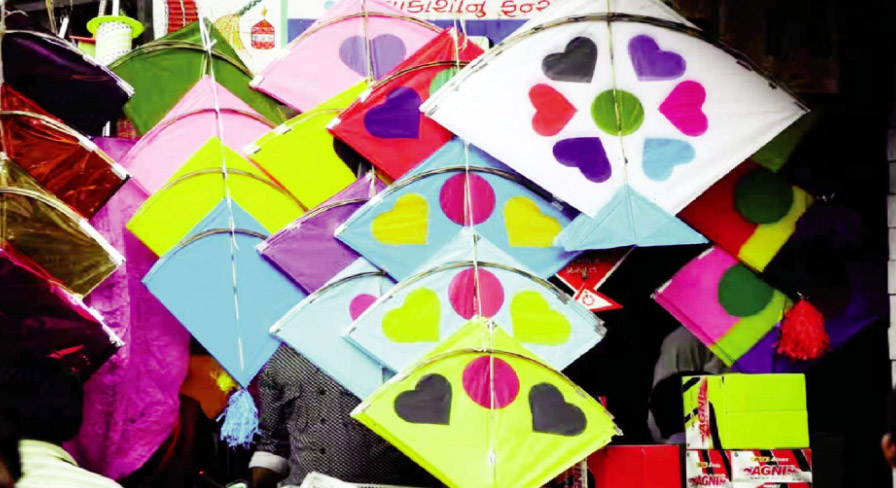
The thread preparation process itself was a competitive art, with people experimenting with techniques to gain an upper hand in aerial duels. Designs and colors mattered immensely. Kites featured moons, ghost faces, Bollywood icons, and even patriotic themes like Tiranga. With long or short tails and distinct shapes, these kites weren’t just flown-they were shown off like fashion statements.
Dawn Duels & Rooftop Rivalries
The competition was fierce. Many children spent sleepless nights, impatient to be the first to fly a kite at sunrise. The obsession was so intense, children often forgot to eat or drink, much to their parents’ dismay. Eyes turned red by evening from sun exposure, but the excitement never dimmed.
Even after dusk, rooftop matches continued under moonlight, filled with victorious shouts of “Chal Gayi Aaa!” Every rooftop had a bamboo stick ready to retrieve fallen kites. Snatching kites drifting in the wind was a sport of its own. The thrill wasn’t just in flying-but in winning.
Parents participated too, with entire families coming together on terraces. Music blared from rooftop speakers, filling the skies not just with colorful paper but with echoes of celebration. It felt as if the entire city had climbed onto the rooftops, creating an electric atmosphere of unity and festivity.
The Decline of a Cultural Phenomenon
Despite its glorious past, Patang Baazi is on the decline. The once-bustling kite shops of Pacca Danga, which were hubs for kites and threads, now struggle for survival. Many kite makers lament that sales during festivals are no longer enough to sustain their craft. Some have shut down entirely.
Several factors have contributed to this cultural shift:
* Smartphones and video games dominate children’s free time.
* Academic pressures have replaced leisure hours with tuition.
* Urban sprawl has left few open spaces for kite flying.
* Most critically, the younger generation lacks exposure to the rich tradition that their elders cherished.
As one kite seller from the Old City said, “Festivals meant joy and community. But now, kids celebrate Raksha Bandhan by watching Instagram reels of someone else flying a kite.”
The Manja Menace: Chinese Thread and Public Safety
Adding to the crisis is the danger posed by Chinese manja, a synthetic, glass-coated thread. Though now banned across many Indian states, it continues to pose grave threats:
* Fatal injuries to birds, especially migratory species.
* Severe accidents involving bikers and pedestrians.
* Environmental damage, as the plastic-based thread does not decompose.
In the lead-up to this year’s festivities, Jammu Police have intensified their crackdown. Raids in Arnia, Domana, and other areas have led to seizures of large quantities of banned manja. Arrests were made, and FIRs registered. Authorities are urging citizens to use eco-friendly cotton-based threads and report any illegal sales.
A Global Connection: Kite Flying Across Cultures
Kite flying is not unique to India. It holds deep significance globally:
* In China, it dates back over 2,000 years. Kites shaped like dragons symbolize luck and ward off evil spirits.
* Japan’s Kodomo no Hi (Boys’ Day) features carp-shaped kites that represent strength and perseverance.
* Thailand and Afghanistan embrace kite flying as a competitive sport and symbol of freedom.
Rekindling the Flame: How to Revive Patang Baazi
All is not lost. Even today, some youth and children do participate with passion-but the spark of earlier generations is fading. The way forward lies in community action, family involvement, and cultural education.
Host Annual Kite Festivals:
Organize city-wide competitions during Raksha Bandhan and Janmashtami, complete with music, prizes, and traditional food.
Revive the Art of Kite Making:
Conduct workshops in schools and community centers to pass on the skills of crafting and designing kites using eco-friendly materials.
Promote Through Social Media:
Use Instagram, YouTube, and Facebook to highlight the beauty of Patang Baazi. Post tutorials, history lessons, and user-generated content to inspire digital-age youth.
Make It a Family Affair Again:
Parents should relive their childhood joys with their kids. A day of kite flying can strengthen family bonds and revive forgotten traditions.
Promote It as a Healthier Lifestyle:
Encourage kite flying as an outdoor, screen-free activity that nurtures mindfulness, creativity, and physical fitness.
Kite flying is more than paper in the sky-it’s a symbol of freedom, joy, culture, and community. In Jammu, where Patang Baazi once touched the hearts of entire neighborhoods, the time has come to bring back that magic.
With police action against Chinese manja and renewed public interest, there is a real opportunity to revive this age-old tradition. Let us once again hear the sounds of “Chal Gayi Aaa!” from rooftops, see children chase kites through narrow lanes, and feel the spirit of Duggar pride soar in the skies.
Let’s not let this tradition drift away. Let it fly.
Let Guddi once again become the heartbeat of our festivals.
( The Writer is working with J&K Govt. PSU)
 Follow our WhatsApp channel
