

Incentives for coal gasification
NEW DELHI, May 13: The Government on Wednesday announced a hike in the Minimum Support Price (MSP) for paddy by Rs 72 to Rs 2,441 per quintal for the 2026-27 kharif marketing season, while steeper increases for pulses, oilseeds and cotton aimed at reducing import dependency and encouraging crop diversification.
Follow the Daily Excelsior channel on WhatsApp
The Cabinet Committee on Economic Affairs (CCEA), chaired by Prime Minister Narendra Modi, approved MSPs for 14 kharif crops ahead of sowing, which typically begins in June with the onset of the southwest monsoon.
For paddy, the MSP for common and A-grade varieties stands at Rs 2,441 and Rs 2,461 per quintal, respectively for 2026-27 kharif marketing season (September-October).
The MSP for cotton (medium staple) has been raised by Rs 557 to Rs 8,267 per quintal, while the long staple variety will fetch Rs 8,667 per quintal – the second-highest absolute increase among all crops.
The highest absolute increase, however, has been recommended for sunflower seed at Rs 622 per quintal, taking its MSP to Rs 8,343 per quintal.
Nigerseed (up Rs 515 to Rs 10,052/qtl) and sesamum (up Rs 500 to Rs 10,346/qtl) also received significant increases.
Among other oilseeds, soyabean (yellow) was raised by Rs 380 to Rs 5,708 per quintal and groundnut by Rs 254 to Rs 7,517 per quintal.
In pulses, tur (arhar) MSP was raised by Rs 450 to Rs 8,450 per quintal, urad by Rs 400 to Rs 8,200 per quintal, while moong saw a marginal increase of Rs 12 to Rs 8,780 per quintal.
For other cereals, jowar (hybrid) MSP has been fixed at Rs 4,023 per quintal (up Rs 324), with the Maldandi variety at Rs 4,073 per quintal.
Bajra has been raised by Rs 125 to Rs 2,900 per quintal, ragi by Rs 319 to Rs 5,205 per quintal, and maize by Rs 10 to Rs 2,410 per quintal.
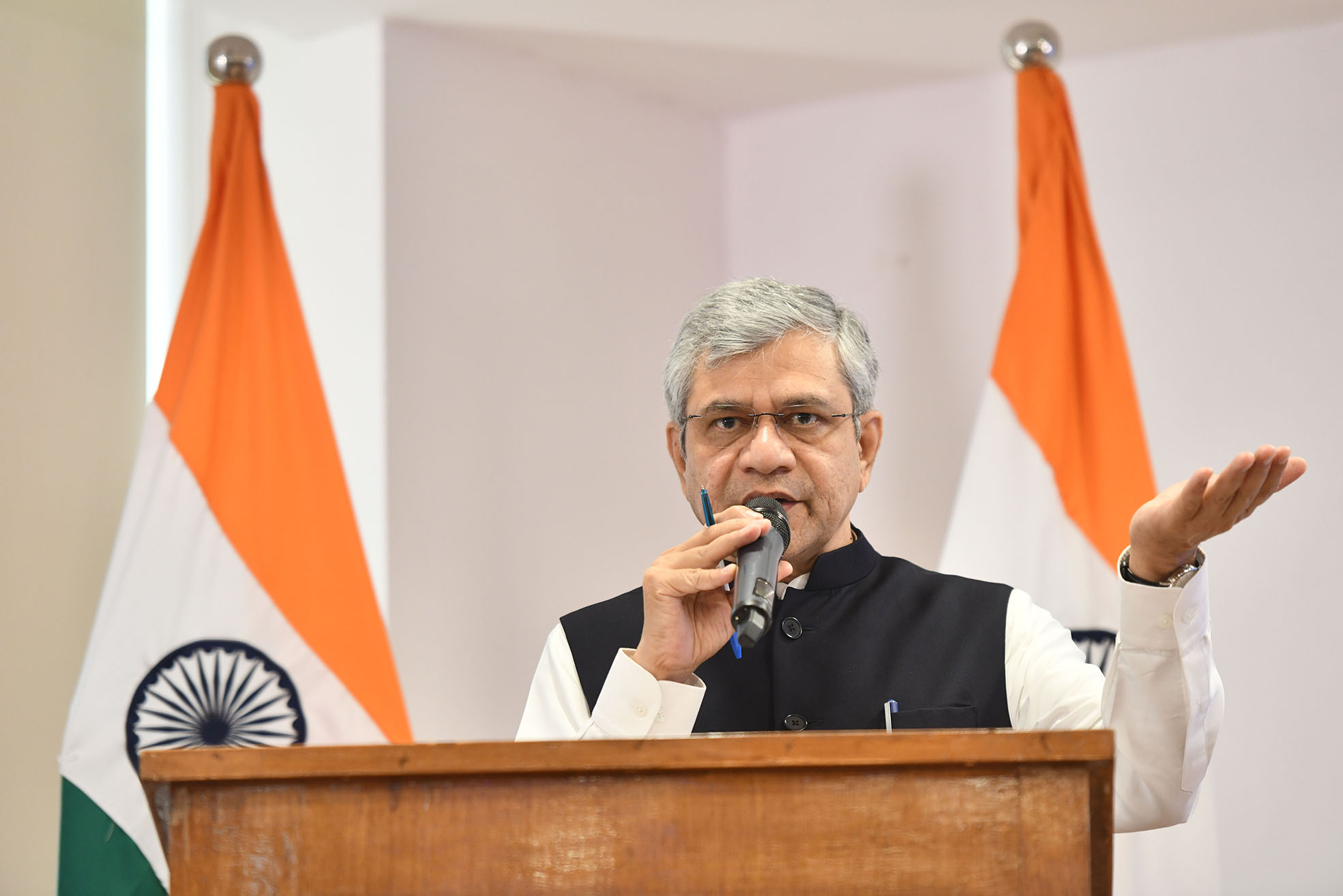
Briefing reporters, Information and Broadcasting Minister Ashwini Vaishnaw said the MSPs have been fixed to ensure remunerative prices for farmers and are at least 50 per cent above the cost of production across all 14 crops.
The margins are estimated to be highest for moong (61 per cent), followed by bajra and maize (56 per cent each) and tur/arhar (54 per cent).
For the remaining crops, the margin is pegged at 50 per cent. The government estimates the total payout to farmers at Rs 2.60 lakh crore, with annual procurement projected at 824.41 lakh tonne.
The Union Cabinet also approved a Rs 37,500-crore incentive scheme to promote coal gasification projects, aimed at boosting clean energy production and reducing dependence on forex-guzzling imports of LNG, urea, and methanol, while insulating the country from global price volatility and supply chain disruptions.
Cabinet approved the scheme for promotion of surface coal/lignite gasification projects with a financial outlay of Rs 37,500 crore, an official statement said.
“An outlay of Rs 37,500 crore has been kept for this scheme, and there will be an investment of around Rs 3,000 lakh crore in this, and the projects will be put up for gasifying 75 million tonnes of coal.”
Vaishnaw said the country has 401 million tonnes of known coal reserves, which is enough for the next 200 years.
“We all know about the current geopolitical situation. So we have to take all the decisions to become Atmanirbhar. In this context, a big decision on coal gasification was taken today,” he said.
Coal gasification refers to the process of converting dry fuel into synthetic gas (syngas), which is used as an alternative fuel and helps reduce carbon emissions. This process supports production of methanol, fertilizers, hydrogen and chemicals, cutting reliance on imports.
The scheme marks a major step towards accelerating the country’s coal gasification programme, advancing the national target of gasifying 100 million tonnes (MT) of coal by 2030, strengthening energy security, and reducing dependence on imports of key products such as LNG, urea, ammonia and methanol.
“At present, more than 50 per cent of the LNG is currently imported, it will be reduced. The urea which we import will also start manufacturing in India. Ammonia is 100 per cent imported today. With this development, new avenues for ammonia production will open. Methanol is currently 80-90 per cent imported that will also be made in India,” the minister said.
Under the scheme, the financial incentive at a maximum of 20 per cent of the cost of plant and machinery will be provided, the statement said, adding that the selection would be through a transparent and competitive bidding process, with an evaluation framework benchmarking project cost, coal input, and syngas output.
The incentive will be disbursed in four equal instalments and be linked to project milestones.
Under the scheme, “financial incentive for any single project (will be) capped at Rs 5,000 crore; for any single product (except synthetic natural gas and urea) (will be) capped at Rs 9,000 crore; and any single entity group (will be) capped at Rs 12,000 crore across all projects.”
Meanwhile, the Cabinet approved the upgradation of the Nagpur International Airport through a public-private partnership.
The Cabinet has cleared the extension of the lease period of the Airports Authority of India’s land allotted to MIHAN India Ltd beyond August 6, 2039. This will enable MIL to license the airport to GMR Nagpur International Airport Ltd (GNIAL), an official release said.
Vaishnaw said the upgradation and modernisation of the airport has been approved.
With the extension of the lease period for the land beyond August 6, 2039, the civil aviation ministry said it would now become co-terminus with the 30-year concession period of GNIAL.
“This is expected to usher in a new era of growth and infrastructure advancement for Nagpur airport. With private sector efficiency and government oversight, the airport is poised to see significant investment, modernisation, and improved passenger and cargo services,” the ministry said in the release.
The Cabinet Committee on Economic Affairs also approved the construction of a 134-km semi-high-speed double rail line between Ahmedabad and Dholera in Gujarat at an estimated cost of around Rs 20,667 crore.
The project will be Indian Railways’ first semi-high-speed corridor planned with indigenously developed technology.
“The project section will provide faster connectivity between Ahmedabad, Dholera SIR (Special Investment Region), upcoming Dholera Airport, and Lothal National Maritime Heritage Complex (NHMC),” according to an official statement.
“Connecting Ahmedabad with Dholera will cut down passenger travel time, enabling comfortable daily commuting and same-day return trips. This semi-high-speed railway would not only bring two cities closer but also bring the people living hundreds of kilometers away closer to each other,” it said.
Dholera Special Investment Region (DSIR) in Gujarat is a greenfield industrial smart city, envisioned as a global hub for manufacturing, innovation, and urban living.
Vaishnaw said the Ahmedabad-Dholera corridor is part of the Delhi-Mumbai Industrial Corridor and that the semi-high-speed rail line will boost development across the region.
He said the train will have a design speed of 220 kmph and an operational speed of 200 kmph. (PTI)
 Follow our WhatsApp channel
