

Lifeline under pressure
*Urgent need to fill gaps
Govind Sharma
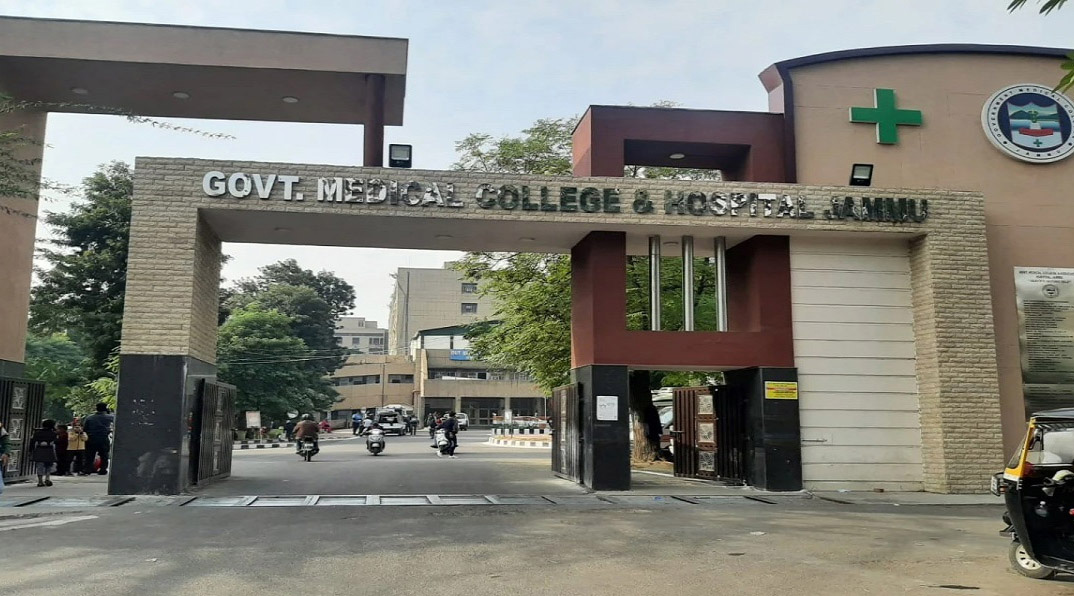
JAMMU, July 25: Even with its emergency teams operating under significant manpower shortages, the Government Medical College and Hospital (GMCH) Jammu continues to function as a critical lifeline for the region. The Emergency Wing, overburdened yet undeterred, handled an overwhelming 16,023 patients in the Emergency Outpatient Department (OPD) during the month of June 2025 – a testament to the unwavering commitment of its doctors, nurses, and technicians.
The latest official report from GMCH paints a stark yet inspiring picture of dedication amidst adversity. Despite the chronic shortage of medical professionals, paramedics, and technical staff, the Emergency Wing remained fully operational, registering 148 emergency admissions during the month.
Among the departments, Medicine bore the highest burden with 7,899 patients, followed by Surgery with 3,978, and Orthopaedics with 2,745 cases. The Ophthalmology section saw 831 patients, while the Anti-Rabies clinic handled 570 cases, indicating sustained activity across specialties.
The Hospital’s diagnostic sections also operated under relentless pressure. In June alone, 1,13,811 pathology tests were conducted, alongside 76,110 microbiology tests and 20,112 biochemistry tests. Other investigations included 8,764 ECGs, 5,894 X-rays, 2,280 CT scans, and 5,894 ultrasounds (USGs). Even the Colour Doppler unit recorded 82 tests – a scale of diagnostics that highlights the dependence on an increasingly stretched team.
Emergency Operation Theatres performed an average of 69 minor and major surgeries daily, managing trauma, acute abdominal conditions, and other time-sensitive cases. These figures reflect not just the hospital’s capability, but the resilience of surgical teams working with limited human resources.
GMCH Jammu continues to serve as the region’s premier tertiary referral center, taking in a high volume of critical cases from peripheral hospitals. In June, 439 referrals were made for further management, in addition to specialist consultations – 67 for cardiology, 49 for CT scans, 48 for neurosurgery, 47 for neurology, 45 for orthopaedics, and 31 for general surgery.
The referral cases covered a wide spectrum of emergencies. Trauma and injury cases (100) topped the list, followed by fever (97), chest pain (60), abdominal pain (59), and hypertensive or cardiac emergencies (56). Others included seizures, snake bites, strokes, vomiting, and loss of consciousness. This diverse caseload underscores the hospital’s critical role in emergency care.
Shift-wise data shows referral peaks during night (40%) and afternoon (40%) shifts, with the morning shift accounting for the remaining 20%. Each day, the Emergency Wing handled an average of 29 medico-legal cases and received 19 referred patients from other hospitals – adding consistent stress to the system.
Despite these pressures, the Emergency Wing has not witnessed any disruption in services. The round-the-clock operation continues to depend heavily on overworked yet committed medical personnel, many of whom are working extended shifts to keep the system from faltering.
While the numbers reflect clinical excellence, they also hint at a looming crisis. Severe manpower shortages in key categories – doctors, paramedical staff, diagnostic technicians – threaten the long-term sustainability of emergency services. If not addressed through immediate recruitment drives and structural reinforcements, the strain could compromise patient care.
The continued functionality of GMCH Jammu’s Emergency Wing stands as a symbol of professional dedication, but it is clear that dedication alone is not enough. Without administrative intervention and systematic strengthening of human resources, the Hospital’s emergency backbone could be pushed to a breaking point.
As the principal emergency care provider for the Jammu region, supporting and expanding GMCH Jammu’s capacity is not just a staffing issue – it is a public health imperative.
 Follow our WhatsApp channel
