

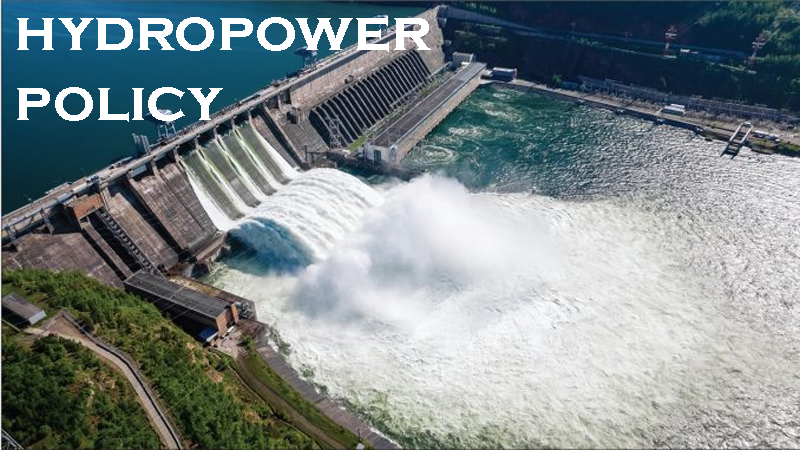
More than fourteen months have passed since the Chief Minister stood in the Legislative Assembly and announced a new Hydropower Policy for Jammu and Kashmir. The announcement was greeted with genuine optimism. Here, at last, was an acknowledgement that the Union Territory’s extraordinary hydropower potential – estimated at over 20,000 MW, of which only a part has ever been tapped – demanded a fresh, coherent and investor-friendly framework. That optimism has since given way to a familiar and dispiriting silence. The Power Development Department placed a draft policy in the public domain in December 2025 and invited stakeholder comments within a month. That consultation window has long since closed, yet the policy remains unfinished, unapproved and unnotified. No timeline has been offered. No revised draft has been circulated.
Demand for electricity across Jammu and Kashmir rises with every passing season – driven by urbanisation, industrial activity and the aspirations of a growing population. Generation capacity, meanwhile, crawls forward without any coherent strategy to accelerate it. Each month of policy paralysis widens that gap. The result is felt not in Government offices but in households and businesses enduring prolonged power cuts, particularly during the harsh winter and peak summer months.
Hydropower development is, by its nature, a long-gestation undertaking. Projects require years of planning, clearances, construction and commissioning before a single unit reaches the grid. This is precisely why the absence of a finalised policy framework is so damaging. Private investors, who must commit capital over extended horizons, cannot act without regulatory certainty. Every month of delay sends a message to the investment community that J&K’s policy environment is unpredictable. The structural case for the new policy is clear and has been for years. Previous IPP frameworks from 2003 and 2011 delivered mixed outcomes. The sector needs updated provisions on project classification, environmental clearances, revenue-sharing and rehabilitation mechanisms. The draft reportedly addresses many of these concerns. The obstacle is not analytical – it is executive. The Government must move the policy from consultation to Cabinet approval without further delay. J&K’s hydropower future cannot remain a statistic in Budget speeches while its citizens contend with darkened evenings. The Government must act now, decisively and visibly, so that the long journey from policy to power station can finally begin.
 Follow our WhatsApp channel
