

* Reviews process for establishment of KVs/JNVs
Excelsior Correspondent
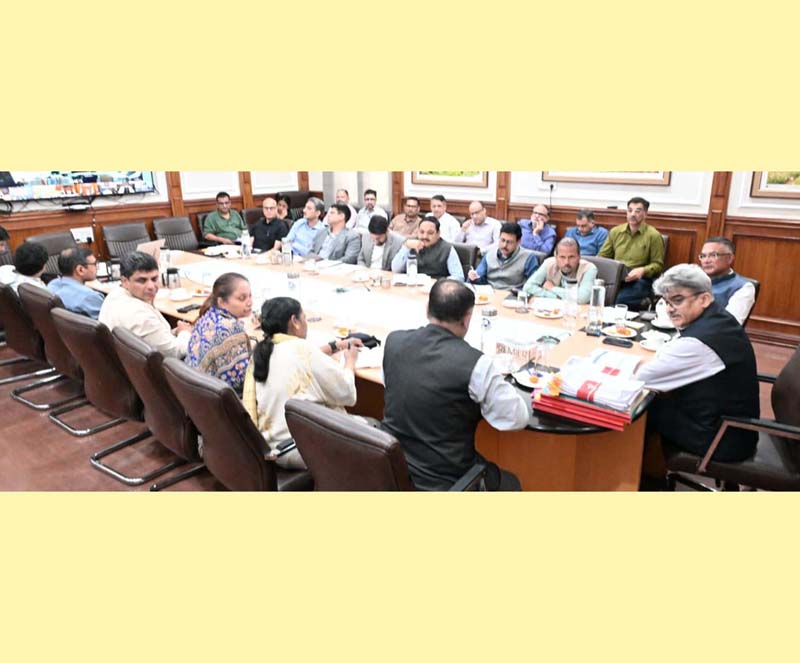
JAMMU, Apr 15: Chief Secretary, Atal Dulloo, today chaired a high-level meeting to review the implementation of the UT-wide ‘100 Days Nasha Mukt J&K’ campaign, which was kickstarted by the Lieutenant Governor on April 11 from MA Stadium, Jammu.
The meeting was attended by all Administrative Secretaries designated as District Mentors by the Government, Divisional Commissioner, Jammu/ Kashmir, Director, Information; Director, School Education, Jammu/Kashmir; HoDs from Social Welfare and Health Departments along with Deputy Commissioners of all districts.
Emphasizing the importance of the initiative, the Chief Secretary called upon all stakeholders to transform the campaign into a mass movement reaching every household across Jammu and Kashmir.
Taking a detailed review, the Chief Secretary sought inputs from each District Mentor and Deputy Commissioner regarding their respective calendars of activities planned during the campaign. He directed that all Panchayats and Urban Local Body wards must be covered to ensure no area remains untouched.
Highlighting the need to make the campaign outcome-driven, he directed that data generated during these 100 days be distinctly captured on the ‘Nasha Mukt J&K’ portal of the Information Department. He asked the Department of Information and Public Relations (DIPR) to handhold the districts in uploading and maintaining real-time data. He stressed that measurable outcomes such as number of people reached, victims counselled, treated or rehabilitated, and action taken against drug peddlers must be systematically recorded and showcased.
The Chief Secretary further directed key departments including Health, Social Welfare and Home to intensify their efforts during this period and work towards achieving quantifiable targets. He also called for a comprehensive review of all Drug De-Addiction Centres to assess availability of facilities and ensure adherence to prescribed norms and standards.
Principal Secretary, Home, Chandraker Bharti, emphasized strengthening enforcement alongside Information, Education and Communication (IEC) activities. He highlighted the need to popularize the Tele-MANAS helpline among affected individuals and proposed its integration with the emergency response number 112 for centralized monitoring. He also encouraged citizens to report drug-related activities, assuring that their identities would be kept confidential.
He further stressed adherence to directions issued during UT-level NCORD meetings and asked districts to regularly review their implementation during the campaign. He informed that all such directions would be shared with District Mentors and field functionaries for effective execution.
Commissioner Secretary, Social Welfare Department, Sarmad Hafeez, presented a detailed overview of the three-month campaign, which commenced with a ‘Padh Yatra’ led by the Lieutenant Governor.
Meanwhile, Chief Secretary chaired a meeting to review the availability of land and infrastructure for Central Government educational institutions, including Jawahar Navodaya Vidyalayas (JNVs) and Kendriya Vidyalayas (KVs), that are either non-functional or presently operating from temporary premises across various districts of Jammu and Kashmir.
During the review, the Chief Secretary sought detailed district-wise and institution-wise inputs regarding the current infrastructural status of these schools. He specifically enquired about the identification and availability of suitable land for construction of permanent school buildings and the arrangements made for their temporary functioning till such infrastructure is developed.
Emphasizing timely action, the Chief Secretary directed the Revenue Department to expedite the transfer of identified land parcels to the School Education Department for further leasing to the Kendriya Vidyalaya Sangathan to facilitate early execution of works. He stressed prioritization of districts where no KV or JNV presently exists and called for immediate commencement of academic activities in locations where temporary accommodation has already been identified.
 Follow our WhatsApp channel
