

Dr Goldi Hazari
Baisakhi, a festival that resonates deeply with the agrarian soul of North India, is far more than just a harvest celebration. It stands as a vibrant tapestry woven with threads of history, religious significance, cultural pride, and communal joy. Particularly in regions like Jammu and Kashmir, Baisakhi transcends its agricultural roots, embracing a spectrum of traditions that reflect the diverse cultural mosaic of the subcontinent.
A Historical Tapestry: From Ancient Roots to Sikh Significance
The origins of Baisakhi can be traced back to ancient times, where it was primarily celebrated as a harvest festival marking the completion of the Rabi crop. The sun’s transition into the Aries constellation, known as “Meśh Sankranti” in Hindu tradition, signifies the beginning of a new solar year and is a time of immense religious and cultural importance across various communities in India.
However, Baisakhi gained a profound new layer of significance in 1699 when the tenth Sikh Guru, Guru Gobind Singh, established the Khalsa Panth at Anandpur Sahib. This pivotal moment in Sikh history saw the formation of a unified, disciplined, and militant Sikh community, dedicated to defending righteousness and upholding justice. The five beloved ones (Panj Pyare) were initiated into this new order, marking the birth of Sikhism as a distinct religious and socio-political force. This historical event imbues Baisakhi with a deep spiritual and political meaning for Sikhs worldwide, transforming it into Vaisakhi, a day of remembrance, spiritual renewal, and renewed commitment to the principles of the Khalsa.
Extent and Importance: A Pan-North Indian Phenomenon
Baisakhi is predominantly celebrated across the northern Indian states, with Punjab and Haryana being its epicenters. However, its jubilant spirit and cultural significance extend far beyond, influencing celebrations in Himachal Pradesh, Uttarakhand, Uttar Pradesh, and importantly, the Union Territory of Jammu and Kashmir.
The festival’s importance lies in its multifaceted nature:
• Agricultural Significance: At its core, Baisakhi signifies prosperity and abundance. It is a time for farmers to offer gratitude for a bountiful harvest and to pray for a successful agricultural season ahead. The palpable sense of relief and joy after a year of hard work is a hallmark of these celebrations.
• Religious Significance: For Sikhs, Vaisakhi is one of their most important festivals, commemorating the formation of the Khalsa. It is a day for visiting Gurdwaras, participating in religious congregations (Sangat), listening to hymns (Kirtan), and engaging in acts of selfless service (Seva).
• Socio-Cultural Bonding: Baisakhi serves as a powerful catalyst for social cohesion. It brings together families, friends, and communities, fostering a sense of unity and shared identity. The festive atmosphere encourages inter-community interaction and reinforces social bonds.
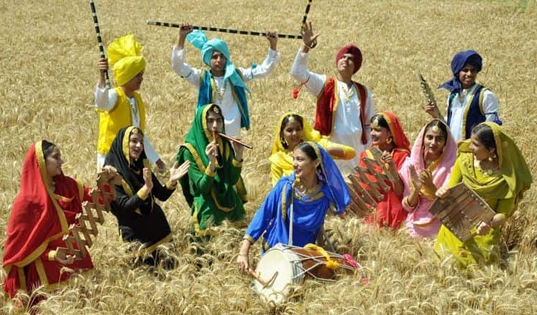
• Cultural Expression: The festival is a vibrant showcase of North Indian culture. Traditional folk dances like Bhangra and Giddha, accompanied by the infectious beats of dhol drums, are an integral part of the celebrations. Melodious folk songs, feasting on traditional delicacies, and the donning of new attire add to the festive fervor.
Baisakhi in Jammu: A Blend of Traditions
In Jammu, Baisakhi, often referred to as “Bishoo” in the local Dogri dialect, is celebrated with immense enthusiasm, reflecting a unique blend of Punjabi and local Dogra traditions. While the agricultural aspect remains central, the festival also holds deep religious and cultural resonance for the Dogra community.
• Agricultural Festivities: Similar to other North Indian regions, Jammu witnesses celebrations marking the harvest. Farmers express their gratitude for the yield, and the air is filled with a sense of prosperity. Rural areas are particularly vibrant, with community gatherings and traditional rituals taking place.
• Religious Observances: Many in Jammu visit temples and shrines to offer prayers on this auspicious occasion. The festival is linked to the worship of various deities, and special pujas and ceremonies are organized. The sanctity of the river Ganges is also revered, with many undertaking a ceremonial bath.
• Cultural Extravaganza: While the energetic Bhangra might not be as prominent as in Punjab, Jammu has its own distinctive folk dances and music that come alive during Baisakhi. The traditional Dogri folk performances, replete with storytelling and vibrant costumes, are a significant part of the celebrations. Families come together for elaborate feasts, savoring local delicacies like Rajma Chawal, Kalaari cheese, and various mithais.
• Community Spirit: Baisakhi in Jammu is a time for strengthening community bonds. Neighborhoods organize fairs and events, fostering a spirit of camaraderie and shared joy. The exchange of greetings and gifts among friends and family is a cherished part of the tradition.
Baisakhi in Kashmiri Culture: A Subtle Yet Significant Presence
The celebration of Baisakhi in Kashmiri culture, while perhaps less overt and boisterous than in the plains, is nonetheless a significant and deeply cherished occasion, particularly among the Kashmiri Pandit community. The festival’s arrival signifies the onset of spring and is intertwined with ancient Kashmiri traditions and rituals.
• “Navreh” – A New Beginning: For Kashmiri Pandits, Baisakhi coincides with “Navreh,” marking the beginning of the new year according to the Kashmiri lunar calendar. This is a time of spiritual introspection, family gatherings, and the practice of ancient customs aimed at ushering in an era of peace and prosperity.
• The “Thal” – A Sacred Offering: A central ritual during Navreh is the preparation of the “Thal,” a sacred platter adorned with various auspicious items. This includes rice, salt, yogurt, a coin, a small mirror, flowers, and sometimes a picture of a deity. The Thal is placed in front of the eldest member of the family, who then uses it for blessings for the New Year. The items on the Thal are believed to symbolize abundance, purity, and good fortune.
• Spring’s Arrival and Nature’s Bounty: Baisakhi’s association with the harvest and the blossoming of spring resonates deeply in Kashmir’s picturesque landscape. The blooming of almond trees and the general reawakening of nature amplify the celebratory mood. While not a direct harvest festival in the Kashmiri context in the same way as in Punjab, the shift in seasons is acknowledged and celebrated.
• Spiritual Significance and Prayer: Like other Hindu communities, Kashmiri Pandits observe Baisakhi with prayers and religious ceremonies. Visits to temples and the performance of specific pujas dedicated to deities like Goddess Parvati and Lord Shiva are common. The spiritual aspect of renewal and seeking blessings for the year ahead is paramount.
• Shared Festivities and Mutual Respect: While the prominent celebrations might be within the Pandit community, the spirit of Baisakhi as a festival marking New Year and prosperity is acknowledged and respected across different communities in Kashmir. Occasional inter-community greetings and the sharing of traditional Kashmiri delicacies contribute to a harmonious celebratory environment. The emphasis is often on peace, prosperity, and the well-being of all.
Conclusion: A Festival of Unity and Renewal
Baisakhi, in its varied manifestations across North India and particularly in Jammu and within the subtle nuances of Kashmiri culture, stands as a testament to India’s rich agrarian heritage, its vibrant spiritual traditions, and its enduring spirit of community. Whether observed as a solemn commemoration of the Khalsa’s birth, a jubilant harvest festival, or a spiritual ushering of the New Year, Baisakhi consistently encapsulates the essence of renewal, gratitude, and the joyous coming together of people. It is a time when the earth yields its bounty, when faith is reaffirmed, and when the bonds of humanity are celebrated with fervor and heartfelt joy, echoing across the diverse landscapes of the subcontinent.
(The author is Medico, New Delhi)
 Follow our WhatsApp channel
