

Excelsior Correspondent
JAMMU, Apr 26: Amit Sharma, Chief Principal Census Officer (CPCO) and Director Census Operations (DCO), Ministry of Home Affairs, Government of India, who has been assigned the task of handling census operations of Jammu & Kashmir and Ladakh, highlighted the roadmap and significance of Census 2027, describing it as a transformative national exercise that will redefine data-driven governance in the country.
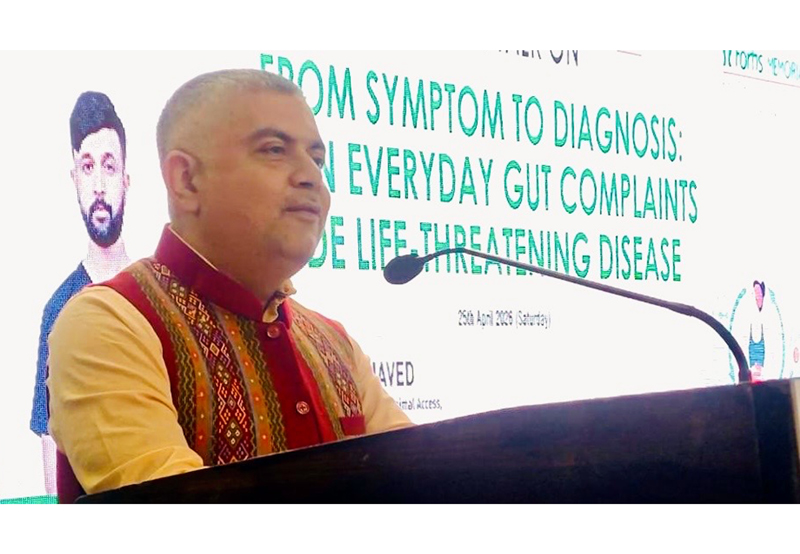
Addressing a special gathering as chief guest at a Health Talk organised by Rotary Club Jammu City in association with Fortis Hospital, Gurugram, Amit Sharma stated that Census 2027 will be India’s first fully digital and paperless Census, aimed at generating accurate, real-time and granular data for effective policy planning and governance.
He informed that the Census will be conducted in two phases in J&K, with the first phase of House Listing Operations (HLO) and Housing Census scheduled from June 1 to June 30, 2026, preceded by a self-enumeration window from May 17 to May 31, 2026. The second phase, Population Enumeration (PE), will be undertaken in February 2027, while snow-bound areas will be covered earlier in September 2026 as per notified timelines.
Elaborating on the digital framework, Sharma said that data collection will be carried out through mobile applications equipped with in-built validation checks, ensuring accuracy and consistency. He added that citizens will have the option to participate directly through a dedicated Self-Enumeration portal, making the Census more inclusive, accessible and transparent.
Highlighting the importance of Census data, Amit Sharma stated that it forms the backbone of governance and plays a critical role in formulation of policies, targeted delivery of welfare schemes and optimal allocation of resources across sectors such as health, education, infrastructure and social development.
On data security, Sharma assured that robust safeguards have been put in place, including end-to-end encryption, secure transmission protocols and certified data centres designated as Critical Information Infrastructure, ensuring complete confidentiality of individual data under the provisions of the Census Act, 1948 and he requested public not to share any vital information like bank account number, credit card number, PAN, Aadhaar or any other detail other than the answers to questions asked in HLO and PE.
 Follow our WhatsApp channel
