

Heena Mahajan
heenaamahajan@gmail.com
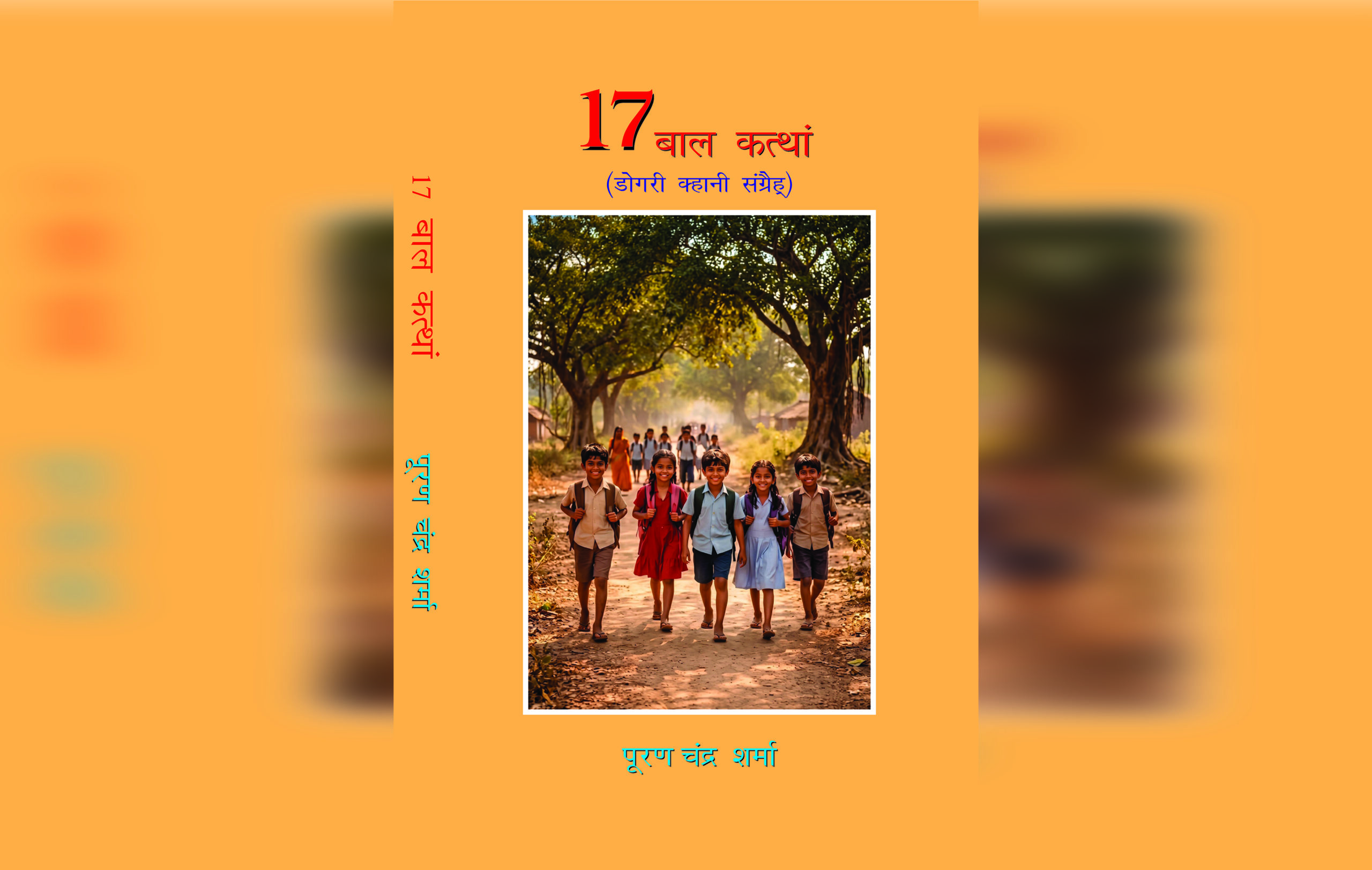
Name of Bool: 17 Bal Kathaan
Written by : Puran Chandra Sharma
“A child who grows with stories grows with sensitivity, imagination, and humanity.”
Regional literature survives not merely through language, but through the stories that preserve the emotional memory, values, and identity of a people. In this context, 17 Bal Kathaan by Shri Puran Chandra Sharma emerges as a meaningful and heartfelt contribution to Dogri children’s literature.
The book was formally released by eminent literary personalities of Jammu during a distinguished literary function organized by the Dogri Sanstha at Kuwar Viyogi Auditorium, Dogri Bhavan. With its publication, the collection entered the literary world carrying a strong message that Dogri short stories possess immense creative potential and deserve wider recognition among readers of all generations.
Shri Puran Chandra Sharma, a devoted literary figure deeply connected to Dogri language and folk traditions, writes with sincerity, emotional insight, and cultural sensitivity. His storytelling reflects not only literary imagination but also the wisdom of a lifelong educator who understands the emotional and moral needs of children. His stories gracefully blend humor, social observation, spirituality, suspense, emotional warmth, and traditional wisdom while remaining rooted in contemporary realities.
This thoughtfully handpicked collection of seventeen stories spans 104 pages and offers far more than simple entertainment. It invites readers into a world of innocence, compassion, moral reflection, imagination, and cultural belonging. Every story carries its own emotional rhythm and atmosphere, making the collection remarkably diverse and engaging.
One of the greatest strengths of 17 Bal Kathaan lies in its ability to educate without becoming preachy. In an age where children are increasingly surrounded by superficial digital distractions, the book restores the timeless beauty of meaningful storytelling. Rather than imposing moral lessons directly, the author allows values to emerge naturally through situations, characters, emotions, and everyday experiences. This subtle narrative style respects the intelligence and sensitivity of young readers while leaving a lasting emotional impact.
“The finest stories do not merely entertain children; they quietly prepare them for life.”
The stories feel authentic and emotionally grounded, as though drawn from lived experiences, classrooms, village life, folklore, and human relationships. The narratives carry warmth, innocence, humor, and wisdom in equal measure, making the reading experience enriching for readers across generations.
Among the most memorable stories in the collection is Master Ji, a deeply touching reflection on the true purpose of education. The story reminds readers that education extends beyond textbooks and examinations; it is about shaping character, nurturing empathy, and instilling honesty, responsibility, and confidence.
Equally moving is Jai Hind, a story filled with patriotic emotion and respect for the sacrifices of soldiers. Through simple yet heartfelt storytelling, the narrative honors their unwavering sense of duty and reminds readers that even small gestures of gratitude can strengthen the morale of those who protect the nation.
Another emotionally powerful story, Par-Swarth, beautifully portrays selflessness, sacrifice, and humanity. Through the wisdom and generosity of an elderly figure, the story conveys that a meaningful life is measured not by material possessions, but by service to others and compassion toward society.
Stories such as Dost, Jhoothe De Pair Nahi Honde, Lalach, Asara, and Gayan Apna Apna – Hunar Apna Apna further strengthen the moral and emotional fabric of the collection. These narratives encourage honesty, friendship, self-confidence, kindness, individuality, and ethical thinking in a manner that feels natural and relatable.
A unique charm of the book lies in its rich connection with folklore, imagination, and traditional storytelling. The stories echo the oral storytelling traditions once lovingly narrated by grandparents in village courtyards, preserving the emotional intimacy of Dogri culture. Inspired by folk narratives, many stories creatively draw upon animals, nature, village life, and symbolic characters to communicate deeper truths. Stories like Akalmand Gidder, Chalak Kukkad, and Ishwar Jo Karda Ae Thik Ge Karda Ae delight young readers while gently teaching intelligence, honesty, faith, optimism, and practical wisdom.
The language of the book remains simple, warm, and accessible, making it highly engaging for children while simultaneously evoking nostalgia among adult readers. Its linguistic purity and cultural rootedness make the collection an important effort toward preserving and promoting the beauty of the Dogri language.
“When regional literature reaches children, culture finds its future.”
In today’s rapidly changing digital age, where many children are gradually drifting away from regional languages and traditional storytelling, 17 Bal Kathaan serves as a meaningful bridge between generations. It reconnects young readers with their roots while reminding parents, teachers, and society that regional literature is emotionally alive, culturally relevant, and deeply necessary.
The book is not simply meant to be read once and forgotten. It is a collection to be felt, remembered, discussed, and lovingly passed from one generation to another. Through its emotional honesty, cultural richness, and literary simplicity, 17 Bal Kathaan succeeds in doing what truly meaningful children’s literature should do. It touches the heart while shaping the mind.
“A society that preserves its mother tongue preserves its memories, values, and identity.”
A valuable addition to Dogri literature, 17 Bal Kathaan deserves a place in homes, school libraries, and among all readers who believe in the power of stories to nurture humanity, compassion, and cultural pride. More than a collection of children’s stories, the book stands as a cultural treasure that celebrates the emotional richness and literary beauty of Dogri heritage.
 Follow our WhatsApp channel
