

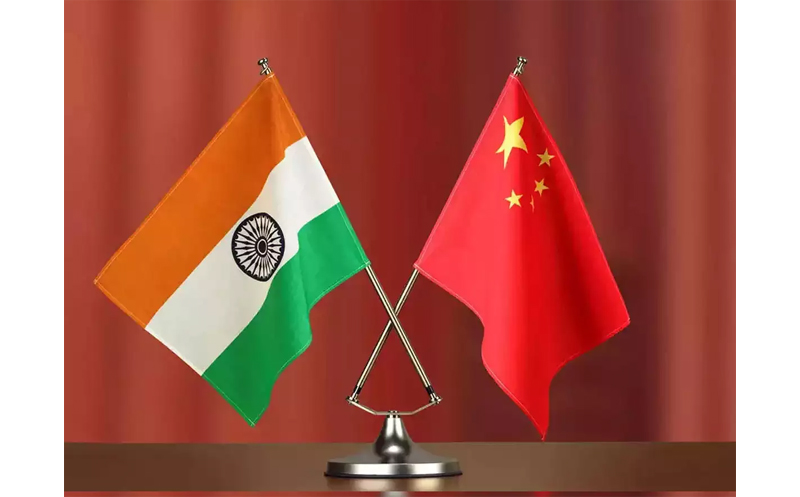
The constructive and forward-looking talks held between India and China at the Working Mechanism for Consultation and Coordination in Beijing this week represent far more than a routine diplomatic exchange. They are the clearest and most encouraging signal yet that Asia’s two most consequential powers have chosen, with deliberation and evident resolve, the path of sustained dialogue over the corrosive temptation of prolonged confrontation. In a world weary of watching conflicts that deliver nothing but misery and destruction, this quiet but determined commitment to engagement deserves both acknowledgement and wholehearted support.
It has become abundantly clear, through hard experience, that consistent and focused bilateral talks are the only durable mechanism through which two nations sharing a 3,400-kilometre border and a combined population of over three billion people can hope to manage their formidable differences. The WMCC meeting reviewed the situation along the Line of Actual Control in eastern Ladakh, expressed satisfaction with the progress made in maintaining peace and tranquillity in the border areas, and agreed to make substantive preparations for the next Special Representatives’ meeting to be held in China. This is methodical, unglamorous diplomacy of precisely the kind that builds the foundations of lasting stability.
Earlier rounds of engagement had already yielded tangible results, and it is important to acknowledge them. The Special Representatives’ dialogue, convened in New Delhi last August between National Security Adviser Ajit Doval and Chinese Foreign Minister Wang Yi, produced a series of meaningful outcomes on border management and confidence-building. The disengagement of troops at Demchok and Depsang, after a military face-off that had persisted for over four years, was achieved through painstaking negotiation. Direct air links between the two countries have been restored after a five-year hiatus, and the Kailash Mansarovar Yatra has been permitted to resume. Each of these gestures, modest in isolation, collectively constitutes a considered and comprehensive effort to restore normalcy.
The world has received the most devastating terms, providing any further argument needed for the absolute supremacy of diplomacy over armed confrontation. The ongoing war in Ukraine and the catastrophic conflict in West Asia, involving Iran, America, and Israel, have revealed the true costs of unresolved disputes and militarisation. Cities have been reduced to rubble, economies have haemorrhaged, and millions of civilians have been killed or displaced. Every corner of the world has felt the knock-on effects – soaring energy prices, acute food insecurity, shattered supply chains, and fractured alliances. India and China must regard these theatres not as distant tragedies but as urgent cautionary mirrors.
Credit must be extended to the respective leadership for demonstrating the political flexibility and strategic maturity required to step back from the edge. Prime Minister Modi’s meeting with President Xi on the sidelines of the SCO Summit in Tianjin provided the crucial political impetus for the current thaw, and both Governments have followed through with methodical, back-channel work ever since. It would be naïve to suggest that all outstanding issues are near resolution – border delimitation remains profoundly complex, trade imbalances persist, and broader geopolitical competition will not be resolved by improved atmospherics. Yet the decision to keep talking, to maintain regular exchanges at both diplomatic and military levels, and to manage shared concerns through agreed mechanisms is precisely what prevents misunderstandings from escalating into catastrophe.
There is a larger, global dimension to this relationship that must not be lost sight of. India and China together account for more than one-third of humanity and are major players in global manufacturing, trade, technology, and renewable energy. In an international environment increasingly defined by economic decoupling and weaponised tariffs, the capacity of these two nations to cooperate – even while competing – could provide a stabilising anchor for a dangerously unsettled world.
The task now is to hold the course with patience, transparency, and consistency. Border management mechanisms must be reinforced, communication lines kept open at every level, and mutual respect for sovereignty maintained as the non-negotiable foundation of every interaction. The reopening of the skies between India and China is a metaphor for something larger: the possibility of two great civilisations choosing, with wisdom and a proper sense of shared responsibility, to face the future side by side.
 Follow our WhatsApp channel
